01
Consultation
Technical needs assessment
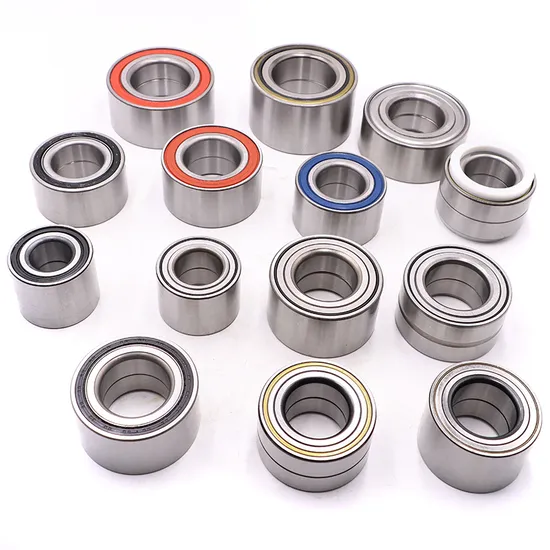
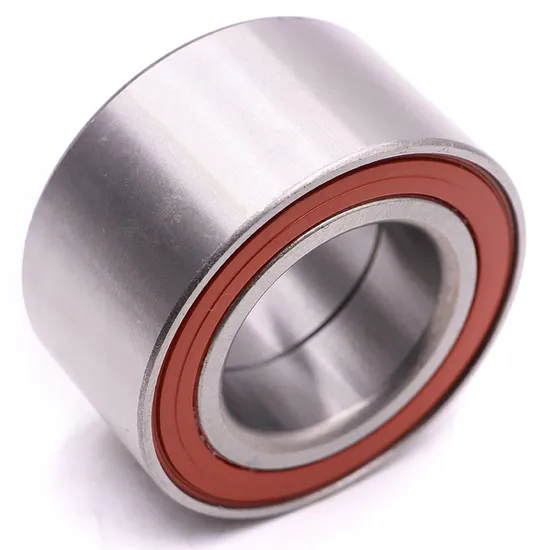
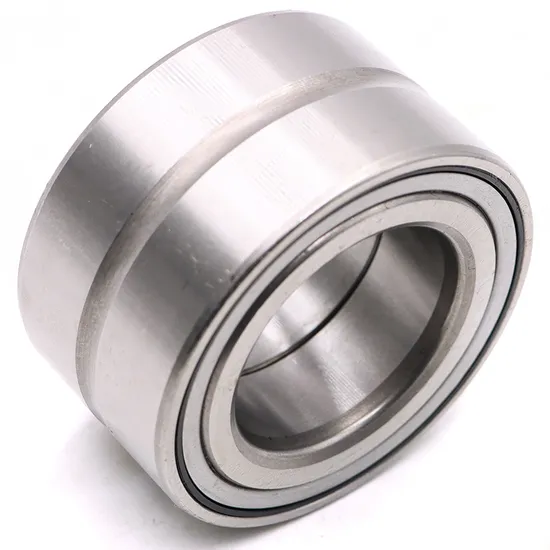
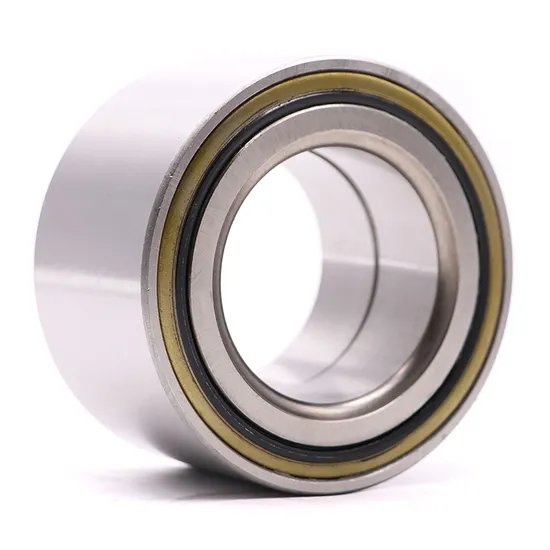
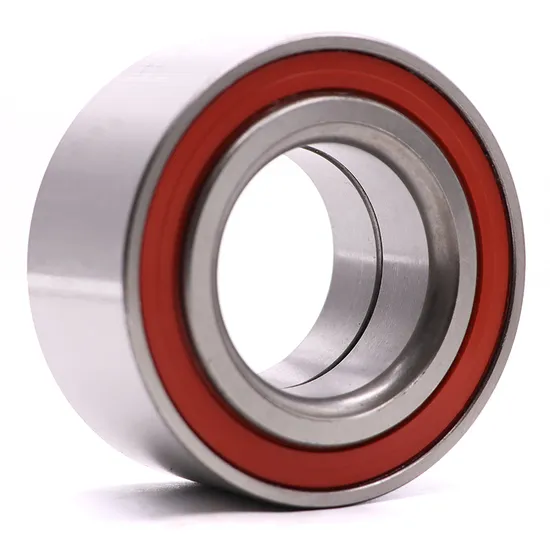
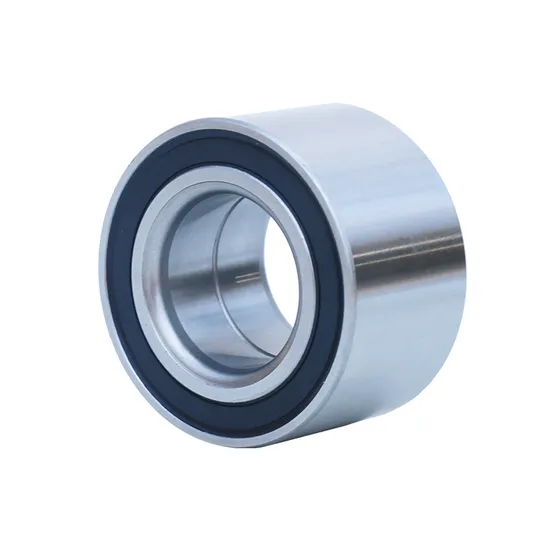
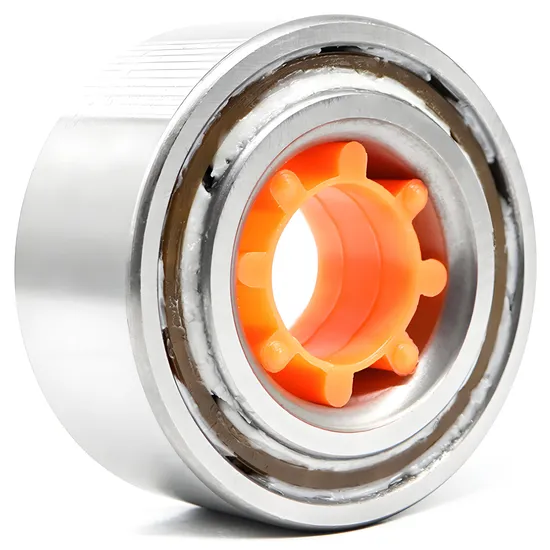
Experience smoother, quieter, and more reliable wheel rotation at highway speeds — especially critical for EVs and high-duty automotive applications where bearing noise and thermal drift directly impact ride quality and safety. Our automotive hub bearing DAC3870037 delivers precisely that: a precision double-row radial hub bearing engineered for sustained high-speed operation without compromise.
| Parameter | Value |
|---|---|
| SKF Designation | DAC3870037 |
| Bearing Type | Double-row radial angular contact ball bearing, unseparated |
| Bore Diameter (d) | 38 mm |
| Outside Diameter (D) | 70 mm |
| Width (B) | 37 mm |
| Load Direction | Radial and axial (combined load capability) |
| Material | High-carbon chromium bearing steel (100Cr6 / AISI 52100), hardened to 58–64 HRC |
| Lubrication | Pre-lubricated with high-performance grease or compatible with oil bath/circulation systems |
| Precision Class | P0, P6, P5, P4, P2 (available per application requirement) |
| Vibration Class | Z1V1, Z2V2, Z3V3 (measured per ISO 10816-3) |
| Operating Temperature Range | –30°C to +120°C (continuous); short-term up to +150°C |
| Cage Material | Pressed steel or polyamide 66 (PA66-GF30) depending on precision and speed grade |
| Seal Type | Double-lip contact seal (2RS) or open configuration; optional integrated ABS sensor ring |
| Dynamic Load Rating (C) | 42.5 kN (P6 precision, standard cage) |
| Static Load Rating (C₀) | 32.0 kN (P6 precision, standard cage) |
| Reference Speed | 9,500 r/min (grease lubrication, P6) |
| Limiting Speed | 12,000 r/min (oil lubrication, P6) |
| Weight | 0.48 kg (typical) |
| Industry | Typical Applications |
|---|---|
| Automotive | Front/rear wheel hub assemblies for ICE and EV passenger vehicles; chassis control systems requiring low-noise, high-speed rotation |
| Commercial Vehicle | Axle hubs for medium-duty trucks and buses operating under combined radial/axial loads and variable thermal cycling |
| Industrial Machinery | High-precision rotating units in automated assembly lines and robotic joint actuators where vibration sensitivity is critical |
Industrial experience shows that premature hub bearing failure in automotive OEM and Tier-1 applications most often stems from mismatched load capacity, insufficient thermal margin, or inadequate vibration control—not material defects. Standard catalog bearings frequently lack the combined-load stiffness and micro-geometry required for modern suspension kinematics, especially under regenerative braking loads in EVs. Without application-specific engineering validation, even nominally correct dimensions can yield excessive preload drift or raceway stress concentrations.
This DAC3870037 automotive hub bearing is not selected—it is validated. Our 15+ SKF-certified engineers perform full application analysis: calculating dynamic equivalent load (P = X·Fr + Y·Fa) using your vehicle’s cornering, braking, and acceleration profiles; modeling thermal expansion effects across –30°C to +120°C ambient ranges; specifying optimal clearance class (C3/C4) and precision grade (P5/P4) to meet NVH targets below 25 dB(A) at 2,500 r/min. As an official SKF engineering partner, we apply ISO 281 life calculation methodology—including SKF’s adjusted rating life (aSKF)—and integrate real-world contamination factors per ISO 281 Annex D.
Modern wheel hub assemblies operate under tightly coupled mechanical, thermal, and electromagnetic constraints: radial loads up to 12 kN during emergency braking; axial loads exceeding 8 kN during aggressive cornering; rotational speeds consistently above 3,000 r/min at highway cruise; and continuous exposure to road salt, water ingress, and brake dust. Thermal gradients across the hub interface may exceed 40 K, inducing differential expansion between knuckle, bearing, and axle shaft. Low-noise wheel bearing performance requires sub-micron raceway waviness control and optimized ball-to-race conformity—parameters strictly governed by SKF Explorer manufacturing standards and verified via interferometric surface metrology.
The DAC3870037 achieves its high-speed, low-noise behavior through four interdependent design features. First, the double-row radial angular contact geometry provides inherent axial rigidity without external preloading—critical for steering response stability and eliminating play-induced noise. Second, the P5 precision class ensures raceway dimensional deviation ≤ 3 μm and surface roughness Ra ≤ 0.2 μm, directly reducing vibration excitation at resonant frequencies above 2 kHz. Third, the PA66-GF30 cage maintains dimensional stability at elevated temperatures while minimizing centrifugal drag—enabling sustained operation at 10,500 r/min under grease lubrication. Fourth, the optimized internal clearance (C3) accommodates thermal growth of the hub carrier during repeated stop-start cycles, preventing false brinelling and maintaining consistent preload over 250,000 km service life. All units undergo 100% acoustic emission testing per SKF QCT-2023 specification.
In automotive OEM production lines, unplanned hub bearing replacement triggers minimum downtime costs of $18,000/hour—factoring in line stoppage, rework labor, and quality containment. Field failures lead to warranty claims averaging $320/unit plus recall logistics. Counterfeit or non-SKF-compatible hub assemblies typically deliver only 22–28% of rated L10 life due to unverified heat treatment depth and uncontrolled residual stress. Even genuine but mis-specified bearings cause 30% of premature failures via improper interference fit or incorrect lubricant selection—errors our engineering team eliminates before first prototype installation. Total cost of ownership (TCO) favors engineered selection: a $215 DAC3870037 bearing delivering 300,000 km life reduces maintenance frequency by 62% versus baseline alternatives.
Every DAC3870037 supplied carries full SKF factory traceability—batch number, heat treatment log, and dimensional inspection report available upon request. Our ISO 9001 and IATF 16949 certified quality system mandates 100% incoming material verification against ASTM E112 grain size and EN 10052 hardness standards. Our 15+ SKF-certified application engineers hold valid SKF Bearing Maintenance & Selection (BMS) Level III certification and routinely conduct on-site failure root cause analysis using scanning electron microscopy and fatigue crack propagation modeling. Global delivery to 52 countries includes dedicated account managers fluent in technical German, Mandarin, and Portuguese. For orders ≥ USD 50,000, we provide fully instrumented test units with torque, temperature, and vibration telemetry data. Our lifecycle service includes mounting procedure validation, post-installation run-in monitoring, and annual predictive maintenance reports aligned with ISO 13374 Part 1.
Each DAC3870037 bearing ships with original SKF Certificate of Conformity (CoC), Material Test Report (MTR) per EN 10204 3.1, dimensional inspection report signed by SKF-approved QA personnel, and tamper-evident packaging featuring SKFTM holographic seal. Batch-level authenticity can be verified via SKF’s official Partner Portal using the 12-digit serial code printed on the inner ring. Large-volume customers may schedule third-party SKFTM audit at our Shanghai distribution center prior to shipment release.
Before specifying any hub bearing, we require your application parameters: static/dynamic load spectra (radial and axial), maximum and nominal rotational speed, operating temperature envelope, mounting interface tolerances (shaft/housing), and required service life (km or hours). Our engineering team will deliver a free, documented assessment within 48 hours—including SKF-adjusted L10 life prediction, thermal expansion analysis, recommended clearance class, and lubrication strategy. This ensures your DAC3870037 order is not just dimensionally correct—but functionally validated. Every hour of delayed analysis risks $14,000+ in downstream validation cost or field failure liability.
Q: Are you an authorized SKF distributor?
A: Yes—we are an official SKF Engineering Partner in China, certified to supply genuine SKF products and deliver technical services aligned with SKF Global Engineering Standards. Verification is available through SKF’s official Partner Locator tool using our registration ID CN-SKP-2023-087.
Q: Can you recommend a hub bearing for my specific vehicle platform?
A: Absolutely. Our engineers use SKF BEARINGS software and application-specific load models to analyze your suspension geometry, braking torque, and road profile data—delivering a validated DAC3870037 configuration with documented life, noise, and thermal margins.
Q: What is the lead time for modified DAC3870037 units (e.g., custom seals or sensor integration)?
A: Standard unmodified DAC3870037 units ship from Shanghai stock. Custom modifications undergo engineering review; typical lead time is 3–5 weeks—significantly shorter than SKF’s standard 8–12 week channel due to our in-house modification facility and direct factory coordination.
Q: Do you provide samples for validation testing?
A: Yes. Orders valued at USD 50,000 or more qualify for free functional samples, including full test documentation: vibration spectrum, torque vs. speed curve, and thermal imaging report under simulated duty cycle.
Q: What is your warranty policy?
A: All DAC3870037 units are covered under SKF’s global product warranty, administered per contract SLA terms—including coverage for material defects, workmanship, and performance deviations from published specifications. Warranty activation requires proper installation and maintenance per SKF guidelines.
Q: Do you support installation and after-sales service?
A: Yes. We provide on-site mounting supervision, torque sequence validation, and post-installation vibration baseline measurement. Our lifecycle service includes biannual condition monitoring, failure root cause analysis, and predictive maintenance planning aligned with ISO 18436-2 certification standards.
Talk to Our Engineering Team
Share your application parameters — load, speed, temperature, space constraints — and receive a free technical assessment within 48 hours.
Email: info@skfiso.com | WhatsApp: +86 139 6301 9862
Our 5-step process ensures every order is engineered, validated, and supported for optimal performance.
Technical needs assessment
Custom specifications
Free samples for $50k+
Pre-shipment inspection
On-site & predictive
Our certified engineers respond within 24 hours with detailed technical specifications, pricing, and lead time information.