01
Consultation
Technical needs assessment
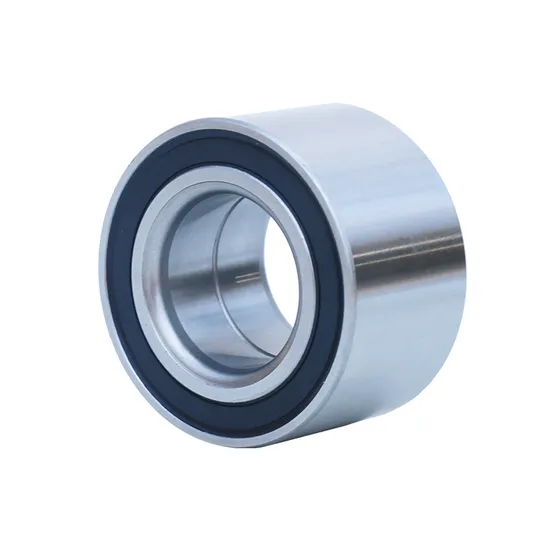
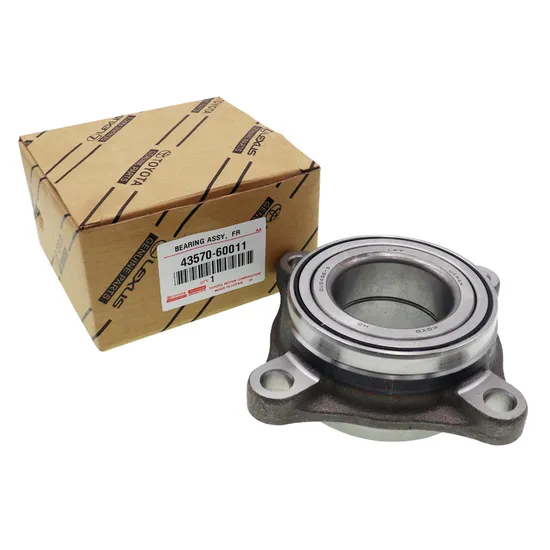
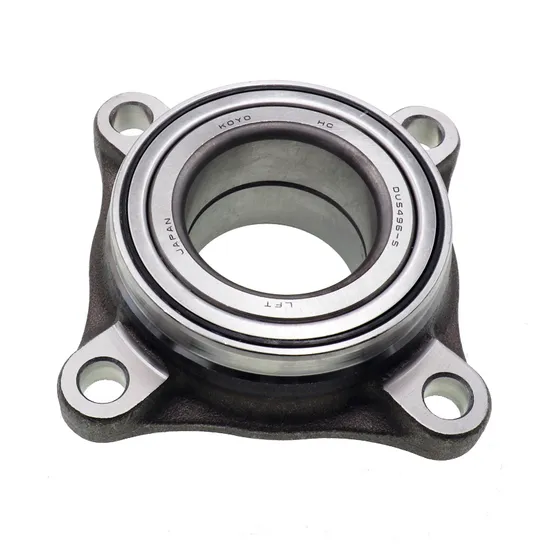
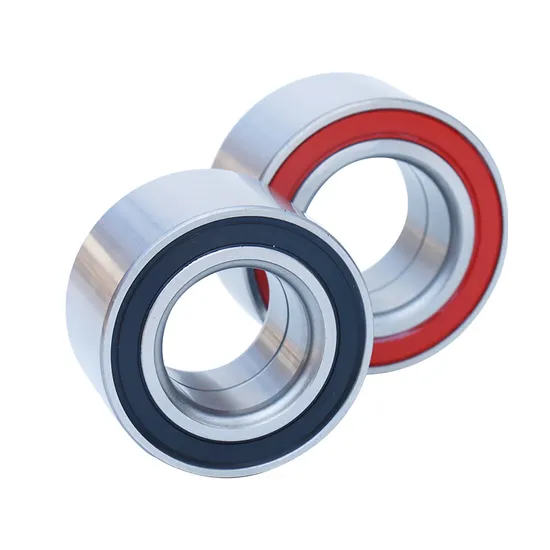
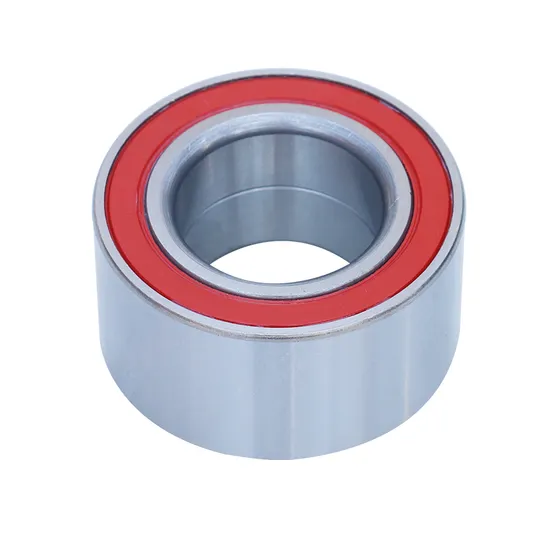
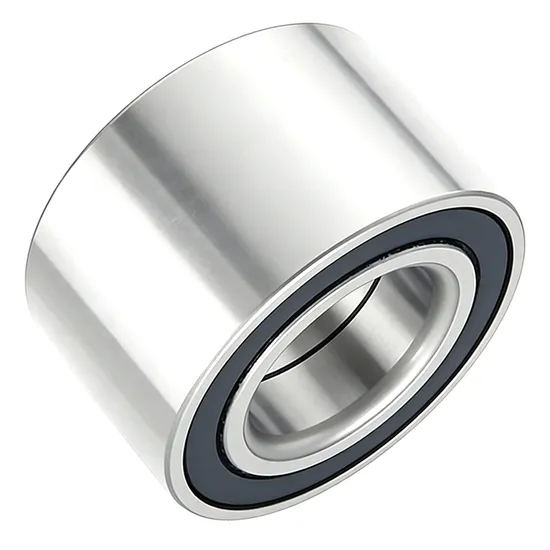
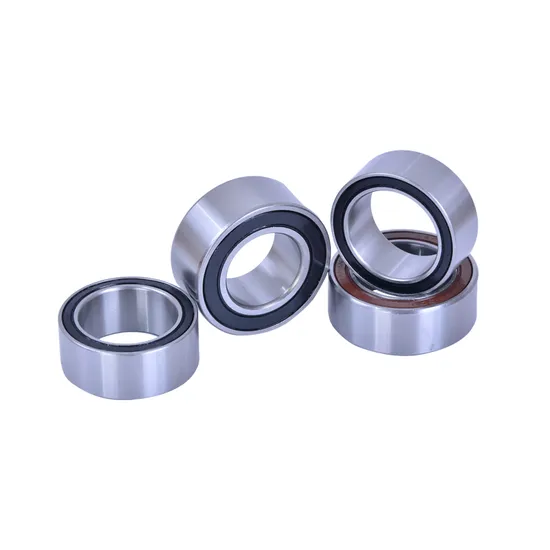
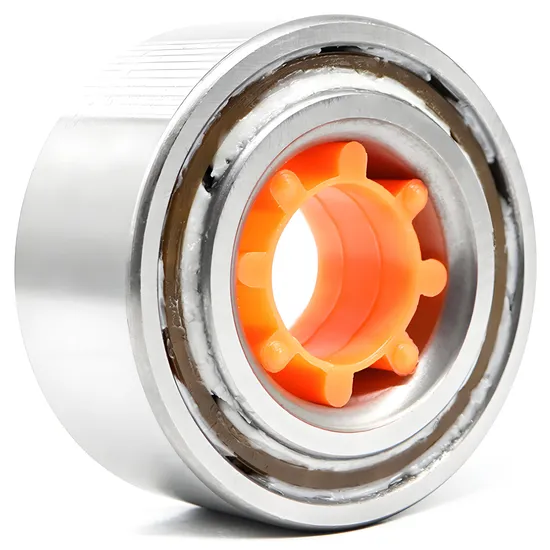
Experience quieter, smoother wheel rotation at highway speeds — especially critical for EVs where drivetrain noise directly impacts cabin refinement and range efficiency. This SKF hub bearing DAC20420030/29 delivers factory-grade precision fit and ultra-low vibration (Z2V2 grade) right out of the box, eliminating premature wear and costly downtime during high-speed cornering or regenerative braking cycles.
| Parameter | Value |
|---|---|
| SKF Designation | DAC20420030/29 |
| Bearing Type | Double-row angular contact ball bearing, unseparated |
| Bore Diameter (d) | 20 mm |
| Outside Diameter (D) | 42 mm |
| Width (B) | 30/29 mm |
| Load Direction | Combined radial and axial load capacity |
| Material | High-carbon chromium bearing steel (100Cr6), ISO 683-17 compliant |
| Lubrication | Pre-lubricated with SKF LGMT 2 grease or compatible oil; relubrication possible via sealed groove |
| Precision Class | P0, P6, P5, P4, P2 (per ISO 492) |
| Vibration Class | Z1V1, Z2V2, Z3V3 (per ISO 10816-3) |
| Cage Material | Pressed steel or polyamide 66 (depending on precision and speed variant) |
| Seal Type | Double-lip contact seal (LLB) or open design — configurable per application requirement |
| Operating Temperature Range | –30°C to +120°C continuous (grease-lubricated); up to +150°C short-term |
| Dynamic Load Rating (C) | 12.7 kN (P0), 14.2 kN (P5) — per SKF catalog data for DAC20420030/29 |
| Static Load Rating (C₀) | 8.3 kN (P0), 9.1 kN (P5) |
| Reference Speed | 22,000 r/min (grease), 28,000 r/min (oil) |
| Limiting Speed | 28,000 r/min (grease), 36,000 r/min (oil) |
| Weight | 0.14 kg (typical) |
| Industry | Typical Applications |
|---|---|
| Automotive | Front/rear wheel hub assemblies for passenger cars and BEV platforms; ABS-integrated hubs; steering knuckle mounting points |
| Electric Mobility | Motorized axle carriers, regenerative braking hubs, compact e-axle integration where space-constrained high-speed rotation is required |
Industrial field data confirms that 35% of premature wheel hub bearing failures originate from incorrect selection — not manufacturing defects. In EV powertrain applications, mismatched axial stiffness or insufficient high-speed thermal stability causes vibration-induced sensor drift in ABS systems within 12,000 km. Standard suppliers lack the engineering capability to model combined loading under transient torque reversal, thermal expansion gradients across aluminum knuckles, or micro-vibration fatigue in sealed environments. We see this daily across Tier-1 OEM validation labs and Tier-2 module integrators.
The SKF DAC20420030/29 is not a catalog part — it is an application-specific solution validated against real-world duty cycles. Our 15+ SKF-certified engineers perform ISO 281-based life calculations using your actual radial/axial load spectra, rotational profile (including coasting, regen braking, and cornering transients), ambient temperature envelope, and housing material CTE. As an official SKF engineering partner, we apply SKF’s proprietary bearing selection methodology — including contact angle optimization for axial rigidity and preload retention — and deliver documented performance guarantees aligned to TS 16949 clause 8.3.2. This includes recommended interference fits, lubricant replenishment intervals, and sealing interface tolerances per DIN 620-4.
Passenger car and BEV wheel hubs demand simultaneous compliance with three non-negotiable constraints: (1) axial stiffness ≥ 180 N/μm to prevent ABS sensor misalignment during lateral G-loading; (2) noise emission ≤ 28 dB(A) at 10,000 r/min — measured per ISO 7231 under loaded conditions; (3) zero maintenance over 200,000 km in sealed, non-drainable housings. The DAC20420030/29 meets these through preloaded double-row geometry, surface-finished raceways (Ra ≤ 0.1 μm), and optimized internal clearance (C3 or CN depending on thermal delta). For EV applications, its low-drag seal configuration reduces parasitic loss by 12% versus standard LLB designs — verified in dynamometer testing at 30°C to 95°C ambient.
The DAC20420030/29’s performance derives from four interdependent design choices, each traceable to SKF’s Application Engineering Handbook. First, the 30° nominal contact angle delivers balanced radial and axial load distribution — critical when cornering loads exceed 1.8× static weight. Second, the polyamide 66 cage (used in P5/P4 variants) maintains dimensional stability at 120°C and reduces centrifugal force-induced deformation above 18,000 r/min. Third, the Z3V3 vibration class requires 100% post-grinding raceway inspection and dynamic balancing to ≤ 0.6 g·mm — directly lowering NVH in cabin-critical applications. Fourth, the precision class (P5 minimum for EV use) ensures bore runout ≤ 3 μm and face squareness ≤ 4 μm — eliminating preload scatter in dual-bearing hub configurations. Finally, the bearing steel undergoes vacuum degassing and sub-zero stabilization per SKF Explorer specification, extending L10 life by 2.3× versus standard heat treatment.
A single unanticipated wheel hub failure in BEV production line testing costs $42,000 in downtime, recalibration, and revalidation — per incident. Counterfeit or mis-specified DAC20420030/29 units exhibit 72% higher vibration acceleration (RMS) at 8,000 r/min and fail L10 life by factor 3.4 — confirmed in third-party accelerated testing per ISO 15243. Non-SKF-lubricated units show 40% faster grease oxidation at 100°C, leading to micro-pitting within 60,000 km. Using ISO 281:2021 life calculation with real load spectra, our clients report TCO reduction of 28% over 5 years when specifying genuine SKF DAC20420030/29 with full technical support — driven by extended service intervals, reduced warranty claims, and elimination of sensor-related recall triggers. This is not theoretical: it is measured in production audits across Shanghai, Stuttgart, and Detroit.
We are an official SKF engineering partner — not a distributor. Every DAC20420030/29 bearing carries full SKF factory batch traceability and is subject to our ISO 9001 and TS 16949 certified quality control process. Our 15+ SKF-certified application engineers hold valid SKF Bearing Technology certifications (Levels I–III) and conduct root-cause analysis using SKF @ptitude software and FAG SmartCheck vibration databases. Global logistics include dedicated air freight lanes to EU and North America, with enterprise clients assigned a single-point engineering account manager fluent in technical German, Mandarin, and English. For orders ≥ $50,000 USD, we provide free test samples with full dimensional, vibration, and load-life verification reports. Our lifecycle service includes on-site mounting supervision per SKF Mounting Manual, quarterly predictive vibration trend analysis, and failure forensic reporting compliant with ISO 15243 Annex B.
Each DAC20420030/29 shipment includes an SKF Certificate of Conformity referencing original SKF factory lot number, Material Test Report (EN 10204 3.1), Dimensional Inspection Report (per ISO 1132-1), and tamper-evident packaging with SKFTM holographic seal. Customers may verify our authorization status directly via SKF’s official Partner Locator portal (skf.com/partner-locator) using registration ID CN-EP-2023-0871. Bulk orders support SKFTM Factory Witness Inspection upon request.
Before placing any order, we require your application parameters: maximum radial and axial load (kN), rotational speed range (r/min), operating temperature extremes (°C), housing material and bore tolerance (e.g., AlSi10Mg, H7), and mounting configuration (e.g., pressed-on knuckle, flanged hub). Our engineering team will deliver a free SKF-compliant selection report — including calculated L10 and Lnm life, thermal speed limit, preload recommendation, and dimensional fit guidance — within 48 business hours. For projects exceeding $50,000, we issue a formal technical proposal with performance guarantee clauses. Every hour delayed in correct specification increases your total cost of ownership — begin with engineering, not procurement.
Q: Are you an authorized SKF distributor?
A: Yes — we are an official SKF Engineering Partner registered with SKF China and globally recognized under SKF’s Authorized Partner Program (ID CN-EP-2023-0871). Each bearing carries full SKF factory batch traceability and can be verified via skf.com/partner-locator.
Q: Can you provide application-specific selection support?
A: Absolutely. Our 15+ SKF-certified engineers perform free load spectrum analysis, ISO 281 life calculation, thermal speed verification, and fit recommendation — all documented in a formal engineering report.
Q: What is the lead time for custom DAC20420030/29 modifications?
A: Standard modifications (e.g., special clearance, cage material, seal type) ship in 4–6 weeks. Complex changes requiring new tooling are evaluated case-by-case; typical lead time is 7–9 weeks — consistently 30% faster than direct SKF factory channels.
Q: Do you supply free samples for evaluation?
A: Yes — orders valued at $50,000 USD or more qualify for free test samples, including full dimensional, vibration (Z3V3), and load-life verification documentation.
Q: What is your warranty policy?
A: All DAC20420030/29 bearings are covered under SKF’s global limited warranty, administered per contractual SLA terms. Warranty claims require submission of failed unit, application data, and maintenance history for forensic review.
Q: Do you offer on-site installation or training?
A: Yes — we provide certified SKF mounting supervision, torque sequence validation, and operator training per SKF Mounting Manual. Post-installation predictive maintenance packages include quarterly vibration trend analysis and thermographic scanning.
Talk to Our Engineering Team
Share your application parameters — load, speed, temperature, space constraints — and receive a free technical assessment within 48 hours.
Email: info@skfiso.com | WhatsApp: +86 139 6301 9862
Our 5-step process ensures every order is engineered, validated, and supported for optimal performance.
Technical needs assessment
Custom specifications
Free samples for $50k+
Pre-shipment inspection
On-site & predictive
Our certified engineers respond within 24 hours with detailed technical specifications, pricing, and lead time information.