01
Consultation
Technical needs assessment


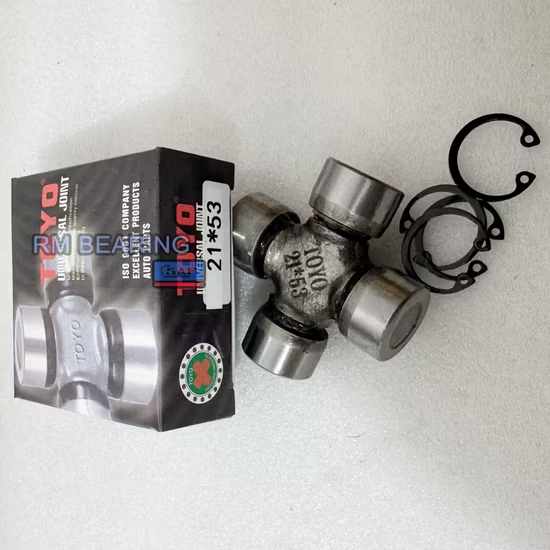
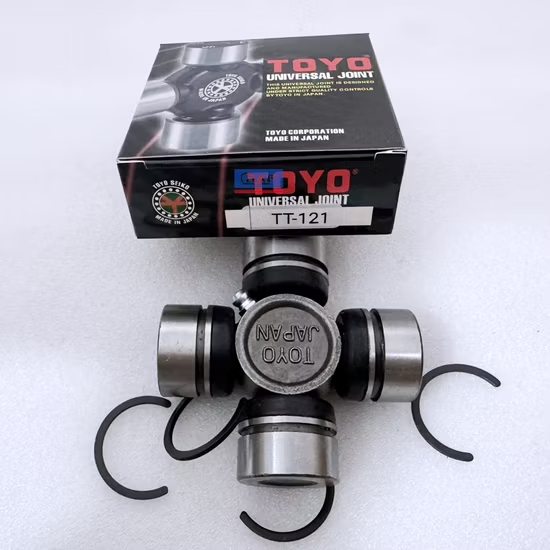
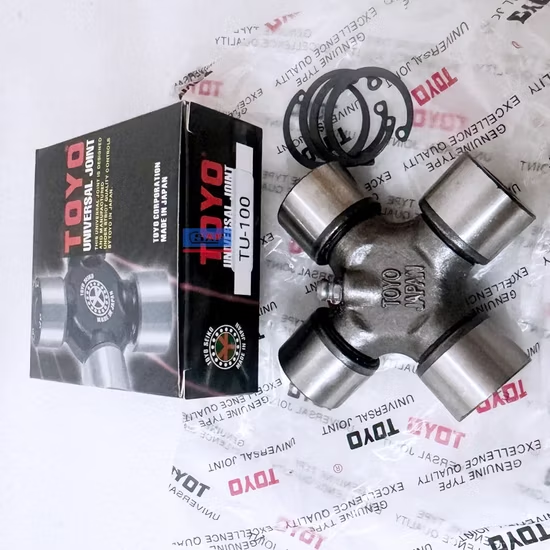
Universal Joint Cross Bearing for Automotive and Construction Machinery — ISO-certified components engineered for high-torque tractor and rolling equipment applications.
Multi-Brand Sourcing Consolidated — A single purchase order covers SKF, NSK, and KOYO cross bearings without juggling multiple vendors.
| Parameter | Value |
|---|---|
| Product Type | Universal Joint Cross Bearing |
| Material | Available in stainless steel or standard bearing steel variants |
| Certification | ISO |
| Application | Automotive, Tractor, Construction Machinery, Rolling equipment |
| Origin | Germany, Japan, Sweden, Malaysia, China |
| Customization | Available |
| Industry | Typical Applications |
|---|---|
| Automotive | Driveline propeller shafts and steering column U-joints |
| Agricultural Machinery | Tractor PTO shafts and heavy-duty implement linkages |
| Construction Equipment | Articulation joints in wheel loaders and excavator booms |
| Rolling Mills | Drive shaft couplings and transfer table mechanisms |
Misaligned cross references destroy U-joint reliability long before the driveline shaft yields.
Sourcing replacement U-joints based solely on base dimensions often overlooks critical internal clearances and seal configurations. When a standard clearance cross is forced into a high-temperature PTO application, thermal expansion eliminates the internal gap, leading to catastrophic needle binding. We frequently see aftermarket clones with soft inner rings and cloned QR codes pass casual visual checks, only to spall under heavy torque . Working with a meticulous universal joint cross bearing supplier ensures the exact OEM structural specifications are matched, preventing unplanned downtime in the field.
Selecting the right cross requires analyzing the specific oscillation angles and torque spikes inherent to the equipment. Our engineering team reviews the exact operating envelope to recommend the optimal needle profile and cup thickness. As a specialized universal joint cross bearing supplier, we align the internal geometry with the actual driveline loads rather than just matching the outer cap diameter.
Heavy equipment U-joints endure severe shock loads and constant exposure to abrasive silica dust or corrosive mud. The oscillating motion prevents a full hydrodynamic lubrication film from forming, making boundary lubrication and seal integrity critical . Inadequate lip seals allow grit to infiltrate the needle clusters, accelerating wear and causing cross journal galling under peak torque conditions.
The operating environment dictates whether standard high-carbon bearing steel or stainless variants are required for the cross and needle assemblies. Stainless options provide substantially higher resistance to washdown chemicals and saline exposure in marine or agricultural settings. Selection depends heavily on the trade-off between maximum dynamic load capacity and the necessity for corrosion resistance in the specific machinery envelope.
Installing a dimensionally correct but internally mismatched U-joint cross voids equipment warranties and triggers cascading driveline damage. According to ISO 15243 frameworks, improper internal clearance in oscillating joints rapidly escalates from surface distress to complete cage fragmentation . This premature failure often damages the mating yokes, turning a simple bearing swap into a costly assembly rebuild.
We verify every cross reference against the exact OEM part number to ensure the internal needle count and seal lip designs match the original equipment. Our batch traceability guarantees that the metallurgical properties of the cross journals meet the manufacturer's original heat treatment specifications. We provide full documentation for mixed-brand orders, eliminating the guesswork when sourcing obsolete or hard-to-find U-joint configurations.
Provide the exact OEM equipment number, yoke dimensions, and maximum articulation angles so our technical team can determine the precise cross configuration. Sharing details about the operating environment, such as exposure to washdowns or extreme dust, allows us to recommend the most suitable material variant. This technical review ensures the supplied U-joint components perfectly match your driveline requirements.
Q: How do we determine the exact U-joint cross model from an OEM number?
A: We cross-reference the OEM equipment number against manufacturer catalogs to identify the precise cap diameter, cross width, and retention method. This ensures the internal needle profile and seal types match the original design, avoiding the common pitfall of selecting a dimensionally similar but structurally inadequate replacement.
Q: What causes premature failure in heavy-duty universal joint bearings?
A: Premature failure typically stems from inadequate sealing allowing abrasive contamination, or incorrect internal clearance causing needle binding under thermal expansion. High shock loads combined with poor lubrication intervals also accelerate surface fatigue and journal galling in oscillating applications.
Q: Should we choose stainless steel or standard bearing steel for our U-joints?
A: Standard bearing steel offers superior load capacity for heavy torque applications, while stainless variants are essential for environments involving frequent chemical washdowns or high moisture. The choice depends on balancing the maximum dynamic load requirements against the severity of the corrosive exposure.
Q: How can we source authentic replacements for discontinued OEM U-joints?
A: We utilize cross-brand interchange expertise to match the exact structural specifications, including seal design and needle geometry, across authorized global brands. This ensures you receive a fully traceable, functionally identical component even when the original manufacturer's specific part number is obsolete.
Our 5-step process ensures every order is engineered, validated, and supported for optimal performance.
Technical needs assessment
Custom specifications
Free samples for $50k+
Pre-shipment inspection
On-site & predictive
Our certified engineers respond within 24 hours with detailed technical specifications, pricing, and lead time information.