01
Consultation
Technical needs assessment
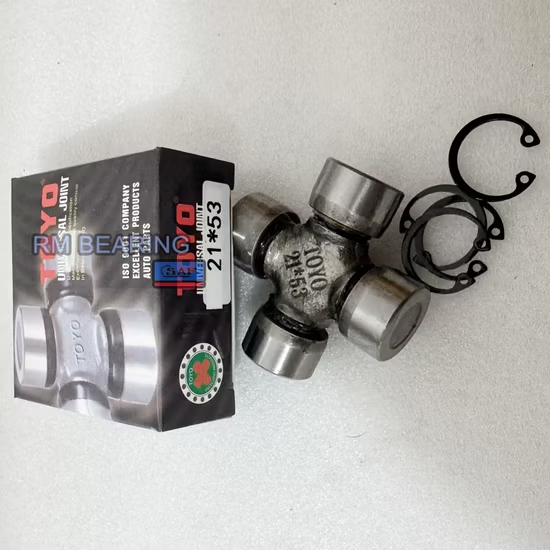
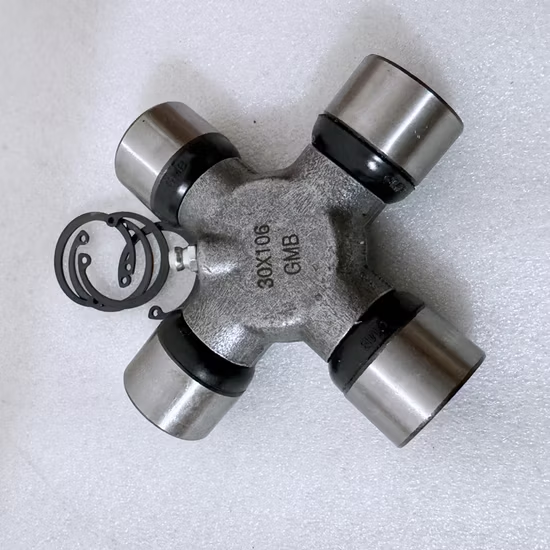


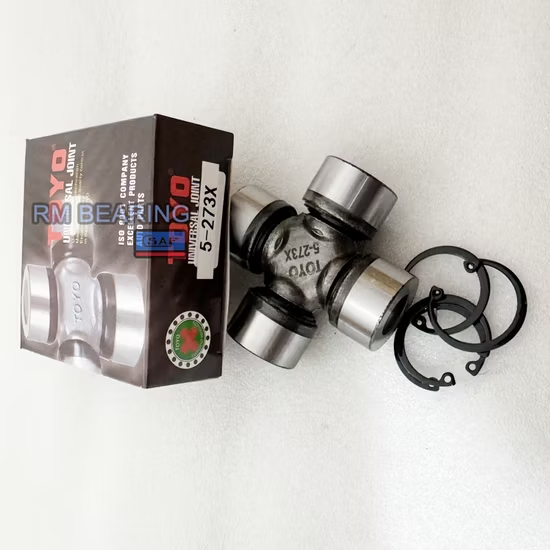

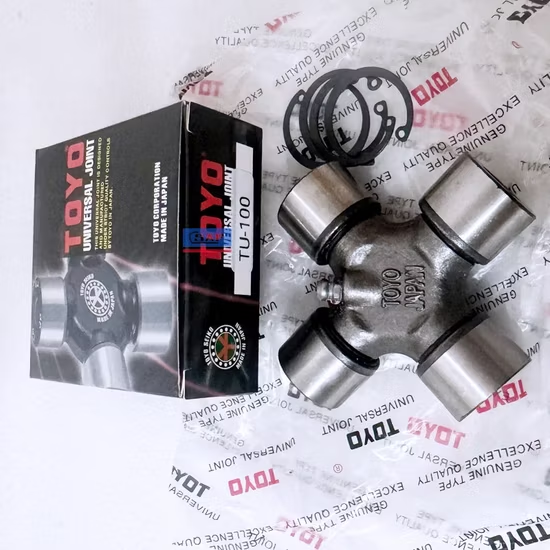
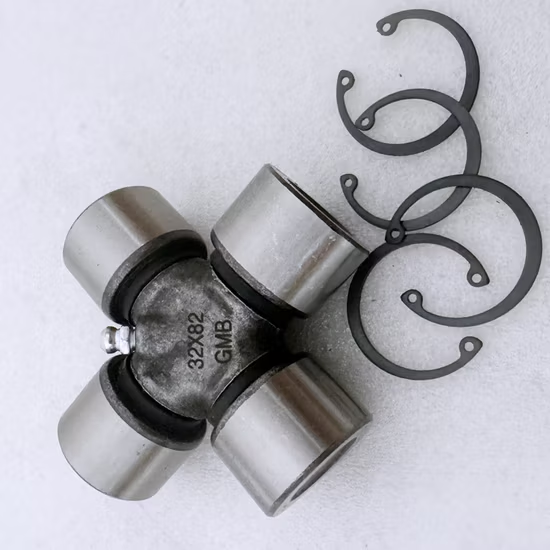
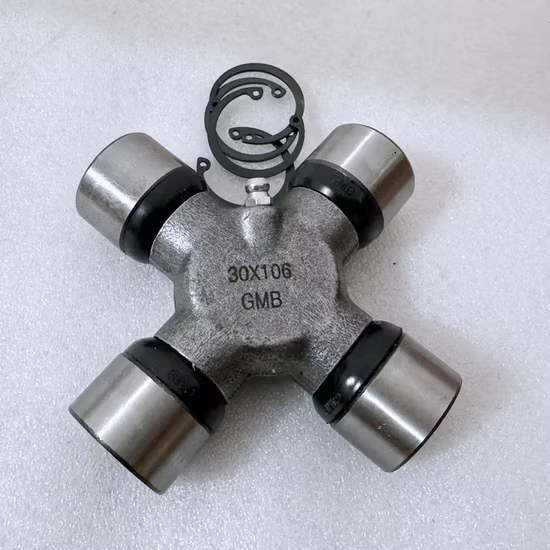
Gun30 Universal Joint Cross Bearing — precision-manufactured U-joint cross for automotive drivetrains, tractors, and construction machinery requiring accurate journal tolerances under variable torque loads.
Verify authenticity instantly by scanning the QR code through the manufacturer's official app to detect cloned markings before installation.
Original Batch Traceability — Every Gun30 unit ships with manufacturer lot documentation for complete supply chain verification.
| Parameter | Value |
|---|---|
| Designation | Gun30 |
| Bearing Type | Universal Joint Cross Bearing (U-Joint Bearing) |
| Material | Available in high-carbon chromium bearing steel or stainless steel variants |
| Structure | Single |
| Certification | ISO |
| Quality | High Precision |
| Origin | Germany / Japan / Sweden / Malaysia / China |
Note: Cross-reference part numbers such as 37125-85461, Uj115, N3092, and Gun-30 are unverified suffixes requiring manufacturer catalog confirmation.
| Industry | Typical Applications |
|---|---|
| Automotive | Car wheel hubs and heavy-duty drivetrain propeller shafts |
| Agriculture | Tractor PTO shafts and heavy-load steering linkages |
| Construction | Excavator swing mechanisms and loader articulation joints |
Visual inspection rarely reveals the soft inner rings or cloned QR codes that cause catastrophic torque failure.
In the Dubai auto parts market, I have seen countless universal joints fail prematurely simply because the cross-reference ignored critical suffix details. One batch matched the base number perfectly, but the cage material was wrong, leading to structural fracture and seizure under high-torque wheel hub conditions. Relying on casual visual checks leaves fleets vulnerable to cloned components that pass superficial inspections but lack the metallurgical integrity required for continuous rotational stress .
Selecting the correct Gun30 universal joint cross bearing requires looking past the basic designation to ensure the internal geometry matches the specific torque and oscillation profiles of the application. Our technical team reviews the exact OEM equipment parameters to verify that the cross journal tolerances and needle bearing clearances align with the operational demands of wheel hubs and articulation joints. This application-based selection review prevents the dimensional mismatches that typically cause binding during high-angle steering or heavy-load articulation.
Drivetrain components endure severe combined loading, where sudden torque spikes and reversing axial forces constantly test the cross journal's fatigue limit. Elevated operating temperatures generated by continuous friction can degrade standard lubricants, making the initial grease fill and seal integrity critical for long-term survival. In dusty construction or agricultural environments, seal friction must be balanced against contamination ingress, as microscopic debris rapidly accelerates needle bearing wear. Proper installation alignment is equally vital, as even minor angular misalignment during assembly introduces localized stress concentrations that drastically shorten service life .
The internal design of a universal joint cross bearing dictates its performance under varying torque loads, particularly regarding the needle roller profile and cage retention. While standard high-carbon chromium bearing steel provides the necessary core hardness for most drivetrain applications, stainless steel variants are available for environments with high moisture or corrosive agricultural chemicals. The precision of the cross journal grinding directly influences rotational smoothness, ensuring that the needle bearings distribute the radial loads evenly across the trunnion. High-precision manufacturing tolerances prevent the micro-sliding friction that leads to premature cross journal wear and eventual drivetrain vibration.
Installing a component that matches the base number but ignores internal design variations inevitably leads to unplanned downtime and catastrophic drivetrain damage. A mismatched cage material or incorrect needle roller profile will fail to handle the specific shock loads of heavy vehicle repair applications, resulting in sudden seizure. According to ISO 15243 frameworks, such premature failures are frequently classified as material fatigue or geometric overload, which immediately voids equipment warranties. The financial impact extends far beyond the replacement part, encompassing secondary damage to the propeller shaft, yoke, and wheel hub assemblies .
We provide authorized coverage across all major international bearing brands, allowing a single order to fulfill mixed-brand requirements for complex fleet maintenance. Our cross-reference matching goes beyond the base designation, verifying clearance, cage material, and precision suffixes to prevent the thermal binding common in improperly substituted wheel hub parts. Every shipment includes batch traceability to the manufacturer, ensuring that the metallurgical properties match the original equipment specifications. Furthermore, our technical selection review covers load, speed, and temperature parameters to confirm the chosen component is genuinely suited for the target application.
To ensure the selected component perfectly matches your drivetrain requirements, please provide the specific radial and axial loads, operating speeds, and maximum articulation angles. Sharing the exact OEM equipment numbers allows our engineering team to perform a comprehensive cross-reference verification and L10 life calculation. Detailing the environmental conditions, such as exposure to corrosive elements or heavy particulate contamination, helps us determine the optimal material variant and seal configuration for your application.
Q: How can I verify the authenticity of the universal joint cross bearings?
A: Authenticity is verified through original manufacturer batch traceability and QR codes that must be scanned using the brand's official mobile application. This process detects cloned codes often found on counterfeit products with soft inner rings, ensuring the metallurgical integrity required for heavy-duty drivetrain applications.
Q: What are the critical parameters beyond the base part number?
A: Beyond the base designation, it is crucial to verify the internal cage material, needle roller profile, and specific clearance class. Overlooking these details during cross-referencing often results in components that fit physically but fail prematurely under high-torque conditions due to thermal binding or structural fracture.
Q: How do I identify counterfeit U-joints with soft inner rings?
A: Counterfeit U-joints often feature soft inner rings that pass casual visual inspection but lack the required core hardness. Identifying them requires reviewing the material test reports and performing hardness checks, as these substandard components will rapidly deform and cause catastrophic drivetrain failure under heavy operational loads.
Q: How do I match OEM part numbers to standard bearing designations?
A: Matching OEM part numbers requires verifying the exact dimensional envelope, cross journal tolerances, and seal configurations against the manufacturer's official catalog. Our technical team reviews these parameters to ensure the cross-referenced component provides an exact structural match for the original wheel hub or drivetrain assembly.
Our 5-step process ensures every order is engineered, validated, and supported for optimal performance.
Technical needs assessment
Custom specifications
Free samples for $50k+
Pre-shipment inspection
On-site & predictive
Our certified engineers respond within 24 hours with detailed technical specifications, pricing, and lead time information.