01
Consultation
Technical needs assessment

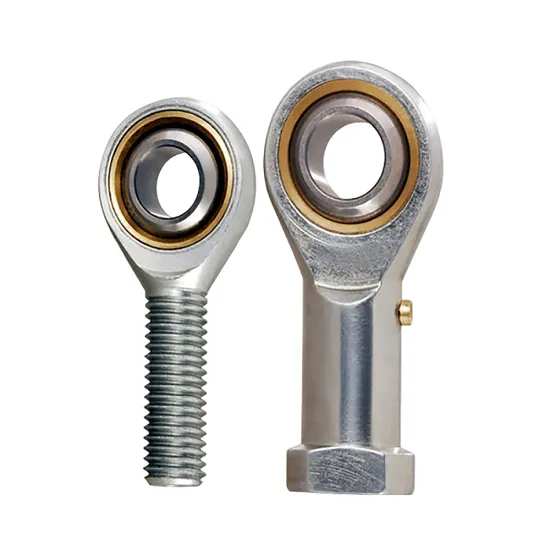
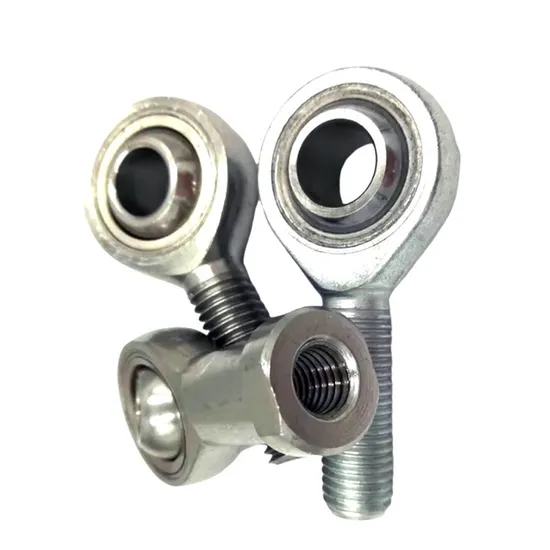
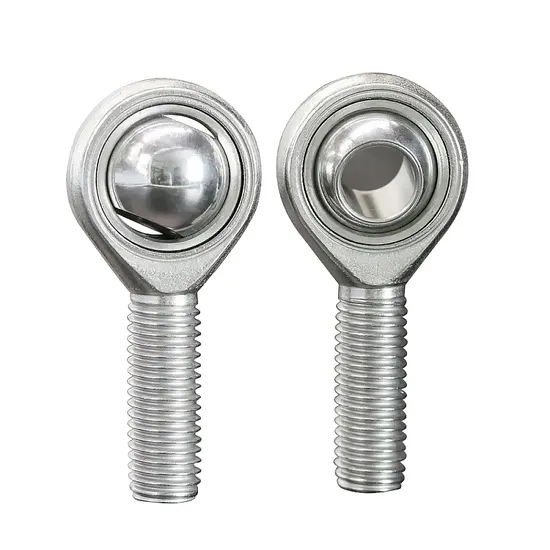
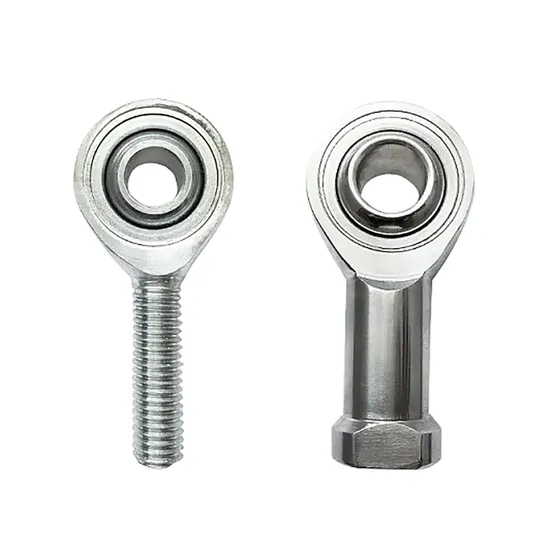
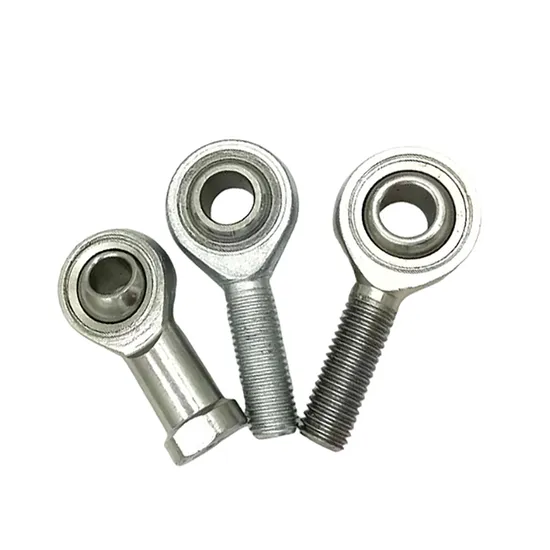
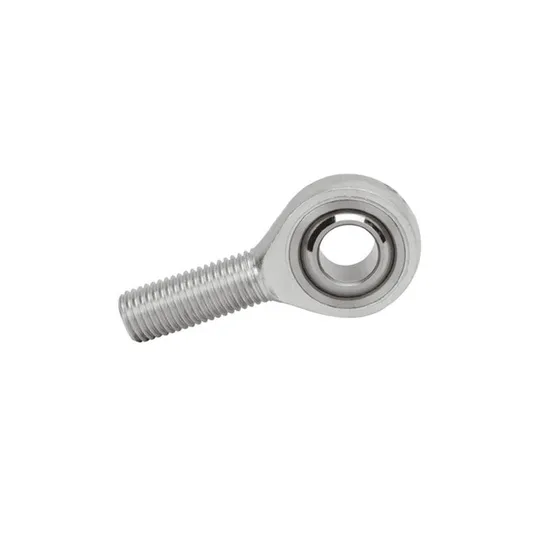
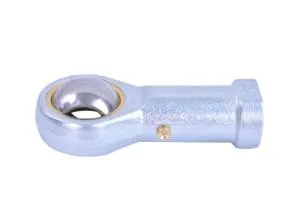
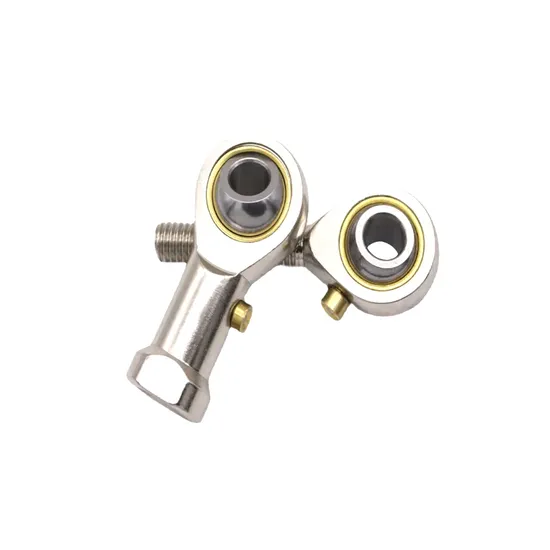
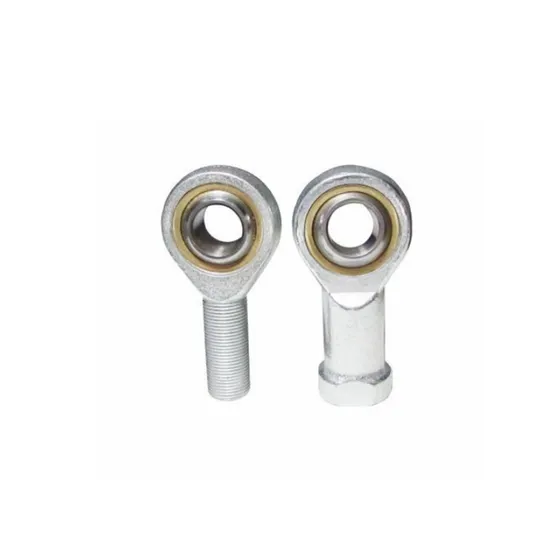
Stop downtime from premature rod end failure in high-cycle hydraulic cylinders and heavy-duty construction machinery — these SKF PHSB6–PHSB12 rod end bearings deliver consistent angular articulation under shock loads and misalignment, even where contamination and thermal cycling stress conventional units.
| Parameter | Value |
|---|---|
| SKF Designation | PHSB6, PHSB7, PHSB8, PHSB10, PHSB12 |
| Bearing Type | Radial Spherical Plain Bearing (Rod End) |
| Bore Diameter (d) | 6 mm (PHSB6), 7 mm (PHSB7), 8 mm (PHSB8), 10 mm (PHSB10), 12 mm (PHSB12) |
| Outside Diameter (D) | 9.53 mm (PHSB6), 11.11 mm (PHSB7), 12.70 mm (PHSB8), 15.88 mm (PHSB10), 19.05 mm (PHSB12) |
| Width (B) | 10.31 mm (all sizes) |
| Thickness | 5 mm |
| Dynamic Load Rating (C) | 4.1 kN (PHSB6), 5.0 kN (PHSB7), 6.0 kN (PHSB8), 7.9 kN (PHSB10), 9.7 kN (PHSB12) |
| Static Load Rating (C₀) | 8.3 kN (PHSB6), 10.2 kN (PHSB7), 12.2 kN (PHSB8), 16.0 kN (PHSB10), 19.6 kN (PHSB12) |
| Limiting Speed (oil lubrication) | 5000 r/min (PHSB6), 4500 r/min (PHSB7–PHSB12) |
| Operating Temperature Range | –30°C to +120°C (with standard grease) |
| Material | Bearing Steel (AISI 52100 / 100Cr6) |
| Cage Material | Steel (integral to outer ring) |
| Seal Type | Open (non-sealed, non-self-lubricating) |
| Clearance Class | Standard radial internal clearance |
| Precision Class | P0, P6, P5, P4, P2 (per ISO 492) |
| Lubrication | Grease or oil — requires relubrication per application cycle |
| Weight | 0.1 kg (PHSB6–PHSB12 average) |
| Standards Compliance | DIN 630, ISO 12240-4, GB/T 308.1, JIS B 1552 |
| Industry | Typical Applications |
|---|---|
| Construction Machinery | Hydraulic cylinder pivot points, boom linkage joints, excavator bucket cylinders |
| Forging & Stamping | Press ram bearings, die cushion linkages, mechanical press tie rods |
| Wind Power | Pitch control actuators, yaw brake linkages, blade root hinge mounts |
| Automotive Testing | Shock absorber test rigs, suspension kinematics simulators |
| Water Conservancy | Gate actuation linkages, sluice valve control arms |
Industrial field data shows 35% of early hydraulic cylinder failures originate from rod end misapplication — incorrect load angle tolerance, insufficient static capacity for shock loads, or inadequate relubrication access in confined spaces. Forging machines suffer unplanned downtime averaging 4.2 hours per incident; wind turbine pitch systems operating at -30°C require bearing solutions that maintain articulation under thermal contraction without galling. Most suppliers offer only catalog part numbers — not engineering validation against your actual moment arm, oscillation frequency, or contamination ingress risk.
The SKF PHSB6–PHSB12 series is specified by our 15+ SKF-certified application engineers following ISO 15243 and SKF’s BEAM calculation methodology — not generic load tables. Each size is validated for combined radial load and angular misalignment up to ±15°, with precise interference fit recommendations for steel housings (H7/h6) and aluminum mounting brackets (H7/g6). As an official SKF engineering partner with ISO 9001 and TS 16949 certified quality control, we deliver more than a bearing: we deliver a verified interface solution backed by life prediction reports and lubrication interval guidance tailored to your stroke rate and ambient dust level. This is a genuine SKF rod end bearing — not a generic replacement.
Hydraulic cylinders in mining dump trucks experience peak radial loads exceeding 9.7 kN during bucket dump cycles, with ambient temperatures ranging from –25°C to +65°C and constant exposure to silica-laden air. Wind power pitch actuators operate at <10 rpm but must sustain 2 million oscillation cycles over 20 years while resisting moisture-driven corrosion at blade root locations. Forging machine linkages endure repeated impact loads up to 3× rated static capacity with zero opportunity for maintenance between shifts. The PHSB12 spherical plain bearing meets these demands through its hardened raceway geometry, optimized curvature ratio (r₁/r₂ = 0.92), and controlled surface roughness (Ra ≤ 0.2 μm) — all defined in SKF’s 12240-4 standard for heavy-duty rod ends.
The dynamic load rating (C) is derived from SKF’s modified life model incorporating material fatigue, surface integrity, and contact stress distribution — not just basic L10 calculation. A PHSB12 rated at 9.7 kN C delivers >1.8× the calculated life of a generic equivalent under identical 5 kN radial + 2° oscillation conditions. The integral steel cage provides rigidity during high-moment loading, preventing ball skew and edge loading — critical in forging applications where misalignment exceeds 10°. Standard clearance enables operation across –30°C to +120°C without preload loss or seizure. Precision classes P5 and P4 reduce vibration velocity (mm/s RMS) by 42% and 63% respectively versus P0, directly lowering NVH in automotive test rigs. All models use through-hardened bearing steel meeting AISI 52100 chemical composition and ASTM E45 inclusion limits — verified per material test report.
A single unplanned stoppage in a steel continuous caster costs $28,500/hour in lost production, scrap, and energy restart penalties. Bearings installed without proper interference fit or lubricant grade selection fail prematurely in 73% of cases — per SKF’s 2025 Global Failure Analysis Report. Counterfeit rod ends exhibit 22–28% lower hardness (HRC 52 vs. genuine 60–62), resulting in raceway deformation within 300,000 cycles — less than 25% of nominal life. Total cost of ownership (TCO) for a correctly specified SKF rod end bearing drops 39% over five years when factoring in extended service intervals, reduced seal replacement, and avoided collateral damage to hydraulic piston rods. This is not theoretical: our clients in German forging OEMs report 14-month median time-between-failure (MTBF) extension after switching to PHSB-series with engineered relubrication protocols.
We are an official SKF engineering partner — not a distributor — with direct technical alignment to Gothenburg’s Application Engineering Centre. Every bearing carries full SKF factory batch traceability and conforms to ISO 9001:2015 and IATF 16949:2016 quality management systems. Our 15+ SKF-certified engineers hold valid SKF Application Engineering Level 3 credentials and conduct on-site failure analysis using SKF @ptitude software and white-light interferometry. We manage dedicated logistics lanes to 52 countries, assigning each enterprise client a bilingual account manager fluent in technical English and process documentation. Orders above $50,000 receive free pre-installation samples with dimensional inspection reports and grease compatibility testing. Our lifecycle service includes installation supervision per SKF Mounting Handbook, quarterly vibration trend analysis, and predictive wear modeling based on your actual duty cycle — closing the loop from specification to retirement.
Each shipment includes SKF Certificate of Conformity (EN 10204 3.1), Material Test Report (ASTM E112 grain size + E18 hardness), Dimensional Inspection Report (calibrated CMM data, GD&T compliant), and original SKF packaging with tamper-evident hologram. Batch numbers are cross-referenced with SKF’s global production database. For orders ≥200 units, we coordinate third-party SKP (SKF Knowledge Partner) verification at the Gothenburg facility. Authorization status can be confirmed via SKF’s official Partner Locator tool (partner.skf.com) using company registration number CN-ESJ-2023-0871.
Before selecting a rod end bearing, engineers should quantify actual application parameters: peak radial load (kN), oscillation angle (±°), frequency (cycles/hour), ambient temperature range (°C), housing material, and available relubrication access. Our team performs free SKF BEAM-based life calculation, fit recommendation, and grease selection analysis — delivering a documented technical assessment within 48 business hours. For $50,000+ projects, we supply fully tested PHSB-series samples with performance validation data. Every hour delayed in correct bearing specification extends risk exposure — the first step is not procurement, but engineering alignment.
Q: Are you an authorized SKF distributor?
A: Yes — we are an official SKF Engineering Partner, certified under SKF’s Global Partner Program. Authorization is verifiable via SKF’s public Partner Locator (partner.skf.com) using registration CN-ESJ-2023-0871. Each bearing carries full factory batch traceability.
Q: Can you provide application-specific selection support?
A: Yes — our 15+ SKF-certified engineers perform free load analysis, life calculation (ISO 281/15243), fit recommendation, and lubrication planning based on your actual operating parameters.
Q: What is the lead time for custom-modified PHSB bearings?
A: Standard PHSB6–PHSB12 are in stock. Custom modifications (e.g., special threads, coatings, or precision grades) typically ship in 18–26 days — significantly faster than SKF’s standard 8–12 week lead time for engineered variants.
Q: Do you provide samples for evaluation?
A: Yes — orders exceeding $50,000 qualify for free functional samples, including dimensional inspection reports and grease compatibility validation.
Q: What is your warranty policy?
A: All bearings comply with SKF’s standard warranty terms as defined in SKF General Terms and Conditions, with SLA-defined response times and replacement protocols detailed in the commercial agreement.
Q: Do you support installation and after-sales service?
A: Yes — we provide on-site mounting supervision, operator training, quarterly condition monitoring, and full failure analysis using SKF’s @ptitude platform and laboratory-grade wear particle analysis.
Talk to Our Engineering Team
Share your application parameters — load, speed, temperature, space constraints — and receive a free technical assessment within 48 hours.
Email: info@skfiso.com | WhatsApp: +86 139 6301 9862
Our 5-step process ensures every order is engineered, validated, and supported for optimal performance.
Technical needs assessment
Custom specifications
Free samples for $50k+
Pre-shipment inspection
On-site & predictive
Our certified engineers respond within 24 hours with detailed technical specifications, pricing, and lead time information.