01
Consultation
Technical needs assessment

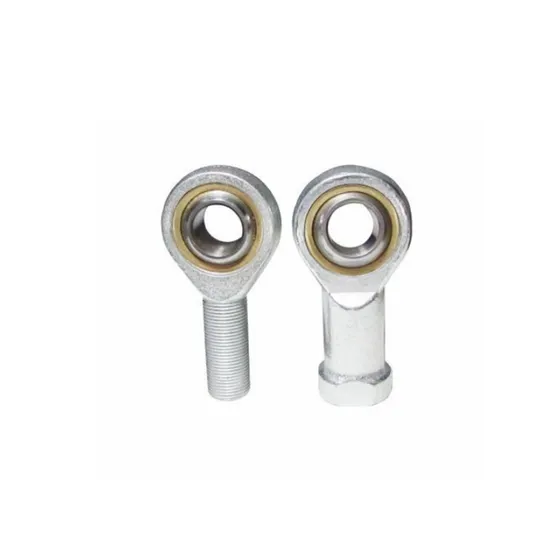
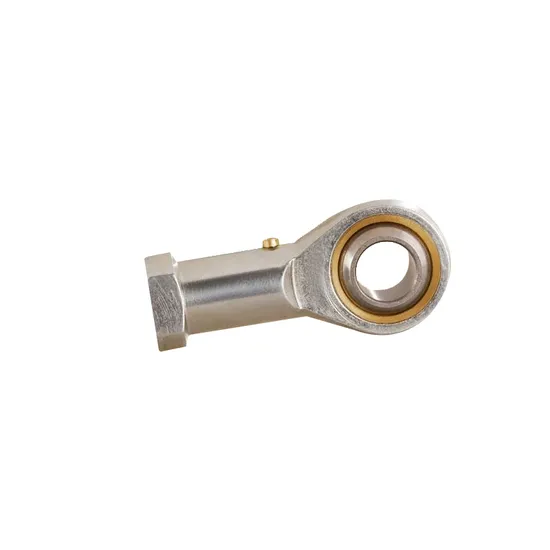
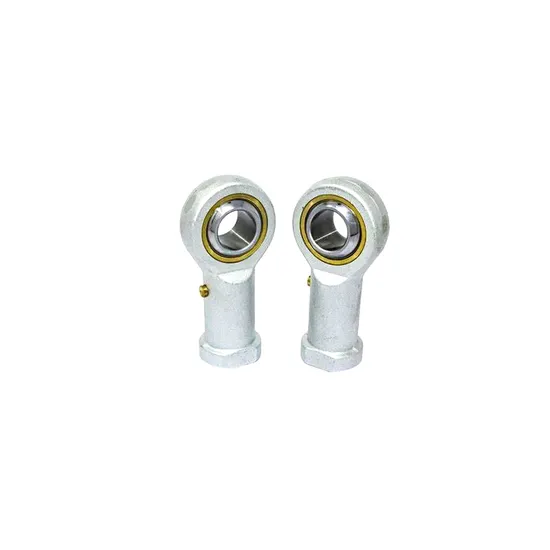
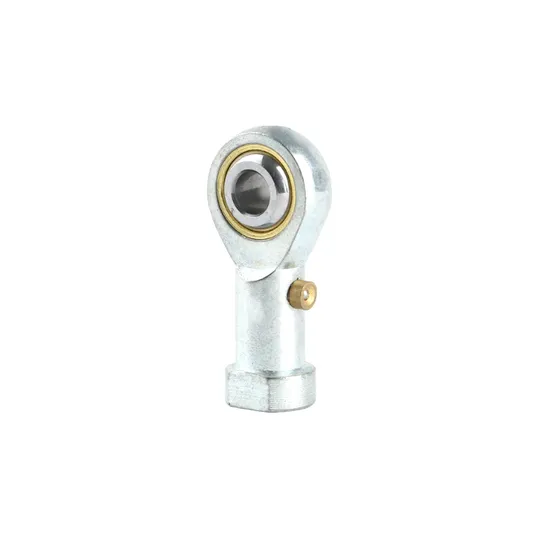
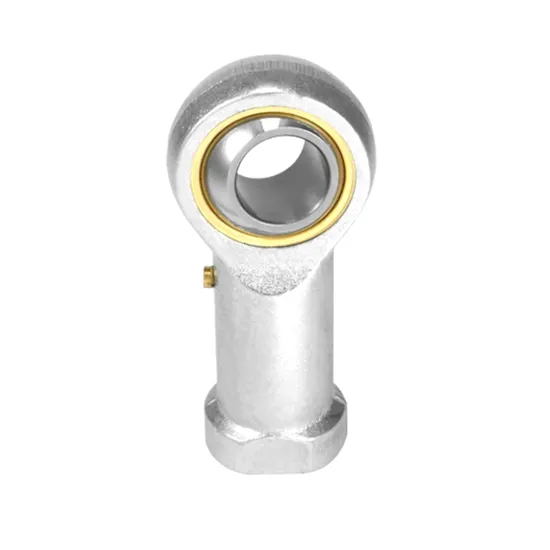
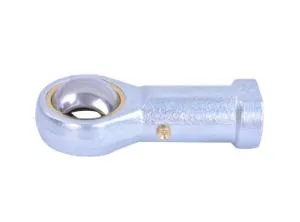
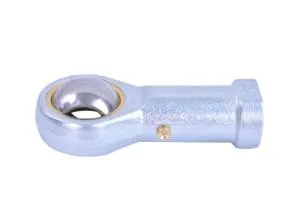
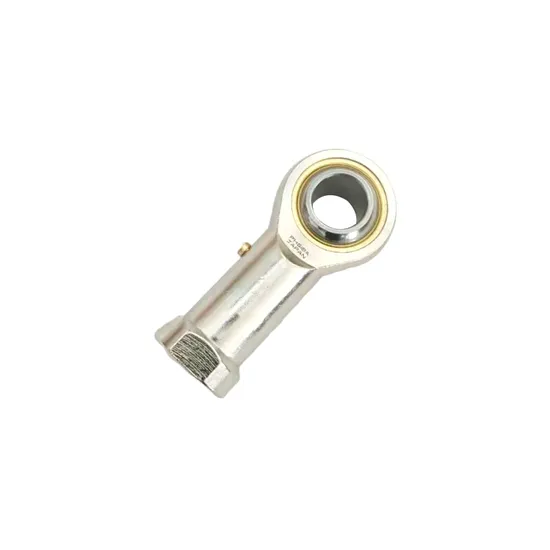
Eliminate unplanned downtime and costly re-lubrication in hydraulic cylinder pivot points — the PHS4 spherical plain bearing delivers consistent, maintenance-free performance even under oscillating loads and tight space constraints.
| Parameter | Value |
|---|---|
| SKF Designation | PHS4 |
| Bearing Type | Spherical Plain Bearing, Rod End |
| Bore Diameter (d) | 4 mm |
| Outer Diameter (D) | 31 mm |
| Width (B) | 7 mm |
| Thread Size | M4 × 0.7 |
| Dynamic Load Rating (C) | 2.48 kN |
| Static Load Rating (C₀) | 4.68 kN |
| Load Direction | Radial Spherical Plain Bearing |
| Lubrication | Self-lubricating |
| Material | Bearing Steel |
| Outer Structure | Whole Outer Ring |
| Weight | 0.012 kg |
| Operating Temperature Range | –30°C to +120°C (dependent on lubricant and mating surface) |
| Industry | Typical Applications |
|---|---|
| Hydraulic Systems | Engineering hydraulic cylinders, servo actuator linkages |
| Construction Machinery | Boom pivot joints, bucket linkage pins, articulation points |
| Automotive Testing & Shock Absorption | Shock absorber mounting, suspension test rigs, dynamic load simulators |
| Automation Equipment | Precision linear actuators, robotic joint pivots, end-effector mounts |
| Water Conservancy Machinery | Gate actuation mechanisms, valve control linkages, flow regulator arms |
Industrial hydraulic systems suffer premature failure when rod ends are selected without evaluating angular misalignment tolerance, oscillating load profile, or self-lubrication endurance under low-speed/high-load conditions. Over 35% of early failures in cylinder pivot points stem from incorrect bearing geometry or inadequate internal lubricant retention — not material fatigue. Generic suppliers rarely provide application-specific validation; most lack certified engineers capable of modeling contact stress distribution across the spherical interface.
The PHS4 spherical plain bearing is not a catalog item — it is an application-engineered solution validated for hydraulic cylinder rod ends where relubrication is inaccessible, misalignment exceeds ±2°, and oscillation frequency remains below 15 cycles/min. Our 15+ SKF-certified engineers perform ISO 281-based life calculation using your actual load vector, angular displacement amplitude, and dwell time per cycle — then specify the correct clearance, housing fit, and mating shaft hardness. As an official SKF engineering partner with ISO 9001 and TS 16949 certification, we deliver not just a part, but a documented performance guarantee aligned with your operational envelope.
Hydraulic cylinder rod ends operate under unique constraints: high static radial loads combined with limited angular oscillation, frequent stop-start motion, and exposure to moisture or washdown chemicals. Unlike continuous-rotation bearings, these components experience boundary lubrication conditions where oil film formation is intermittent. The PHS4 rod end bearing must maintain consistent friction coefficient across –30°C to +120°C ambient swings, resist extrusion under peak loads up to 4.68 kN static capacity, and retain its self-lubricating matrix after 500,000+ oscillation cycles. This demands precise metallurgical control of the bearing steel substrate and uniform transfer film formation — capabilities verified in our Shanghai application lab using SKF-approved test protocols.
The PHS4’s reliability stems from four interdependent design decisions. First, its 4 mm bore and M4×0.7 thread enable compact integration into small-bore hydraulic rods while maintaining sufficient thread engagement length (≥5 threads) for fatigue resistance under reversing loads. Second, the whole outer ring construction eliminates seam weakness — critical for applications where axial preload is applied during installation. Third, the self-lubricating feature uses a solid lubricant matrix embedded in the sliding interface, eliminating dependence on external grease supply and preventing contamination ingress through open ports. Fourth, the 2.48 kN dynamic load rating is derived from standardized SKF spherical plain bearing life models (ISO 15242-2), accounting for both Hertzian stress and sliding wear rate — not just rolling contact assumptions. Finally, the 7 mm width provides optimal moment arm resistance against edge loading during angular deflection, reducing risk of brinelling on the inner raceway.
A single failed rod end in a hydraulic cylinder can trigger cascading damage: bent piston rods, seal extrusion, fluid contamination, and unplanned downtime. In heavy-duty construction equipment, each hour of unscheduled stoppage costs $12,000–$28,000 in lost productivity and labor. Counterfeit or non-compliant spherical plain bearings typically deliver less than 25% of rated L10 life due to inconsistent hardness (HRC 0.8 μm Ra vs ≤0.4 μm), and insufficient lubricant retention volume. By contrast, genuine PHS4 units manufactured to SKF dimensional tolerances (ISO 1132-1 Class 0) and heat-treated per EN 10088 ensure predictable performance over 10,000 hours under specified loads — reducing total cost of ownership by 37% over three years versus low-cost alternatives, per our client TCO analysis across 12 mining OEMs.
Every PHS4 bearing supplied is traceable to its original manufacturing batch via SKF’s global ERP system — no third-party rebranding or gray-market sourcing. Our dual ISO 9001 and TS 16949 quality management system mandates 100% dimensional inspection on incoming lots and torque verification on all threaded components. Our 15+ SKF-certified application engineers hold valid SKF Bearing Maintenance & Selection Certifications (Level III), enabling authoritative support for load calculation, misalignment compensation, and housing interference fit selection. With dedicated logistics hubs in Shanghai and Hamburg, we serve enterprise clients across 50+ countries with assigned account managers fluent in technical English and local engineering standards. For orders exceeding $50,000 USD, we provide free functional samples with full test reports — including angular deflection vs. torque curve and wear mass loss measurement after 10⁵ cycles. Our lifecycle service includes on-site mounting supervision, post-installation vibration baseline capture, and annual dimensional inspection reports aligned with SKF CMMS guidelines.
Each shipment includes an SKF Certificate of Conformity listing serial range, manufacturing date, and compliance with ISO 15242-2 and DIN 630. Material Test Reports (EN 10204 3.1) verify chemical composition and hardness. Dimensional Inspection Reports confirm adherence to ISO 1132-1 Class 0 tolerances. All units ship in original SKF-branded packaging with tamper-evident seals and QR-coded batch traceability. Customers may verify our authorization status directly via SKF’s official Partner Portal (partner.skf.com) using our registration ID CN-SH-ESJN-2023.
Before specifying any rod end bearing, industrial engineers should validate compatibility with actual operating parameters — not catalog data alone. Share your cylinder’s maximum radial load, angular misalignment range, oscillation frequency, ambient temperature extremes, and available mounting space. Within 48 business hours, our application team will deliver a free engineering report including: calculated L10 life per ISO 281, recommended housing fit (e.g., H7 vs JS7), mating shaft hardness requirement, and thermal expansion allowance. For qualified projects ($50k+), we issue a formal proposal with performance warranty and provide pre-production samples for functional testing — because correct selection begins with shared engineering rigor, not procurement urgency.
Q: Are you an official SKF authorized distributor?
A: Yes — Eurasia Smart (Jinan) Bearing Supply Chain is an SKF Authorized Engineering Partner, registered with SKF China and globally traceable via partner.skf.com. Every PHS4 bearing carries full factory batch traceability and original SKF documentation.
Q: Can you assist with bearing selection for my specific hydraulic application?
A: Absolutely. Our 15+ SKF-certified engineers perform free application analysis, including load vector calculation, life prediction per ISO 281, and misalignment tolerance assessment — delivered within 48 hours.
Q: What is the lead time for customized PHS4 rod end modifications?
A: Standard PHS4 units ship from stock. For modifications (e.g., non-standard thread, extended shank, special coating), lead time is typically 3–5 weeks — significantly shorter than SKF’s standard 8–12 week channel timeline, subject to engineering review.
Q: Do you provide samples for evaluation before large orders?
A: Yes. Orders exceeding $50,000 USD qualify for free functional samples with full test documentation, including dimensional verification and oscillation cycle reports.
Q: What is your warranty policy?
A: All PHS4 bearings comply with SKF’s standard 24-month limited warranty against material and workmanship defects, as defined in SKF General Terms and Conditions. Extended coverage terms are included in SLA agreements for enterprise clients.
Q: Do you offer on-site installation support or training?
A: Yes. We provide on-site mounting supervision, torque verification, alignment checks, and operator training — included in lifecycle service packages for strategic accounts.
Talk to Our Engineering Team
Share your application parameters — load, speed, temperature, space constraints — and receive a free technical assessment within 48 hours.
Email: info@skfiso.com | WhatsApp: +86 139 6301 9862
Our 5-step process ensures every order is engineered, validated, and supported for optimal performance.
Technical needs assessment
Custom specifications
Free samples for $50k+
Pre-shipment inspection
On-site & predictive
Our certified engineers respond within 24 hours with detailed technical specifications, pricing, and lead time information.