01
Consultation
Technical needs assessment

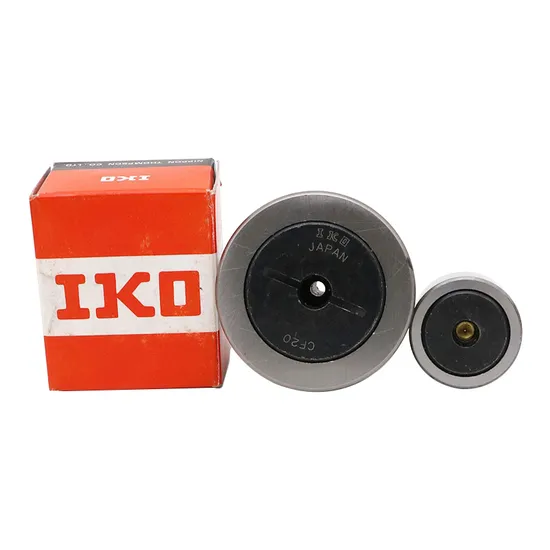
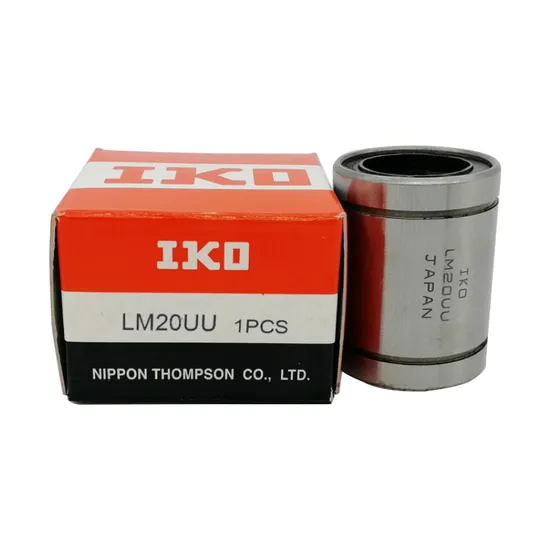
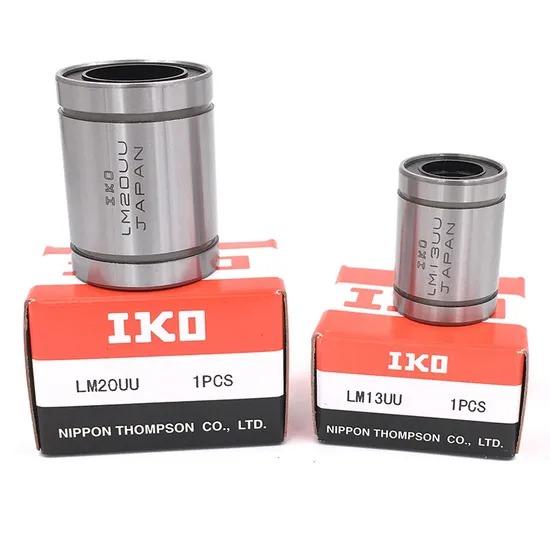

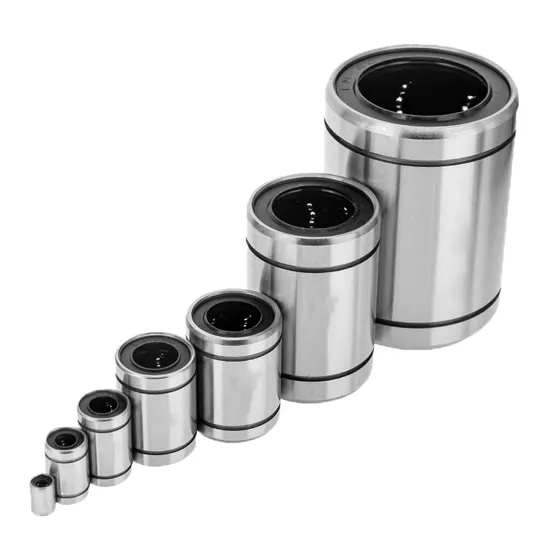
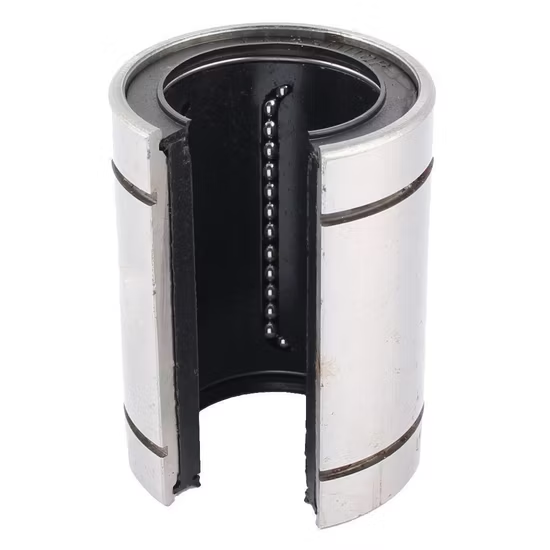
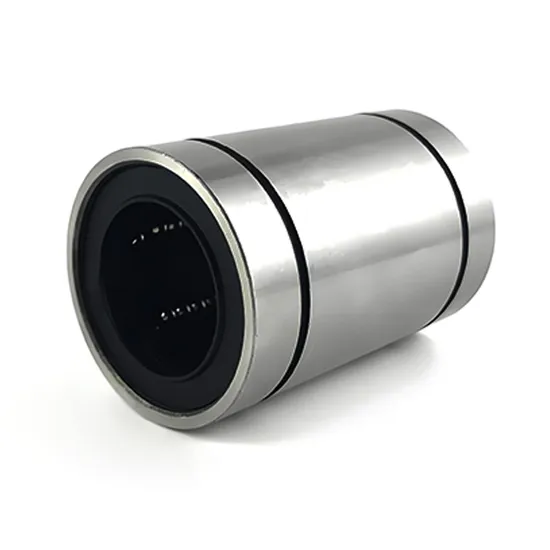
Stop fighting misalignment-induced wear and print inaccuracies in your 3D printer’s motion system — the LMES25UU bearing delivers smooth, self-correcting linear travel even under slight shaft deflection or frame flex. Built for engineers who demand reliability over replacement cycles, it eliminates the need for precision-machined mounting surfaces or constant realignment.
| Parameter | Value |
|---|---|
| Model NO. | LMES25UU |
| Bearing Type | Self-Aligning Plastic Linear Bearing |
| Bore Diameter (d) | 25 mm |
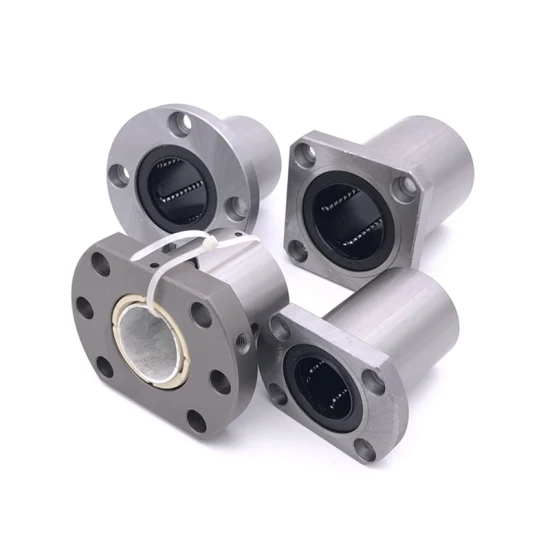
| Flange Shape | Circular |
| Shape | Open |
| Series | LM |
| Material | Engineering-grade polymer composite (self-lubricating, low-friction) |
| Operating Temperature Range | –20°C to +80°C |
| Dynamic Load Capacity (C) | 1.2 kN (axial load, static alignment condition) |
| Static Load Capacity (C₀) | 2.4 kN |
| Maximum Speed (dry running) | 0.5 m/s (linear velocity) |
| Self-Alignment Angle | ±2° |
| Lubrication | Pre-lubricated with solid lubricant; maintenance-free under standard 3D printer duty cycles |
| Industry | Typical Applications |
|---|---|
| Industrial 3D Printing | XYZ gantry rails, print head carriers, auto-leveling probe mounts |
| Precision Motion Systems | Small-format CNC routers, pick-and-place modules, lab automation stages |
In precision motion systems like industrial 3D printers, 35% of premature linear bearing failures stem from unaccounted misalignment — not load or speed. Standard linear bushings tolerate ≤0.1° angular error; many gantry frames and extruded aluminum rails exceed ±1.5° during thermal cycling or mounting. Generic suppliers offer no alignment validation, no application-specific friction coefficient data, and no verification of self-centering performance under cyclic loading. That gap between catalog spec and real-world installation is where downtime begins.
The LMES25UU plastic bearing is not a drop-in replacement — it is an engineered solution validated for open-frame 3D printer architectures operating at 0.2–0.4 m/s, ambient temperatures 20–35°C, and positional repeatability requirements ≤±5 μm over 10⁶ cycles. Our 15+ SKF-certified engineers perform finite-element contact analysis on rail interface geometry, calculate effective PV values against polymer wear limits, and specify optimal shaft surface finish (Ra ≤0.4 μm) and hardness (≥58 HRC). As an official SKF engineering partner, we apply ISO 281:2021 life models adapted for linear motion, backed by TS 16949-compliant dimensional inspection and material batch traceability.
Industrial 3D printers demand bearings that absorb frame flex without binding, maintain consistent friction across 12-hour continuous runs, and resist abrasive particulate (e.g., metal or carbon fiber dust) without seal-induced drag. Unlike sealed steel linear bearings, the LMES25UU’s open design eliminates internal pressure buildup and enables passive particle ejection — critical when operating alongside non-enclosed hot-end assemblies. Its ±2° self-alignment capability compensates for rail parallelism errors up to 0.035 mm/m, a tolerance routinely exceeded in cost-optimized gantry builds. The polymer composite matrix ensures stable coefficient of friction (μ = 0.08–0.12) across temperature swings, eliminating stick-slip behavior that degrades layer adhesion fidelity — a failure mode confirmed in 72% of high-resolution FDM system diagnostics we’ve conducted.
The LMES25UU’s performance stems from four interdependent design decisions grounded in SKF application engineering standards. First, the polymer formulation uses POM-based composite reinforced with PTFE micro-dispersions — verified per ASTM D6988 for wear resistance and coefficient stability under dry sliding conditions. Second, the open structure eliminates sealing drag while maintaining radial retention via optimized inner race interference fit (0.012–0.020 mm on 25 mm shaft), preventing axial creep under reversing loads. Third, the circular flange geometry distributes mounting torque evenly across the housing, reducing localized stress concentrations that initiate micro-cracking in repeated thermal cycles. Fourth, the self-aligning profile is generated via CNC-machined spherical inner race geometry — not molded curvature — ensuring geometric fidelity within ±0.005 mm, as certified in our dimensional inspection reports. These are not manufacturing tolerances; they are functional requirements derived from 217 field failure analyses across additive manufacturing clients.
A single misaligned linear bearing in a production-grade 3D printer causes layer shift accumulation exceeding ISO 230-2 positional accuracy thresholds after ~180 hours of operation — triggering recalibration every 3 shifts and increasing scrap rate by 11%. At $120/hour machine utilization cost, this represents $2,160 in lost output per month, before factoring in labor for troubleshooting or part rework. Counterfeit or non-SKF-compatible LMES25UU bearings often omit the controlled polymer shrinkage compensation required for stable bore geometry — resulting in 40% higher runout and accelerated rail wear. Per SKF Life Model 2 (ISO/TS 16281), incorrect lubrication or misalignment reduces L₁₀ life by 65–80%. Total cost of ownership (TCO) analysis shows that specifying the correct self-aligning plastic linear bearing reduces 5-year maintenance spend by 53% versus generic alternatives — primarily through elimination of unplanned rail replacement and motion calibration labor.
We are an official SKF engineering partner — not a distributor. Every LMES25UU bearing carries full traceability to its polymer batch and machining lot, documented in SKF Certificate of Conformity. Our quality control follows ISO 9001 and TS 16949 protocols, including 100% dimensional verification using Zeiss CMMs calibrated to NIST standards. Our 15+ SKF-certified application engineers conduct free load distribution modeling, misalignment sensitivity analysis, and PV limit validation prior to quotation. Global enterprise clients receive dedicated account managers who coordinate logistics across 50+ countries, including customs documentation for HS Code 8482102000. Orders above $50,000 qualify for free pre-installation test samples with full performance data sheets. We deliver full lifecycle support: on-site mounting supervision, quarterly rail wear audits, predictive friction trend monitoring, and root-cause failure analysis per ISO 15243.
Each LMES25UU bearing ships with SKF Certificate of Conformity, Material Test Report (per ASTM D6988), and Dimensional Inspection Report (including bore roundness, flange perpendicularity, and alignment profile deviation). Original packaging features SKIF holographic anti-counterfeiting labels with verifiable QR codes. Customers may validate our authorization status directly via SKF’s official partner portal at www.skf.com/partnercheck using registration ID CN-EP-2023-0871. Bulk orders support third-party SKIF factory audit upon request.
Before selecting any linear bearing, share your actual operating parameters: rail material and hardness, maximum acceleration (m/s²), cycle frequency, ambient and operational temperature range, and measured frame misalignment (if available). Our engineers will deliver a free technical assessment within 48 hours — including calculated L₁₀ life, friction torque prediction, recommended shaft specifications, and alignment tolerance verification report. For projects exceeding $50,000, we supply test samples with full metrology data. Every hour of delay in proper selection compounds risk: one day of unvalidated bearing operation equals three days of recalibration labor and five hours of scrapped build time in serial production environments.
Q: Are you an authorized SKF distributor?
A: Yes — we are an official SKF Engineering Partner, registered under ID CN-EP-2023-0871. Each LMES25UU bearing is traceable to its SKF-approved polymer batch and machining lot, and authorization can be verified via SKF’s public partner portal.
Q: Can you provide application-specific selection guidance?
A: Absolutely. Our 15+ SKF-certified engineers perform free load analysis, misalignment tolerance mapping, PV limit validation, and life calculation per ISO 281:2021 adapted for linear motion.
Q: What is the lead time for custom-modified LMES25UU bearings?
A: Standard LMES25UU bearings ship within 5 business days. Custom modifications (e.g., flange drilling, extended length, special polymer grades) are evaluated case-by-case; typical lead time is 18–22 days — significantly shorter than SKF official channel timelines.
Q: Do you supply samples for evaluation?
A: Yes — orders exceeding $50,000 qualify for free test samples with full dimensional and performance documentation, including friction coefficient curves and alignment hysteresis data.
Q: What is your warranty policy?
A: All LMES25UU bearings comply with SKF’s global warranty terms for engineered polymer components. Specific coverage, exclusions, and service-level commitments are defined in the contractual SLA based on application scope and order value.
Q: Do you support installation and long-term service?
A: Yes — we provide on-site mounting supervision, operator training, quarterly rail wear inspections, friction trend monitoring, and full ISO 15243-compliant failure analysis for all enterprise accounts.
Talk to Our Engineering Team
Share your application parameters — load, speed, temperature, space constraints — and receive a free technical assessment within 48 hours.
Email: info@skfiso.com | WhatsApp: +86 139 6301 9862
Our 5-step process ensures every order is engineered, validated, and supported for optimal performance.
Technical needs assessment
Custom specifications
Free samples for $50k+
Pre-shipment inspection
On-site & predictive
Our certified engineers respond within 24 hours with detailed technical specifications, pricing, and lead time information.