01
Consultation
Technical needs assessment
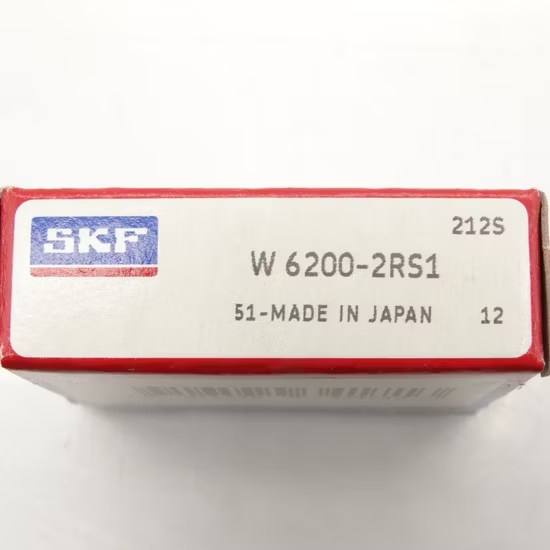

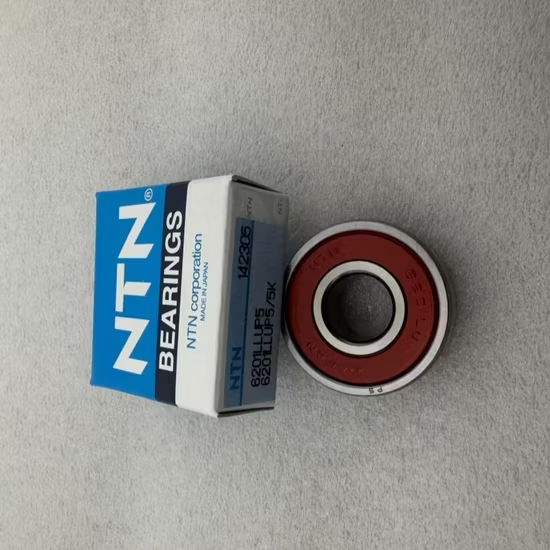


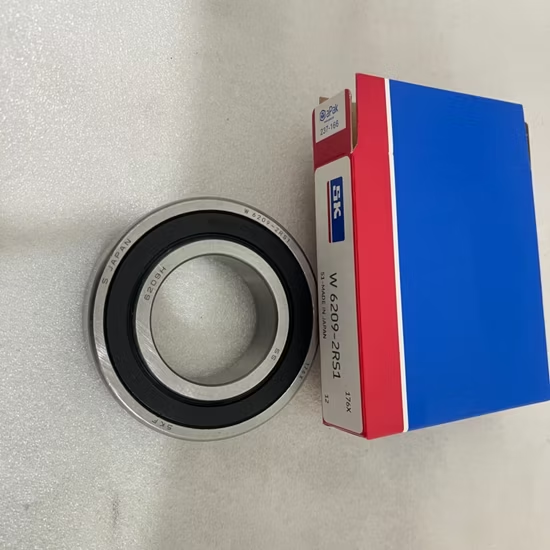
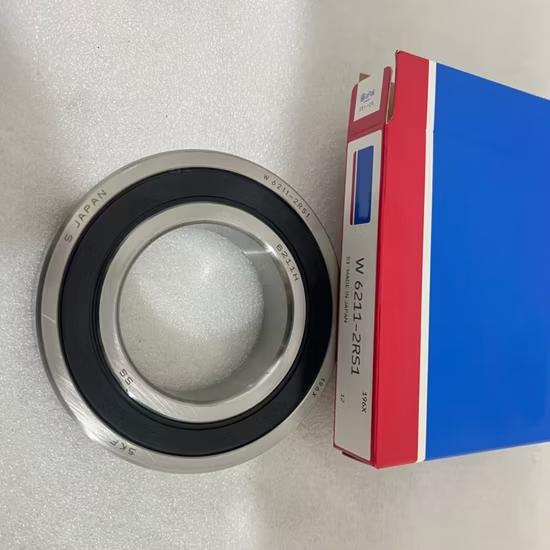
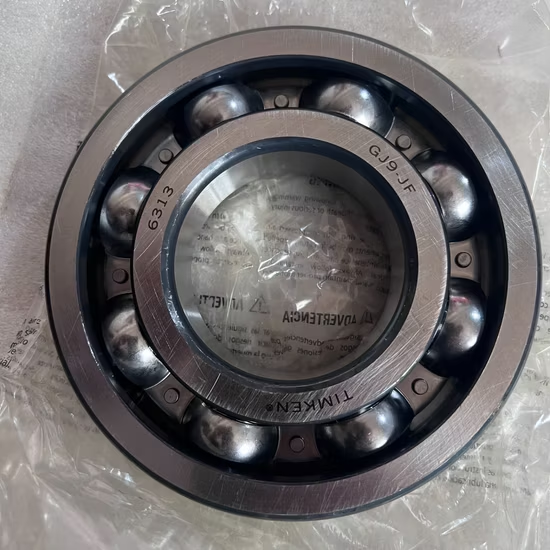
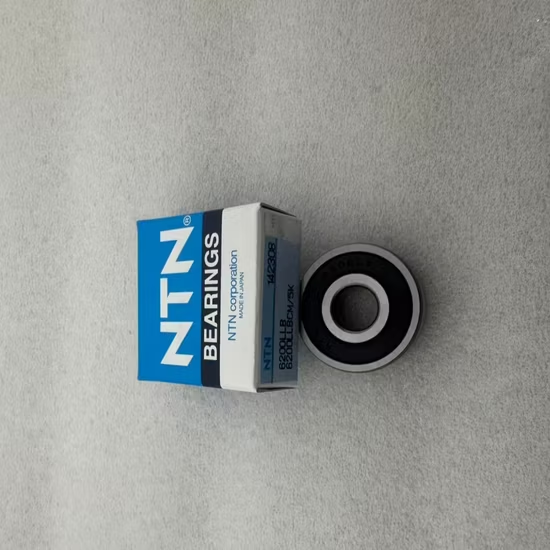
S6015-2RS Stainless Steel Deep Groove Ball Bearing — engineered for corrosive and washdown environments to prevent premature failure in food processing and marine applications.
Multi-Brand Authorized Coverage — Source genuine S6015-2RS stainless steel deep groove ball bearings alongside other major international brands in a single consolidated shipment.
| Parameter | Value |
|---|---|
| Designation | S6015-2RS |
| Product Type | Deep Groove Ball Bearing |
| Material Options | 420, 440, or 304 Stainless Steel |
| Bearing Style Options | Open, Rubber Seals, Iron Seals |
| Quality Level Options | Z1V1, Z2V2, Z3V3, Z4V4 |
| Origin Options | Germany, Japan, Sweden, Malaysia, China |
Note: The 'S' and '-2RS' suffixes are unverified and require manufacturer catalog confirmation, though they commonly denote stainless steel construction and double contact rubber seals.
| Industry | Typical Applications |
|---|---|
| Food and Beverage Processing | Washdown conveyor drive rollers, bottling line rotary fillers |
| Pharmaceutical Manufacturing | Cleanroom tablet press mechanisms, sterile mixing vessel agitators |
| Chemical Processing | Corrosive fluid transfer pump shafts, chemical dosing valves |
| Marine and Offshore | Deck winch sheave bearings, saltwater exposure steering hardware |
Carbon steel bearings corrode rapidly under washdown conditions, making verified stainless material grades essential for preventing unplanned line stoppages.
I have seen entire production lines halted because a standard carbon steel bearing was mistakenly installed in a high-moisture food processing zone. The inner rings rusted and seized within weeks, causing catastrophic damage to the surrounding conveyor belts. Relying solely on base designations without verifying the actual material composition leads to a significant share of premature failures in corrosive environments . Securing the correct S6015-2RS stainless steel deep groove ball bearing with full batch traceability ensures the metalurgy actually matches the harsh operational demands.
Selecting the right S6015-2RS stainless steel deep groove ball bearing requires aligning the specific material option with the chemical exposure of the application. Martensitic grades like 420 and 440 stainless steel offer higher hardness and load capacity, making them suitable for moderate corrosion and higher radial loads. Conversely, austenitic 304 stainless steel provides substantially higher resistance to aggressive chemical cleaners and acidic food byproducts, though it carries lower load limits. Evaluating the exact washdown chemicals and operational loads ensures the selected material variant prevents rapid pitting and structural degradation.
Washdown environments subject bearings to severe thermal shocks and high-pressure water ingress that quickly compromise standard seals. The transition from hot sanitizing fluids to cold rinse water creates internal pressure differentials that can draw moisture past inadequate sealing arrangements. Selecting between rubber seals and iron shields depends heavily on the friction tolerance and contamination risk of the specific machinery. Rubber seals provide superior exclusion of liquid contaminants but generate more friction heat, while iron shields offer lower friction but less protection against direct high-pressure fluid intrusion . Proper selection prevents lubricant washout and subsequent metal-to-metal contact.
The Z1V1 through Z4V4 quality levels dictate the noise and vibration profile of the bearing during high-speed operation. Higher grades like Z3V3 or Z4V4 are critical for pharmaceutical mixing vessels or precision food packaging equipment where excessive vibration compromises product consistency or structural integrity. Furthermore, understanding the exact seal configuration denoted by the suffix is vital; a true double contact rubber seal prevents liquid ingress far better than a non-contact shield. Verifying these specific suffix details ensures the bearing maintains its internal lubrication and operational smoothness throughout its intended service life.
Installing a counterfeit bearing with a soft inner ring disguised as stainless steel leads to rapid spalling and unplanned downtime that far exceeds the initial component cost. When cross-referencing ignores critical suffix details, a standard clearance bearing might be forced into an application requiring extra clearance for thermal expansion, resulting in thermal binding and catastrophic cage failure. These misconfigurations violate the operational parameters outlined in ISO 281, drastically reducing the calculated L10 life and voiding equipment warranties . The financial impact of a seized bearing in a continuous processing line includes lost production hours, emergency maintenance labor, and potential product contamination.
Our procurement process specifically targets the vulnerabilities common in stainless steel bearing supply chains. We verify the exact material composition through mill test reports, ensuring the rings are machined from genuine 420, 440, or 304 stainless steel rather than softer, counterfeit alternatives. When cross-referencing the S6015-2RS stainless steel deep groove ball bearing, we validate the precise seal type and internal clearance, preventing the installation of mismatched variants that fail under thermal stress. Every shipment includes batch traceability linked directly to the manufacturer's production facilities, eliminating the risk of cloned verification codes and ensuring absolute metallurgical authenticity.
To ensure the selected bearing variant perfectly matches your operational demands, please provide detailed application parameters including radial and axial loads, operating speeds, and specific washdown chemical exposures. Sharing the exact OEM equipment numbers allows our engineering team to perform a comprehensive cross-reference review, verifying that the seal configuration and material grade align with the original design intent. This technical validation process guarantees that the proposed solution addresses the unique corrosion and load challenges of your specific machinery.
Q: How can I verify the authenticity of stainless steel bearings and avoid counterfeit soft inner rings?
A: Counterfeiters often use softer carbon steel and apply a superficial coating that passes casual visual inspection. We prevent this by providing comprehensive material test reports that verify the exact chemical composition of the 420, 440, or 304 stainless steel. Additionally, every bearing features batch traceability that can be verified through the manufacturer's official app, ensuring the metallurgical integrity matches your demanding washdown requirements.
Q: What are the cross-reference pitfalls when replacing standard steel bearings with S6015-2RS stainless variants?
A: A common error is matching only the base numeric designation while ignoring the internal clearance and seal suffixes. Standard steel bearings often use different clearance classes than stainless variants due to differing thermal expansion rates. We meticulously review the complete suffix string to ensure the replacement S6015-2RS stainless steel deep groove ball bearing maintains the correct thermal expansion allowances and sealing integrity for your specific corrosive environment.
Q: How do I choose between 420, 440, and 304 stainless materials for specific corrosive environments?
A: Martensitic grades like 420 and 440 offer higher hardness and load capacity, making them ideal for applications with moderate moisture and heavier radial loads. Austenitic 304 stainless steel provides substantially higher resistance to aggressive chemical cleaners and acidic food byproducts, though it carries lower load limits. Evaluating your specific washdown chemicals and operational loads ensures the selected material variant prevents rapid pitting and structural degradation.
Q: What do the Z1V1 to Z4V4 quality levels mean for noise and vibration in stainless steel bearings?
A: These designations indicate the strictness of the dimensional tolerances and the resulting acoustic performance during rotation. Higher grades like Z3V3 or Z4V4 are essential for precision pharmaceutical or food packaging equipment where excessive vibration compromises product consistency. Selecting the appropriate quality level ensures the bearing operates smoothly without generating disruptive noise or transferring harmful vibrations to sensitive machinery components.
Q: How do I select the correct seal type for high-pressure washdown applications?
A: Rubber seals provide superior exclusion of liquid contaminants and high-pressure water ingress, making them ideal for direct washdown zones, though they generate slightly more friction heat. Iron shields offer lower friction and higher speed capabilities but provide less protection against direct fluid intrusion. Matching the seal type to the specific contamination risk and thermal profile of your machinery prevents lubricant washout and premature failure.
Our 5-step process ensures every order is engineered, validated, and supported for optimal performance.
Technical needs assessment
Custom specifications
Free samples for $50k+
Pre-shipment inspection
On-site & predictive
Our certified engineers respond within 24 hours with detailed technical specifications, pricing, and lead time information.