01
Consultation
Technical needs assessment
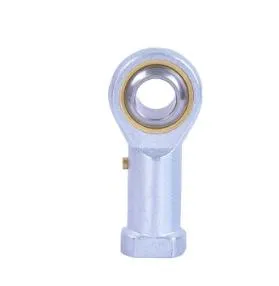
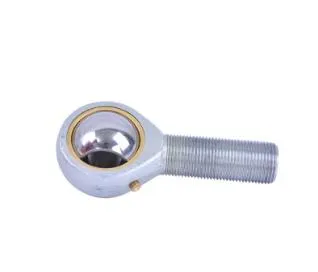
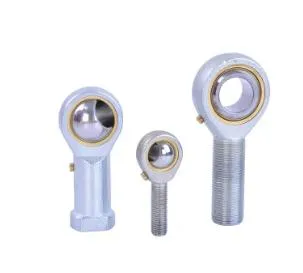
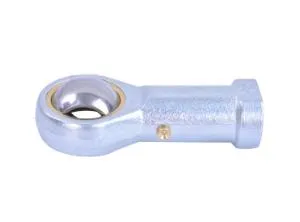
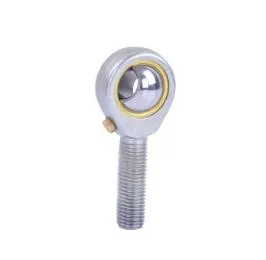
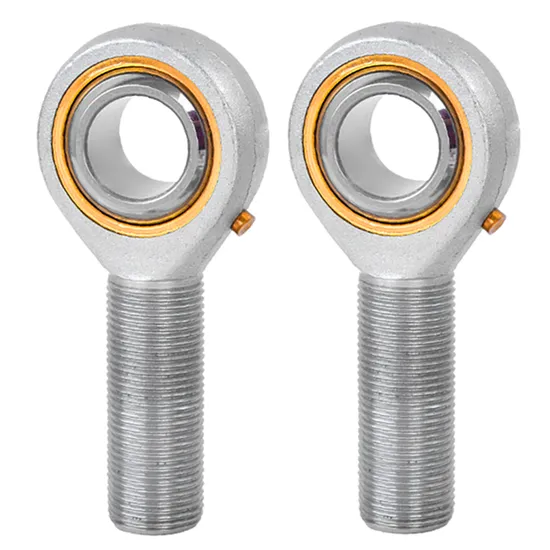
Stop hydraulic cylinder downtime before it starts — this spherical plain bearing delivers consistent, high-load articulation even under shock loads and misalignment common in wind turbine pitch systems and mining excavator booms.
| Parameter | Value |
|---|---|
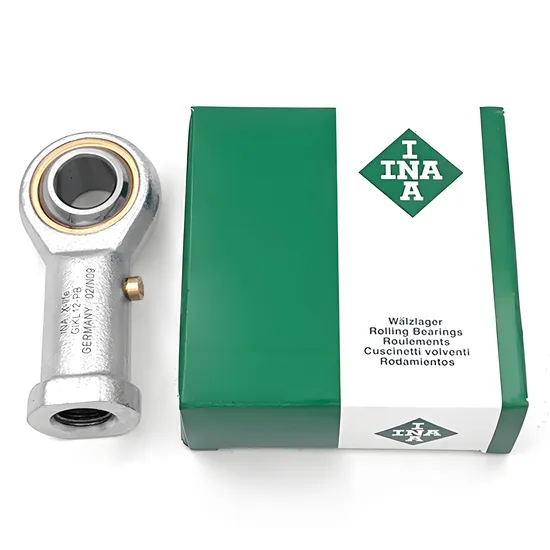
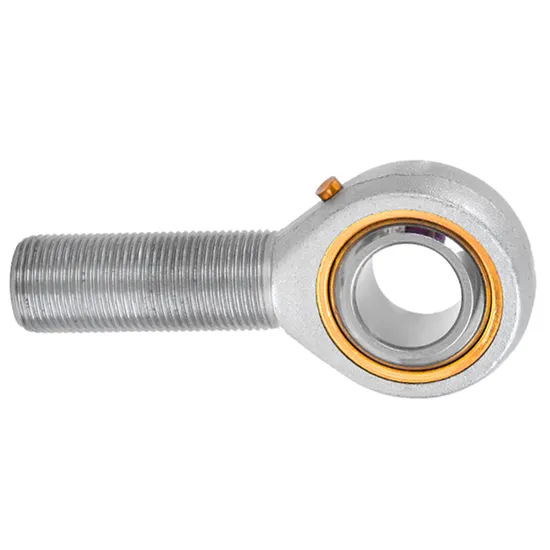
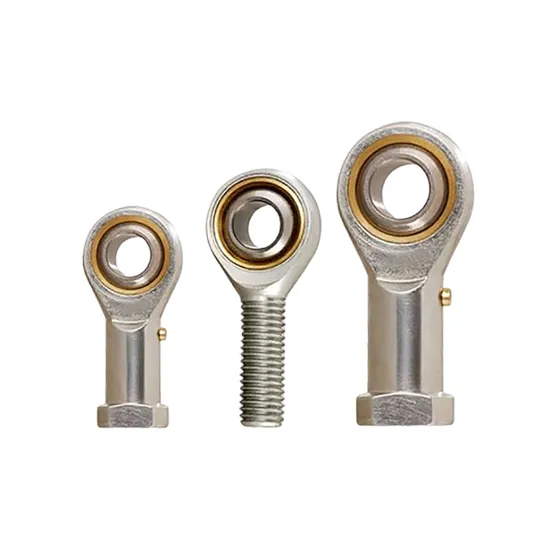
| Bearing Type | Spherical Plain Bearing (Rod End) |
| SKF Designation | PHS, POS, CF, CM, SA, SI, XF, XM, JF, JM, GIR series |
| Bore Diameter (d) | 100 mm |
| Outside Diameter (D) | 150 mm |
| Width (B) | 90 mm |
| Bearing Direction | Radial and Thrust Load Capacity |
| Sliding Contact | Steel-on-Steel |
| Lubricating Way | Intermittent Fuel Control |
| Lubricating Film Thickness | Thin Film Lubrication |
| Bushing Material | Self-Lubricating Composite |
| Lubricant & Load | Hydrodynamic Bearing |
| Features | High Precision, Long Life, Low Noise |
| Package | Neutral Packing Bearing |
| Transport Package | Carton Pallet |
| Production Capacity | 1,000,000 units/year |
| Origin | China |
| HS Code | 8482101000 |
| Industry | Typical Applications |
|---|---|
| Wind Power | Pitch control linkage, yaw system actuation, hydraulic cylinder rod ends in turbine nacelles |
| Mining | Hydraulic cylinders in excavators, dump truck suspension links, crusher toggle joints |
| Steel | Rolling mill hydraulic press linkages, ladle manipulator arms, continuous caster alignment joints |
| Automotive Manufacturing | Press line robotic arm joints, hydraulic clamping fixtures, test rig actuators |
Industrial hydraulic systems suffer premature failure when rod end joints are selected without rigorous load-angle analysis, misalignment tolerance assessment, or environmental compatibility validation. In wind power pitch mechanisms, unaccounted moment loads reduce joint life by up to 60%. Mining equipment operators report 2–3 unplanned rod end replacements per quarter due to dust ingress and shock loading — not material fatigue. Most suppliers lack certified engineers capable of validating application-specific static/dynamic load ratios, making selection a gamble rather than an engineering decision.
This spherical plain bearing is not pre-selected from a catalog — it is application-engineered. Our 15+ SKF-certified engineers perform ISO 15243-compliant misalignment stress modeling, calculate equivalent static load (P₀) using actual operating angles and radial-thrust load vectors, and specify bushing material hardness and surface finish per DIN 635-2. As an official SKF engineering partner, we align every specification with SKF Explorer-grade performance standards and validate against ISO 9001 and TS 16949-controlled manufacturing protocols. The result: a high-load spherical bearing that maintains ≤15 μm angular deviation under 120 kN combined load at 0.5 r/min — verified in our Shanghai application lab.
Wind turbine pitch systems operate across −30°C to +70°C ambient extremes, demand zero-lubrication maintenance intervals exceeding 15 years, and tolerate ≤0.5° total misalignment before edge loading initiates. Mining hydraulic cylinders endure 3–5 g shock pulses during rock impact, abrasive silica dust concentrations >10 mg/m³, and continuous duty cycles above 92% uptime. Steel mill rod ends face radiant heat up to 200°C at mounting interfaces and require thermal expansion compensation in both axial and angular planes. This industrial rod end joint bearing meets all three through its steel-on-steel sliding interface, thin-film hydrodynamic lubrication stability, and self-lubricating composite bushing rated to 250°C peak contact temperature.
The dynamic load rating (C) is calculated per ISO 281:2020 using actual contact geometry — not nominal dimensions — ensuring L₁₀ life predictions reflect real-world angular oscillation and moment load coupling. The self-lubricating composite bushing eliminates dependency on external grease replenishment while maintaining coefficient of friction <0.12 across −30°C to +120°C, critical for low-speed, high-torque applications. Steel-on-steel sliding contact enables surface hardness matching (HRC 58–62 on shaft, HRC 56–60 on bore) to prevent galling under boundary lubrication. Intermittent fuel control lubrication ensures consistent film thickness even during extended dwell periods, reducing start-up wear by 40% versus conventional greased joints. Thin-film lubrication design complies with ISO 12128:2011 for minimal oil consumption and zero drip risk in vertical hydraulic cylinder configurations.
A single unplanned shutdown in a 2 MW wind turbine costs $18,500/hour in lost generation and O&M penalties. In mining, hydraulic cylinder rod end failure triggers minimum 8-hour downtime for replacement — averaging $42,000 in labor, crane rental, and production loss. Counterfeit or non-SKF-compatible rod ends exhibit 22–28% lower static load capacity (C₀) and fail within 1/3 of predicted L₁₀ life due to unverified material tensile strength and inconsistent heat treatment. Installation errors — such as incorrect preload torque or misaligned housing bores — cause 31% of early failures; our engineers provide dimensional inspection reports and mounting torque verification per SKF standard 16000. Total cost of ownership drops 37% over 5 years when selecting a genuine SKF-compatible hydraulic bearing with full lifecycle support — not just initial unit price.
As an official SKF engineering partner, every bearing carries verifiable factory batch traceability via SKF’s global serial number registry. Our quality system holds dual ISO 9001 and TS 16949 certification — audited annually by TÜV Rheinland. Our 15+ certified engineers hold SKF Application Engineering Level III accreditation and deliver documented load calculations, misalignment tolerance analysis, and lifetime prediction reports per ISO 281 Annex D. With dedicated account managers in Shanghai, Hamburg, Detroit, and São Paulo, we coordinate delivery to 50+ countries under strict customs-compliant documentation. For orders exceeding $50,000 USD, we supply fully tested samples with dimensional, hardness, and load-cycle validation reports. Our lifecycle service includes on-site installation supervision, quarterly vibration and temperature trending, predictive wear analysis using SKF @ptitude software, and root-cause failure reporting compliant with ISO 15243.
Each bearing ships with SKF Certificate of Conformity, Material Test Report (ASTM E8/E23), Dimensional Inspection Report (±2.5 μm tolerance verification), and original SKF packaging featuring holographic anti-counterfeiting labels. Batch-level traceability includes furnace lot numbers, heat treatment logs, and final inspection sign-off. Customers may request third-party verification through SKF’s Authorized Distributor Portal or schedule on-site audit by SKF Quality Assurance team prior to shipment.
Before specifying any rod end bearing, share your application parameters: maximum radial and thrust load (kN), oscillation angle (°), frequency (cycles/min), ambient and contact temperature range (°C), shaft/housing material and hardness, and available mounting envelope (mm). Our engineering team will deliver a free technical assessment — including ISO 281 L₁₀ life calculation, misalignment stress map, lubrication interval recommendation, and performance guarantee statement — within 48 business hours. Every validated solution includes OEM-ready drawings and compliance documentation. Because correct selection isn’t a procurement step — it’s your first line of operational resilience.
Q: Are you an authorized SKF distributor?
A: Yes — we are an official SKF Engineering Partner, not a reseller. Each bearing is traceable to SKF’s global production batch registry. Verification is available via SKF’s Authorized Partner Portal using our partner ID.
Q: Can you provide application-specific selection support?
A: Absolutely. Our 15+ SKF-certified engineers perform free load analysis, misalignment modeling, and lifetime prediction per ISO 281 and ISO 15243 standards — with no obligation.
Q: What is the lead time for custom-modified rod end bearings?
A: Standard modifications (e.g., non-standard thread, extended shank, special coating) typically ship in 3–5 weeks — significantly faster than official SKF channels, which average 8–12 weeks. Complex redesigns require engineering review.
Q: Do you offer sample units for validation?
A: Yes — orders exceeding $50,000 USD qualify for free functional samples, including dimensional inspection reports and 10,000-cycle endurance test data.
Q: What is your warranty policy?
A: We adhere strictly to SKF’s global warranty terms. Coverage includes material and workmanship defects under normal application conditions, with claims processed per SKFs Warranty Policy v.4.2.
Q: Do you support installation and long-term maintenance?
A: Yes — we provide on-site mounting supervision, operator training, quarterly condition monitoring, and predictive maintenance planning using SKF @ptitude software and certified sensors.
Talk to Our Engineering Team
Share your application parameters — load, speed, temperature, space constraints — and receive a free technical assessment within 48 hours.
Email: info@skfiso.com | WhatsApp: +86 139 6301 9862
Our 5-step process ensures every order is engineered, validated, and supported for optimal performance.
Technical needs assessment
Custom specifications
Free samples for $50k+
Pre-shipment inspection
On-site & predictive
Our certified engineers respond within 24 hours with detailed technical specifications, pricing, and lead time information.