01
Consultation
Technical needs assessment


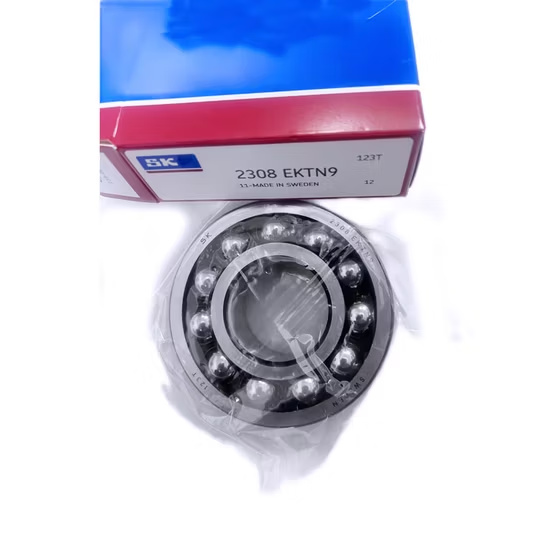


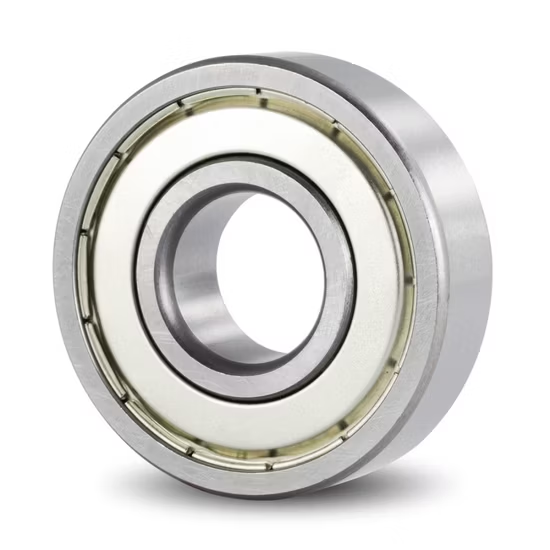
1218m/2218m/1318m/2318m Self-Aligning Ball Bearing — available in open, rubber-sealed, and iron-shielded configurations for electric motors, industrial gearboxes, and agricultural machinery. Multi-origin supply from Germany, Japan, Sweden, Malaysia, and China supports flexible lead times and cost optimization for global MRO requirements.
Every shipment supports authenticity verification through official brand QR scanning apps for full batch confidence.
Cross-reference alignment verified — Every 1218m/2218m/1318m/2318m self-aligning ball bearing order undergoes strict clearance, cage, and precision suffix validation before dispatch to prevent thermal binding in the field.
| Parameter | Value |
|---|---|
| Designation | 1218m/2218m/1318m/2318m |
| Product Type | Self-Aligning Ball Bearing |
| Bearing Style | Open, Rubber Seals, Iron Seals |
| Origin | Germany, Japan, Sweden, Malaysia, China |
| HS Code | 848210 |
Note: The lowercase 'm' suffix is unverified and requires manufacturer catalog confirmation, as the standard designation for a machined brass cage is typically uppercase 'M'.
| Industry | Typical Applications |
|---|---|
| Industrial Gearboxes | Conveyor drive shafts with slight misalignment |
| Material Handling | Belt idler rollers and bucket elevator pulleys |
| Agricultural Machinery | Combine harvester threshing cylinders and augers |
| General MRO | Exhaust fan shafts and ventilation blowers |
Matching the base number is never enough when sourcing a 1218m/2218m/1318m/2318m self-aligning ball bearing for heavy machinery. Overlooking internal design variations, seal configurations, or clearance classes directly leads to thermal binding and premature cage destruction under operational heat.
I learned this the hard way while troubleshooting a cement plant shutdown in Ethiopia. A replacement bearing seized within hours because the supplier matched the base designation but ignored the required C3 clearance for thermal expansion. The original equipment operated in high-temperature, dusty conditions, and installing a standard CN clearance unit caused the inner ring to expand and lock against the rolling elements . Sourcing the exact suffix combination is the only way to prevent these costly, unplanned downtime events.
Selecting the correct variant from the 1218m/2218m/1318m/2318m self-aligning ball bearing range requires looking beyond the catalog number. We evaluate your specific radial loads, shaft deflection expectations, and environmental contamination levels to recommend the precise seal type and internal geometry. This application-based selection review ensures the bearing survives the actual working conditions rather than just fitting the housing.
Heavy-duty environments introduce severe thermal gradients and particulate contamination that compromise standard bearing performance. When shafts deflect under load, the spherical raceway allows the inner ring and ball assembly to align with the outer ring, preventing edge loading. However, elevated temperatures reduce the effective internal clearance, making C3 or C4 classes mandatory to accommodate thermal expansion . Furthermore, agricultural and material handling sites demand robust sealing; rubber seals offer superior dust exclusion but generate friction heat, whereas iron shields provide non-contact protection for higher-speed applications.
The internal architecture of these units dictates their operational limits. While the base numbers indicate the dimensional series, the suffix defines the cage material, which controls the speed and vibration thresholds. A machined brass cage withstands higher temperatures and heavier vibrations compared to a pressed steel alternative. Additionally, the sealing configuration balances contamination exclusion against rotational friction. Specifying the correct clearance class ensures that the thermal growth of the shaft and housing does not eliminate the internal play required for the balls to roll freely without skidding.
Failing to verify the exact suffix and clearance class results in catastrophic damage rather than simple wear. According to failure mode classifications outlined in ISO 15243, thermal instability and smearing occur rapidly when internal clearance is exhausted. This leads to welded contact between the rolling elements and the raceway, destroying the shaft and housing simultaneously. The resulting unplanned downtime and secondary equipment repairs vastly outweigh the initial procurement savings of an incorrectly specified part .
We eliminate the risk of cross-reference errors by validating clearance, cage material, and precision suffixes, not just the base designation. For the 1218m/2218m/1318m/2318m series, we specifically check for the exact sealing variant required by your dust exposure levels. Our authorized multi-brand coverage means you can consolidate mixed-brand MRO requirements into a single, fully traceable order. Every shipment includes batch traceability to the manufacturer, ensuring you receive genuine components with verified metallurgical properties.
To ensure precise application matching, please provide your operational parameters, including radial and axial loads, operating speeds, and ambient temperature ranges. If you are replacing an existing unit, share the OEM equipment number or the exact designation printed on the current bearing nameplate for a comprehensive cross-reference review. Our engineering team will analyze these details to confirm the optimal clearance class and sealing configuration for your specific machinery.
Q: How do cross-reference errors in clearance cause thermal binding?
A: When a standard CN clearance bearing is installed in an application requiring C3, the thermal expansion of the shaft eliminates the internal play. This forces the rolling elements to slide rather than roll, generating excessive friction heat that rapidly leads to cage failure and complete seizure of the bearing assembly.
Q: How can I verify bearing authenticity using official brand apps?
A: Genuine bearings feature specific QR codes or data matrix labels on the packaging or the bearing itself. By scanning these codes with the manufacturer's official mobile application, procurement teams can instantly verify the batch number, production date, and origin, effectively filtering out counterfeits with soft inner rings.
Q: What is the difference between standard CN and C3 clearance?
A: Standard CN clearance is designed for normal operating temperatures and standard fits. C3 clearance provides greater internal play, which is essential for applications involving high speeds, elevated temperatures, or interference fits, as it compensates for the thermal expansion of the shaft and prevents internal preload.
Q: How do I select the correct seal type for harsh environments?
A: Rubber seals provide excellent protection against fine dust and moisture ingress but generate higher friction, limiting maximum speed. Iron shields offer non-contact protection, suitable for higher-speed applications where large debris is the primary concern, though they provide less resistance to fine particulate contamination.
Our 5-step process ensures every order is engineered, validated, and supported for optimal performance.
Technical needs assessment
Custom specifications
Free samples for $50k+
Pre-shipment inspection
On-site & predictive
Our certified engineers respond within 24 hours with detailed technical specifications, pricing, and lead time information.