01
Consultation
Technical needs assessment



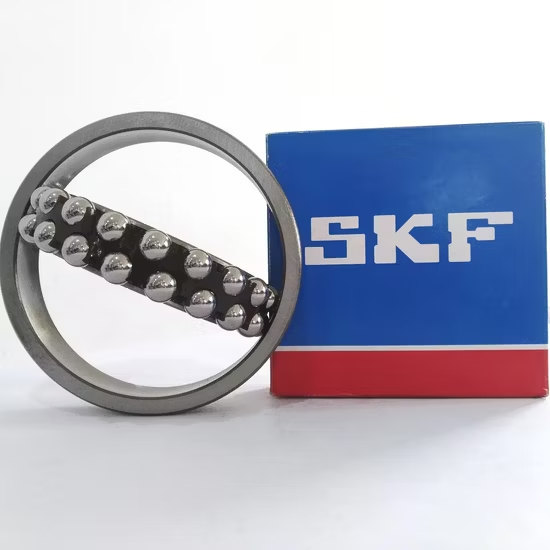
S1200 1201 1202 1203 1204 1205 1206 1207 1208 1209 1210 Double Row Self-Aligning Ball Bearings feature stainless steel construction for corrosion resistance, accommodating shaft misalignment in open or sealed styles.
Cross-Reference Triple Alignment — Base number, internal clearance, and seal type are verified simultaneously to prevent field binding across all S1200 to S1210 designations.
| Parameter | Value |
|---|---|
| Designation | S1200 1201 1202 1203 1204 1205 1206 1207 1208 1209 1210 |
| Bearing Type | Double Row Self-Aligning Ball Bearing |
| Material | Stainless Steel |
| Number of Rows | Double Row |
| Bearing Style | Open, Rubber Seals, Iron Seals |
| Feature | Low Noise, High Speed, Long Service Life |
| Customization | Available |
| Origin | Germany / Japan / Sweden / Malaysia / China |
| HS Code | 848210 |
Note: The "S" prefix in this context acts as an unverified suffix requiring manufacturer catalog confirmation for exact material grade and internal design specifics.
| Industry | Typical Applications |
|---|---|
| Food Processing | Washdown conveyor rollers, mixer shaft supports, packaging line idlers |
| Material Handling | Screw conveyor hanger bearings, bucket elevator tail pulleys |
| Electric Motors | Cooling fan shafts, marine motor mounts, pump drive assemblies |
| Agricultural Machinery | Fertilizer spreader discs, irrigation pivot joints, harvester augers |
Material substitution is the primary cause of seizure in high-moisture environments.
Early in my career in Dubai, I watched a critical packaging line halt completely because standard carbon steel bearings were installed in a high-humidity washdown zone. The inner rings rusted solid, scoring the shafts and causing catastrophic downtime. Relying solely on the base 12xx number without verifying the material composition leads to these exact failures. When sourcing a stainless steel double row self-aligning ball bearing S1200 series, procurement teams must ensure the internal rings and rolling elements are genuinely manufactured from corrosion-resistant alloys, not just coated carbon steel that will inevitably flake and jam .
Selecting the correct variant of the stainless steel double row self-aligning ball bearing S1200 series depends heavily on the contamination level of the facility. For food processing plants requiring daily chemical washdowns, rubber-sealed variants prevent moisture ingress and protect the internal raceways. In dry but dusty agricultural settings, iron shields offer low-friction protection against fine particulate matter. Our technical team reviews the specific environmental exposure to recommend the optimal sealing arrangement, ensuring the self-aligning capability is not compromised by external debris.
Conveyor systems and agricultural augers frequently suffer from shaft deflection and structural flexing under heavy, uneven loads. The double row self-aligning design accommodates these angular misalignments, preventing edge stresses that rapidly destroy rigid bearing types. Furthermore, in applications experiencing temperature fluctuations, selecting the appropriate internal clearance is critical. A standard clearance might lead to thermal binding when the shaft expands, whereas a C3 clearance provides the necessary operational gap. Proper lubrication selection also dictates service life; sealed units require high-quality, washdown-resistant grease pre-packed at the factory, while open designs demand strict relubrication schedules .
The 1200 to 1210 sequence defines the dimensional series and bore size progression for these self-aligning units. The double row configuration provides higher radial load capacity compared to single row alternatives, while the sphered outer ring raceway allows the inner ring and ball assembly to align freely. When specifying these bearings, the sealing choice dictates the friction and protection balance. Open bearings are ideal for applications where external lubrication systems are already integrated and contamination is minimal. Rubber seals provide excellent contact sealing against water and dust but generate slightly higher friction, limiting maximum rotational speeds. Iron shields offer non-contact protection, maintaining high-speed capabilities while keeping out larger debris.
Installing a counterfeit or improperly specified bearing in a food processing conveyor leads to far more than just a replacement part cost. Unplanned downtime halts the entire production line, resulting in significant revenue loss and missed shipment deadlines. Worse, if a soft inner ring fails and sheds metallic particles into a food product, it triggers severe safety recalls and regulatory penalties. According to failure analysis frameworks, material fatigue and corrosion pitting are primary drivers of premature spalling . Verifying the metallurgical composition before installation prevents these catastrophic operational and financial consequences.
We eliminate the risk of receiving counterfeit bearings with soft inner rings by sourcing exclusively through authorized channels, guaranteeing material authenticity for every S1200 to S1210 unit. Our cross-reference process goes beyond matching the base 12xx number; we verify the exact seal type and internal clearance required by your specific equipment to prevent field binding. Because we hold distribution authorizations across all major international brands, you can consolidate mixed-brand requirements into a single, traceable order. Every shipment includes full batch traceability, allowing your maintenance team to verify the origin and specifications directly through the manufacturer's official applications.
To ensure the selected S1200 to S1210 variant perfectly matches your operational demands, please provide the specific radial and axial loads, operating speeds, and ambient temperature ranges. Sharing the OEM equipment number or the exact installation space dimensions allows our engineering team to perform a precise cross-reference and L10 life calculation. Additionally, detailing the environmental conditions, such as exposure to chemical washdowns or abrasive dust, helps us determine the most appropriate sealing style and internal clearance for your application.
Q: How can we verify the authenticity of stainless steel bearings and avoid counterfeit soft inner rings?
A: Always procure through authorized distributors and demand batch traceability documentation. Genuine units feature QR codes that can be scanned using the manufacturer's official applications to verify origin. Additionally, requesting material test reports ensures the inner and outer rings are manufactured from the specified corrosion-resistant alloys, preventing the premature seizure caused by soft, counterfeit components.
Q: What cross-reference checks are critical beyond the base 12xx designation?
A: Matching the base number is insufficient. You must verify the internal clearance class to accommodate thermal expansion, and confirm the exact seal type required for your contamination level. Overlooking these suffixes often results in thermal binding or rapid grease washout. Our technical team aligns these parameters with your specific equipment requirements to ensure field reliability.
Q: How do we choose between open, rubber sealed, and iron sealed variants?
A: Open bearings suit environments with integrated external lubrication and low contamination. Rubber seals provide superior protection against water and fine dust in washdown areas but generate slightly higher friction. Iron shields offer non-contact protection, maintaining high-speed capabilities while excluding larger debris. The choice depends on your specific balance of contamination risk and rotational speed limits.
Q: What is the misalignment capacity difference compared to single row alternatives?
A: The double row configuration combined with the sphered outer ring raceway provides a broader angular misalignment tolerance. This design effectively accommodates shaft deflections and housing inaccuracies common in conveyor and agricultural machinery, significantly reducing edge stresses and extending service life compared to rigid, single row bearing types that cannot compensate for structural flexing.
Q: How should we perform mounting checks to prevent premature cage failure?
A: Ensure the shaft and housing seats are machined to the precise tolerances specified for the stainless steel variant. Avoid excessive drive-in forces that eliminate the internal operational clearance, as this causes thermal binding and cage stress under load. Always use appropriate induction heating or hydraulic tools, and never strike the bearing rings directly with standard steel hammers to prevent surface damage.
Our 5-step process ensures every order is engineered, validated, and supported for optimal performance.
Technical needs assessment
Custom specifications
Free samples for $50k+
Pre-shipment inspection
On-site & predictive
Our certified engineers respond within 24 hours with detailed technical specifications, pricing, and lead time information.