01
Consultation
Technical needs assessment
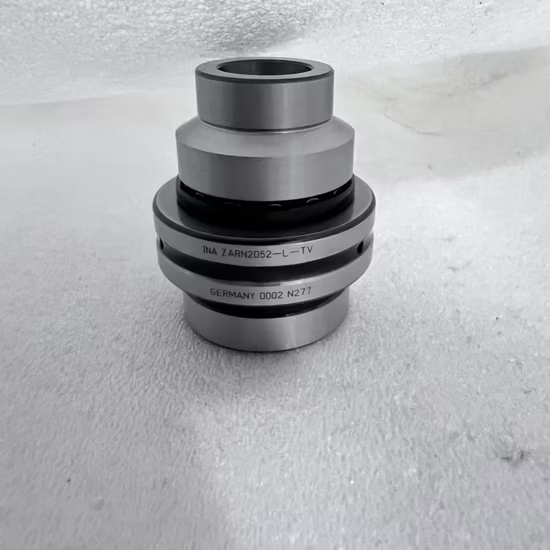
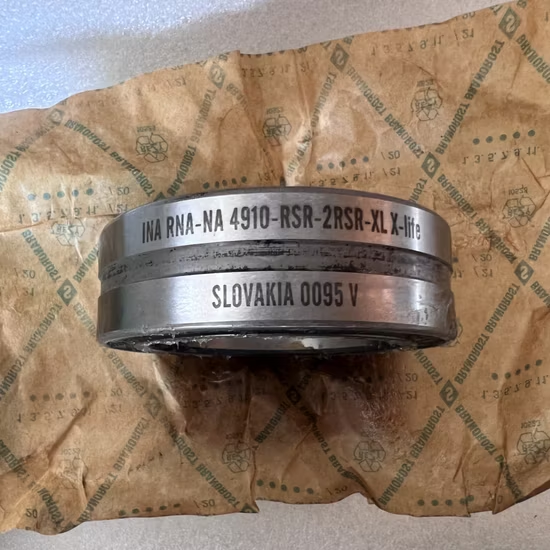
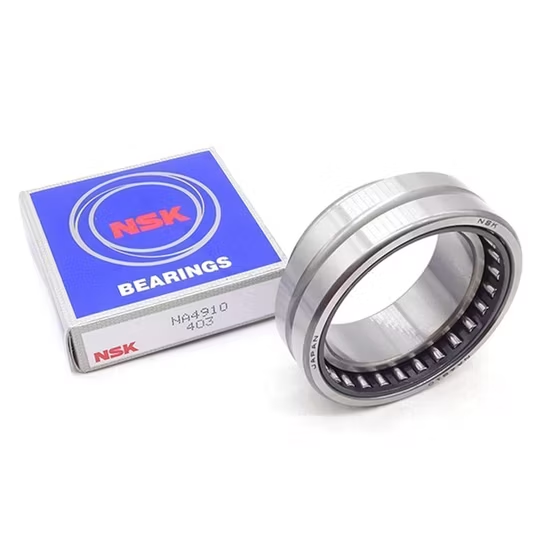
K030505 Needle Roller Bearing 3×5×5 mm — featuring a plastic cage for low friction in high-speed miniature applications. The open design requires external lubrication and proper sealing to maintain optimal radial load capacity.
Cross-Reference Triad Alignment — matching base number, cage polymer grade, and radial clearance to prevent thermal binding in micro-drives.
| Parameter | Value |
|---|---|
| Designation | K030505 |
| Bearing Type | Needle Roller Bearing |
| Bore Diameter (d) | 3 mm |
| Outside Diameter (D) | 5 mm |
| Width (B) | 5 mm |
| Cage Material | Plastic (Polymer) |
| Material Options | Bearing Steel or Stainless Steel variants |
| Load Direction | Radial |
| Seal or Shield Type | Open |
Note: The 'K' prefix and '030505' dimensional suffix are unverified standard industry codes requiring manufacturer catalog confirmation for exact interchange.
| Industry | Typical Applications |
|---|---|
| Small Electric Motors | Micro-rotor shaft supports |
| Precision Instruments | Gimbal and optical alignment mechanisms |
| Robotics | Miniature actuator joints and wrist linkages |
| Fishing Reels | Drag system radial support |
Polymer deformation under thermal load causes catastrophic seizure in tight envelopes.
When sourcing a K030505 needle roller bearing for compact assemblies, procurement teams often fixate on the 3x5x5mm footprint while overlooking the cage material. In high-humidity, high-temperature environments—like those I frequently troubleshoot across Southeast Asian manufacturing floors—plastic cages absorb moisture and soften. The result is rapid deformation, roller skewing, and eventual lock-up, long before the rolling elements show any fatigue . A basic designation match is useless if the polymer grade cannot withstand the operational heat.
Supplying the correct K030505 needle roller bearing requires looking past the basic dimensions. We evaluate the specific thermal and rotational demands of your micro-motors or robotic joints. By verifying the exact polymer compound used in the cage and confirming the material option—whether standard bearing steel or a stainless variant for corrosion resistance—we ensure the component survives the actual operating envelope, not just the theoretical one.
In miniature applications, heat dissipation is severely restricted. Friction from high-speed rotation rapidly elevates the internal temperature of a 3 mm bore assembly. If the plastic cage lacks the necessary thermal stability, it expands and binds against the shaft or housing. Furthermore, in humid or washdown environments, moisture ingress degrades certain polymers and accelerates corrosion in standard steel components, making the selection of the right material variant and initial lubrication absolutely critical .
The K-series designation typically indicates a needle roller and cage assembly without inner or outer rings, relying on the shaft and housing to act as raceways. This maximizes radial load capacity within the minimal 5 mm outside diameter. The plastic cage is engineered to be noticeably lighter than brass alternatives, reducing centrifugal forces on the rollers at high speeds. However, this advantage is strictly bound by the thermal limits of the specific polymer used, dictating the maximum permissible operating temperature and speed.
Installing a component where the base number matches but the cage material differs from the OEM specification leads to rapid, unplanned downtime. The polymer may melt or fracture, scattering debris throughout the micro-gearbox or instrument housing. This catastrophic damage often destroys the precision ground shaft and housing bore, voiding equipment warranties and forcing a complete sub-assembly replacement rather than a simple bearing swap .
We do not just ship a box with the right number printed on it. Our cross-reference process strictly aligns the base designation, the exact cage polymer grade, and the internal clearance. For the K030505, we specifically verify that the plastic cage compound matches the thermal profile of your application, preventing the high-humidity deformation issues I have seen wreck production lines. Every order is backed by batch traceability, ensuring you receive the exact material variant required for your specific operating environment.
To ensure the selected component perfectly matches your application, please provide the exact radial loads, maximum rotational speeds, and continuous operating temperatures. If you are replacing an existing part, share the OEM equipment number or the original manufacturer's drawing so our engineering team can perform a strict cross-reference check on the cage material and internal geometry.
Q: Why does a basic K030505 cross-reference sometimes fail in the field?
A: A basic match only confirms the 3x5x5mm dimensions. It often ignores the specific plastic cage polymer grade and internal clearance. If the replacement uses a lower-temperature polymer, it will deform and seize under the same thermal loads that the original equipment handled easily, leading to premature failure.
Q: How do I choose between bearing steel and stainless variants for this size?
A: Standard bearing steel offers superior fatigue strength for high-load, dry environments. Stainless variants are necessary when the micro-motor or instrument is exposed to high humidity, mild corrosive agents, or washdown procedures, though they may carry slightly lower dynamic load limits.
Q: What are the thermal limits for the plastic cage in this assembly?
A: The exact thermal limit depends on the specific polymer compound used by the manufacturer. While some engineering plastics handle elevated temperatures well, others will soften and cause roller skewing. We verify the exact material data sheet for your batch before shipment.
Q: How can I verify the authenticity of these micro-bearings?
A: Counterfeiters frequently clone packaging for high-volume micro-bearings. We provide full batch traceability and a QR code that links directly to the manufacturer's official verification app, confirming the origin and material specifications of your specific K030505 units.
Q: What shaft preparation is required since this is an open assembly?
A: Because the K-series lacks inner and outer rings, the shaft and housing act directly as raceways. They must be precision ground and hardened to the manufacturer's specifications to prevent premature wear and ensure the plastic cage maintains proper roller guidance.
Our 5-step process ensures every order is engineered, validated, and supported for optimal performance.
Technical needs assessment
Custom specifications
Free samples for $50k+
Pre-shipment inspection
On-site & predictive
Our certified engineers respond within 24 hours with detailed technical specifications, pricing, and lead time information.