01
Consultation
Technical needs assessment
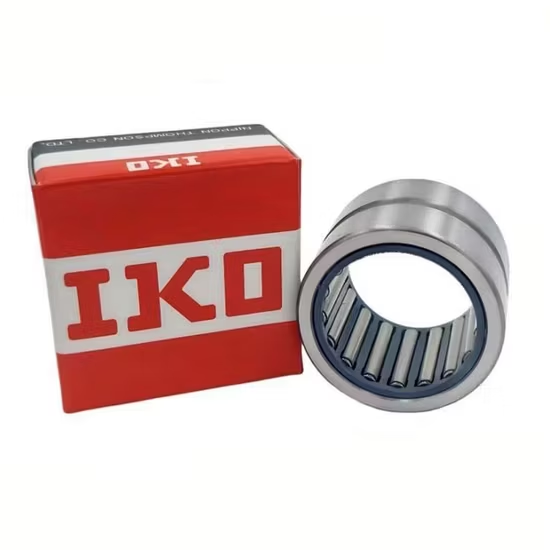


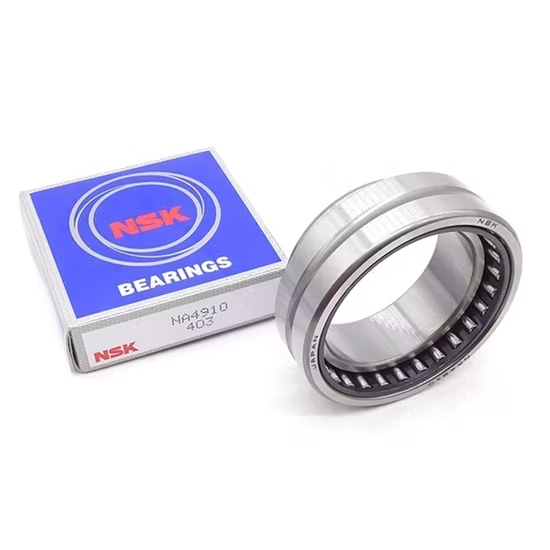
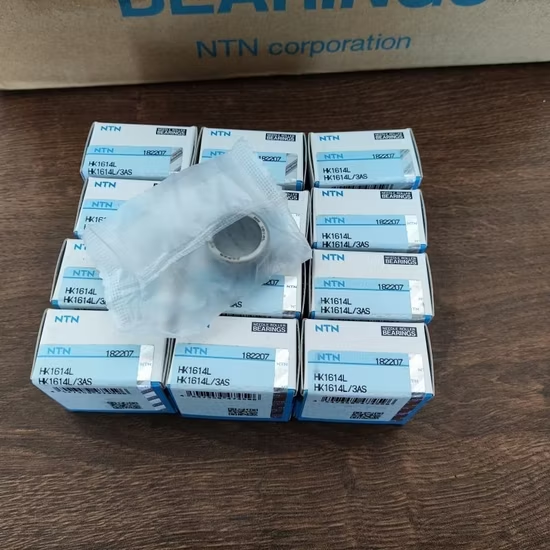
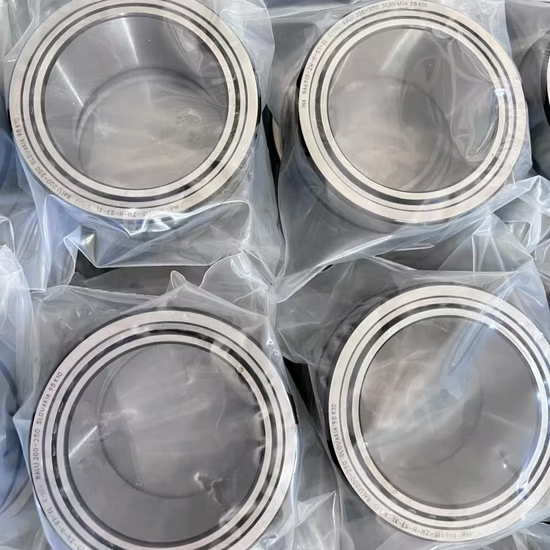
SS316 Stainless Steel Needle Roller Bearing — corrosion-resistant radial load solution engineered for high-moisture and chemically aggressive operating environments. Open-type configurations offered with or without inner and outer rings to accommodate compact cross-section constraints.
Exact Cross-Reference Alignment — verifying structural style, radial clearance, and cage material rather than just matching the base designation.
| Parameter | Value |
|---|---|
| Product Type | Needle Roller Bearing |
| Material Options | SS316 Stainless Steel or standard bearing steel variants |
| Load Direction | Radial |
| Structural Style | Open type; configurable with or without inner and outer rings |
| Origin | Germany, Japan, Sweden, Malaysia, or China |
| Certification | Material test reports and batch traceability documentation |
| Industry | Typical Applications |
|---|---|
| Agricultural Machinery | Harvester conveying mechanisms and fertilizer spreader drive shafts exposed to corrosive agrochemicals |
| Material Handling | Conveyor belt idler rolls and automated storage retrieval systems operating in high-humidity washdown zones |
| Industrial Gearboxes | Planetary gear sets and high-torque reduction stages requiring compact radial load support |
Material substitution is the primary culprit behind unexpected cage fractures in washdown environments.
Procurement teams frequently encounter situations where the base part number matches perfectly, but the internal metallurgy does not. In the Pearl River Delta manufacturing hub, it is alarmingly common to see standard bearing steel passed off as corrosion-resistant alternatives. When these components face aggressive moisture or chemical exposure, the inner rings rust rapidly, leading to severe spalling and catastrophic cage failure. Sourcing from a verified SS316 stainless steel needle roller bearing supplier ensures the metallurgical composition actually withstands the harsh operational reality, preventing the costly unplanned downtime associated with premature seizing .
Needle roller profiles excel where radial space is strictly limited but load demands remain high. As an experienced SS316 stainless steel needle roller bearing supplier, we provide open-type configurations that adapt to your specific housing and shaft designs. Selecting the correct structural style—whether utilizing the shaft directly as a raceway or requiring dedicated inner and outer rings—directly impacts the assembly's overall rigidity and load distribution.
Equipment exposed to frequent caustic washdowns or high ambient humidity demands more than just surface-level rust prevention. Standard lubricants easily emulsify and wash out, leaving the rolling elements unprotected against friction and wear. Open-type designs in these environments require meticulous external relubrication schedules using water-resistant greases to flush out contaminants. Furthermore, the thermal expansion characteristics of stainless alloys differ from standard carbon steels, meaning internal clearance must be carefully evaluated to prevent thermal binding when operating temperatures fluctuate during continuous cycles .
The decision between SS316 stainless steel and standard bearing steel hinges entirely on the operating environment's corrosiveness and load requirements. While standard bearing steel offers superior fatigue strength for heavy radial loads in dry conditions, SS316 provides essential resistance to pitting and crevice corrosion in wet or chemical-laden atmospheres. The open structural style allows for customized lubrication intervals, but it also means the housing and shaft must be machined to precise tolerances if inner or outer rings are omitted. Understanding these material and structural options ensures the selected component aligns perfectly with both the mechanical loads and the environmental exposure.
Accepting unverified material certifications to save on initial procurement costs inevitably leads to severe operational penalties. When inferior steel is installed in a corrosive application, the resulting surface degradation accelerates fatigue spalling, ultimately causing the needle rollers to skew and fracture the cage. This cascading failure not only destroys the bearing but frequently scores the shaft and housing, turning a simple component swap into a major assembly rebuild. According to ISO 281 frameworks, operating a bearing outside its verified material and environmental limits drastically reduces its calculated rating life, voiding equipment warranties and disrupting production schedules .
We address the critical pain points of material misrepresentation and cross-reference errors by validating every shipment. Our documentation proves the exact SS316 grade, eliminating the risk of receiving softer, lower-tier stainless alternatives that fail salt spray tests. We verify that the structural style—such as the presence of an inner ring—matches your equipment's specific shaft hardness requirements, not just the base number. Every batch is traced back to the manufacturer, ensuring full accountability. Furthermore, our technical review assesses your specific radial loads and washdown frequencies to confirm the selected configuration will survive the actual operating conditions.
To ensure optimal performance, please provide your specific equipment parameters, including radial load magnitudes, operating speeds, and environmental exposure details. Our engineering team utilizes this data to determine the exact structural configuration and material grade required for your application. Sharing the OEM equipment number or existing housing dimensions allows us to perform a precise cross-reference check, guaranteeing the selected component integrates flawlessly into your machinery.
Q: How do we determine the exact designation for our specific equipment?
A: Provide your equipment's radial load, operating speed, shaft diameter, and housing dimensions. Our engineering team analyzes these parameters alongside environmental factors to recommend the precise structural style—whether you need dedicated inner and outer rings or can use the shaft directly as a raceway.
Q: What is the difference between SS316 and standard bearing steel for these applications?
A: Standard bearing steel offers higher load capacity for dry environments, while SS316 provides essential resistance to pitting and corrosion in wet or chemical-exposed conditions. We help you evaluate the operational environment to select the material that prevents premature rust and surface degradation.
Q: What are common failure modes in high-moisture operating environments?
A: In washdown zones, standard lubricants often emulsify and wash away, leaving rolling elements unprotected. This leads to rapid surface corrosion, roller skewing, and eventual cage fracture. Proper material selection and water-resistant relubrication are critical to preventing these moisture-induced failures.
Q: How should open-type stainless steel bearings be maintained?
A: Open-type designs require regular external relubrication using water-resistant greases to flush out moisture and contaminants. Establishing a strict maintenance cycle based on your specific washdown frequency ensures the rolling elements remain protected against friction and environmental degradation.
Our 5-step process ensures every order is engineered, validated, and supported for optimal performance.
Technical needs assessment
Custom specifications
Free samples for $50k+
Pre-shipment inspection
On-site & predictive
Our certified engineers respond within 24 hours with detailed technical specifications, pricing, and lead time information.