01
Consultation
Technical needs assessment



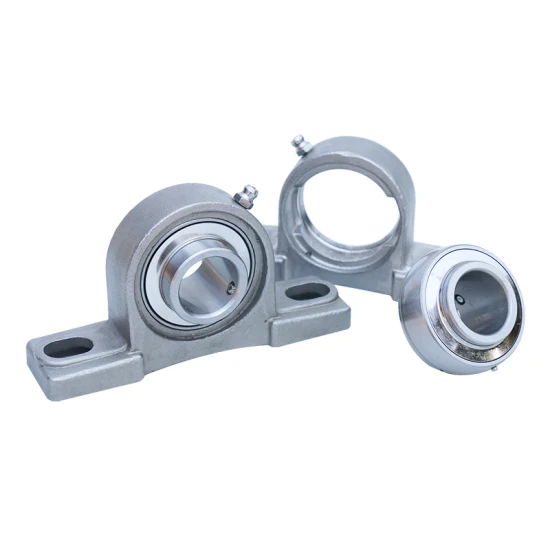
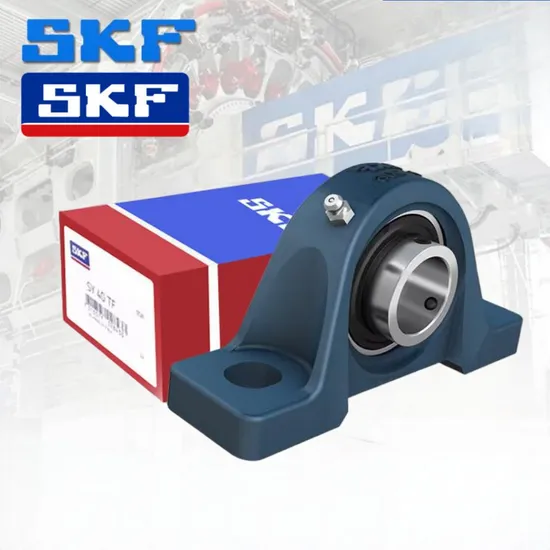
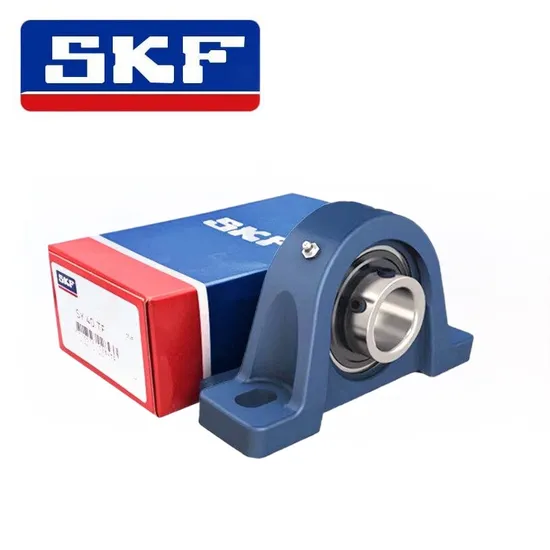
UCFL320 Two-Bolt Flange Block Unit — cast iron housing with deep groove raceway for radial and axial load handling in agricultural and conveyor systems.
Traceable Origin Verification — Every UCFL320 unit ships with batch codes scannable via official brand applications to confirm manufacturing origin and prevent field failures.
| Parameter | Value |
|---|---|
| Designation | UCFL320 |
| Product Type | Insert Bearing / Pillow Block Unit |
| Number of Rows | Single |
| Raceway | Deep Groove Raceway |
| Housing Material | Cast Iron |
| Bore Diameter (d) | 100 mm |
| Feature Options | Corrosion Resistant, High Temperature, High Speed variants |
| Origin | Germany / Japan / Sweden / Malaysia / China |
| HS Code | 8483200000 |
Note: Base designations like UCFL and 320 require manufacturer catalog confirmation for specific internal clearance and seal suffixes.
| Industry | Typical Applications |
|---|---|
| Agricultural Machinery | Combine harvester rotor shafts, tractor PTO drive supports |
| Material Handling | Bulk conveyor tail pulleys, bucket elevator return idlers |
| Textile Machines | Yarn winding spindle supports, loom beam flange mounts |
Seal failure, not metal fatigue, causes the majority of early removals in dirty environments.
Procurement teams often approve a UCFL320 pillow block bearing based solely on the 100mm bore and basic flange dimensions, ignoring the critical seal suffix. In agricultural and material handling applications, fine particulate matter bypasses standard non-contact shields, mixing with grease to form an abrasive paste that scores the deep groove raceway . I have dismantled countless seized flange blocks in the Pearl River Delta where the inner ring was perfectly intact, but the seal lip was worn through, allowing silica dust to lock the cage.
Selecting the correct UCFL320 pillow block bearing requires looking past the basic housing shape to evaluate the internal sealing arrangement and clearance class. Our technical review process cross-references your specific exposure to moisture and particulate matter against available seal variants, ensuring the selected unit maintains lubrication integrity without generating excessive friction heat at the lip contact point.
Flange block units in conveyor systems face combined loading from belt tension and pulley weight, demanding a robust deep groove raceway to handle the radial component while accommodating minor axial displacement. When operating at elevated temperatures, standard internal clearances can close up due to thermal expansion of the shaft and housing, leading to preload and premature cage failure. Proper selection must account for the lubrication interval and whether the environment necessitates contact seals for maximum dirt exclusion or non-contact shields for higher speed capabilities .
The cast iron housing provides the necessary rigidity to prevent outer ring creep under heavy radial loads, but the internal bearing insert dictates the actual service life. A wide inner ring with set screw locking ensures secure shaft attachment without the need for precision-machined stepped shafts, though it requires careful torque application to avoid distorting the inner raceway. The deep groove raceway geometry is optimized to distribute contact stresses evenly across the ball complement, which is critical when the flange block is subjected to shock loads typical in agricultural harvesting equipment. Selecting the appropriate cage material—whether pressed steel for standard speeds or specialized polymers for corrosion-prone environments—directly influences the vibration signature and operational noise floor.
Substituting a visually similar flange block without verifying the exact seal type or internal clearance often results in unplanned downtime that dwarfs the initial component savings. When a replacement unit lacks the necessary thermal clearance for a high-speed conveyor pulley, the resulting binding can destroy the shaft journal and warp the mounting bracket. ISO 281 life calculations become irrelevant when the fundamental operating clearance is compromised by incorrect cross-referencing, leading to catastrophic damage and voided equipment warranties .
We do not simply ship the base number; we verify the exact seal and clearance suffix required for your specific duty cycle to prevent the dust ingress failures I frequently witnessed during my field service years. Our cross-reference database aligns not just the 100mm bore and bolt spacing, but also the internal geometry differences between major manufacturers. Every UCFL320 unit we supply includes full batch traceability, allowing you to verify the metallurgical origin before installation. We reject generic replacements that match the outer dimensions but fail on the critical internal tolerances needed for agricultural and industrial longevity.
To ensure the selected flange block unit meets your operational demands, please provide the radial and axial load profiles alongside the maximum operating speed and ambient temperature range. Supplying the specific OEM equipment number or the exact environmental exposure details allows our engineering team to confirm the optimal seal variant and internal clearance class for your application.
Q: How do I verify the authenticity of the UCFL320 pillow block bearing upon delivery?
A: Every genuine unit features a unique batch code that can be scanned using the manufacturer's official mobile application. This digital verification confirms the production facility, manufacturing date, and original specifications, protecting your operation from counterfeit units with soft inner rings that fail prematurely under agricultural loads.
Q: Why do cross-reference errors happen when replacing a standard flange block?
A: Matching only the base designation and 100mm bore ignores critical internal differences like seal friction, cage material, and thermal clearance. A unit intended for a clean, high-speed environment will fail rapidly if installed in a dusty conveyor application without the correct contact seal suffix, leading to abrasive wear and seizure.
Q: What are the mounting considerations for this two-bolt oval flange design?
A: Proper alignment of the cast iron housing to the shaft axis is essential to prevent the outer ring from binding within the bore. The set screws on the wide inner ring must be tightened evenly to the specified torque to secure the 100mm shaft without distorting the inner raceway, which would otherwise introduce vibration and reduce the bearing life.
Q: Which seal variant is best for high-dust agricultural machinery?
A: For environments with heavy particulate contamination, a triple-lip contact seal is typically required to block fine dust from reaching the deep groove raceway. However, this increases friction, so the selection must balance contamination exclusion with the operational speed and temperature limits of the specific UCFL series insert.
Q: What documentation accompanies a verified bearing shipment?
A: We provide a comprehensive documentation package including a Certificate of Conformity, material test reports for the cast iron housing and bearing steel, and a dimensional inspection report. These documents confirm that the running accuracy and physical tolerances of the UCFL320 unit strictly adhere to the manufacturer's engineering specifications.
Our 5-step process ensures every order is engineered, validated, and supported for optimal performance.
Technical needs assessment
Custom specifications
Free samples for $50k+
Pre-shipment inspection
On-site & predictive
Our certified engineers respond within 24 hours with detailed technical specifications, pricing, and lead time information.