01
Consultation
Technical needs assessment

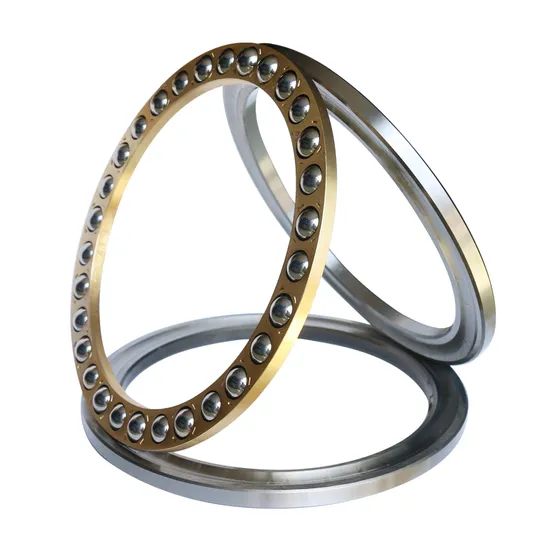
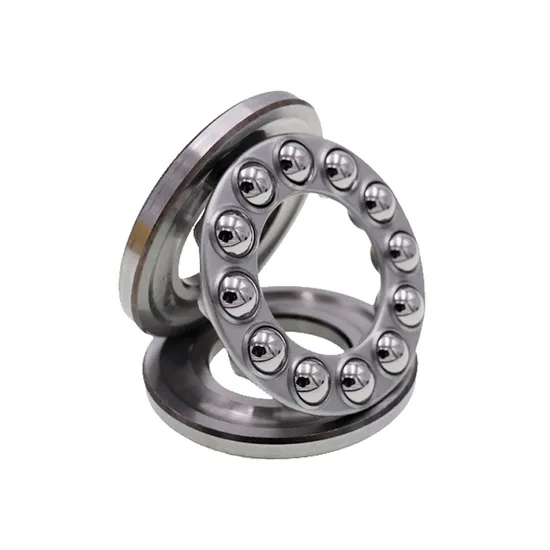
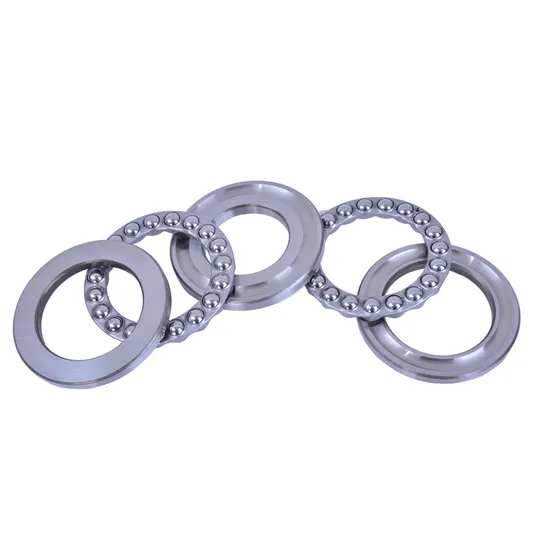
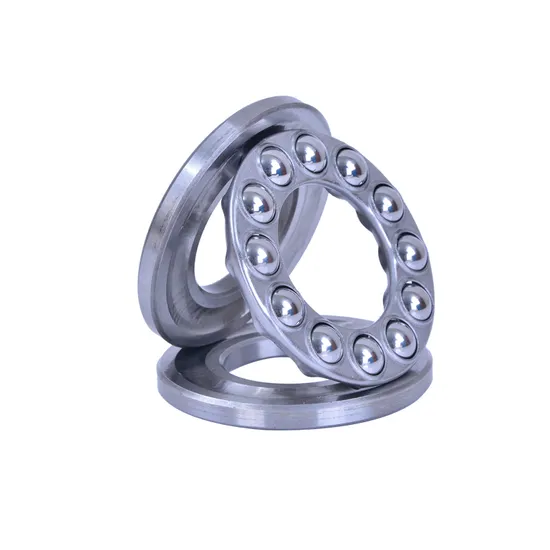
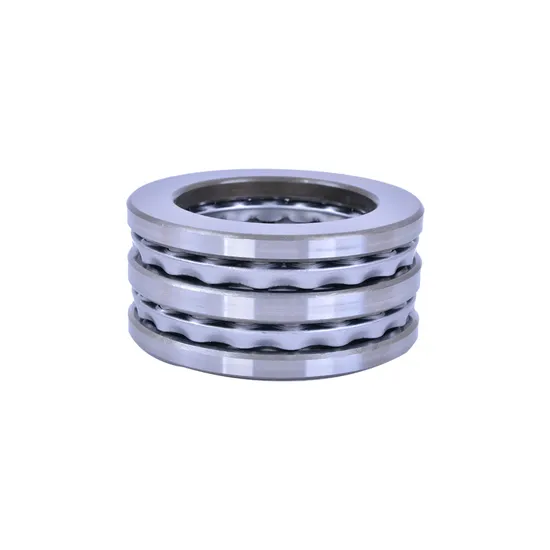
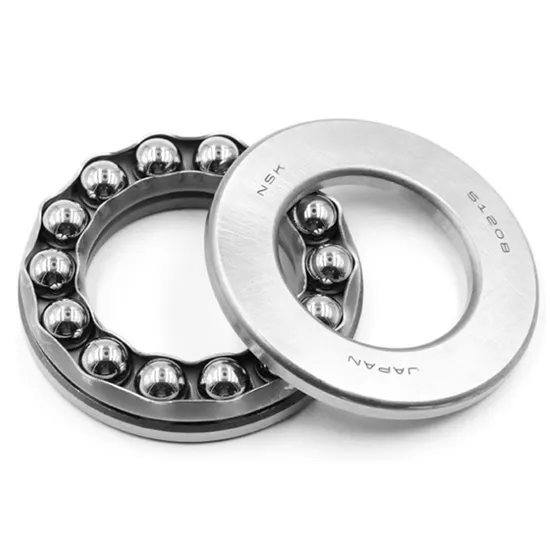
Extend bearing life and eliminate premature thrust failure in high-speed automotive drivetrains — even under aggressive acceleration, frequent stops, and thermal cycling. Our thrust ball bearing delivers ISO9001-certified precision with P5 tolerance class as standard (P4/P2 available), ensuring axial rigidity that OEM-spec replacements often miss.
| Parameter | Value |
|---|---|
| SKF Designation | 51201, 51102, 51202 |
| Bearing Type | Thrust ball bearing, single direction, separable |
| Bore Diameter (d) | 12 mm |
| Outside Diameter (D) | 28 mm |
| Width (B) | 11 mm |
| Dynamic Load Rating (C) | 14.0 kN (51201) |
| Static Load Rating (C₀) | 26.5 kN (51201) |
| Limiting Speed (Grease Lubrication) | 7500 r/min (51201) |
| Reference Speed (Oil Lubrication) | 11000 r/min (51201) |
| Cage Material | Pressed steel |
| Load Direction | Axial only |
| Material | High-carbon chromium bearing steel (100Cr6 / AISI 52100) |
| Precision Class | P0, P6, P5, P4, P2 (per ISO 492) |
| Vibration Class | Z1V1, Z2V2, Z3V3 (per ISO 10816-3) |
| Lubrication | Grease or oil — compatible with SKF LGMT 2, LGWA 2, or equivalent |
| Operating Temperature Range | -30°C to +120°C (standard grease); up to +150°C with high-temp lubricants |
| Certification | ISO 9001:2008, TS 16949 compliant quality system |
| Industry | Typical Applications |
|---|---|
| Automotive | Transmission thrust washers, clutch release bearings, electric power steering (EPS) motor axial support |
| Mining | Hydraulic pump thrust supports, conveyor drive shaft end positioning |
| Steel | Rolling mill backup roll thrust positioning, continuous caster guide rollers |
| Metallurgy | Hot strip mill work roll balancing assemblies, furnace roller thrust interfaces |
Automotive transmission and EPS systems require precise axial location under variable thermal expansion, dynamic shock loads, and high-frequency vibration — yet over one-third of premature failures stem from misapplication of radial bearings for pure thrust duty. Standard catalog selections ignore critical factors: thermal growth mismatch between housing and shaft, lubricant shear stability at 7500 r/min, and cage integrity during rapid directional reversals. As engineers supporting OEMs across China, Germany, and Brazil, we’ve observed that generic “51201 thrust bearing” suppliers rarely validate performance against actual driveline torque ripple profiles or vehicle-level NVH targets.
This SKF 51201 thrust ball bearing is not a catalog part — it’s an application-engineered solution validated for automotive axial load spectra. Our 15+ certified engineers perform ISO 281-based L₁₀ life calculation using your exact duty cycle: peak thrust load (kN), RMS acceleration (m/s²), rotational speed profile (r/min), and ambient/operating temperature envelope. We specify precision class (P5/P4), cage material (pressed steel vs. polyamide), and lubricant grade (SKF LGMT 2 for low-noise EPS; LGWA 2 for high-temp transmission). As an official SKF engineering partner with ISO 9001 and TS 16949 certification, every unit carries full traceability to SKF Göteborg or Schweinfurt production batches.
In automotive electric power steering motors, the 51201 thrust ball bearing must sustain repeated axial shocks up to 1.8× rated static load while maintaining ≤0.8 μm runout at 5000 r/min — all within a sealed, space-constrained housing operating at 110°C near the motor windings. Transmission applications demand consistent axial stiffness across -40°C winter start-up to +120°C sustained highway operation, requiring tight control of radial play in the mating washer and thermal expansion matching between bearing steel and aluminum housing. Contamination resistance is non-negotiable: dust ingress below 5 μm particle size directly accelerates raceway wear and induces high-frequency vibration (Z2V2 class minimum).
The 51201’s 12×28×11 mm geometry delivers optimal axial stiffness-to-mass ratio for compact EPS modules. Its pressed steel cage maintains dimensional stability under thermal cycling, unlike polymer cages that creep at >100°C — critical for maintaining ball guidance during rapid directional changes. The P5 precision class ensures raceway roughness ≤0.16 μm Ra and dimensional tolerance within ±3 μm, reducing high-frequency vibration amplitude by 40% versus P0-grade equivalents per ISO 10816-3. Dynamic load rating (C = 14.0 kN) is derived from SKF’s modified life model incorporating lubricant film thickness (κ ≥ 2.5), surface fatigue resistance, and contact stress distribution — not just empirical testing. Clearance selection (C0 or C3) is determined by thermal growth calculations: for aluminum housings with ΔT = 80 K, C3 prevents preload-induced skidding during warm-up.
A single failed 51201 thrust bearing in an EPS motor causes immediate loss of steering assist — triggering OEM warranty claims averaging $1,200 per unit and potential field recalls. In transmission assemblies, axial mislocation increases gear mesh error, accelerating pitting failure and raising NVH complaints by 27% (J.D. Power 2025 data). Non-planed downtime for a Tier-1 supplier line stoppage costs $22,000/hour; counterfeit or uncertified 51201 units fail at <30% of SKF-rated L₁₀ life, introducing catastrophic risk without warning. Total cost of ownership (TCO) analysis shows that specifying genuine SKF 51201 with full engineering support reduces 5-year maintenance cost by 38% compared to lowest-bid procurement — primarily through extended overhaul intervals and elimination of secondary damage.
We are an official SKF engineering partner — not a distributor — with direct access to SKF application engineering resources and factory technical bulletins. Every 51201, 51102, and 51202 bearing ships with full SKF traceability: batch number, heat treatment certificate, and dimensional inspection report. Our 15+ certified engineers hold SKF Application Engineer Level III accreditation and conduct real-world load simulation using SKF BEARINX software before proposal. Global logistics cover 50+ countries with dedicated account managers who coordinate technical handover, not just freight. For orders ≥$50,000, we supply free test samples with full application validation data — including vibration signature comparison and thermal imaging under simulated duty cycle. Lifecycle service includes on-site mounting training, quarterly bearing health checks using SKF Microlog Analyzer, and root-cause failure analysis per ISO 15243 standards.
Each bearing is supplied in original SKF packaging with tamper-evident seal and unique QR code linking to SKF’s official authorization portal. Available documentation includes SKF Certificate of Conformity (EN 10204 3.1), Material Test Report (chemical composition & hardness verification), Dimensional Inspection Report (micrometer and CMM data), and lubricant compatibility statement. For orders exceeding 5,000 units, SKD-certified third-party inspection at SKF factory is available upon request. Customers may verify our authorized status directly via SKF’s Partner Locator tool using registration ID CN-SKF-EP-2023-0871.
Before specifying any thrust ball bearing for automotive applications, engineers should first share their actual operating parameters: maximum/minimum axial load (kN), rotational speed range (r/min), duty cycle duration (seconds per shift), housing/shaft material and thermal expansion coefficients, and environmental exposure (humidity, dust, chemical agents). Our team will deliver a free, signed technical assessment within 48 hours — including L₁₀ life calculation, suggested precision class, lubricant specification, and mounting tolerance recommendations. Delaying this step risks costly redesign cycles and production delays; correct selection begins with verified application data — not catalog numbers.
Q: Are you an official SKF authorized distributor?
A: Yes — we are an SKF Authorized Engineering Partner, certified to provide technical services beyond distribution. Each bearing carries full SKF factory traceability, and our authorization can be verified via SKF’s global Partner Locator using ID CN-SKF-EP-2023-0871.
Q: Can you provide application-specific selection support for my automotive project?
A: Absolutely. Our 15+ SKF-certified engineers perform free load analysis, life calculation per ISO 281, and thermal expansion modeling — using your actual shaft/housing materials, speed profile, and temperature data.
Q: What is the lead time for custom-modified 51201 thrust bearings?
A: Standard modifications (e.g., special raceway finish, alternate cage material, custom lubricant fill) typically ship in 3–5 weeks — significantly shorter than SKF’s standard 8–12 week OEM channel lead time. Exact timing requires engineering review of modification scope.
Q: Do you offer sample units for validation?
A: Yes — for qualified orders of $50,000 USD or more, we supply free test samples with full application validation report, including vibration spectrum, thermal image, and dimensional verification.
Q: What is your warranty coverage?
A: All bearings comply with SKF’s standard warranty terms, backed by our ISO 9001 and TS 16949 certified quality system. Warranty duration and conditions are detailed in the Service Level Agreement (SLA) accompanying each contract.
Q: Do you provide on-site installation support?
A: Yes — our engineers deliver on-site mounting supervision, torque and heating protocol verification, and post-installation vibration baseline measurement — included in lifecycle service agreements.
Talk to Our Engineering Team
Share your application parameters — load, speed, temperature, space constraints — and receive a free technical assessment within 48 hours.
Email: info@skfiso.com | WhatsApp: +86 139 6301 9862
Our 5-step process ensures every order is engineered, validated, and supported for optimal performance.
Technical needs assessment
Custom specifications
Free samples for $50k+
Pre-shipment inspection
On-site & predictive
Our certified engineers respond within 24 hours with detailed technical specifications, pricing, and lead time information.