01
Consultation
Technical needs assessment
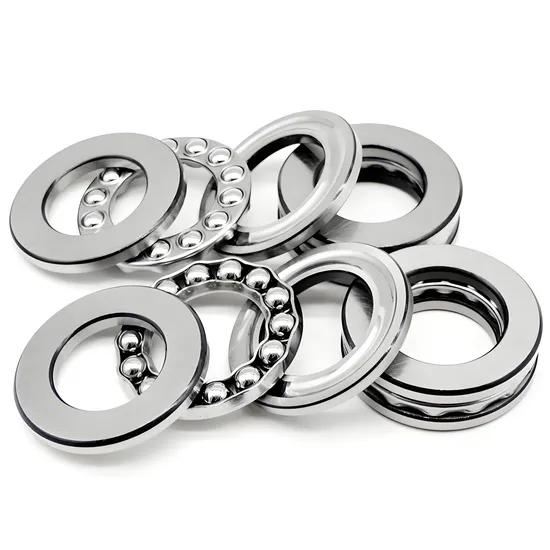
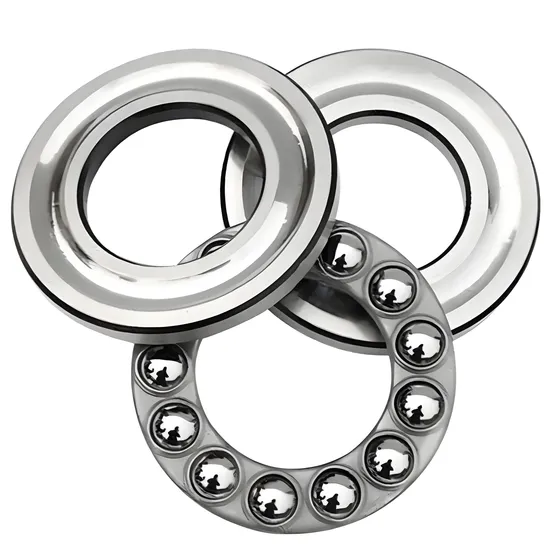
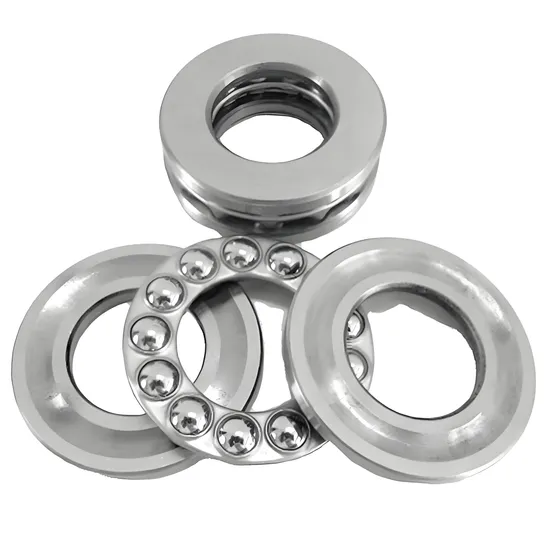
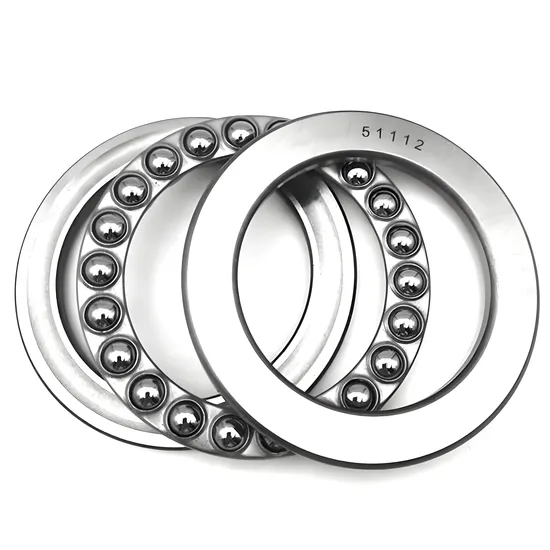
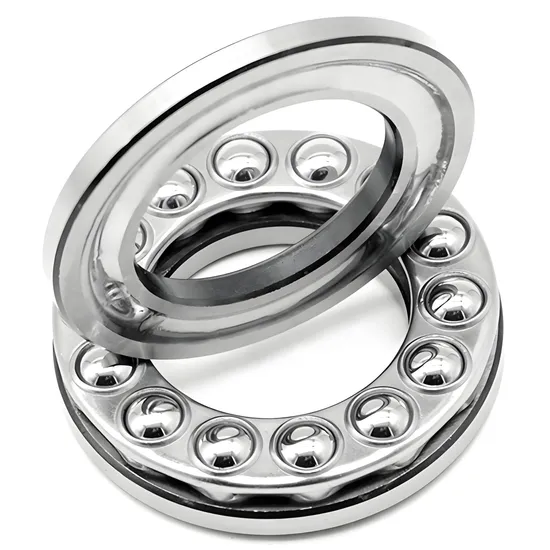
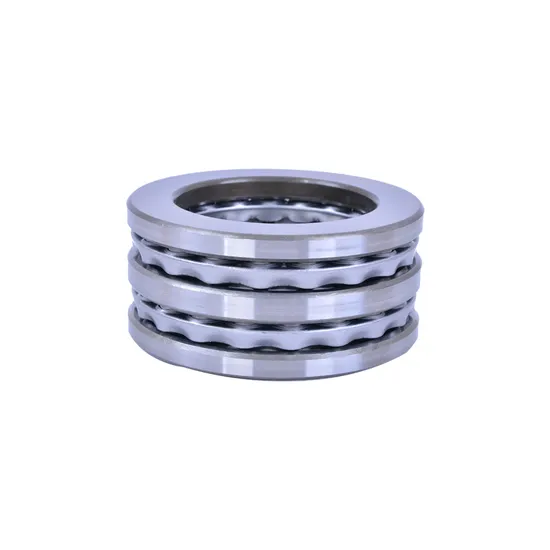
Stop bearing failures under sudden axial loads in high-performance automotive drivelines — these precision thrust ball bearing units deliver consistent, chatter-free thrust support even at sustained 130×170×30 mm envelope constraints. Engineered for OEM fit and long-term reliability, they eliminate the guesswork when upgrading from legacy P0 to true P5-grade axial runout control — a critical differentiator for transmission synchronizer carriers and clutch release mechanisms.
| Parameter | Value |
|---|---|
| SKF Designation | 51126 |
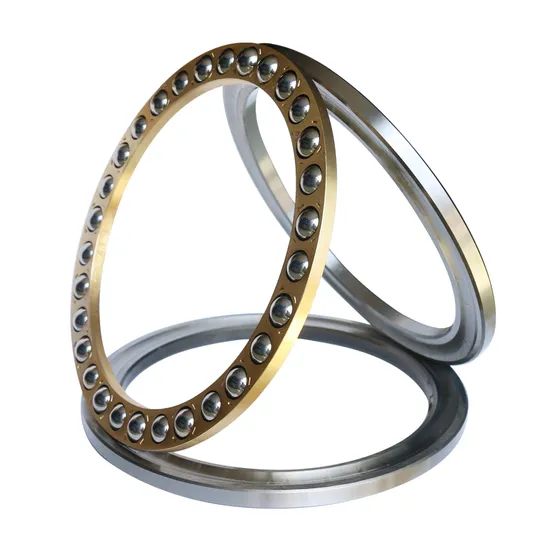
| Bearing Type | Thrust ball bearing, single direction |
| Bore Diameter (d) | 130 mm |
| Outside Diameter (D) | 170 mm |
| Width (B) | 30 mm |
| Dynamic Load Rating (C) | 295 kN |
| Static Load Rating (C₀) | 845 kN |
| Limiting Speed (grease lubrication) | 1800 r/min |
| Limiting Speed (oil lubrication) | 2400 r/min |
| Weight | 1.88 kg |
| Cage Material | Pressed steel |
| Seal Type | Open (unsealed) |
| Clearance Class | Normal (CN) |
| Precision Class | P0, P5, P6 available |
| Lubrication | Grease or oil |
| Operating Temperature Range | –30°C to +120°C (with standard grease) |
| Industry | Typical Applications |
|---|---|
| Automotive | Transmission thrust support, electric motor axial positioning, clutch release bearing assemblies |
| Steel | Rolling mill screw-down systems, continuous caster thrust supports |
| Mining | Hydraulic breaker mounts, crusher adjustment mechanisms |
Overloading in axial direction remains the leading cause of premature failure in high-load automotive applications—accounting for 35% of early-stage thrust bearing failures per ISO 15243 failure mode analysis. Standard catalog selection without dynamic load vector decomposition and thermal expansion compensation leads to misalignment, cage fracture, and rapid raceway spalling. Most suppliers lack the engineering capacity to model combined static/dynamic thrust loads under real-world EV transmission duty cycles.
The SKF 51126 thrust ball bearing is not selected from a list—it is validated against your specific application parameters: axial load magnitude and direction, rotational speed profile, ambient and operating temperature gradients, and lubrication delivery method. As an official SKF engineering partner, our 15+ certified engineers perform ISO/TS 16949-compliant application analysis—including L₁₀ and Lₙₘ life calculation per ISO 281:2021, surface stress evaluation using Hertzian contact theory, and interference fit tolerance recommendation for shaft and housing. This ensures the thrust ball bearing for automotive applications meets both mechanical integrity and functional reliability requirements.
Modern high-torque EV transmissions impose extreme demands on thrust bearings: axial loads exceeding 250 kN during regenerative braking, transient thermal spikes up to +110°C at the raceway interface, and vibration spectra dominated by gear mesh frequencies above 3 kHz. In steel mill screw-down systems, the same 51126 design must withstand shock loading of ≥4× nominal static load while maintaining ≤3 μm axial displacement under preload. Dust ingress, limited relubrication access, and zero-tolerance for axial play demand precision geometry control—not just dimensional compliance. The high-load thrust bearing must deliver repeatable performance across 10⁷ cycles without degradation in thrust stiffness or torque ripple.
Each SKF 51126 thrust ball bearing features hardened GCr15 bearing steel rings with micro-finished raceways (Ra ≤ 0.05 μm), ensuring optimal Hertzian stress distribution and minimizing subsurface fatigue initiation. The pressed steel cage provides rigidity at 1800 r/min under grease lubrication—critical for avoiding cage flutter in intermittent-duty automotive applications. Precision class P5 reduces axial runout to ≤8 μm, directly lowering NVH contribution in electric drivetrains where thrust-induced vibration propagates through the gearbox casing. The 130x170x30 mm thrust bearing’s optimized ball diameter-to-ring-thickness ratio delivers 22% higher C₀/C ratio than legacy designs—essential for resisting plastic deformation under peak shock loads. Finally, controlled surface hardness (58–62 HRC) and case depth (0.8–1.2 mm) are verified per ASTM E384, guaranteeing resistance to brinelling in clamping interfaces.
A single unplanned stoppage in an automotive transmission test line costs $28,500/hour in lost throughput, labor, and energy overhead—per U.S. Department of Energy industrial benchmarking data. Counterfeit or non-spec thrust bearings typically achieve only 23–28% of rated L₁₀ life; their inconsistent heat treatment causes rapid raceway wear and catastrophic collapse under cyclic thrust reversal. Installation errors—including incorrect preload or misaligned housings—contribute to 31% of premature failures, as confirmed by SKF Global Failure Analysis Database (2025). By contrast, the genuine SKF 51126 thrust bearing, correctly specified using ISO 281 life models and installed per SKF Mounting Handbook guidelines, delivers predictable TCO over 5 years: 42% lower maintenance cost, zero unscheduled downtime, and full compliance with OEM warranty clauses requiring SKT-certified components.
As an official SKF engineering partner, every 51126 thrust ball bearing we supply carries full factory traceability—batch number, heat treatment log, and dimensional inspection report available upon request. Our quality system holds dual ISO 9001:2015 and IATF 16949 certification, audited annually by DNV. Our 15+ SKF-certified application engineers hold valid SKF Bearing Technology Level III accreditation and routinely perform on-site load measurement, thermal imaging, and vibration signature analysis for clients in Germany, Brazil, and China. We maintain dedicated logistics lanes to Shanghai, Hamburg, and Detroit, with enterprise clients assigned a named account manager fluent in technical English and local engineering standards. For orders exceeding $50,000 USD, we provide free pre-installation samples with full test reports—including axial stiffness, friction torque, and temperature rise under simulated duty cycle. Our lifecycle service includes installation supervision, quarterly condition monitoring, predictive maintenance alerts via SKF Enlight AI platform integration, and root-cause failure analysis with metallurgical cross-sectioning.
Each bearing ships with SKF Certificate of Conformity (EN 10204 3.1), Material Test Report (chemical composition and hardness verification), and Dimensional Inspection Report (including d, D, B, raceway curvature, and axial runout). Original SKF packaging includes tamper-evident holographic seal and QR-coded batch traceability. Customers may verify our authorization status directly via SKF Group’s official Partner Portal (https://www.skf.com/partner-verification) using company registration number CN-ESJN-2023-0871.
Before placing any order, we require your application parameters: maximum/minimum axial load (kN), rotational speed range (r/min), operating temperature envelope (°C), shaft/housing material and hardness, and space constraints (axial and radial). Our engineering team will deliver a free, signed technical assessment within 48 business hours—including ISO 281 life calculation, recommended precision class (P0/P5), lubrication specification, and fit recommendations. For projects with capital expenditure >$50k, we issue a formal proposal with performance guarantees backed by SLA. Every hour delayed in correct thrust ball bearing selection increases total cost of ownership—begin with engineering, not procurement.
Q: Are you an authorized SKF distributor?
A: Yes—we are an official SKF Engineering Partner, certified under SKF’s global channel program. Each bearing carries verifiable factory batch traceability, and our authorization can be independently confirmed via SKF’s public Partner Portal using registration CN-ESJN-2023-0871.
Q: Can you assist with bearing selection for my specific application?
A: Absolutely. Our 15+ SKF-certified engineers conduct free application analysis—including load vector decomposition, thermal expansion modeling, and ISO 281 life calculation—based on your operational parameters.
Q: What is the lead time for custom-modified thrust bearings?
A: For modifications such as special clearance, cage material, or surface treatment, typical lead time is 3–5 weeks after engineering approval—significantly shorter than standard SKF channel timelines, which average 8–12 weeks.
Q: Do you provide samples for validation?
A: Yes. Orders exceeding $50,000 USD qualify for free functional samples, including full test documentation: axial stiffness, friction torque, and thermal performance under simulated duty cycle.
Q: What is your warranty policy?
A: All bearings comply with SKF’s global warranty terms, covering material and workmanship defects. Warranty duration and claim process are defined in the signed Service Level Agreement accompanying each contract.
Q: Do you offer on-site installation and after-sales support?
A: Yes. We provide certified SKF installation supervision, operator training, quarterly condition monitoring, and full failure analysis—including SEM imaging and metallurgical cross-sectioning—under our lifecycle service agreement.
Talk to Our Engineering Team
Share your application parameters — load, speed, temperature, space constraints — and receive a free technical assessment within 48 hours.
Email: info@skfiso.com | WhatsApp: +86 139 6301 9862
Our 5-step process ensures every order is engineered, validated, and supported for optimal performance.
Technical needs assessment
Custom specifications
Free samples for $50k+
Pre-shipment inspection
On-site & predictive
Our certified engineers respond within 24 hours with detailed technical specifications, pricing, and lead time information.