01
Consultation
Technical needs assessment
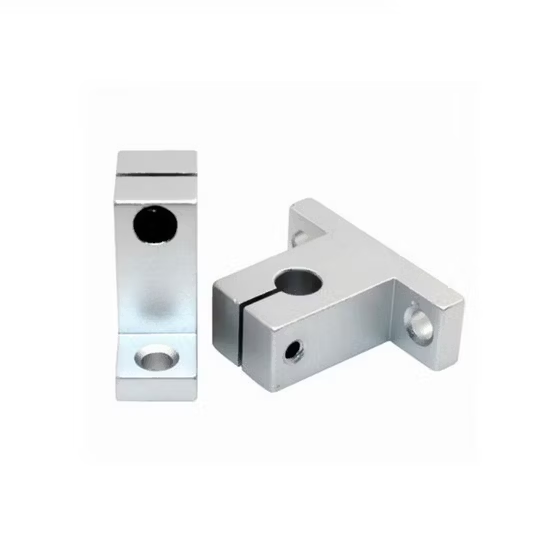
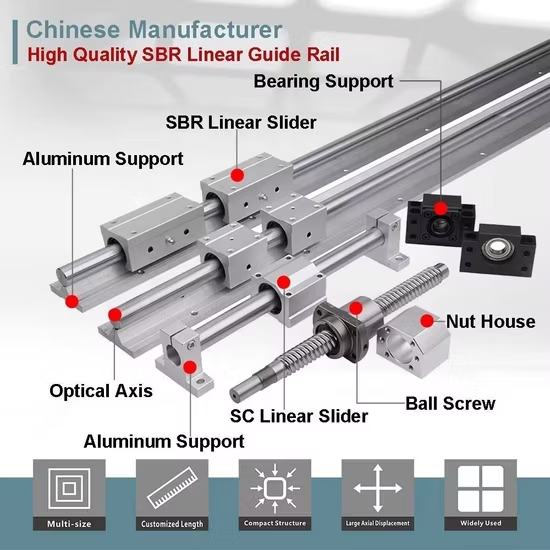


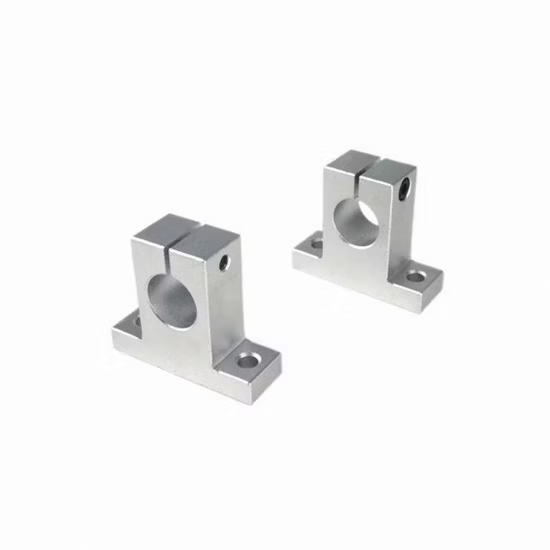
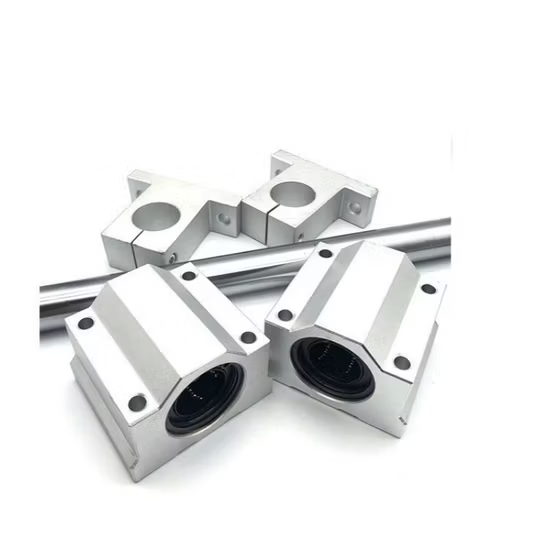
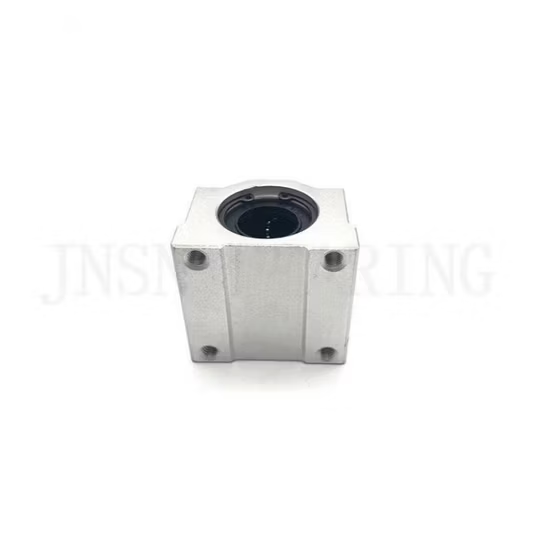
Linear Guide Rail Slide Slider Bearing for Automation Equipment — polished stainless steel or aluminum alloy construction ensures high corrosion resistance for continuous linear motion systems.
Traceable Batch Verification — Scan the manufacturer's official app QR code to confirm material grade and production origin for every linear motion component.
| Parameter | Value |
|---|---|
| Product Type | Linear Motion Slider Bearing |
| Material Options | Stainless Steel or Aluminum Alloy variants |
| Corrosion Resistance | High corrosion resistance for harsh environments |
| Profile Type | Hollow profile for reduced moving mass |
| Surface Treatment | Polished finish for minimized friction |
| Operational Features | High speed capability, low voice operation |
| Precision Rating Options | P0, P6, P5, P4, P2 classes |
| Certification | ISO 9001:2000, ISO 9001:2008, CE, RoHS |
| Origin Options | Germany, Japan, Sweden, Malaysia, China |
| Industry | Typical Applications |
|---|---|
| CNC Machines | Precision tool positioning carriages and spindle traversing axes |
| Automation Equipment | High-speed pick-and-place gantry systems and robotic arms |
| Engineering Machinery | Heavy-duty linear actuation joints and structural guide mechanisms |
Selecting the correct bracket material prevents catastrophic structural fatigue under dynamic loads.
In the manufacturing hubs of Dongguan, I have dismantled countless automated gantries where the wrong bracket material caused the entire linear motion system to collapse. When an aluminum alloy bracket is forced into a high-load engineering machinery application, the structural deflection compromises the rail alignment, leading to uneven load distribution across the rolling elements. Conversely, using heavy stainless steel variants on high-speed automation equipment increases the moving mass, causing severe vibration and premature track wear . A reliable linear guide rail slide slider bearing supplier will always evaluate the specific load profile and acceleration requirements before recommending a material option, preventing these costly field failures.
Determining the right configuration requires balancing moving mass against structural rigidity. For high-speed pick-and-place automation equipment, aluminum alloy variants provide the necessary lightweight characteristics to maintain rapid acceleration without overloading the drive motors. In contrast, CNC machine tool carriages demand the vibration-damping properties and high rigidity of stainless steel options to maintain micron-level cutting accuracy. As a specialized linear guide rail slide slider bearing supplier, we review your specific acceleration and cutting force parameters to ensure the selected material option perfectly aligns with your machine's dynamic requirements.
High-speed linear motion systems generate significant friction heat, which can alter the internal clearance of the rolling elements and cause thermal binding if the precision class is incorrectly specified. In environments with high humidity or coolant exposure, the polished surface treatment and high corrosion resistance of stainless steel options become critical to prevent pitting on the raceways. Furthermore, the low voice operation feature relies heavily on maintaining strict geometric tolerances; any deviation in the hollow profile machining will introduce resonance at elevated speeds . Proper lubrication intervals must also be adjusted based on the operational speed and environmental contamination levels to prevent micro-pitting.
The transition from a P0 to a P4 or P2 precision rating fundamentally changes the running accuracy and positional repeatability of the carriage. While P0 might suffice for basic material handling, CNC tool positioning strictly requires P4 or P2 classes to eliminate axial play and ensure smooth, low voice operation during direction reversals. The choice between stainless steel and aluminum alloy options is not merely about weight; it dictates the thermal expansion characteristics of the entire assembly. Stainless steel variants offer superior dimensional stability under fluctuating ambient temperatures, whereas aluminum options require careful thermal compensation in high-precision setups. Understanding these material boundaries ensures the linear guide system maintains its geometric integrity throughout its operational lifespan.
Installing a slider with an inappropriate profile type or mismatched precision grade inevitably leads to unplanned downtime and catastrophic damage to the mating rail. According to failure analysis frameworks outlined in ISO 15243, surface fatigue and abrasive wear accelerate exponentially when the carriage cannot maintain parallel alignment under load . Using a standard precision block in a high-speed application generates excessive heat, degrading the lubricant and causing the rolling elements to skid rather than roll. This premature failure not only voids equipment warranties but also forces expensive emergency replacements, halting production lines for extended periods.
Sourcing linear motion components requires more than just matching a basic part number; it demands rigorous cross-referencing of profile dimensions, precision suffixes, and material grades. Our engineering team verifies that the selected aluminum alloy or stainless steel options match your OEM equipment's exact load and speed parameters, eliminating the guesswork. Every linear guide rail slide slider bearing supplier claims to offer quality, but we provide comprehensive application-based selection reviews that account for thermal expansion and mounting tolerances. This technical scrutiny ensures that the high-speed and low voice features perform reliably in your specific operating environment, preventing the all-too-common mismatch errors that plague the industry.
To ensure the selected linear motion components meet your exact operational demands, please provide the specific equipment model, available mounting space, and detailed load profiles. Sharing the environmental conditions, such as exposure to coolants or extreme dust, allows our engineering team to determine whether stainless steel or aluminum alloy options are most appropriate. Supplying your target travel speed and required positional accuracy enables us to recommend the precise P-class rating, ensuring optimal performance and longevity for your automation or CNC machinery.
Q: How do I determine the correct material and precision grade for my linear motion application?
A: Material selection depends on the load capacity and environmental exposure; stainless steel options suit high-load or corrosive CNC environments, while aluminum alloy variants are ideal for high-speed automation. Precision grades range from P0 for general handling to P2 for ultra-precise tool positioning. Providing your specific load, speed, and accuracy requirements allows our engineers to specify the exact configuration needed to prevent premature wear.
Q: What are the common failure modes of linear guide sliders and how can I prevent them?
A: Premature failures typically stem from material deflection, thermal binding, or contamination ingress. Using an aluminum alloy bracket in a high-load application causes misalignment, while incorrect precision grades lead to heat buildup at high speeds. Prevention requires matching the profile type and precision class to your exact operational parameters and maintaining strict lubrication schedules. We provide application-based selection reviews to eliminate these mismatch errors before installation.
Q: What customization options are available for length and profile types, including MOQ requirements?
A: We offer custom length configurations and specialized hollow profile designs to reduce moving mass or accommodate specific sensor integrations. Whether you require specialized polished surface treatments or specific high corrosion resistance coatings, our manufacturing partners can adapt the design to your automation equipment. Minimum order quantities vary based on the complexity of the custom machining and the selected precision rating, which we will clarify during the initial technical inquiry.
Q: How should I manage maintenance and lubrication cycles for high-speed linear guide systems?
A: High-speed operation rapidly degrades standard lubricants, necessitating shorter re-lubrication intervals to maintain the low voice operation and prevent rolling element skidding. The frequency depends on the travel distance, ambient temperature, and contamination levels in your engineering machinery. We recommend establishing a condition-based maintenance schedule and using manufacturer-approved greases that match the specific thermal and mechanical demands of your selected precision class and material option.
Our 5-step process ensures every order is engineered, validated, and supported for optimal performance.
Technical needs assessment
Custom specifications
Free samples for $50k+
Pre-shipment inspection
On-site & predictive
Our certified engineers respond within 24 hours with detailed technical specifications, pricing, and lead time information.

![SK8 SK10 SK12 SK13 SK16 SK20 Aluminum Linear Shaft Support Unit Slide Bearing [WARN] draft identifier mismatch](https://skfiso.com/wp-content/uploads/2026/09/sk8-sk10-sk12-sk13-sk16-sk20-aluminum-linear-shaft-support-unit-slide-bearing-warn-draft-identifier-mismatch-eb5dd1.avif)