01
Consultation
Technical needs assessment
![SK8 SK10 SK12 SK13 SK16 SK20 Aluminum Linear Shaft Support Unit Slide Bearing [WARN] draft identifier mismatch - 1](https://skfiso.com/wp-content/uploads/2026/09/sk8-sk10-sk12-sk13-sk16-sk20-aluminum-linear-shaft-support-unit-slide-bearing-warn-draft-identifier-mismatch-eb5dd1.avif)
![SK8 SK10 SK12 SK13 SK16 SK20 Aluminum Linear Shaft Support Unit Slide Bearing [WARN] draft identifier mismatch - 2](https://skfiso.com/wp-content/uploads/2026/09/sk8-sk10-sk12-sk13-sk16-sk20-aluminum-linear-shaft-support-unit-slide-bearing-warn-draft-identifier-mismatch-ba2c93.avif)
![SK8 SK10 SK12 SK13 SK16 SK20 Aluminum Linear Shaft Support Unit Slide Bearing [WARN] draft identifier mismatch - 3](https://skfiso.com/wp-content/uploads/2026/09/sk8-sk10-sk12-sk13-sk16-sk20-aluminum-linear-shaft-support-unit-slide-bearing-warn-draft-identifier-mismatch-1577dd.avif)
![SK8 SK10 SK12 SK13 SK16 SK20 Aluminum Linear Shaft Support Unit Slide Bearing [WARN] draft identifier mismatch - 4](https://skfiso.com/wp-content/uploads/2026/09/sk8-sk10-sk12-sk13-sk16-sk20-aluminum-linear-shaft-support-unit-slide-bearing-warn-draft-identifier-mismatch-408eb9.avif)
![SK8 SK10 SK12 SK13 SK16 SK20 Aluminum Linear Shaft Support Unit Slide Bearing [WARN] draft identifier mismatch - 5](https://skfiso.com/wp-content/uploads/2026/09/sk8-sk10-sk12-sk13-sk16-sk20-aluminum-linear-shaft-support-unit-slide-bearing-warn-draft-identifier-mismatch-2eadf5.avif)
![SK8 SK10 SK12 SK13 SK16 SK20 Aluminum Linear Shaft Support Unit Slide Bearing [WARN] draft identifier mismatch - 6](https://skfiso.com/wp-content/uploads/2026/09/sk8-sk10-sk12-sk13-sk16-sk20-aluminum-linear-shaft-support-unit-slide-bearing-warn-draft-identifier-mismatch-9ef52a.avif)
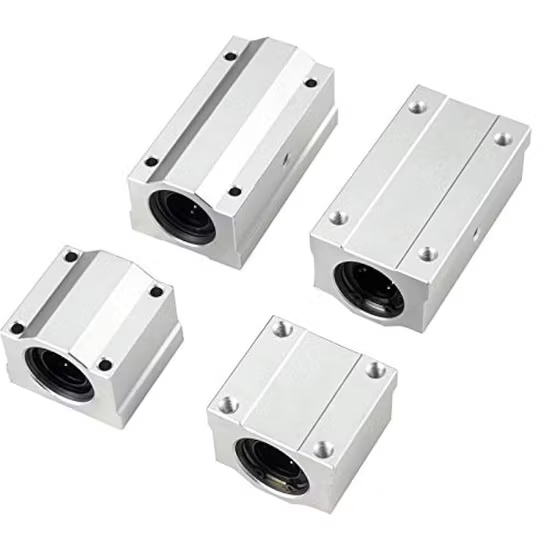
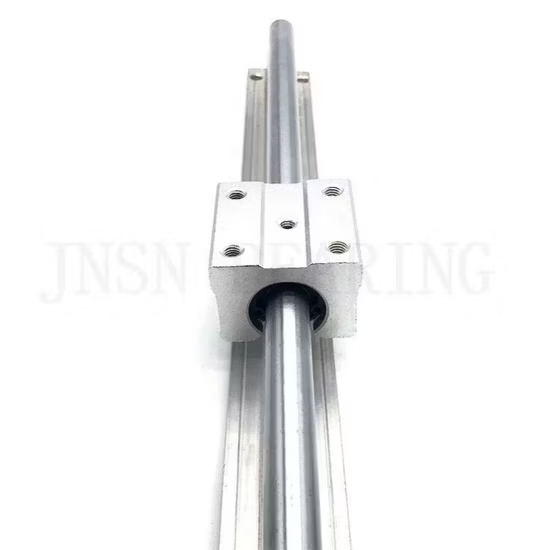
Sk8 Sk10 Sk12 Sk13 Sk16 Sk20 Linear Shaft Support Units for 8-20 mm Shafts P0-P2 — polished hollow profile construction ensures high-speed, low-noise operation for automation systems.
Mixed-Brand Sourcing Simplified — Consolidate your SK series linear supports and matching motion components from multiple authorized manufacturers into a single traceable shipment.
| Parameter | Value |
|---|---|
| Designation | Sk8 Sk10 Sk12 Sk13 Sk16 Sk20 |
| Product Type | Linear Shaft Support Unit / Slide Bearing |
| Material Options | Aluminum or stainless steel variants |
| Profile Type | Hollow Profile |
| Surface Treatment | Polished |
| Corrosion Resistance | High Corrosion Resistance |
| Operational Features | High Speed, Low Voice |
| Precision Rating | P0, P6, P5, P4, P2 |
| Length | Custom Length |
| Certification | CE, CS, EPA, ISO 9001:2000, ISO 9001:2008, RoHS |
| Origin | Germany, Japan, Sweden, Malaysia, China |
| Industry | Typical Applications |
|---|---|
| Automation Equipment | CNC router linear axes, 3D printer guide rails |
| Engineering Machinery | Actuator guide supports, robotic arm linear tracks |
| Material Handling | Automated storage retrieval system shuttle rails |
Micro-deviations in housing bore tolerances translate directly into axis deflection under continuous dynamic loads.
In field deployments across harsh Middle Eastern environments, I have repeatedly seen aluminum housings with loose machining tolerances cause severe shaft deflection. When procurement teams substitute precision slide bearings with generic bushings to cut costs, the resulting friction at elevated temperatures inevitably leads to catastrophic seizure. Selecting the correct Sk8 Sk10 Sk12 Sk13 Sk16 Sk20 linear shaft support unit slide bearing requires strict adherence to dimensional accuracy, preventing the premature wear that plagues poorly matched assemblies .
Choosing between aluminum and stainless steel variants dictates the thermal and structural behavior of the linear guide. Aluminum offers a noticeably lighter profile for high-speed automation, while stainless steel variants provide substantially higher resistance to corrosive washdown environments. We verify the exact alloy composition against your specific load and speed requirements to ensure the Sk8 Sk10 Sk12 Sk13 Sk16 Sk20 linear shaft support unit slide bearing maintains structural integrity without introducing unnecessary inertia.
Continuous high-speed travel generates friction heat that alters the internal clearance between the shaft and the slide bearing. If the housing material expands at a different rate than the shaft, the system risks thermal binding or excessive play. Proper lubrication intervals and selecting the appropriate surface treatment mitigate these thermal shifts, ensuring the hollow profile design dissipates heat effectively while maintaining low voice operation .
The available P0 through P2 precision ratings define the running accuracy and allowable geometric deviations of the support unit. Higher precision classes are mandatory for machine tool spindles where micron-level deflection ruins surface finishes, whereas standard P0 suffices for general material handling. The hollow profile design significantly reduces moving mass without compromising the torsional rigidity required to dampen vibrations during rapid directional changes.
Installing a support unit with an out-of-spec inner diameter forces the linear shaft into a bent state, creating uneven load distribution across the rolling elements. This localized stress accelerates fatigue and leads to unplanned downtime long before the calculated L10 life is reached. Relying on unverified components often results in catastrophic damage to the entire linear guide rail, voiding equipment warranties and inflating maintenance budgets .
Sourcing mixed-brand requirements usually fractures batch traceability, but our authorized coverage ensures every component is tracked to the manufacturer. Cross-reference errors frequently occur when buyers match the base size but ignore the required precision suffix, leading to thermal binding in the field. We provide application-based selection reviews that verify load, speed, and mounting parameters, ensuring the exact configuration reaches your facility.
Provide your equipment model, available mounting space, and specific radial load parameters so our engineering team can determine the optimal size and material. Detailing the operational environment, including exposure to dust or washdown chemicals, allows us to specify the correct corrosion resistance and precision class for your application.
Q: How do I select the correct size among the SK series for my linear motion system?
A: Selection depends on the linear shaft diameter and the dynamic load applied to the carriage. The designations correspond directly to shaft sizes from 8mm to 20mm. Provide your load calculations and speed requirements, and our technical team will confirm the exact model to prevent structural deflection.
Q: What are the practical differences between aluminum and stainless steel linear supports?
A: Aluminum variants are noticeably lighter, making them ideal for high-speed automation where reducing moving mass improves cycle times. Stainless steel options offer substantially higher corrosion resistance, which is essential for food processing or outdoor engineering machinery exposed to moisture and chemical washdowns.
Q: How does the hollow profile design affect the rigidity of the support unit?
A: The hollow profile removes non-essential material from the housing core, reducing overall weight while preserving the outer structural walls that resist bending moments. This geometry maintains high torsional rigidity, ensuring the linear shaft remains perfectly aligned under dynamic loads without adding unnecessary inertia.
Q: What causes noise in high-speed linear systems, and how do these units prevent it?
A: Excessive noise typically stems from improper clearance, poor surface finish, or misalignment causing the bearing to drag against the shaft. These units feature a polished surface treatment and strict tolerance controls to ensure smooth, low voice sliding contact, even during rapid acceleration and deceleration phases.
Q: Are there specific lead time considerations for custom-length linear shaft supports?
A: Custom lengths require specialized cutting and machining of the hollow profile, which extends the manufacturing cycle compared to standard off-the-shelf sizes. Submit your exact dimensional drawings early in the procurement process so we can secure production slots and provide an accurate delivery schedule.
Our 5-step process ensures every order is engineered, validated, and supported for optimal performance.
Technical needs assessment
Custom specifications
Free samples for $50k+
Pre-shipment inspection
On-site & predictive
Our certified engineers respond within 24 hours with detailed technical specifications, pricing, and lead time information.