01
Consultation
Technical needs assessment
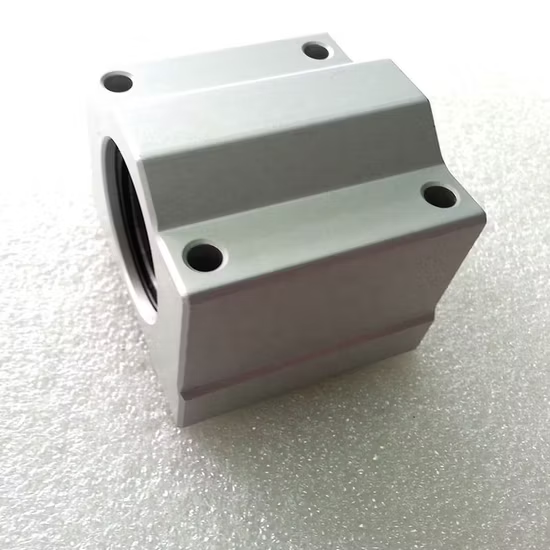
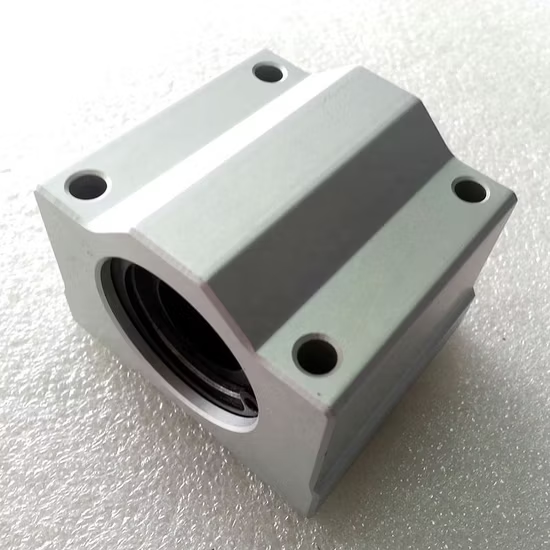
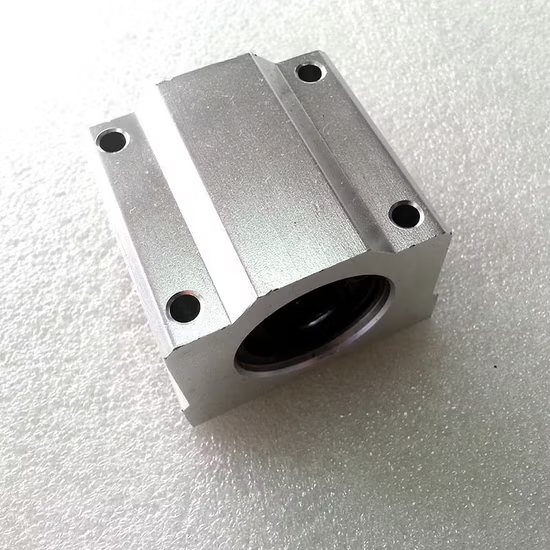
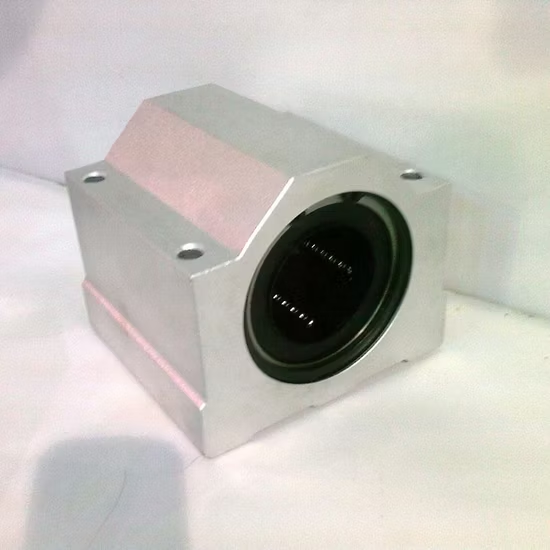
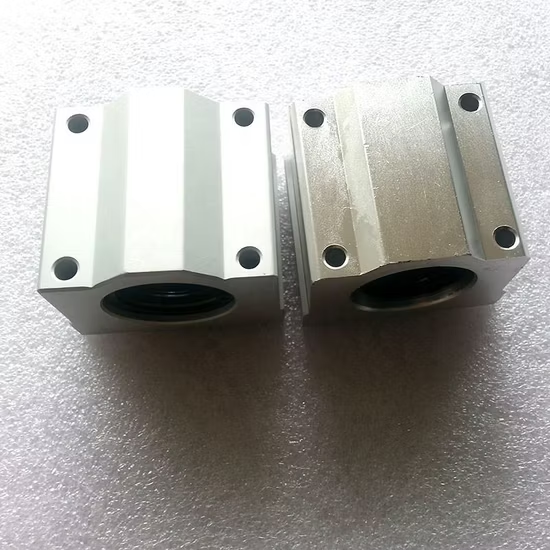
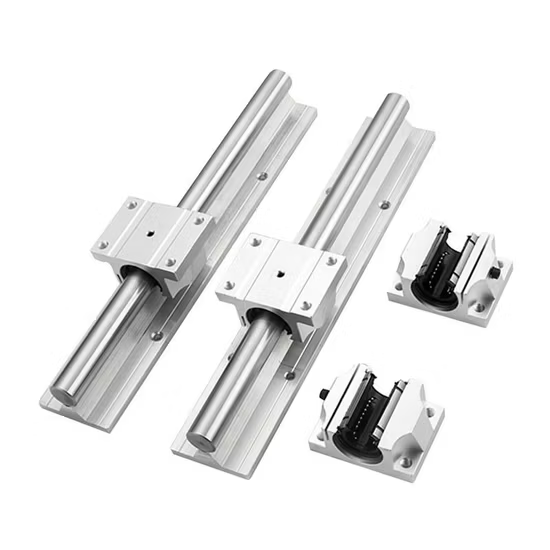
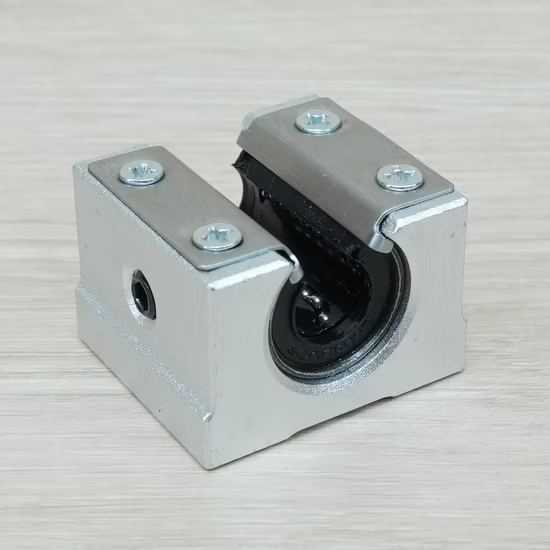
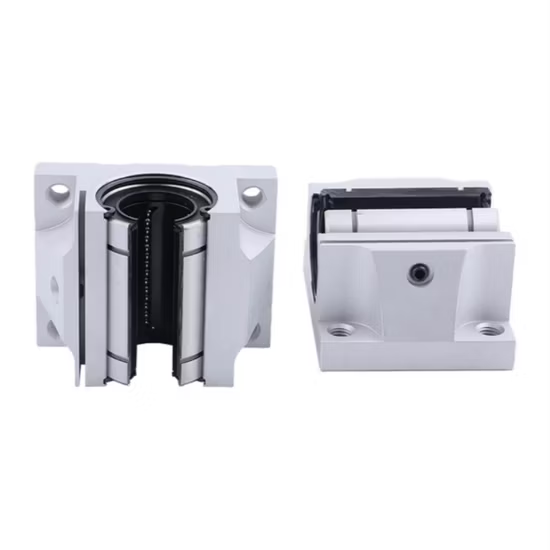
Sc6 8 Sc10uu 12uu Linear Slider Bearing — stainless steel hollow profile with polished surface treatment ensures high corrosion resistance across 3D printer and automation guide rail systems.
Each cross-reference is verified across base designation, internal seal variant, and precision class to prevent field mismatch.
Cross-reference alignment verified — ensuring base designation, stainless steel material, and internal seal variants match your exact optical axis guide rail requirements.
| Parameter | Value |
|---|---|
| Designation | Sc6 8 Sc10uu 12uu |
| Product Type | Linear Slider Bearing |
| Material Options | Stainless steel or standard bearing steel variants |
| Surface Treatment | Polished |
| Profile Type | Hollow Profile |
| Precision Rating | P0, P6, P5, P4, P2 |
| Feature | High Speed, Low Voice |
| Corrosion Resistance | High Corrosion Resistance |
| Length | Custom Length |
| Certification | CE, CS, EPA, ISO 9001:2000, ISO 9001:2008, RoHS |
| Origin | Germany, Japan, Sweden, Malaysia, China |
Note: The 'uu' suffix is an unverified suffix requiring manufacturer catalog confirmation, typically denoting standard metric dimensions with integrated seals in linear motion systems.
| Industry | Typical Applications |
|---|---|
| 3D Printing | Z-axis lead screw guide rails and extruder carriage sliders |
| Automation Equipment | High-speed pick-and-place linear modules and gantry systems |
| CNC Machining | Optical axis guide rails for router spindle positioning |
| Engineering Machinery | Precision linear actuators and automated assembly fixtures |
Print layer shifting usually originates from microscopic slider play, not the stepper motors.
Sourcing a reliable Sc10uu linear slider bearing supplier is critical because cross-reference errors often match the base designation while overlooking internal clearance and seal friction. When purchasing engineers focus solely on the outer dimensions, they frequently receive units with soft inner rings or cloned QR codes that pass casual visual inspection but fail under continuous reciprocating loads . A mismatched internal design causes thermal binding or severe Z-axis wobble, ruining batch consistency and causing unplanned downtime on the production floor.
Selecting the correct material variant directly impacts the operational lifespan of optical axis systems. While standard bearing steel suffices for enclosed CNC routers, stainless steel options provide high corrosion resistance for 3D printers exposed to humid environments or aggressive cooling fluids. As a dedicated Sc10uu linear slider bearing supplier, we verify that the chosen material aligns with the specific friction and wear demands of your guide rail configuration.
High-speed reciprocating motion generates continuous friction heat, which can degrade standard lubrication and cause the slider to bind on the optical shaft. The polished hollow profile design optimizes the weight-to-rigidity ratio, reducing the moving mass and minimizing inertial forces during rapid direction changes. Furthermore, integrated seals must balance contamination exclusion with low friction; excessive seal drag increases operating temperatures and accelerates wear . Proper alignment during installation is equally vital to prevent edge loading on the bearing balls.
The hollow profile construction significantly reduces the carriage weight, allowing for higher acceleration without sacrificing structural rigidity. Precision ratings ranging from P0 to P2 dictate the dimensional tolerance and running accuracy of the slider, directly influencing the surface finish and dimensional accuracy of the final machined or printed part. The 'uu' suffix generally indicates the presence of built-in seals to retain lubrication and block debris, though verifying the exact seal material is essential to ensure compatibility with the operating temperature and speed requirements of the automation equipment.
Installing a slider with incorrect internal clearance or incompatible seal friction leads to premature failure and catastrophic damage to the optical shaft. According to ISO 15243 frameworks for bearing damage, improper mounting or misalignment causes localized stress concentrations that rapidly degrade the recirculating ball paths . This results in severe print layer misalignment, frequent maintenance interventions, and warranty voidance for the entire motion control assembly.
We eliminate the risk of receiving counterfeit units with soft inner rings by providing full batch traceability for every Sc6 8 Sc10uu 12uu shipment. Our cross-brand interchange expertise ensures that clearance, seal friction, and precision grades align perfectly, rather than just matching the base designation. We conduct application-based selection reviews covering load, speed, and mounting conditions to prevent Z-axis wobble in 3D printers. Furthermore, our single-source authorized coverage handles mixed-brand requirements efficiently, saving procurement teams from coordinating with multiple vendors.
To ensure optimal performance, please provide your specific radial and axial load profiles, operating speeds, and environmental conditions. Sharing the exact optical shaft diameter and carriage mounting space allows our engineering team to verify the precision grade and seal friction requirements. We will cross-reference your OEM equipment numbers to confirm the exact internal design and deliver a technically validated solution.
Q: How can I verify the authenticity of these linear bearings upon delivery?
A: Every unit is supplied with manufacturer batch traceability and a unique QR code. You can scan this code using the brand's official mobile application to instantly verify its origin and authenticity, effectively eliminating the risk of installing counterfeit sliders with compromised inner ring hardness.
Q: What cross-reference checks are necessary beyond the base designation?
A: Matching the base number is insufficient; you must verify the internal seal type, material composition, and precision class. A standard steel slider might fit physically but fail rapidly in a humid 3D printer environment, making it crucial to confirm the stainless steel variant and specific friction characteristics.
Q: How do I select the right precision rating for high-speed automation?
A: High-speed CNC routers and precision 3D printers typically require P5 or P4 grades to minimize Z-axis wobble and ensure smooth reciprocating motion. Standard P0 grades may introduce microscopic play that degrades surface finish and dimensional accuracy during rapid directional changes.
Q: What is the recommended maintenance for optical axis guide rail bearings?
A: Units with integrated seals are generally pre-lubricated and require minimal maintenance, but periodic visual inspections for debris accumulation are essential. If the equipment operates in highly contaminated environments, establishing a regular cleaning schedule for the optical shaft will significantly extend the slider's operational lifespan.
Our 5-step process ensures every order is engineered, validated, and supported for optimal performance.
Technical needs assessment
Custom specifications
Free samples for $50k+
Pre-shipment inspection
On-site & predictive
Our certified engineers respond within 24 hours with detailed technical specifications, pricing, and lead time information.
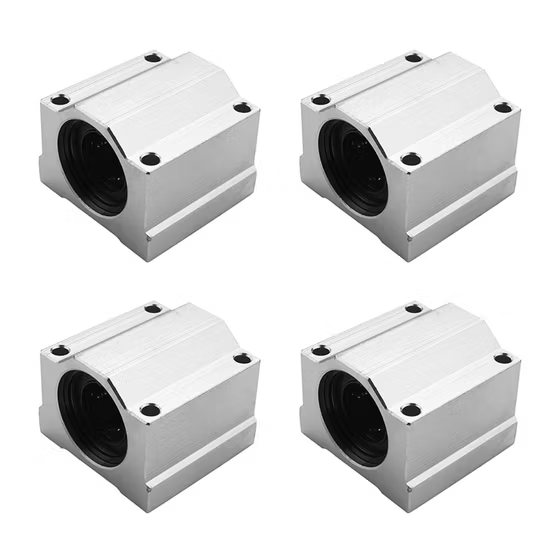
![SK8 SK10 SK12 SK13 SK16 SK20 Aluminum Linear Shaft Support Unit Slide Bearing [WARN] draft identifier mismatch](https://skfiso.com/wp-content/uploads/2026/09/sk8-sk10-sk12-sk13-sk16-sk20-aluminum-linear-shaft-support-unit-slide-bearing-warn-draft-identifier-mismatch-eb5dd1.avif)