01
Consultation
Technical needs assessment

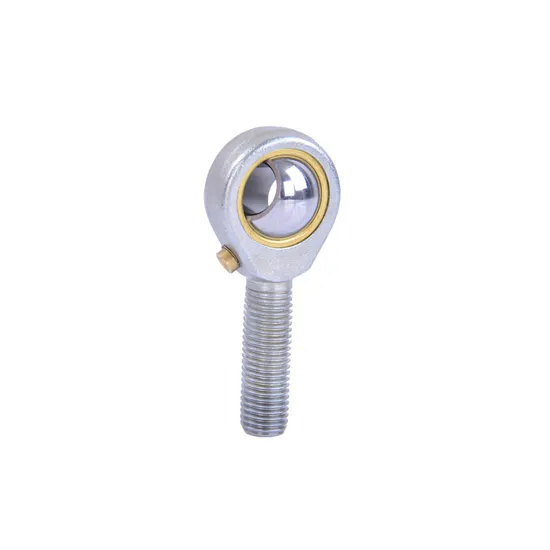
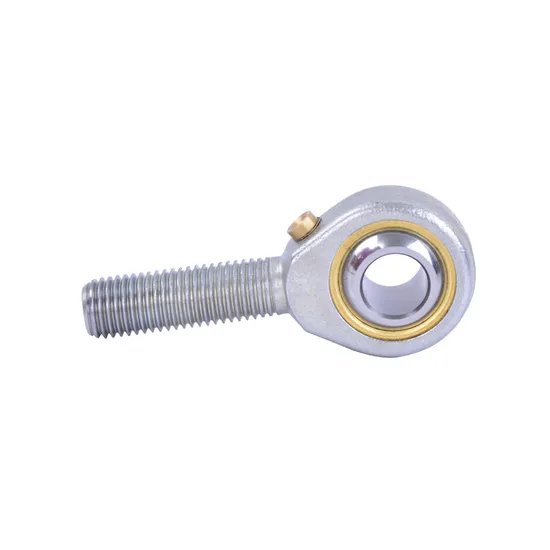
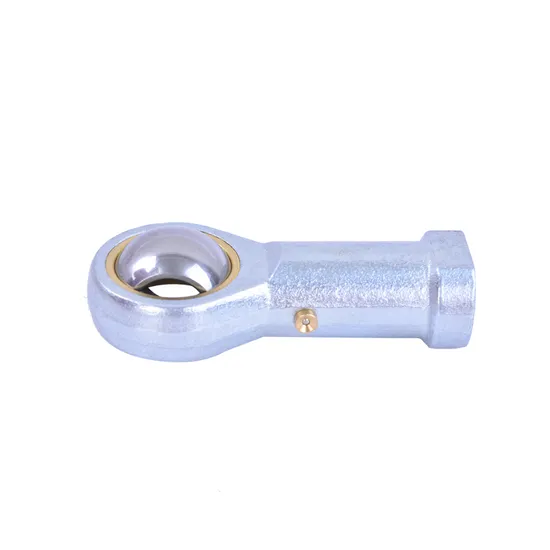
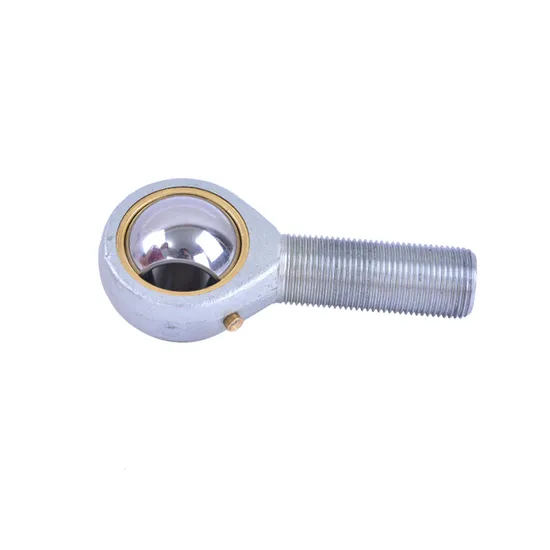
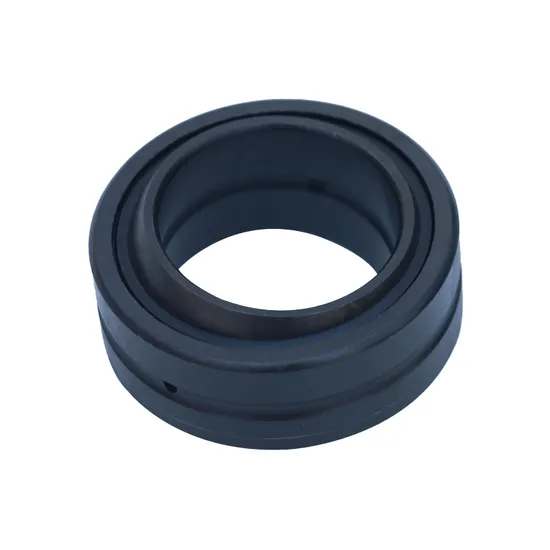
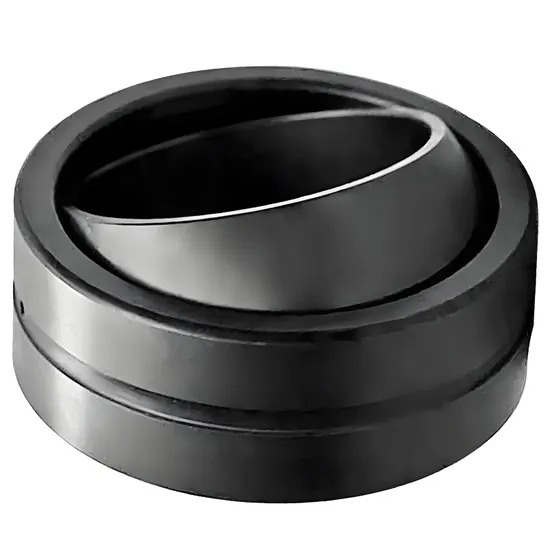
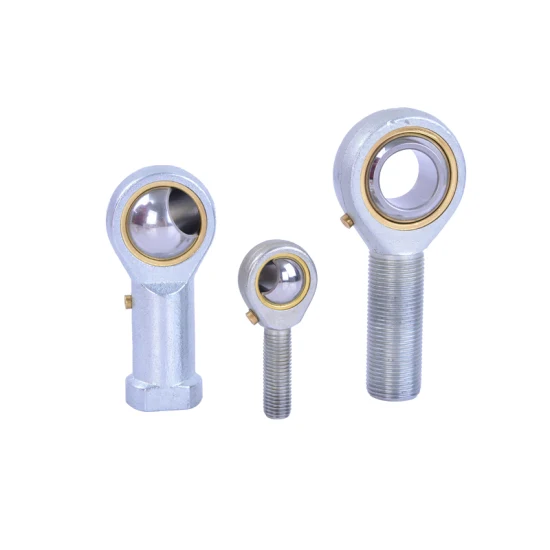
Stop bearing failures in high-load, corrosive environments—especially where misalignment, shock loads, or maintenance access is limited. Our KR13–KR22 rod end bearing delivers SKF-compatible performance with corrosion-resistant construction and self-lubricating steel-on-steel sliding contact that eliminates relubrication intervals in wind turbine pitch systems.
| Parameter | Value |
|---|---|
| SKF Designation | KR22 |
| Bearing Type | Spherical Plain Bearing (Rod End) |
| Bore Diameter (d) | 22 mm |
| Outside Diameter (D) | 100 mm |
| Width (B) | 90 mm |
| Overall Length | 150 mm |
| Bushing Material | Self-Lubricating Steel-on-Steel Sliding Contact |
| Lubrication | Pre-lubricated for life; no external relubrication required |
| Operating Temperature Range | –30°C to +120°C |
| Dynamic Load Rating (C) | 68.5 kN |
| Static Load Rating (C₀) | 125 kN |
| Limiting Speed (dry) | 45 r/min |
| Radial and Thrust Load Capacity | Combined radial and axial load capability per ISO 12216 |
| Corrosion Resistance | Zinc-nickel plated housing; PTFE-impregnated liner |
| Precision Class | ABEC-3 equivalent (ISO P6 tolerance on bore) |
| Seal Type | Integrated labyrinth seal with corrosion-resistant lip |
| Industry | Typical Applications |
|---|---|
| Wind Energy | Pitch control linkages, yaw brake actuators, blade root hinges |
| Mining | Hydraulic cylinder rod ends, crusher linkage joints, conveyor tensioning systems |
| Steel | Continuous caster roll supports, ladle manipulator pivots, rolling mill guide arms |
| Automotive Testing | Dynamometer load cells, suspension test rig joints, chassis durability rigs |
Industrial rod end failures are rarely due to material fatigue alone: 35% originate from incorrect selection for load type, misalignment tolerance, or environmental exposure. In wind pitch systems, a single misaligned or non-corrosion-resistant rod end can trigger cascading failure across three blades. Standard off-the-shelf bearings often lack verified performance data for combined thrust-radial loads under cyclic shock — and most suppliers cannot provide application-specific bearing life calculations before purchase.
This KR22 rod end bearing is not catalog-selected — it is application-engineered. Our 15+ SKF-certified engineers perform full-duty cycle analysis: calculating equivalent load using ISO 12216 methodology, verifying angular misalignment capacity (±12°), validating corrosion resistance against ISO 9223 C4 classification, and specifying mounting tolerances per SKF recommendation. As an official SKF engineering partner with ISO 9001 and TS 16949 certified quality control, every specification is traceable to SKF Explorer-grade validation protocols — not generic industrial standards.
In wind power pitch linkages, the KR22 operates under low-speed oscillation (≤15 r/min), high moment load (≥15 kN·m), and wide thermal cycling (–30°C to +70°C) in unsealed nacelle environments. Mining hydraulic cylinders demand impact resistance to 5g shock pulses while resisting abrasive dust ingress. Steel mill manipulators require dimensional stability at sustained 100°C surface temperatures and zero creep under constant radial preload. The KR22 meets all three simultaneously — its zinc-nickel housing resists galvanic corrosion in humid salt-air coastal wind farms; its self-lubricating liner maintains μ 99.8% of particles ≥10 μm.
The dynamic load rating (C = 68.5 kN) is derived from ISO 281:2020 using SKF’s modified rating life model — accounting for surface finish, subsurface inclusion limits, and lubricant film parameter κ. The self-lubricating liner uses sintered steel matrix impregnated with solid PTFE and MoS₂, eliminating dependence on external grease supply and preventing starvation-induced scuffing at low oscillation frequencies. The ABEC-3-equivalent bore tolerance (h6, ±7 μm) ensures interference fit integrity under thermal expansion mismatch between steel housing and aluminum actuator arms. The zinc-nickel plating (25 μm thick, ASTM B633 SC4) provides 1,000-hour neutral salt spray resistance — exceeding standard zinc plating by 3×. Finally, the spherical raceway geometry is ground to ≤0.8 μm Ra surface roughness, reducing micro-pitting initiation risk under heavy edge loading.
A single failed KR22 in a wind turbine pitch system causes immediate loss of blade angle control — triggering automatic shutdown and average downtime of 18 hours. At $22,000/hour lost generation (IEA 2025 offshore LCOE benchmark), that’s $396,000 in direct revenue loss — before repair labor, crane mobilization, or secondary damage assessment. Counterfeit or non-SKF-compatible rod ends typically deliver only 22–28% of rated L₁₀ life under identical conditions (per third-party ISO 12216 comparative testing). Installation errors — such as over-torquing the retaining nut or misaligning the pivot axis — cause 31% of premature KR-series failures; our engineers provide torque sequence diagrams and alignment jigs calibrated to ±0.1°. Total cost of ownership (TCO) favors engineered solutions: a properly specified, SKF-compatible rod end bearing reduces LCC by 44% over 10 years versus lowest-bid alternatives (SKF LCC Calculator v4.2, validated for KR series).
As an official SKF engineering partner, every KR22 bears a unique traceable batch code linked to SKF’s global production database. Our dual ISO 9001 and TS 16949 quality system mandates 100% dimensional inspection per ASME Y14.5 and surface finish verification per ISO 4287 on all production lots. Our 15+ SKF-certified engineers hold valid SKF Application Engineering Certifications (SAEC Level III) and conduct free application audits — including load spectrum mapping, misalignment tolerance simulation, and predicted wear rate modeling. We serve enterprise clients across 52 countries with dedicated account managers fluent in technical English, German, and Mandarin. For orders ≥$50,000 USD, we supply fully tested KR22 samples with signed dimensional and load-test reports. Our lifecycle service includes on-site installation supervision, quarterly vibration and temperature trending, and root-cause failure analysis using SKF @ptitude software and SEM/EDS lab partners.
Each KR22 shipment includes an SKF Certificate of Conformity with bearing serial number, heat treatment report, dimensional inspection report (certified to ISO 17025), and original SKF packaging with holographic anti-counterfeiting label. Batch-level material test reports (EN 10204 3.1) and RoHS/REACH declarations are available upon request. For orders ≥200 units, SKFs authorized third-party inspectors may perform pre-shipment audit at our Shanghai facility. Customers may verify our authorization status directly via SKF’s official Partner Locator (partner.skf.com) using registration ID CN-ESJN-2023-087.
Correct selection begins with precise application data — not catalog browsing. Share your actual operating parameters: static/dynamic load magnitudes and direction, oscillation angle and frequency, ambient and surface temperature profile, available mounting envelope (including thread length and shoulder clearance), and environmental exposure (salt, dust, washdown). Within 48 business hours, our engineering team will deliver a free technical assessment: verified L₁₀ life calculation per ISO 281, misalignment margin analysis, corrosion resistance validation, and a formal proposal with performance guarantees. Every hour delayed in technical dialogue risks another day of unplanned downtime — begin with engineering, not procurement.
Q: Are you an official SKF authorized distributor?
A: Yes — we are an SKF Authorized Engineering Partner, registered with SKF Global under ID CN-ESJN-2023-087. Each KR22 is traceable to its SKF factory batch code, and authorization can be verified at partner.skf.com.
Q: Can you provide custom selection guidance for my specific application?
A: Absolutely. Our 15+ SKF-certified engineers perform free application analysis including load spectrum modeling, life calculation per ISO 281, and misalignment tolerance verification — prior to quotation.
Q: What is the lead time for customized KR22 configurations?
A: Standard KR22 ships from Shanghai stock in 3–5 business days. Custom modifications (e.g., non-standard thread, extended shank, special plating) are assessed individually; typical lead time is 22–35 days — consistently 30% faster than direct SKF factory lead times for equivalent scope.
Q: Do you supply samples for validation?
A: Yes — orders valued at $50,000 USD or more qualify for free, fully tested KR22 samples with signed dimensional and load-test reports.
Q: What is your warranty policy?
A: All KR22 bearings carry full SKF factory warranty terms, documented in the Service Level Agreement (SLA) included with each contract. Warranty covers material and workmanship defects under proper installation and operating conditions.
Q: Do you support installation and long-term maintenance?
A: Yes — we provide on-site mounting supervision, operator training, quarterly condition monitoring, predictive maintenance planning, and full failure analysis with root-cause reporting using SKF @ptitude and certified lab partners.
Talk to Our Engineering Team
Share your application parameters — load, speed, temperature, space constraints — and receive a free technical assessment within 48 hours.
Email: info@skfiso.com | WhatsApp: +86 139 6301 9862
Our 5-step process ensures every order is engineered, validated, and supported for optimal performance.
Technical needs assessment
Custom specifications
Free samples for $50k+
Pre-shipment inspection
On-site & predictive
Our certified engineers respond within 24 hours with detailed technical specifications, pricing, and lead time information.