01
Consultation
Technical needs assessment

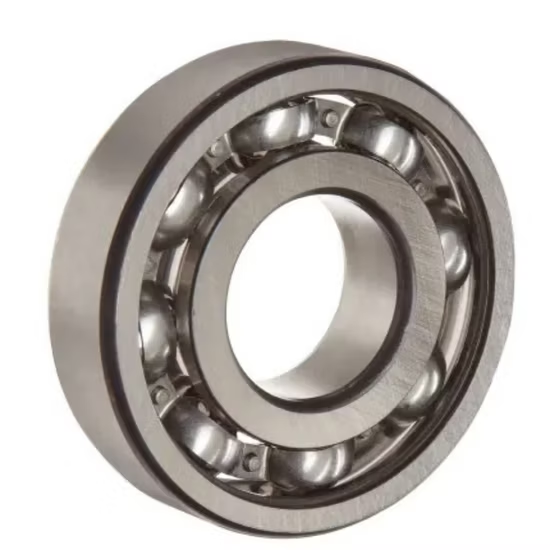

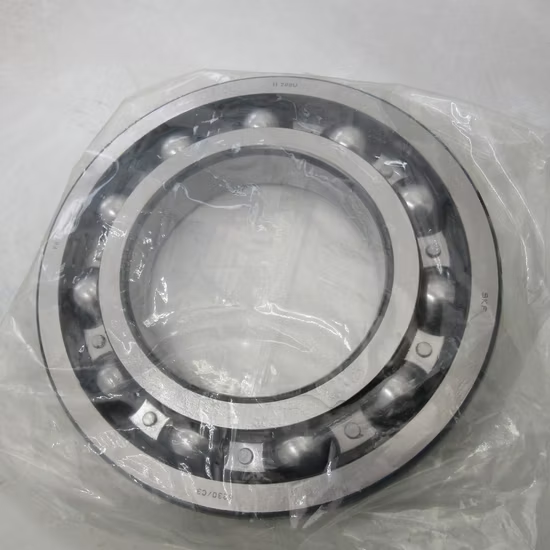
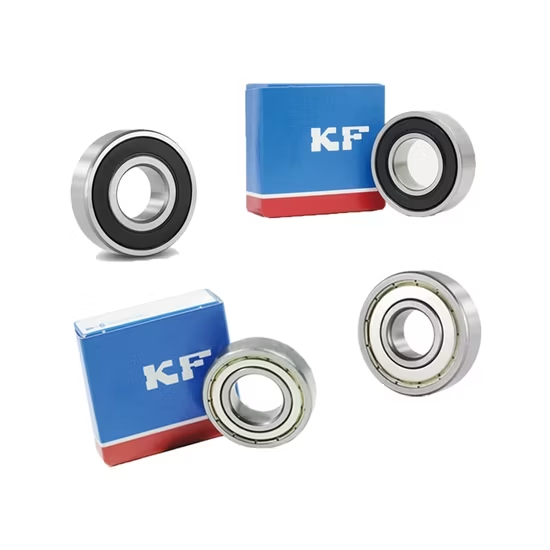


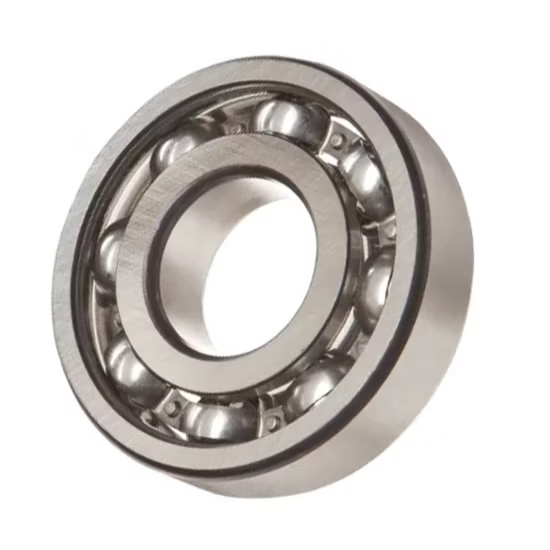
NTN 638 Deep Groove Ball Bearing 8×20×6 mm — engineered for compact electric motors and precision instruments to handle radial loads efficiently in space-constrained assemblies.
Cross-Reference Alignment Verified — We validate base designation, clearance class, and seal configuration to prevent thermal binding in micro-motor applications.
| Parameter | Value |
|---|---|
| Designation | NTN 638 |
| Bearing Type | Deep Groove Ball Bearing |
| Bore Diameter (d) | 8 mm |
| Outside Diameter (D) | 20 mm |
| Width (B) | 6 mm |
| Seal or Shield Type | Open, Rubber Seals, Iron Seals |
| Quality Level | Z1V1, Z2V2, Z3V3, Z4V4 |
| HS Code | 848210 |
| Industry | Typical Applications |
|---|---|
| Electric Motors | Micro motor rotors and precision instrument drive spindles |
| Household Appliances | Small cooling fan assemblies and blender drive shafts |
| Industrial Gearboxes | Low-torque auxiliary drive mechanisms and sensor positioning |
| Pumps | Miniature fluid transfer pump impellers and dosing units |
A basic NTN 638 deep groove ball bearing designation is never enough to guarantee operational safety.
I have seen countless micro-motors seize because procurement teams ordered the base number without specifying the necessary internal clearance or seal type. When a standard clearance bearing is pressed into a tight housing at high speeds, the thermal expansion eliminates the internal gap, leading to catastrophic cage failure . Sourcing an authentic NTN 638 deep groove ball bearing requires looking past the base digits to ensure the exact suffix configuration matches the thermal and friction demands of your specific equipment.
The 8x20x6mm footprint of the NTN 638 deep groove ball bearing makes it a standard choice for space-constrained electric motors and precision instruments. Supplying this specific size requires strict adherence to the requested noise and vibration grades, ensuring the internal geometry supports smooth rotation without generating excess heat. Our technical team reviews your speed and load parameters to confirm whether an open, rubber-sealed, or iron-shielded variant provides the optimal balance between friction reduction and contamination exclusion.
In miniature applications, the ratio of friction heat to mass is exceptionally high, making internal clearance and lubrication critical. If the operating temperature rises significantly, a standard clearance bearing will experience thermal binding, while an overly loose fit will cause vibration and premature raceway wear . The choice between contact rubber seals and non-contact iron shields directly dictates the friction torque, which must be carefully matched to the motor's starting torque capabilities and the ambient dust levels in the operating environment.
The availability of Z1V1 through Z4V4 quality levels dictates the acoustic and vibrational performance of the bearing in sensitive appliances and medical devices. Higher Z/V grades require superior raceway finishing and tighter ball sorting to minimize high-frequency noise. Furthermore, selecting the correct seal type is vital; rubber seals offer superior protection against fine dust but introduce higher friction, whereas iron shields provide low-friction operation suitable for clean, high-speed environments where external lubrication is managed by the system design.
Installing counterfeit or improperly cross-referenced miniature bearings inevitably results in unplanned downtime and collateral damage to the motor windings. When the inner ring hardness falls below specification due to poor metallurgical processing, the raceway degrades rapidly under high-speed rotation, generating metallic debris that destroys the entire assembly . Relying on unverified supply chains for critical micro-components voids equipment warranties and forces maintenance teams into frequent, costly replacement cycles that disrupt overall production schedules.
We eliminate the risk of soft inner rings and cloned packaging by providing full batch traceability for every NTN 638 deep groove ball bearing we ship. While other suppliers might match the base number but ignore the critical suffix differences, our engineering team verifies the exact seal and clearance requirements against your OEM specifications. Every shipment is backed by manufacturer-level documentation, ensuring that the physical dimensions and running accuracy strictly align with the declared Z/V quality grades before the components ever reach your assembly line.
To ensure the selected configuration meets your exact operational demands, please provide the radial and axial load profiles, target operating speeds, and ambient temperature ranges. Sharing the specific OEM equipment numbers or existing housing tolerances allows our technical team to perform a comprehensive cross-reference check and L10 life calculation. This data enables us to recommend the precise seal type and internal clearance necessary to optimize the performance and longevity of your micro-motor or instrument assembly.
Q: How can I verify the authenticity of the NTN 638 deep groove ball bearing upon delivery?
A: Authenticity is confirmed by scanning the QR code on the packaging using the official manufacturer application, which validates the batch number and origin. We also supply a Certificate of Conformity and material test reports that trace the specific components back to the original production facility, effectively eliminating the risk of counterfeit products with substandard inner ring hardness.
Q: Why is it dangerous to order the base NTN 638 without specifying suffixes?
A: Ordering only the base number often results in receiving standard clearance and open bearings, which may cause thermal binding in tight housings or fail rapidly in dusty environments. Procurement must explicitly define the required internal clearance and seal configuration to ensure the bearing can accommodate the specific thermal expansion and contamination challenges of the target application.
Q: How do Z1V1 to Z4V4 quality levels affect electric motor performance?
A: These grades define the strictness of the noise and vibration tolerances during high-speed rotation. Selecting a higher Z/V grade ensures smoother operation and reduced acoustic emissions, which is critical for precision instruments and household appliances where excessive vibration can lead to premature fatigue of the surrounding structural components and reduced overall equipment lifespan.
Q: What is the functional difference between rubber seals and iron shields in this size?
A: Rubber seals provide excellent exclusion of fine dust and moisture but generate higher friction torque due to contact with the inner ring. Iron shields offer a non-contact labyrinth design that minimizes friction and heat generation, making them ideal for clean, high-speed micro-motor applications where the primary concern is reducing rotational resistance rather than blocking heavy contamination.
Our 5-step process ensures every order is engineered, validated, and supported for optimal performance.
Technical needs assessment
Custom specifications
Free samples for $50k+
Pre-shipment inspection
On-site & predictive
Our certified engineers respond within 24 hours with detailed technical specifications, pricing, and lead time information.