01
Consultation
Technical needs assessment


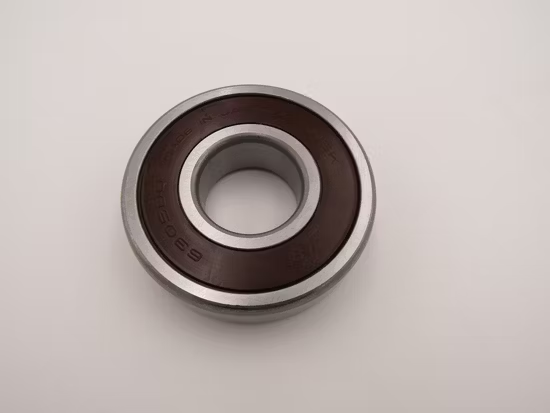


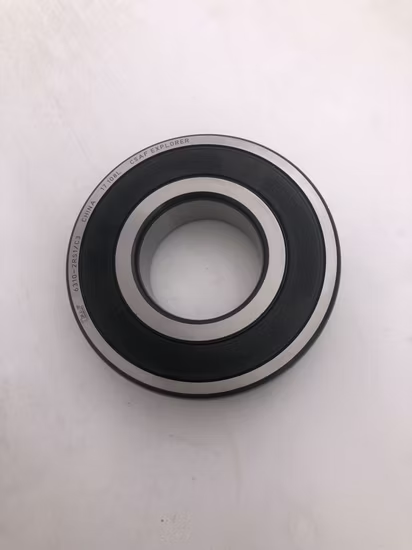
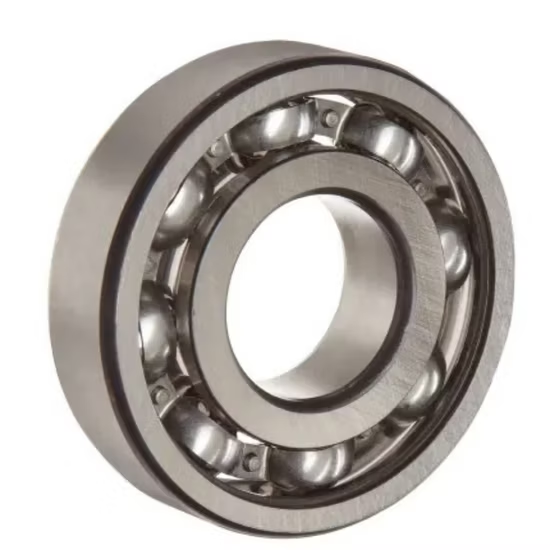
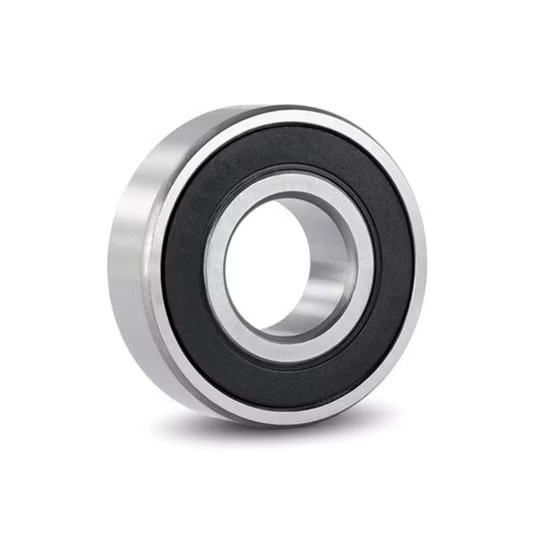
Koyo 6305 2RS Deep Groove Ball Bearing 25×62×17 mm — equipped with double-sided contact rubber seals to ensure maintenance-free performance and reliable contamination exclusion in demanding industrial environments.
Unified Multi-Brand Procurement — Source your Koyo 6305 2RS deep groove ball bearing alongside other major manufacturer requirements in a single, fully traceable consolidated shipment.
| Parameter | Value |
|---|---|
| Designation | Koyo 6305 2RS |
| Bearing Type | Deep Groove Ball Bearing |
| Bore Diameter (d) | 25 mm |
| Outside Diameter (D) | 62 mm |
| Width (B) | 17 mm |
| Seal or Shield Type | Double-sided contact rubber seals (2RS / DDU equivalent) |
| Noise and Vibration Level | Z1V1, Z2V2, Z3V3, Z4V4 options |
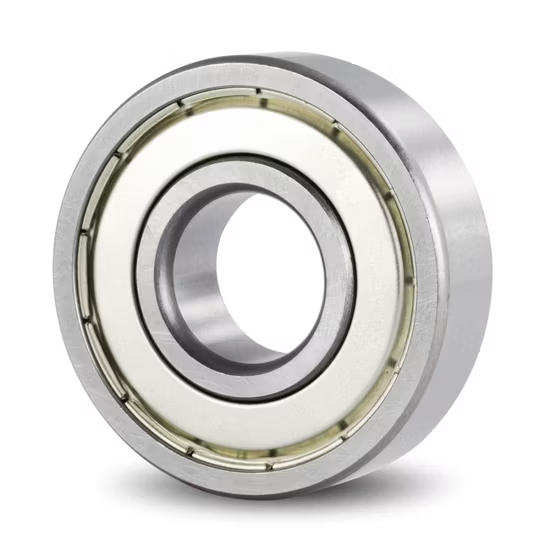
| Alternative Seal Options | Open, Iron Shields (ZZ) |
| Cross-Reference Equivalents | 6305 ZZ, 6305 DDU, 6301-6304 series variants |
| Industry | Typical Applications |
|---|---|
| Electric Motors | Rotor shaft support in humid or washdown environments |
| Industrial Pumps | Impeller shaft sealing against fluid ingress and corrosion |
| Material Handling | Conveyor roller end-caps exposed to airborne particulate dust |
| Agricultural Machinery | Gearbox input shafts requiring moisture and debris exclusion |
A matching base number does not guarantee operational survival in wet environments.
During my early purchasing days in Dongguan, I reviewed countless failure reports where 6305 ZZ shielded bearings were installed in damp electric motors instead of the specified rubber-sealed variants. The non-contact steel shields allowed moisture to bypass the gap, washing out the factory grease and causing the inner rings to corrode and seize . When sourcing a Koyo 6305 2RS deep groove ball bearing, verifying the exact seal suffix prevents these catastrophic field returns, ensuring the contact lips actually block the contaminants your equipment faces.
Selecting the correct Koyo 6305 2RS deep groove ball bearing requires looking past the basic dimension series. While the 25x62x17 mm envelope fits the housing, the 2RS contact seal provides the physical barrier necessary for high-humidity applications. Our technical review process cross-checks your environmental data against the seal type, ensuring you receive the exact DDU or 2RS configuration required to keep moisture out and lubrication in.
Every sealing solution introduces specific mechanical trade-offs. Contact rubber seals generate higher friction than non-contact iron shields, which restricts the maximum permissible operating speed but drastically improves contamination exclusion. If the motor operates in a dusty or wet environment, the slight increase in rotational torque is a necessary compromise to prevent abrasive paste formation inside the raceway . Conversely, high-speed precision spindles might demand open bearings with external forced lubrication to manage thermal expansion.
The 2RS suffix explicitly denotes double-sided contact rubber seals, functioning identically to Koyo’s proprietary DDU designation. This distinguishes it from the ZZ suffix, which indicates non-contact steel shields. Beyond sealing, selecting the appropriate Z/V noise and vibration grade—from standard Z1V1 up to the ultra-quiet Z4V4—is critical for electric motor applications where acoustic performance dictates product quality. Pairing the correct seal with the required internal clearance ensures the bearing accommodates thermal shaft expansion without binding under load.
Substituting a shielded bearing for a sealed one in a wet application inevitably leads to premature fatigue and catastrophic seizure. According to ISO 281 life calculation frameworks, contamination severely degrades the lubricant film thickness, accelerating surface spalling and unplanned downtime . These hidden costs manifest as voided equipment warranties, emergency maintenance dispatches, and production line stoppages that far exceed the initial component savings.
We eliminate the risk of soft inner rings and cloned packaging by supplying exclusively through authorized channels. Our cross-reference protocol verifies the 2RS suffix and internal clearance, not just the 6305 base number, preventing thermal binding. Every shipment includes verifiable batch traceability back to the manufacturer's production facilities. We provide application-based selection reviews to confirm the seal type matches your specific load and speed parameters.
To finalize your procurement, share your operational parameters including radial loads, rotational speeds, and ambient temperature ranges. Providing the original OEM equipment numbers allows our engineering team to execute a precise cross-reference check, confirming that the internal clearance and seal geometry perfectly match your machinery's requirements before shipment.
Q: What is the functional difference between Koyo's 2RS and DDU seal designations?
A: Both designations indicate double-sided contact rubber seals providing identical levels of moisture and dust protection. The 2RS suffix is the generic industry standard, while DDU is Koyo’s specific proprietary nomenclature. Both ensure the sealing lips maintain physical contact with the inner ring to block contaminants.
Q: How can I verify the authenticity of my Koyo bearings upon delivery?
A: Every genuine bearing features a unique QR code on the packaging. You can verify authenticity by scanning this code using the manufacturer's official mobile application, which cross-references the batch number directly against the factory database to confirm origin and traceability.
Q: Why is it critical to match clearance suffixes during cross-brand interchange?
A: Matching only the base 6305 number while ignoring internal clearance can cause thermal binding. If a motor requires C3 clearance to accommodate shaft expansion, installing a standard CN clearance bearing will result in excessive preload, elevated temperatures, and rapid cage failure under operational loads.
Q: Which seal type is optimal for high-speed electric motor applications?
A: For high-speed motors operating in clean, dry environments, non-contact ZZ steel shields or open bearings are preferred to minimize friction and heat generation. However, if the motor faces moisture or dust, the 2RS rubber seals are mandatory to prevent lubricant washout, despite the slight speed limitation.
Q: How do I select the correct Z/V noise and vibration grade?
A: Standard Z1V1 grades suffice for general industrial gearboxes and conveyors. For precision electric motors, household appliances, or medical equipment where acoustic performance is critical, specifying Z3V3 or Z4V4 grades ensures the bearing undergoes stricter manufacturing tolerances to minimize operational noise and vibration.
Our 5-step process ensures every order is engineered, validated, and supported for optimal performance.
Technical needs assessment
Custom specifications
Free samples for $50k+
Pre-shipment inspection
On-site & predictive
Our certified engineers respond within 24 hours with detailed technical specifications, pricing, and lead time information.