01
Consultation
Technical needs assessment


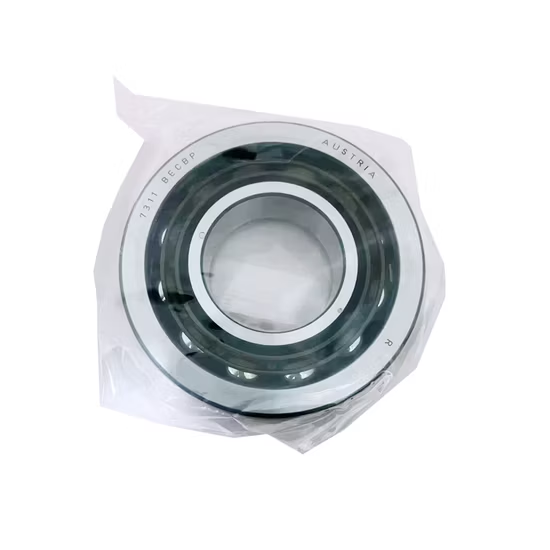
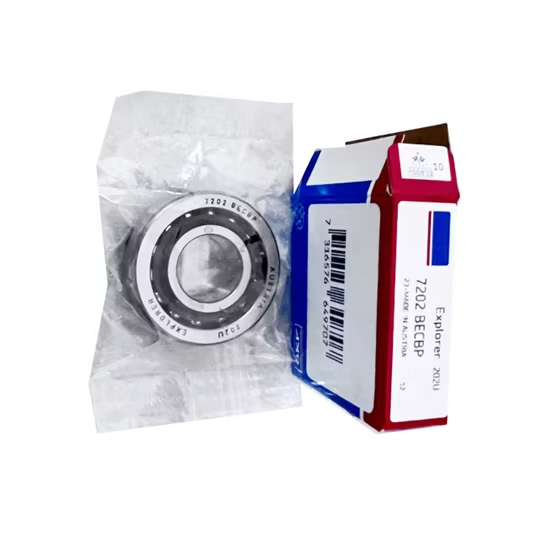

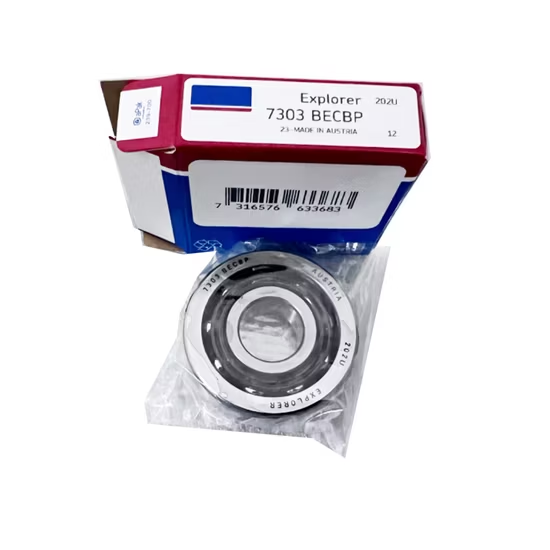

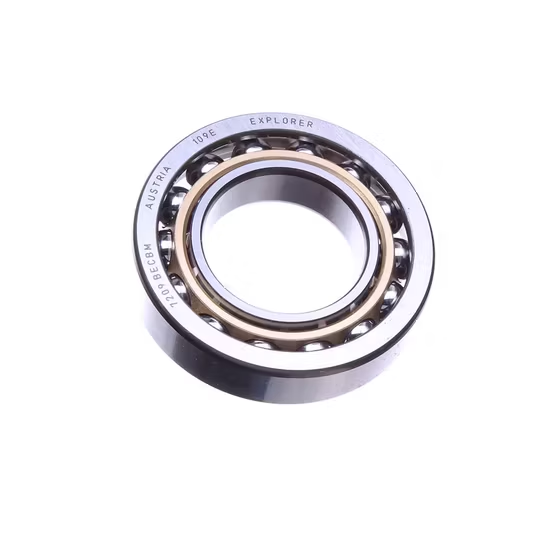
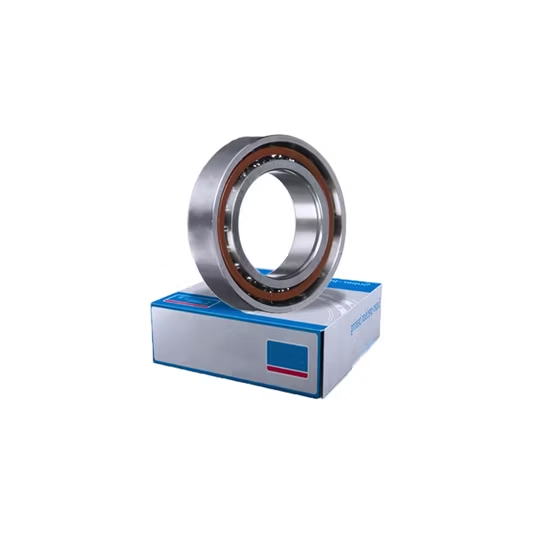
71914 CD/P4a Angular Contact Ball Bearing — engineered with a 15° contact angle to handle high-speed combined loads, while P4a precision guarantees strict dimensional and running accuracy for demanding machine tool spindles.
Traceable Factory Batches — Every 71914 CD/P4a angular contact ball bearing ships with verifiable lot documentation directly from the manufacturer's production facilities.
| Parameter | Value |
|---|---|
| Designation | 71914 CD/P4a |
| Bearing Type | Angular Contact Ball Bearing |
| Contact Angle | 15° |
| Precision Class | P4a |
| Arrangement | Universal match, light preload (for 71914cdga/P4a variant) |
| Material | Bearing steel (available in ceramic or stainless steel variants) |
| Vibration Level | Z1V1, Z2V2, Z3V3 |
| Origin | Germany, Japan, Sweden, Malaysia, China |
| HS Code | 8482102000 |
| Industry | Typical Applications |
|---|---|
| Machine Tool Manufacturing | High-speed motorized spindles and precision grinding wheelheads |
| Robotics & Automation | High-rigidity rotary joints and precision actuator mechanisms |
| Industrial Pumping | High-speed centrifugal pump shafts requiring strict axial control |
| Precision Equipment | Optical measuring instruments and coordinate measuring machine axes |
Ignoring the P4a running accuracy suffix turns a precision component into a thermal liability.
Cross-referencing errors frequently occur when procurement teams match the base 71914 designation but overlook the specific precision and contact angle suffixes. I have seen standard P0 grade bearings mistakenly installed in high-speed spindles where a 71914 CD/P4a angular contact ball bearing was strictly required. The resulting thermal binding and excessive vibration often destroy the spindle housing before the first maintenance window .
The optimized 15° contact angle in this configuration is engineered specifically for the combined radial and axial loads typical in high-speed machining. By supplying the exact 71914 CD/P4a angular contact ball bearing with verified internal geometry, we ensure the spindle maintains its rigidity without generating excessive friction heat, directly supporting the tight tolerances required for modern CNC operations.
At elevated rotational speeds, friction heat dramatically alters the internal clearance and lubricant film thickness. A 15° contact angle helps manage the axial thrust generated by tool engagement, but if the precision grade is insufficient, microscopic running deviations cause localized stress and rapid lubricant breakdown . Maintaining the correct operating temperature relies heavily on the exact dimensional accuracy that the P4a class provides.
The CD suffix confirms the 15° contact angle, which is optimal for high-speed applications where minimizing centrifugal forces on the rolling elements is critical. The P4a designation indicates standard P4 dimensional accuracy combined with enhanced running accuracy, meaning the inner and outer ring thickness variations and radial runout are strictly controlled. For the 71914cdga/P4a variant, the GA suffix guarantees a universal match with light preload, ensuring consistent stiffness when mounted in back-to-back or face-to-face pairs.
Installing a standard precision bearing in a high-speed spindle leads to catastrophic damage and unplanned downtime. According to failure classification frameworks, improper internal geometry and loose running tolerances accelerate surface fatigue and cage wear . This premature failure not only voids equipment warranties but also results in the costly replacement of the entire spindle assembly.
We do not just match base numbers; we verify every suffix to prevent field failures. Our technical team specifically checks the P4a running accuracy and CD contact angle to ensure the replacement matches the OEM spindle design. We provide full batch traceability for every 71914 CD/P4a angular contact ball bearing, eliminating the risk of receiving counterfeit parts with soft inner rings. Furthermore, our cross-reference to the 71914cdga/P4a paired variant ensures the preload matches your specific stiffness requirements.
To ensure the selected configuration perfectly matches your machinery, please provide the exact radial and axial loads, maximum operating speeds, and thermal conditions of your spindle. If you are replacing an existing unit, sharing the OEM equipment number allows our engineering team to perform a precise cross-reference check. This technical review guarantees the correct preload and precision class are applied to your specific application.
Q: What is the difference between the CD and ACD suffixes in this series?
A: The CD suffix indicates a 15° contact angle optimized for high-speed applications with lower axial loads. In contrast, the ACD suffix typically designates a 25° contact angle, which provides higher axial load capacity but generates more friction heat at extreme speeds. Selecting the correct angle is critical for spindle thermal stability.
Q: How does P4a precision differ from standard P4 for machine tool spindles?
A: While both share the same dimensional tolerances, the P4a class enforces strictly tighter running accuracy, specifically controlling radial and axial runout. This enhanced running precision minimizes vibration and heat generation at high rotational speeds, which is essential for achieving superior surface finishes in precision grinding and milling operations.
Q: How do I choose between GA and GB preload for paired installations?
A: The GA suffix provides a light preload, ideal for high-speed spindles where minimizing friction heat is the priority. The GB suffix indicates a medium preload, offering higher rigidity for heavy cutting operations but at lower maximum speeds. The choice depends on whether your application prioritizes rotational speed or cutting stiffness.
Q: How can I identify counterfeit high-precision bearings before installation?
A: Counterfeits often feature soft inner rings and cloned QR codes that pass casual visual checks. Always verify the batch using the brand's official app and demand a dimensional inspection report. Genuine P4a bearings will show strict runout tolerances on the report, whereas fakes typically fail these precise measurements.
Our 5-step process ensures every order is engineered, validated, and supported for optimal performance.
Technical needs assessment
Custom specifications
Free samples for $50k+
Pre-shipment inspection
On-site & predictive
Our certified engineers respond within 24 hours with detailed technical specifications, pricing, and lead time information.