01
Consultation
Technical needs assessment

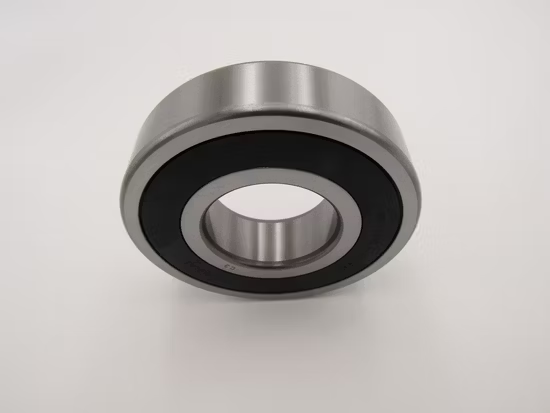
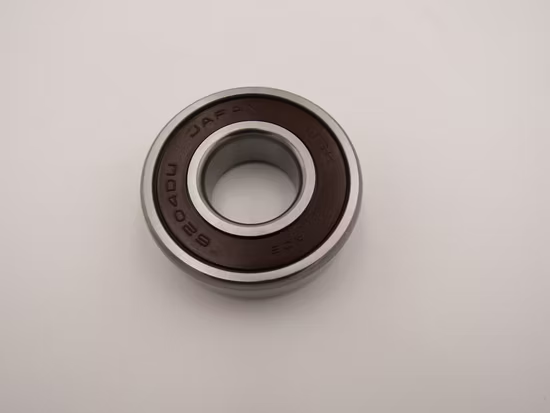


NACHI 6201-2nse9 Deep Groove Ball Bearing 12×32×10 mm
Multi-Brand Authorized Coverage — Consolidate your NACHI 6201-2nse9 deep groove ball bearing requirements alongside other major international brands in a single shipment, fully backed by unified manufacturer batch traceability.
| Parameter | Value |
|---|---|
| Designation | NACHI 6201-2nse9 |
| Product Type | Deep Groove Ball Bearing |
| Bore Diameter (d) | 12 mm |
| Outside Diameter (D) | 32 mm |
| Width (B) | 10 mm |
| Seal or Shield Type | Rubber Seals |
| Cross Reference | 6201nse, 6201 |
| HS Code | 848210 |
| Origin | Japan |
Note: The "2nse9" suffix is an unverified designation requiring manufacturer catalog confirmation for exact internal clearance and seal compound mapping.
| Industry | Typical Applications |
|---|---|
| Electric Motors | Small to medium motor rotor shaft support, cooling fan assemblies |
| Industrial Gearboxes | High-speed input shaft positioning, auxiliary drive pulleys |
| Pumps | Centrifugal pump impeller shaft stabilization, seal chamber supports |
Base numbers match, but suffix deviations cause rapid thermal binding in the field.
Procurement teams often approve substitutions based solely on the "6201" core designation, overlooking critical suffix variations. In my years distributing across the Pearl River Delta manufacturing hub, I have witnessed standard open or lightly shielded bearings installed where specific rubber-sealed variants were required. The resulting dust ingress and lubricant washout lead to premature motor failures within weeks. Sourcing the exact NACHI 6201-2nse9 deep groove ball bearing ensures the seal geometry and internal clearance align perfectly with the original equipment manufacturer's thermal and environmental calculations .
Supplying the correct NACHI 6201-2nse9 deep groove ball bearing goes beyond reading a parts list; it requires validating the application parameters. Our technical review process cross-checks the requested seal type against the actual operating environment, ensuring that the rubber compound and internal design can withstand the specific moisture and particulate challenges of your facility.
Small deep groove ball bearings in electric motors and pumps face intense thermal cycling and contamination risks. When ambient dust breaches an inadequate seal, it mixes with the grease to form an abrasive paste that scores the raceways. Furthermore, if the internal clearance is too tight for the operating temperature, thermal expansion eliminates the internal play, causing excessive friction and catastrophic cage failure. Proper seal selection and clearance matching are mandatory to maintain low torque and prevent heat buildup .
The 12 mm bore, 32 mm outside diameter, and 10 mm width define the physical envelope, but the rubber seal configuration dictates the service life. Unlike non-contact metal shields that only block large debris, contact rubber seals provide superior protection against fine particulates and moisture, albeit with a slight increase in frictional torque. The specific internal design codes embedded in the suffix govern how the bearing accommodates shaft deflection and thermal growth. Ensuring these internal geometries match the OEM specification prevents the localized stress concentrations that lead to early spalling on the inner ring.
Installing an incorrect variant where a specialized seal or clearance is required triggers a cascade of operational failures. Unplanned downtime halts production lines, while premature failure forces maintenance crews into repetitive, costly replacement cycles. In severe cases, a seized bearing can cause catastrophic damage to the surrounding motor windings or pump housings. Adhering to the exact specification mitigates these risks and prevents warranty voidance on expensive capital equipment .
We maintain authorized distribution channels that guarantee the authenticity of every NACHI 6201-2nse9 deep groove ball bearing we supply. Our cross-reference protocol explicitly verifies the seal type and internal clearance simultaneously, preventing the common error of matching only the base number. Because we handle multiple international brands, you can consolidate mixed-brand MRO requirements into a single, fully documented shipment. Every unit is subjected to a rigorous pre-shipment review to ensure it meets the exact application parameters you provided.
To ensure optimal performance, please provide the specific radial and axial loads, operating speeds, and ambient temperatures for your application. Supplying the OEM equipment number allows our engineering team to perform a precise cross-reference review and validate the L10 life calculation for this exact configuration.
Q: How can I verify the authenticity of the NACHI 6201-2nse9 deep groove ball bearing upon delivery?
A: Every bearing we supply features a unique QR code that links directly to the manufacturer's official verification application. Scanning this code confirms the production batch, origin, and authenticity, protecting your facility from counterfeit products that often feature soft inner rings and cloned packaging.
Q: Why must clearance and seal suffixes be matched together during cross-referencing?
A: Matching only the base number ignores critical internal design differences. A standard clearance bearing installed in a high-temperature motor will thermally bind, while an incorrect seal type will allow contaminant ingress. We verify all suffixes simultaneously to ensure the physical bearing matches the exact engineering requirements of your equipment.
Q: What is the difference between standard CN clearance and expanded clearances like C3 in motor applications?
A: Standard CN clearance is suitable for normal operating temperatures and loads. Expanded clearances, such as C3, provide additional internal play to accommodate thermal expansion of the shaft and housing in high-speed or high-temperature electric motors, preventing the bearing from seizing as the components heat up during operation.
Q: How do I select the correct rubber seal variant for high-moisture environments?
A: Standard rubber seals protect against general dust and light moisture. For high-moisture or washdown environments, specialized seal compounds and tighter lip geometries are required to prevent water ingress and grease emulsification. Sharing your specific environmental conditions allows us to verify if this exact designation meets your sealing requirements.
Our 5-step process ensures every order is engineered, validated, and supported for optimal performance.
Technical needs assessment
Custom specifications
Free samples for $50k+
Pre-shipment inspection
On-site & predictive
Our certified engineers respond within 24 hours with detailed technical specifications, pricing, and lead time information.