01
Consultation
Technical needs assessment



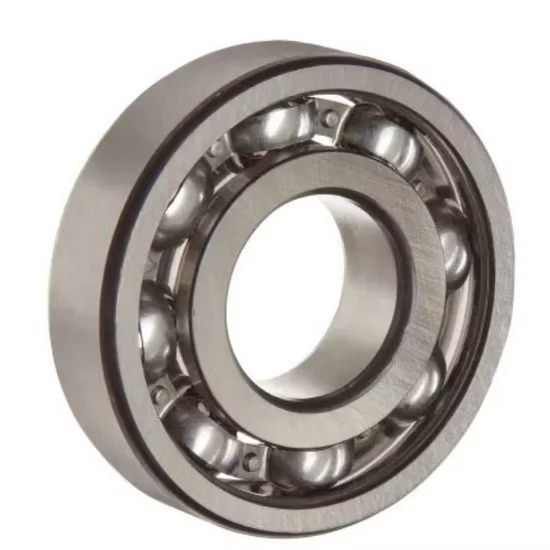
686 687 688 689 Deep Groove Ball Bearings — offered in open, rubber seal, and iron shield options to match specific environmental and friction requirements.
Exact Cross-Reference Alignment — We verify clearance, seal types, and vibration grades against your OEM specs rather than relying solely on the base number.
| Parameter | Value |
|---|---|
| Designation | 686 687 688 689 |
| Bearing Type | Deep Groove Ball Bearing |
| Seal or Shield Type | Open, Rubber Seals, Iron Shields |
| Vibration and Noise Level | Z1V1, Z2V2, Z3V3, Z4V4 |
| Origin | Germany, Japan, Sweden, Malaysia, China |
| HS Code | 848210 |
| Industry | Typical Applications |
|---|---|
| Electric Motors | Small motor rotors, cooling fan shafts, servo motor encoders |
| Precision Instruments | Optical scanner spindles, laboratory centrifuge rotors, gimbal joints |
| Household Appliances | Washing machine drain pumps, blender drive shafts, vacuum cleaner motors |
| Industrial Gearboxes | Micro planetary gear drives, low-torque actuator output shafts |
Matching the base number is never enough for thin-walled micro bearings.
In my years on the workshop floor in Ningbo, I have dismantled countless seized small motors where the root cause was a subtle specification mismatch. A standard clearance bearing installed in a high-speed micro motor will thermally bind and lock up the rotor within hours. Sourcing a 686 687 688 689 deep groove ball bearing based purely on the numeric designation often overlooks critical internal geometry and seal friction, leading to catastrophic field failures that standard visual inspections simply cannot catch .
Selecting the correct 686 687 688 689 deep groove ball bearing requires balancing rotational speed with thermal expansion limits. Our technical team reviews your specific RPM and operating temperature to recommend the precise internal clearance and cage design, ensuring the bearing maintains its operational geometry without generating excess friction heat.
Thin-section bearings operate with minimal internal volume, meaning any heat generated by seal friction or incorrect preload rapidly degrades the lubricant. In dusty appliance or precision instrument environments, iron shields offer low-friction protection, while rubber seals provide superior exclusion of fine particulates at the cost of slightly higher torque. Selecting the wrong seal type or ignoring the Z1V1 through Z4V4 vibration grading inevitably leads to premature lubricant starvation and raceway spalling .
The Z1V1 to Z4V4 classification dictates the allowable vibration velocity and noise levels, which is absolutely critical for optical instruments and quiet household appliances. A Z4V4 grade ensures the rolling elements and raceways are manufactured to ultra-strict geometric tolerances, minimizing acoustic emissions at high speeds. Furthermore, choosing between open, rubber-sealed, or iron-shielded variants directly dictates the maintenance cycle; sealed units are lubricated for life, whereas open variants require precise external oiling to prevent dry running.
Installing a bearing with incorrect internal clearance or inadequate vibration grading in a precision spindle results in unplanned downtime and scrapped production batches. Per ISO 281 frameworks, even minor deviations in thin-wall bearing selection drastically reduce the calculated L10 life, causing micro-pitting and eventual rotor eccentricity. This silent degradation often voids equipment warranties and forces expensive emergency replacements long before the scheduled maintenance window .
Counterfeit micro bearings frequently feature soft inner rings and cloned packaging that easily deceive standard receiving inspections. We eliminate this risk by supplying fully traceable components, verifying the exact cross-reference to ensure the seal type and vibration grade perfectly match your OEM requirements. Our multi-origin sourcing capabilities allow us to secure genuine inventory from authorized manufacturing facilities, preventing the supply chain delays that typically plague niche thin-section designations.
To ensure precise specification alignment, please provide your application's radial and axial loads, operational RPM, and ambient temperature range. Supplying the OEM equipment part number allows our engineering team to execute a comprehensive cross-reference check, verifying that the selected clearance and seal configuration perfectly suit your operational environment.
Q: How do I choose between rubber seals and iron shields for my application?
A: Iron shields provide excellent protection against large dust particles while maintaining very low friction, making them ideal for high-speed small motors. Rubber seals offer superior exclusion of fine moisture and microscopic contaminants, which is critical for household appliances, though they introduce slightly higher rotational torque.
Q: What do the Z1V1 to Z4V4 quality levels actually mean?
A: These designations classify the bearing's vibration velocity and acoustic noise limits. Z4V4 represents the strictest tolerance for ultra-quiet, high-speed operation required in precision instruments and premium electric motors, whereas Z1V1 is suitable for general-purpose, low-speed appliance drives where noise is less critical.
Q: Why must cross-referencing include seal types and not just the base number?
A: The base number only defines the physical boundary dimensions. If a cross-reference ignores the seal type or internal clearance, a shielded bearing might be replaced with an open one, leading to immediate lubricant washout and rapid failure in contaminated environments despite fitting the housing perfectly.
Q: How can I verify the authenticity of multi-brand micro bearings?
A: We provide comprehensive batch and lot traceability for every shipment. You can verify the authenticity and origin of your 686 687 688 689 deep groove ball bearing by scanning the packaging QR codes through the respective brand's official mobile application, ensuring the internal components meet genuine factory specifications.
Our 5-step process ensures every order is engineered, validated, and supported for optimal performance.
Technical needs assessment
Custom specifications
Free samples for $50k+
Pre-shipment inspection
On-site & predictive
Our certified engineers respond within 24 hours with detailed technical specifications, pricing, and lead time information.