01
Consultation
Technical needs assessment



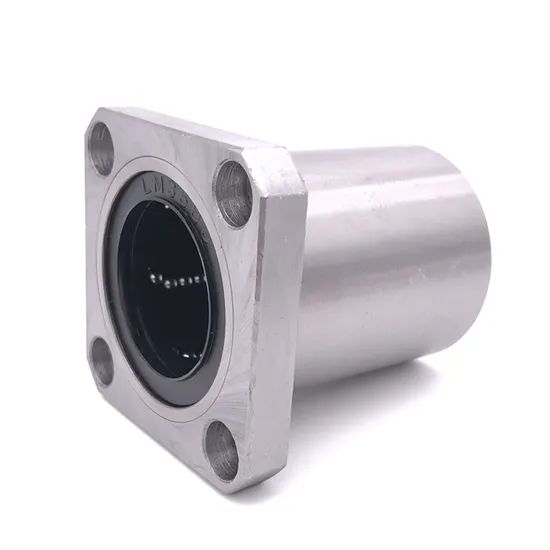

Lmek8luu Linear Bearing — Constructed with bearing steel and a nylon cage for high-speed, low-noise operation, supporting precision grades from P0 to P2.
Unified Multi-Brand Sourcing — Procure the Lmek8luu linear bearing alongside other international motion components in a single consolidated shipment without juggling multiple vendors.
| Parameter | Value |
|---|---|
| Designation | Lmek8luu |
| Product Type | Linear Bearing |
| Flange Shape | Circular |
| Shape | Open |
| Material | Bearing Steel |
| Cage Material | Nylon Cage |
| Precision Rating | P0, P6, P5, P4, P2 |
| Feature | High Speed, Low Noise |
| Origin | Germany, Japan, Sweden, Malaysia, China |
| HS Code | 8483109000 |
Suffixes LME, K, and LUU are unverified and require manufacturer catalog confirmation.
| Industry | Typical Applications |
|---|---|
| CNC Machining | Machine tool spindles and CNC routing equipment |
| Automation | Robotics and automated material handling systems |
| Precision Engineering | Precision measuring equipment and 3D printers |
Contamination causes more early seizures than load miscalculations in automated environments.
In the manufacturing hubs of the Pearl River Delta, I have seen countless automated assembly lines grind to a halt because procurement teams focused solely on the base designation. They overlooked the sealing suffixes, allowing microscopic particulate matter to infiltrate the carriage. When a Lmek8luu linear bearing operates in high-dust conditions without adequate protection, the internal friction spikes dramatically, leading to catastrophic scoring on the shaft .
Selecting the right motion component goes beyond matching the outer diameter. The Lmek8luu linear bearing integrates a nylon cage that significantly reduces friction and acoustic emissions during rapid traversals. Our technical review process ensures that the selected precision class and flange configuration perfectly align with your specific automated material handling systems, preventing the resonance issues common in high-speed robotics.
Automated assembly lines subject linear motion systems to complex dynamic loads and continuous high-speed cycling. The thermal expansion generated during rapid movements dictates the necessary internal clearance and precision grade. Furthermore, environments like CNC routing equipment produce aggressive metallic swarf and coolant mist. Selecting the appropriate sealing configuration is critical; contact seals provide maximum contamination exclusion but introduce drag, while open designs require rigorous external lubrication protocols to prevent premature wear .
The bearing steel construction provides the necessary core hardness to resist brinelling under heavy static loads. The nylon cage is specifically engineered to maintain ball spacing and reduce vibration at elevated speeds, offering a distinct advantage over metallic cages in noise-sensitive applications. While the standard configuration utilizes high-carbon bearing steel, alternative martensitic stainless grades are available for environments exposed to corrosive coolants or washdown procedures. The availability of multiple precision ratings, up to P2, allows engineers to specify the exact dimensional tolerance required for precision measuring equipment.
Treating all linear bearings with the same base number as interchangeable is a costly mistake. Substituting a unit with an incorrect flange shape or missing dust cover leads to unplanned downtime and severe shaft damage. According to failure analysis frameworks, contamination and improper mounting account for a significant share of premature failures . A minor oversight in cross-referencing the exact sealing and flange suffixes can void equipment warranties and halt entire production cells.
We do not just ship boxes; we verify the internal geometry and sealing integrity of every unit. When cross-referencing the Lmek8luu linear bearing to equivalent models, we strictly align the flange shape, cage material, and sealing suffixes, not just the basic dimensions. Our multi-brand authorization allows us to source exact OEM replacements or validated alternatives from Germany, Japan, or Sweden without compromising traceability. Every shipment is backed by comprehensive documentation, ensuring you receive genuine components that meet the rigorous demands of automated assembly lines.
To ensure optimal performance, provide your specific radial and axial load profiles, maximum traversal speeds, and operating temperatures. If replacing an existing unit, share the exact OEM equipment number and the environmental conditions, such as dust or coolant exposure. This data allows our engineering team to validate the Lmek8luu linear bearing selection and confirm the appropriate sealing and precision requirements for your application.
Q: Why do identical base numbers fail when interchanged in automated lines?
A: Base numbers only define basic dimensions. Ignoring suffixes that dictate flange shape, internal clearance, or sealing types leads to physical interference or rapid contamination ingress. We cross-reference every parameter to ensure the replacement matches the exact mechanical and environmental demands of your automated assembly line.
Q: How do precision grades affect CNC routing equipment performance?
A: Higher precision grades minimize dimensional deviations and radial play, which is critical for maintaining tight machining tolerances. Selecting a P4 or P2 grade ensures smoother shaft translation and reduces vibration, directly improving the surface finish and accuracy of the components produced by your CNC machines.
Q: What are the trade-offs between nylon and steel cages in robotics?
A: Nylon cages offer superior vibration dampening, lower weight, and quieter operation at high speeds, making them ideal for rapid robotic movements. Steel cages tolerate higher temperatures but generate more noise and friction. We evaluate your specific speed and thermal profiles to recommend the optimal cage material.
Q: How should open linear bearings be maintained in dusty environments?
A: Open designs lack integrated contact seals, requiring meticulous external lubrication and protective bellows to prevent particulate ingress. If your environment has high airborne dust, we recommend evaluating sealed alternatives or implementing automated re-lubrication systems to extend the service life of the carriage.
Our 5-step process ensures every order is engineered, validated, and supported for optimal performance.
Technical needs assessment
Custom specifications
Free samples for $50k+
Pre-shipment inspection
On-site & predictive
Our certified engineers respond within 24 hours with detailed technical specifications, pricing, and lead time information.