01
Consultation
Technical needs assessment

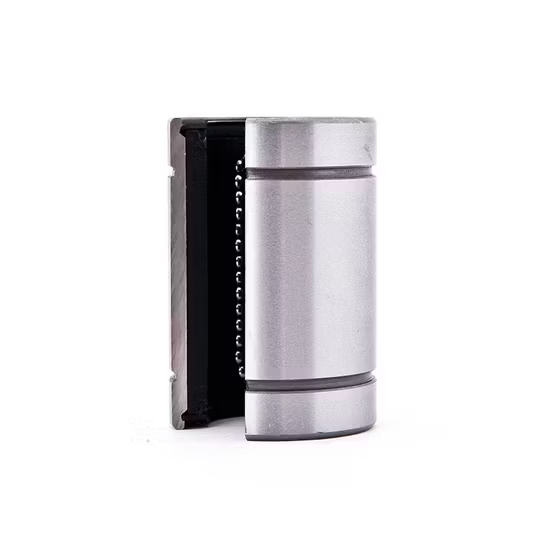
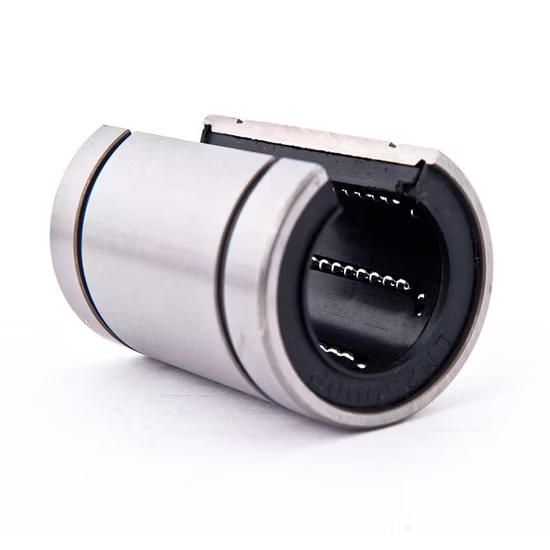
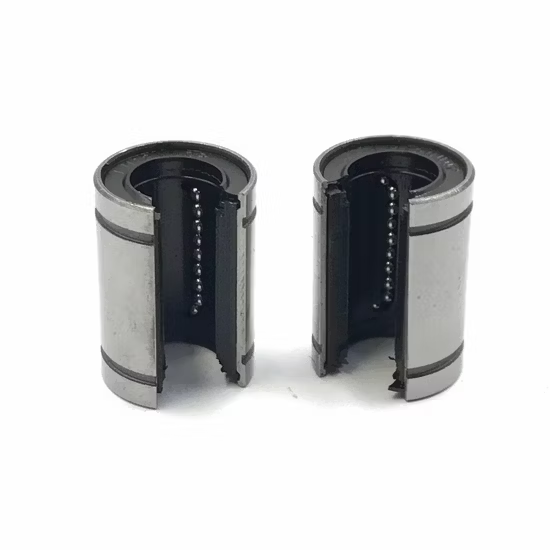


Lme10-Op Lme12-Op Lme16-Op Open Type Linear Bearings feature an OP slotted design for adjustable radial clearance and precise shaft preloading. The nylon cage construction ensures smooth, low-noise operation in automation equipment.
Factory QR Verification — Every LME-OP batch we dispatch includes scannable codes linking directly to the manufacturer's official authenticity database, eliminating the risk of cloned visual markers on counterfeit linear motion components.
| Parameter | Value |
|---|---|
| Designation | Lme10-Op Lme12-Op Lme16-Op |
| Product Type | Linear Bearing |
| Series | LM |
| Shape | Open (OP) / Slotted Design |
| Flange Shape | Circular |
| Material | Bearing Steel |
| Cage Material | Nylon |
| Precision Class | P0, P6, P5, P4, P2 |
| Origin | Germany / Japan / Sweden / Malaysia / China |
| HS Code | 8483109000 |
| Industry | Typical Applications |
|---|---|
| Machine Tools | CNC routing axes and precision spindle positioning guides |
| Automation | Automated guided vehicle linear tracks and robotic pick-and-place arms |
| Precision Equipment | Coordinate measuring machines and optical inspection stages |
| Additive Manufacturing | 3D printer Z-axis lead screw support and extruder carriages |
Matching the base designation while ignoring the open-slot geometry guarantees binding in adjustable housings.
Procurement teams often source standard closed linear bearings when the equipment specifically requires a slotted design for clearance tuning. In automated assembly lines across the Pearl River Delta, I have seen entire production cells halt because a visually similar closed bearing was forced into an adjustable pillow block, causing immediate shaft galling. The Lme10-Op Lme12-Op Lme16-Op open type linear bearing solves this by featuring a longitudinal slot that allows the housing to clamp down and fine-tune the radial clearance. Overlooking this specific OP suffix during cross-referencing leads to catastrophic thermal expansion issues and premature cage disintegration under high-speed reciprocation .
When integrating the Lme10-Op Lme12-Op Lme16-Op open type linear bearing into precision stages, the primary advantage lies in the adjustable housing interface. This specific geometry allows maintenance engineers to eliminate play entirely, which is critical for CNC routing axes where even microscopic deflection ruins surface finishes. We verify that the open-slot width and housing clamp tolerances align perfectly with your OEM specifications, ensuring the bearing performs exactly as the machine builder intended without introducing artificial preload stress.
Linear motion systems subject components to relentless directional reversals and continuous acceleration forces. The nylon cage construction in these units is engineered to maintain ball spacing and reduce friction during high-speed travel, but it demands careful attention to lubrication intervals. Without adequate grease film, the sliding contact between the balls and the raceway generates localized heat, which rapidly degrades the polymer cage material. Furthermore, the open design exposes the internal rolling elements to the environment, making external bellows or way covers mandatory to prevent abrasive swarf from infiltrating the load-bearing zones .
The OP designation explicitly defines the slotted, open geometry required for adjustable clearance, distinguishing it from standard closed cylindrical variants. This structural feature relies on the housing's clamping force to achieve the desired fit on the shaft. Beyond the shape, selecting the appropriate precision class—ranging from standard P0 up to ultra-precise P2—dictates the dimensional accuracy of the bore and the running smoothness. In high-speed material handling systems, a higher precision grade minimizes vibration and ensures the nylon cage operates within its optimal kinematic envelope, preventing the early fracture issues commonly seen when lower-grade components are pushed beyond their dynamic limits.
Substituting a closed bearing into an adjustable open housing, or vice versa, inevitably results in unplanned downtime and severe shaft scoring. When the clearance cannot be properly tuned due to a missing slot, the system suffers from either excessive play that destroys positioning accuracy or extreme preload that causes thermal seizure. According to failure analysis frameworks, improper mounting and clearance adjustment account for a massive portion of premature linear guide replacements . This not only voids equipment warranties but also triggers cascading failures in adjacent drive components.
Sourcing genuine linear guides requires more than just matching the alphanumeric code on the label. We provide comprehensive cross-reference verification to ensure the OP slotted design and nylon cage specifications exactly match your OEM requirements, preventing the installation of incompatible internal structures. Every shipment includes full batch and lot traceability back to the manufacturer's production facilities, backed by official app QR verification to rule out sophisticated counterfeits. Our technical team reviews your load, speed, and mounting parameters to confirm the selected precision class is adequate for the application, eliminating the guesswork that leads to field failures.
To ensure optimal performance and prevent clearance-related binding, please provide your specific radial and axial load profiles, travel speed, and operating temperature ranges. Sharing the exact OEM equipment number or the adjustable housing dimensions allows our engineering team to perform a thorough cross-reference check and confirm the L10 life expectancy. We will evaluate your environmental conditions to recommend the necessary external sealing solutions for the open-slot design.
Q: What is the functional difference between open-type (OP) and closed-type linear bearings?
A: Open-type bearings feature a longitudinal slot along the outer ring, allowing the housing to clamp down and adjust the radial clearance or apply a precise preload. Closed-type bearings have a solid cylindrical outer ring and rely entirely on the manufactured internal clearance, making them unsuitable for applications requiring fine-tuned shaft fitment via adjustable pillow blocks.
Q: How do I select the correct precision class for my linear motion application?
A: Standard P0 or P6 classes are generally sufficient for basic material handling and transport systems. However, CNC machine tools, coordinate measuring machines, and high-speed automation require P5, P4, or P2 precision to minimize vibration, ensure smooth travel, and maintain strict positioning accuracy during continuous reciprocating operations.
Q: How does the nylon cage affect speed and temperature limits compared to steel cages?
A: Nylon cages offer excellent high-speed performance, lower weight, and reduced noise due to their self-lubricating properties and lower friction against the rolling elements. However, they have a lower maximum continuous operating temperature threshold compared to pressed steel or machined brass cages, requiring careful thermal management in high-heat environments.
Q: What are the cross-reference interchange rules for LM series linear bearings?
A: While base dimensions might match across different manufacturers, interchangeability requires verifying the exact shape, cage material, and precision suffixes. Substituting a standard closed equivalent for an OP designated unit will prevent proper clearance adjustment, leading to immediate binding or excessive play in the linear guide system.
Our 5-step process ensures every order is engineered, validated, and supported for optimal performance.
Technical needs assessment
Custom specifications
Free samples for $50k+
Pre-shipment inspection
On-site & predictive
Our certified engineers respond within 24 hours with detailed technical specifications, pricing, and lead time information.


