01
Consultation
Technical needs assessment


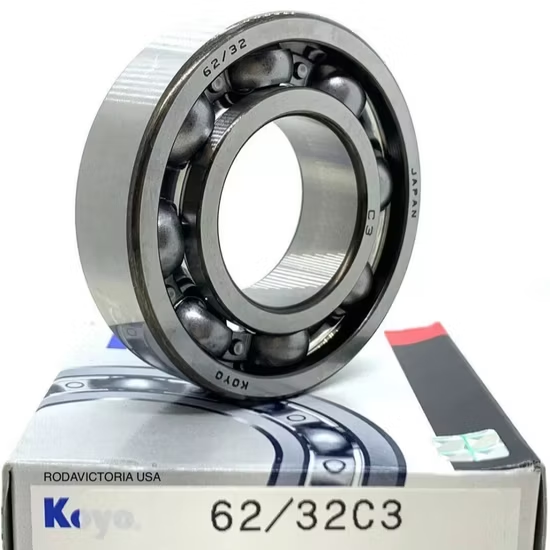
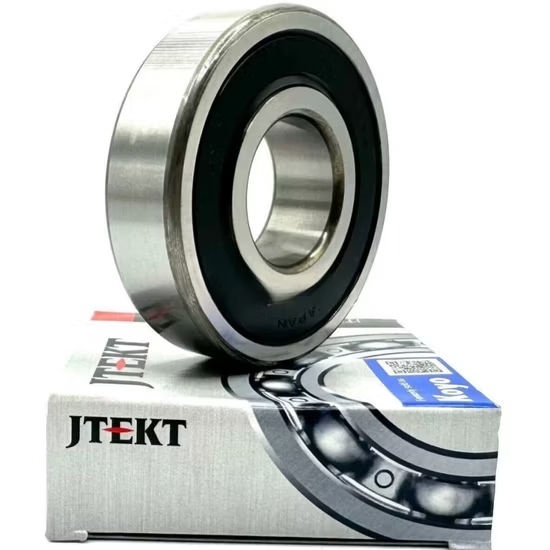
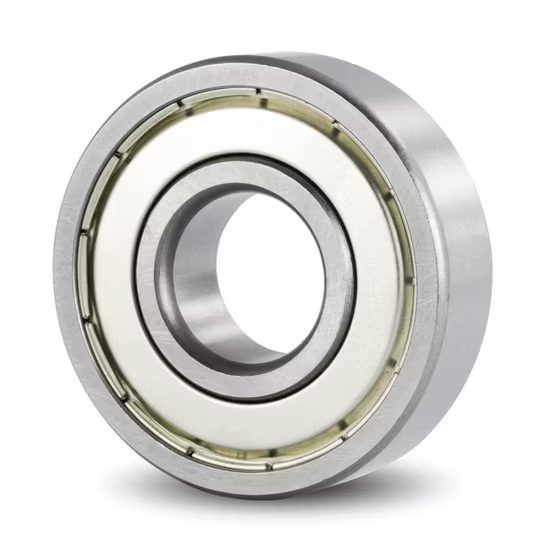
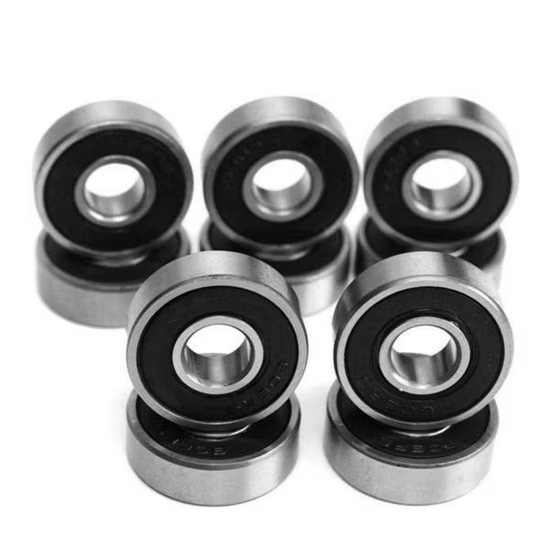

Koyo 6314 Deep Groove Ball Bearing 70×150×35 mm — This base designation operates with standard internal clearance and geometry, effectively managing combined radial and axial loads in electric motors and industrial gearboxes.
Traceable Factory Batches — Every Koyo 6314 deep groove ball bearing we dispatch includes verifiable lot documentation linking directly to the manufacturer's original production records.
| Parameter | Value |
|---|---|
| Designation | Koyo 6314 |
| Bearing Type | Deep Groove Ball Bearing |
| Bore Diameter (d) | 70 mm |
| Outside Diameter (D) | 150 mm |
| Width (B) | 35 mm |
| Bearing Style | Open, Rubber Seals, Iron Seals |
| Quality Level | Z1V1, Z2V2, Z3V3, Z4V4 |
| HS Code | 848210 |
| Industry | Typical Applications |
|---|---|
| Electric Motors | Rotor shaft support in medium-duty industrial drive motors |
| Industrial Gearboxes | Input and output shaft mounting in parallel reduction units |
| Pumps | Centrifugal pump impeller shaft stabilization and radial support |
| General MRO | Replacement units for conveyor drive pulleys and exhaust fans |
Matching the base designation is never enough to prevent thermal binding in continuous-duty motors.
During my years sourcing industrial components in Dongguan, I have seen procurement teams focus strictly on the 6314 number while entirely ignoring internal clearance requirements. When a standard clearance unit is forced into an application demanding thermal expansion tolerance, the internal gaps close as the motor heats up. Within minutes, the rolling elements skid, the cage deforms, and the shaft seizes completely . Sourcing a genuine Koyo 6314 deep groove ball bearing requires verifying that the internal geometry perfectly matches the operating temperature profile of your specific equipment.
Selecting the correct configuration goes far beyond confirming the 70x150x35 mm dimensions. We review your specific load profiles, rotational speeds, and ambient temperatures to ensure the selected unit handles the actual field conditions. Our technical team cross-references your OEM equipment numbers to prevent the costly mismatch of seal types or vibration grades, ensuring the Koyo 6314 deep groove ball bearing integrates flawlessly into your existing machinery without premature wear.
Electric motors and gearboxes generate substantial internal heat, which directly impacts the operational clearance of the bearing. If the initial clearance is too tight, thermal expansion from the rotor and housing will eliminate the internal gap, leading to catastrophic friction. Furthermore, industrial environments introduce fine particulate matter that easily penetrates inadequately sealed housings . Choosing between open, rubber-sealed, or iron-shielded variants dictates whether the unit retains its factory lubricant while effectively blocking external contaminants from degrading the raceways.
The absence of explicit clearance suffixes on the base Koyo 6314 identifier indicates standard internal geometry, making the selection of the correct Z/V vibration grade critical for noise-sensitive applications. The Z1V1 through Z4V4 classifications define the strictness of the running accuracy and acoustic emissions, with higher grades essential for high-speed electric motors to prevent harmonic resonance. Additionally, the choice between rubber seals and iron shields involves a direct trade-off: rubber seals provide superior contact sealing against moisture and dust but generate slightly higher friction, whereas iron shields offer non-contact protection ideal for high-speed, low-torque gearboxes where minimizing rotational resistance is paramount.
Installing a bearing with mismatched internal clearances or inappropriate seal types inevitably triggers unplanned downtime and secondary equipment damage. According to the failure mode classifications outlined in ISO 15243, inadequate internal clearance rapidly accelerates surface fatigue and cage breakdown under thermal stress . This premature failure not only destroys the bearing itself but frequently scores the motor shaft and damages the housing, transforming a simple component replacement into a massive, costly mechanical overhaul.
We eliminate the risk of receiving counterfeit units with soft inner rings by enforcing strict batch traceability for every order. Because cross-reference errors frequently occur when suppliers match the base 6314 number but overlook critical seal or vibration suffixes, our engineering team manually verifies these parameters against your application data. We provide authorized multi-brand coverage, meaning your mixed-brand MRO requirements are fulfilled through a single, technically vetted supply channel. Furthermore, we supply complete documentation packages that allow your receiving department to independently authenticate the product before it ever reaches the maintenance floor.
To ensure precise selection and L10 life calculation, please provide your specific radial and axial load values, operating speeds, and expected thermal conditions. If you are replacing an existing unit, sharing the exact OEM equipment number or motor nameplate data allows our engineering team to perform a comprehensive cross-reference check. This technical validation guarantees the supplied configuration perfectly aligns with your machinery's original design parameters.
Q: How do I verify the authenticity of the received units?
A: Every unit features a unique QR code on the packaging that links directly to the manufacturer's database. By scanning this code with the official brand application, your receiving team can instantly verify the production batch, confirm the origin, and ensure the product has not been cloned or diverted from authorized channels.
Q: What is the selection boundary between rubber seals and iron shields?
A: Rubber seals provide excellent contact sealing against moisture and heavy dust but introduce higher friction, making them ideal for moderate-speed applications. Iron shields offer non-contact protection that minimizes rotational resistance and heat generation, making them the preferred choice for high-speed electric motors where torque efficiency is critical.
Q: Why must I verify vibration grades beyond the base designation?
A: The base number only defines the physical dimensions. The Z1V1 to Z4V4 grades dictate the internal running accuracy and acoustic limits. Installing a lower vibration grade in a precision, high-speed motor will cause excessive noise, harmonic vibration, and accelerated fatigue, completely undermining the equipment's operational stability.
Q: What compliance documents should I request with my order?
A: You should require a Certificate of Conformity tied to the specific batch, a material test report verifying ring hardness, and a dimensional inspection report confirming the Z/V grade. These documents ensure full traceability and prove the internal specifications match your exact engineering requirements.
Our 5-step process ensures every order is engineered, validated, and supported for optimal performance.
Technical needs assessment
Custom specifications
Free samples for $50k+
Pre-shipment inspection
On-site & predictive
Our certified engineers respond within 24 hours with detailed technical specifications, pricing, and lead time information.