01
Consultation
Technical needs assessment


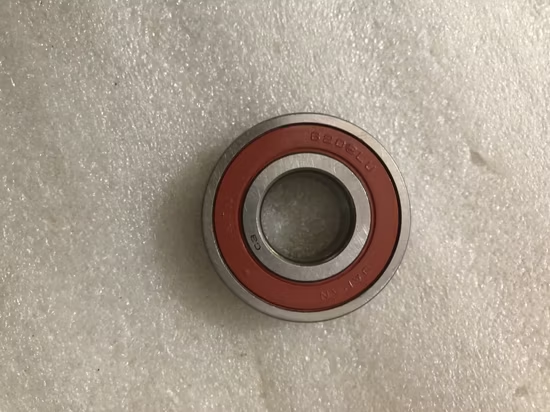

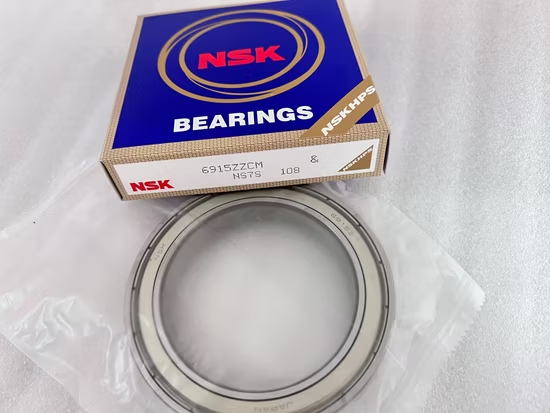


NSK NTN NACHI Timken Koyo 6005 6006 6007 2RS Zz P5 P4 Deep Groove Ball Bearing — P4 and P5 precision grades ensure strict dimensional control for sensitive spindle applications. The 2RS contact seals prevent contamination, while Zz steel shields offer reliable dust protection at medium speeds.
Verified via official apps — Every batch includes scannable QR codes linking directly to the manufacturer's authenticity database for immediate field verification.
| Parameter | Value |
|---|---|
| Designation | NSK NTN NACHI Timken Koyo 6005 6006 6007 2RS Zz P5 P4 |
| Bearing Type | Deep Groove Ball Bearing |
| Seal or Shield Type | Open, 2RS (Rubber Seals), Zz (Iron Seals) |
| Precision Class | P4, P5, Z1V1, Z2V2, Z3V3, Z4V4 |
| Origin | Germany, Japan, Sweden, Malaysia, China |
| Feature | Low Noise, High Speed, Long Service Life |
| HS Code | 848210 |
| Industry | Typical Applications |
|---|---|
| Electric Motors | High-speed rotor shafts and precision spindle drives |
| Industrial Gearboxes | High-speed input shafts requiring low vibration transmission |
| General MRO | Conveyor drive rollers and centrifugal pump impeller supports |
Matching the base number is merely the starting line; the suffix dictates operational survival.
Procurement teams frequently approve purchase orders based solely on the 6005, 6006, or 6007 base designation, completely overlooking the critical P4, P5, 2RS, or Zz suffixes. In high-speed motor applications, installing a standard precision unit where a P4 grade was specified introduces unacceptable radial runout, leading to severe vibration and premature rotor wear. Similarly, substituting a Zz shielded variant in a washdown environment where a 2RS contact seal was required allows moisture ingress, rapidly destroying the raceway . I have dismantled seized electric motors where the root cause was simply a mismatched clearance or incorrect seal type that passed visual inspection but failed under thermal expansion.
Selecting the correct NSK NTN NACHI Timken Koyo 6005 6006 6007 2RS Zz P5 P4 deep groove ball bearing requires strict alignment between the equipment's operational demands and the bearing's suffix configuration. Our technical review process ensures that every cross-reference matches not just the bore and outer diameter, but the exact sealing and precision requirements. We verify that a P4 designation is supplied when the spindle demands ultra-high rotational accuracy, and that 2RS seals are specified for environments where dust and moisture contamination are constant threats.
Electric motors and industrial gearboxes subject these components to continuous high-speed rotation and fluctuating thermal loads. At elevated speeds, the friction generated by 2RS rubber contact seals can cause internal temperature spikes, making Zz non-contact iron shields a necessary alternative for specific high-RPM applications to prevent lubricant degradation. Furthermore, the Z1V1 through Z4V4 quality grading directly correlates to the acoustic and vibration limits of the driven equipment. In precision MRO tasks, ignoring the thermal expansion characteristics of the internal clearance during installation often results in catastrophic binding once the shaft reaches its operating temperature .
The distinction between P4 and P5 precision classes governs the dimensional and running accuracy of the bearing, directly influencing the noise profile and vibration signature of high-speed electric motors. A P4 grade provides the stringent geometric tolerances required for sensitive spindle applications, minimizing harmonic resonance. Meanwhile, the choice between 2RS and Zz sealing defines the contamination defense strategy. The 2RS rubber seals offer superior exclusion of fine particulates and moisture but introduce rotational friction, whereas the Zz steel shields maintain a narrow air gap, allowing for higher limiting speeds while providing adequate protection in cleaner gearbox environments.
Relying on visual similarity rather than exact suffix verification inevitably leads to unplanned downtime and catastrophic equipment damage. When a standard clearance bearing is forced into a high-temperature motor housing without accounting for thermal expansion, the internal preload spikes, causing the cage to fracture and the raceway to spall. These failures not only void equipment warranties but also trigger secondary damage to adjacent shafts and housings. Adhering strictly to the OEM's specified precision and sealing parameters is the only reliable method to prevent these cascading mechanical failures .
We eliminate the risk of suffix mismatch by enforcing a rigorous three-point cross-reference check on every order, ensuring the base number, precision class, and seal type perfectly mirror your OEM requirements. Our multi-brand authorization allows us to consolidate mixed requests for NSK, NTN, NACHI, Timken, and Koyo into a single, fully traceable shipment without compromising on specific suffix availability. We provide comprehensive application-based selection reviews that evaluate your exact speed and temperature parameters to confirm whether a 2RS or Zz configuration is optimal. Furthermore, our inventory management guarantees that high-precision P4 and P5 variants are stored under strict climate control to prevent raceway corrosion before they ever reach your facility.
To ensure precise application matching, please provide the exact radial and axial load profiles, operational speed ranges, and ambient temperature parameters for your equipment. Supplying the specific OEM equipment number or the existing bearing's full designation, including all clearance and precision suffixes, allows our engineering team to execute a comprehensive cross-reference and L10 life verification. This technical review guarantees that the selected seal type and precision grade will withstand your specific operational environment without premature degradation.
Q: Why does substituting a Zz shield for a 2RS seal cause premature failure in washdown environments?
A: The Zz steel shield maintains a microscopic air gap to minimize friction at high speeds, but it cannot block liquid ingress. In washdown or high-moisture environments, water bypasses the shield, emulsifying the grease and causing rapid raceway corrosion. The 2RS rubber contact seal provides the necessary physical barrier against liquids, making it mandatory for these specific operational conditions.
Q: How do P4 and P5 precision classes differ in their impact on electric motor performance?
A: The P4 class enforces significantly tighter tolerances on radial runout and dimensional accuracy compared to P5. In high-speed electric motors and precision spindles, this reduced runout minimizes harmonic vibration and acoustic noise, preventing premature fatigue in the rolling elements. Using a P5 bearing in a P4-specified application often results in unacceptable vibration levels and reduced operational lifespan.
Q: What is the correct cross-reference procedure when replacing an existing 6006 bearing?
A: A valid cross-reference must align the base designation with the exact internal clearance, cage material, and precision suffix. Simply matching the 6006 number is insufficient; if the original equipment requires a C3 clearance for thermal expansion or a P4 grade for spindle accuracy, substituting a standard CN clearance or P0 precision unit will lead to thermal binding or excessive vibration under load.
Q: How can I verify the authenticity of multi-brand shipments containing NSK, NTN, and Timken bearings?
A: Every authorized shipment includes batch-specific traceability documentation and scannable QR codes. By using the respective brand's official mobile application to scan the packaging, you can instantly verify the production lot, manufacturing origin, and authenticity status, ensuring that no counterfeit or gray-market components have entered your maintenance inventory.
Our 5-step process ensures every order is engineered, validated, and supported for optimal performance.
Technical needs assessment
Custom specifications
Free samples for $50k+
Pre-shipment inspection
On-site & predictive
Our certified engineers respond within 24 hours with detailed technical specifications, pricing, and lead time information.


