01
Consultation
Technical needs assessment



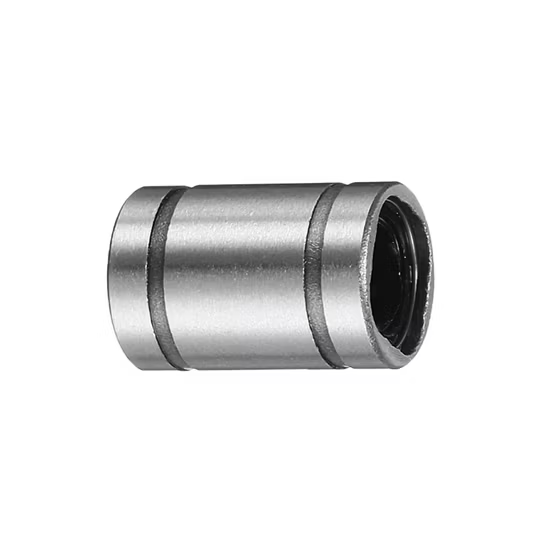
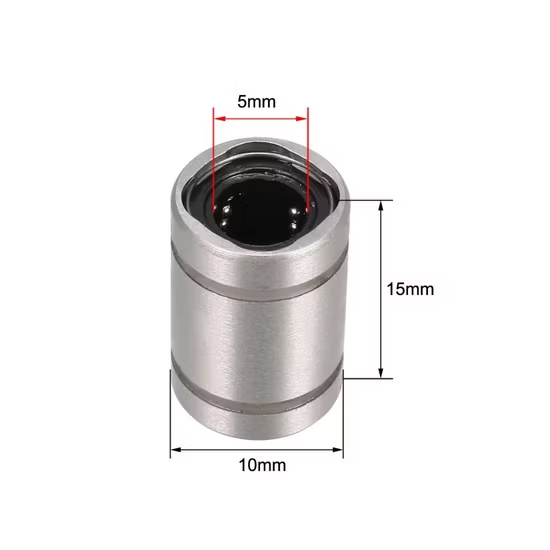


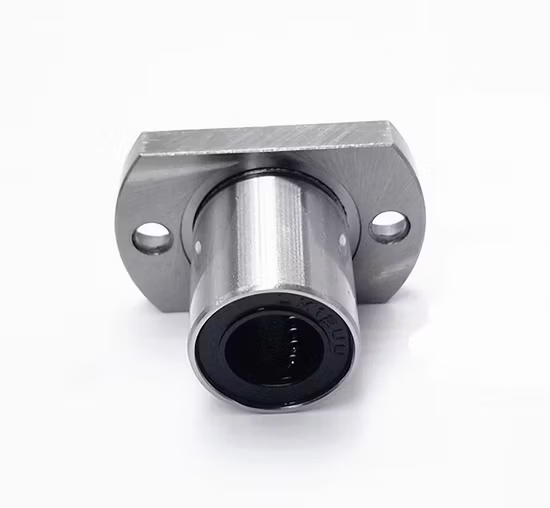
LM40LUU LM50LUU LM60LUU LM80LUU LM100LUU Linear Bearings P0–P2 — engineered with bearing steel and nylon cages for low-noise, high-speed automation.
Multi-brand authorized supply — securing genuine LM40LUU LM50LUU LM60LUU LM80LUU LM100LUU linear bearing units from various global manufacturers in a single consolidated shipment.
| Parameter | Value |
|---|---|
| Designation | LM40LUU LM50LUU LM60LUU LM80LUU LM100LUU |
| Product Type | Linear Bearing |
| Series | LM |
| Flange Shape | Circular |
| Shape | Open |
| Material | Available in bearing steel or stainless steel variants |
| Cage Material | Nylon |
| Precision Class | P0, P6, P5, P4, P2 |
| Features | High Speed, Low Noise |
| Origin | Germany, Japan, Sweden, Malaysia, China |
| Industry | Typical Applications |
|---|---|
| CNC Machine Tools | Precision spindle slides and automated tool changers |
| Industrial Automation | High-speed linear modules and gantry positioning systems |
| Robotics | Cartesian robot axes and rapid pick-and-place arms |
| Material Handling | Automated guided vehicle lifting mechanisms |
| Printing Machinery | High-speed paper feed rollers and registration guides |
Base numbers match, but internal structures fail.
Procurement teams often approve orders based solely on the primary LM designation, overlooking critical suffix variations that dictate internal clearance and seal friction. When an open or standard-friction variant is installed in a high-speed linear module, the resulting thermal expansion causes the carriage to bind against the shaft. This misalignment generates severe vibration, leading to premature track剥落 and catastrophic system停机, a recurring issue we frequently diagnose in the field .
Selecting the correct tolerance band ensures the LM40LUU LM50LUU LM60LUU LM80LUU LM100LUU linear bearing operates without excessive play or binding. While P0 suffices for basic transport conveyors, multi-axis CNC machines and optical inspection robots demand P4 or P2 grades to maintain micron-level positioning accuracy. Our technical team reviews your specific load and speed profiles to recommend the exact precision class, preventing both overspending on unnecessary tolerances and under-specifying for critical applications.
High-speed linear modules generate significant friction heat, which directly impacts the internal clearance of the carriage. If the running clearance is too tight, thermal expansion will cause the recirculating balls to skid rather than roll, rapidly destroying the nylon cage. Conversely, excessive clearance introduces unacceptable vibration at high velocities. Proper lubrication intervals and selecting the correct seal friction type are vital to managing these thermal dynamics and preventing early fatigue .
The "LUU" suffix indicates that the carriage is equipped with contact seals on both sides, providing essential protection against dust and coolant mist in harsh machining environments. However, these contact seals also introduce friction. Pairing them with a nylon cage is critical for high-speed applications, as the polymer material reduces weight and minimizes recirculation noise compared to pressed steel alternatives. Understanding this interplay between seal friction and cage material is essential for optimizing the lifespan of the linear guide.
Substituting a dimensionally identical carriage from an unverified source often results in subtle internal geometry mismatches. Even a microscopic deviation in the ball groove curvature radius alters the load distribution, leading to localized stress concentrations and unplanned downtime. According to industry failure analysis frameworks, such geometric discrepancies are a primary driver of premature spalling and warranty voidance in precision automation equipment .
Sourcing linear motion components requires strict verification to avoid carriages with soft inner rings and cloned packaging. We provide comprehensive batch traceability for every LM series unit, ensuring the steel hardness meets exact specifications. Our cross-reference alignment process verifies not just the outer dimensions, but the exact internal ball diameter and seal lip geometry, guaranteeing that the replacement part performs identically to the original equipment manufacturer's specification.
To ensure optimal performance and longevity, please provide your specific radial and axial load profiles, maximum travel speeds, and operating temperature ranges. Sharing the exact OEM equipment model numbers allows our engineering team to perform precise cross-reference verification and L10 life calculations. This technical review guarantees that the selected precision class and internal geometry perfectly match your automation requirements.
Q: How do I verify the authenticity of these linear bearings?
A: Every unit we supply features batch traceability and can be verified using the manufacturer's official mobile application via QR code scanning. This process confirms the original production facility and prevents the installation of counterfeits with soft inner rings that pass casual visual inspections but fail rapidly under load.
Q: What cross-reference checks are needed beyond the base LM number?
A: A reliable cross-reference must verify the internal ball diameter, cage material, and seal friction characteristics, not just the outer envelope dimensions. We ensure these internal geometries match your OEM specifications to prevent thermal binding and premature track degradation in high-speed applications.
Q: Why choose a nylon cage over a steel cage for these models?
A: Nylon cages are significantly lighter and generate less friction during ball recirculation, which is critical for maintaining low noise and stable operation at high speeds. Steel cages are generally reserved for environments with elevated temperatures that exceed the thermal limits of engineering polymers.
Q: How do precision classes impact machine tool accuracy?
A: Higher precision classes like P4 or P2 feature tighter dimensional tolerances and stricter parallelism limits, directly reducing carriage play and vibration. This ensures micron-level positioning accuracy for CNC spindles and optical inspection robots, whereas lower grades are suitable for general material handling.
Q: What causes premature failure in high-speed linear modules?
A: Premature failure often stems from thermal binding caused by incorrect internal clearance or excessive seal friction. When friction heat expands the carriage without adequate clearance, the recirculating balls skid instead of roll, leading to rapid cage failure and track spalling.
Our 5-step process ensures every order is engineered, validated, and supported for optimal performance.
Technical needs assessment
Custom specifications
Free samples for $50k+
Pre-shipment inspection
On-site & predictive
Our certified engineers respond within 24 hours with detailed technical specifications, pricing, and lead time information.