01
Consultation
Technical needs assessment

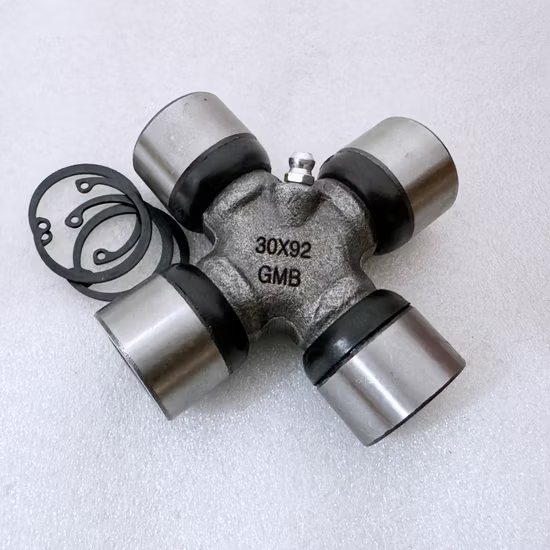
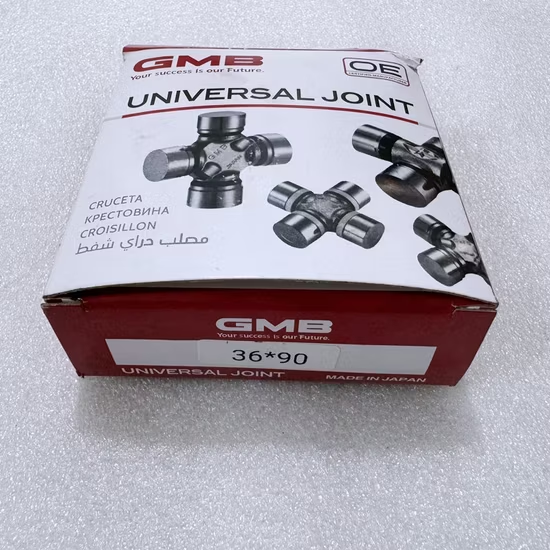
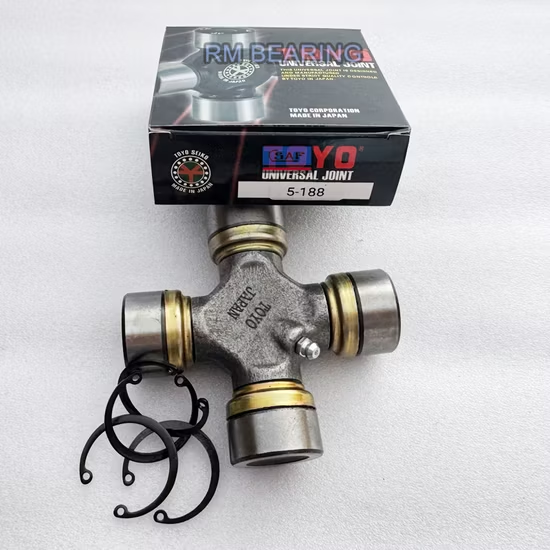
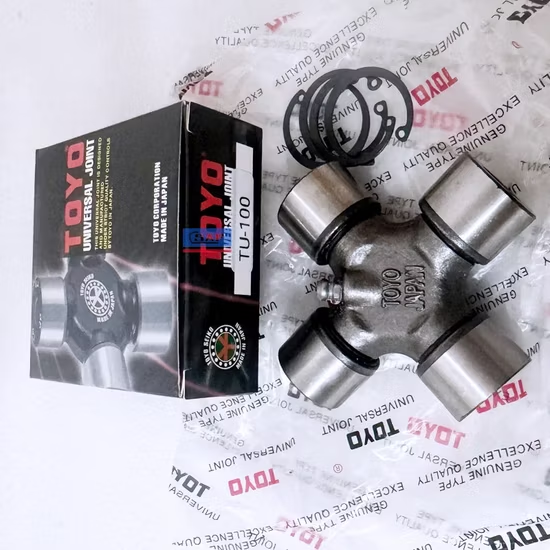
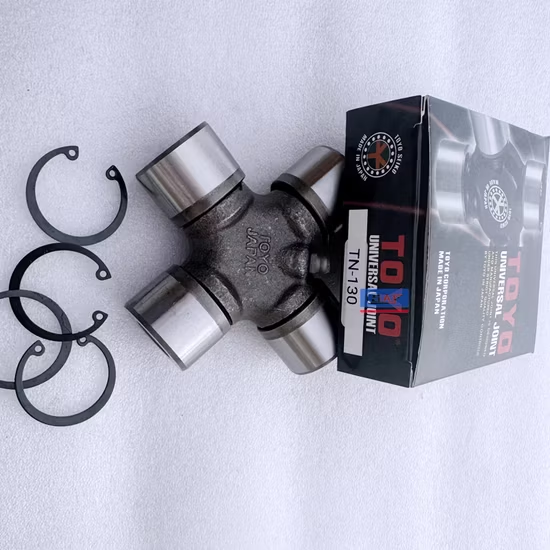

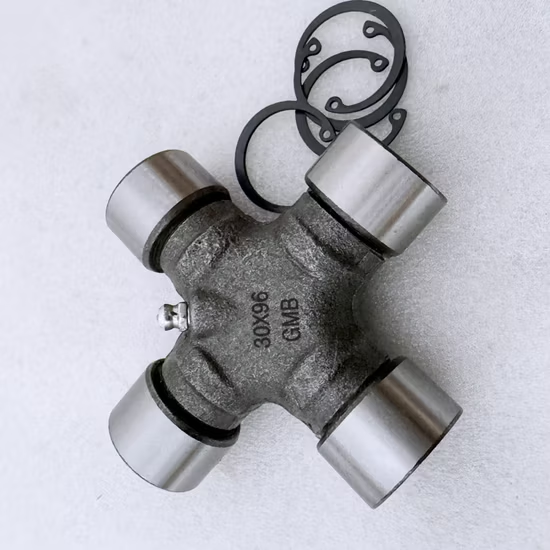
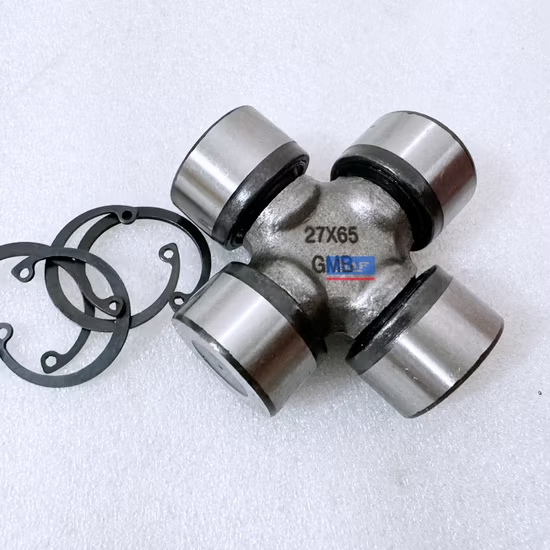
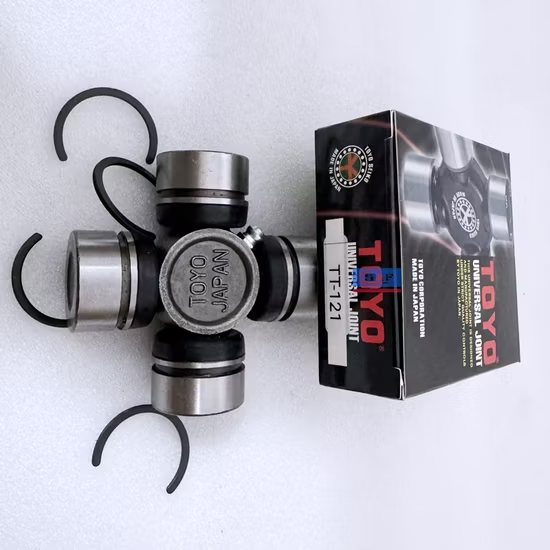
Gut-20 Universal Joint Cross Bearing — engineered as a direct OEM replacement for part numbers 04371-36021, T3292, and Uj234, ensuring exact dimensional alignment for automotive and heavy machinery drivetrains.
Verified via official app — Every batch of Gut-20 crosses includes scannable QR codes linking directly to the manufacturer's authentication portal.
| Parameter | Value |
|---|---|
| Designation | Gut-20 |
| Bearing Type | Universal Joint Cross Bearing |
| Material | Available in high-carbon bearing steel or stainless steel variants |
| Structure | Single cross assembly |
| Certification | ISO |
| Quality Grade | High Precision |
| Customization | OEM support available |
| HS Code | 8483600090 |
| Industry | Typical Applications |
|---|---|
| Automotive & Heavy Vehicles | Driveshaft articulation joints and steering column universal joints |
| Construction & Agriculture | Heavy-duty tractor PTO shafts and excavator linkage pivots |
| Industrial Machinery | Rolling mill transfer tables and material handling conveyors |
Misaligned cross-references and ignored internal needle profiles cause catastrophic binding long before the base metal reaches its fatigue limit.
During a critical downtime event at a Dubai mining site, a misidentified universal joint cross seized under high torque. The replacement part matched the base dimensions but lacked the correct internal needle cage design, leading to rapid thermal expansion and shaft lockup. Sourcing from a reliable Gut-20 universal joint cross bearing supplier prevents these field failures by ensuring the internal geometry perfectly matches the OEM requirements .
Transmitting power through angular misalignments demands exact dimensional tolerances. A properly specified Gut-20 universal joint cross bearing maintains smooth torque transfer even when the driveshaft operates at steep articulation angles. Our technical team verifies that the cross journal diameters and needle roller clearances align precisely with the original equipment specifications, eliminating the micro-vibrations that accelerate spline wear.
Universal joints in construction and agricultural equipment face severe environmental exposure. Abrasive dust and moisture easily penetrate compromised seals, degrading the lubricant and causing abrasive wear on the needle rollers. Furthermore, continuous high-speed rotation generates significant friction heat. If the internal clearance is too tight, thermal expansion eliminates the operating gap, resulting in the exact high-temperature seizure scenarios I have documented in heavy machinery fleets. Proper seal selection and correct grease fill intervals are critical to managing these combined thermal and contamination risks .
The Gut-20 designation frequently crosses over to OEM part numbers like 04371-36021, T3292, and Uj234. However, matching the external cross dimensions is only the first step. The internal needle roller arrangement, seal lip design, and grease retention cavities must also align. When evaluating material options, standard high-carbon bearing steel provides the necessary surface hardness for heavy shock loads, while stainless steel variants are reserved for specific corrosive environments. Ensuring these internal structural details match the OEM blueprint is what separates a functional replacement from a premature failure point.
Installing a universal joint cross that only partially matches the OEM specification introduces severe operational risks. A slight deviation in the journal diameter or needle clearance leads to uneven load distribution across the rollers. According to ISO 15243 frameworks, this localized stress rapidly initiates surface spalling and eventual cross fracture. The resulting unplanned downtime and secondary damage to the transmission yokes far outweigh the initial savings of an unverified component .
Sourcing drivetrain components requires more than just matching a part number. We cross-reference the Gut-20 against OEM numbers like T3292 and 04371-36021, verifying the internal needle cage design and seal configurations. Our inventory provides batch traceability for mixed-brand requirements, ensuring every cross meets the exact dimensional tolerances your maintenance team expects. We validate the specific grease cavity designs to ensure compatibility with your standard re-lubrication schedules.
To ensure the Gut-20 universal joint cross bearing perfectly matches your application, provide the specific OEM equipment number or the exact drivetrain operating parameters. Share details regarding the maximum articulation angle, continuous torque loads, and environmental exposure. Our engineering team will use this data to verify the internal needle geometry, confirm the appropriate seal configuration, and finalize the cross-reference validation before quoting.
Q: How do I confirm the correct cross-reference for OEM part 04371-36021?
A: Simply providing the OEM number is the first step, but we also require the equipment model to verify the internal needle profile and seal design. This ensures the Gut-20 replacement matches not just the external dimensions, but the exact internal geometry required for your specific drivetrain application.
Q: What causes premature failure in universal joint crosses under heavy loads?
A: Premature failure typically stems from internal clearance loss due to thermal expansion or abrasive contamination bypassing worn seals. When the internal needle rollers lack sufficient operating gap, friction spikes rapidly, leading to the high-temperature seizure and cross fracture commonly seen in mining and construction fleets.
Q: Should I choose stainless steel or high-carbon steel for my driveshaft application?
A: Standard high-carbon bearing steel is generally required for high-torque drivetrain applications due to its superior load-carrying capacity and fatigue resistance. Stainless steel variants are only recommended when the operating environment involves severe chemical corrosion or constant moisture exposure that would rapidly degrade standard steel.
Q: How can I verify the authenticity of the Gut-20 bearings upon delivery?
A: Every authorized batch includes specific traceability markers and scannable QR codes. You can verify the metallurgical origin and dimensional inspection records directly through the manufacturer's official mobile application, ensuring the components meet the strict tolerances required for heavy-duty universal joints.
Our 5-step process ensures every order is engineered, validated, and supported for optimal performance.
Technical needs assessment
Custom specifications
Free samples for $50k+
Pre-shipment inspection
On-site & predictive
Our certified engineers respond within 24 hours with detailed technical specifications, pricing, and lead time information.