01
Consultation
Technical needs assessment



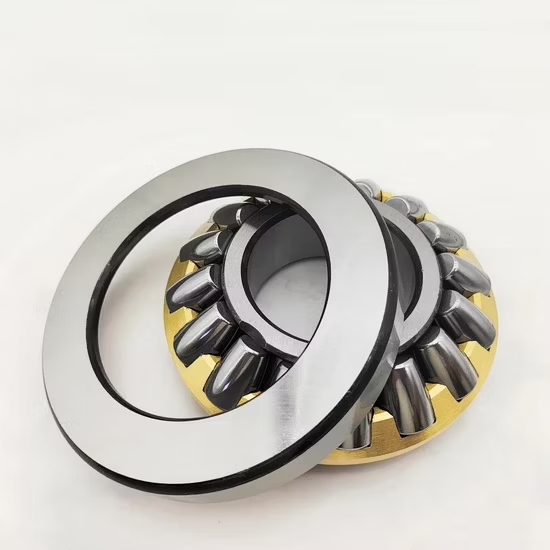
51107 51108 51109 51110 Single Direction Thrust Ball Bearings — optimized for moderate-speed applications requiring high axial load capacity, featuring bore diameters from 35 mm to 50 mm.
Cross-reference dimension alignment — verifying bore, outside diameter, and width tolerances ensures these thrust bearings fit vertical shafts without axial play issues.
| Parameter | Value |
|---|---|
| Designation | 51107 51108 51109 51110 |
| Bearing Type | Single Direction Thrust Ball Bearing |
| Bore Diameter (d) | 35 mm, 40 mm, 45 mm, 50 mm |
| Outside Diameter (D) | 50 mm, 60 mm, 65 mm, 70 mm |
| Origin | Germany, Japan, Sweden, Malaysia, China |
| Certification | Certificate of Conformity, Batch Traceability |
| Industry | Typical Applications |
|---|---|
| Architectural Hardware | Heavy-duty door hinges and pivot mechanisms |
| Machine Tools | Vertical spindle axial load support |
| Automotive Repair | Steering column thrust mechanisms |
| General Industry | Vertical shaft axial positioning |
Matching the basic designation is only the first step; ignoring internal geometry and cage material leads to rapid wear in high-cycle applications.
Procurement engineers often source these exact models for door hinge systems, focusing solely on the base number while overlooking the cage material required for high-frequency start-stop cycles . When a standard pressed steel cage is installed in an application demanding a machined brass alternative, the resulting friction and vibration cause premature cage failure. Sourcing genuine components requires looking past the basic designation to verify that the internal design matches the actual operational stress.
Selecting the right thrust bearing for vertical shafts or steering columns requires a precise match between the axial load profile and the bearing's internal geometry. We review the specific load direction and magnitude to ensure the chosen model from this series handles the continuous axial thrust without compromising the raceway integrity. This application-based selection review prevents the common mistake of installing a component that technically fits the housing but fails under dynamic operational stress.
Vertical shafts and heavy door hinges subject thrust bearings to continuous axial loads combined with frequent start-stop cycles. In these environments, the cage material dictates how well the rolling elements are guided under fluctuating speeds and varying lubrication conditions. Inadequate cage strength leads to ball skewing and accelerated wear, especially when the lubrication film breaks down during startup . Ensuring the correct cage design is critical for maintaining separation and reducing friction heat in these specific axial load applications.
The 511 series relies on a flat shaft washer, a flat housing washer, and a ball and cage assembly to manage unidirectional axial forces. Because these components cannot accommodate radial loads, the alignment between the shaft and housing must be precise to prevent edge loading on the raceways. The bore and outside diameter tolerances are strictly controlled to ensure the washers seat flush against their mating surfaces. Any deviation in the housing shoulder squareness will transfer uneven stress to the balls, drastically reducing the operational lifespan of the assembly.
Installing a counterfeit thrust bearing with a soft inner ring or incorrect dimensional tolerances results in unplanned downtime and catastrophic damage to the surrounding housing. According to failure analysis frameworks, improper material hardness or cloned dimensions cause the washers to deform under standard axial loads, leading to complete mechanical seizure . These hidden defects void equipment warranties and force expensive emergency repairs that far exceed the initial cost of sourcing verified, authentic components.
Our authorized distribution network covers all major international brands, allowing you to consolidate mixed-brand requirements into a single, fully traceable order. We specifically check for soft inner rings and cloned QR codes that often plague the 511 series in the secondary market. Every cross-reference is verified against the exact bore, outside diameter, and width, ensuring no dimensional interference occurs during installation. Furthermore, our application-based selection review catches mismatches in cage material and precision before the components are shipped to your facility.
To ensure optimal performance, provide your specific axial load values, rotational speeds, and operating temperatures so our engineering team can verify the L10 life calculation. If you are replacing an existing unit, share the OEM equipment number or the exact dimensions of the shaft and housing seating. This data allows us to perform a precise cross-reference check and recommend the correct cage material and precision class for your specific vertical shaft or hinge application.
Q: What is the core difference between the 511 thrust ball bearing series and thrust roller bearings?
A: The 511 ball series is engineered for moderate axial loads and higher rotational speeds, utilizing point contact to minimize friction. Thrust roller bearings use line contact to handle significantly heavier axial loads but operate at lower speeds. Selecting the wrong type for a high-speed vertical spindle will cause rapid thermal binding and premature cage failure.
Q: How can I verify the authenticity of the 51107 to 51110 bearings upon delivery?
A: We provide comprehensive batch traceability documentation and a Certificate of Conformity with every shipment. You can verify the authenticity by scanning the packaging QR codes through the respective brand's official mobile application. This digital verification confirms the origin and effectively rules out counterfeit products with cloned labels or soft inner rings.
Q: How do you ensure cross-reference accuracy when substituting thrust bearing brands?
A: We do not rely solely on the base designation. Our technical team cross-references the exact bore diameter, outside diameter, and width, while also verifying the internal cage design and precision class. This strict alignment ensures the substitute bearing matches the original equipment's axial load capacity and thermal expansion requirements without causing housing interference.
Q: What mounting precautions are necessary for the 511 series in door hinge applications?
A: The shaft and housing washers must seat against perfectly square shoulders to prevent uneven stress distribution across the balls. Installers should use a soft-faced drift tool rather than direct impact to press the washers into place, avoiding raceway brinelling. Proper alignment is critical to prevent the cage from binding during high-frequency start-stop cycles.
Our 5-step process ensures every order is engineered, validated, and supported for optimal performance.
Technical needs assessment
Custom specifications
Free samples for $50k+
Pre-shipment inspection
On-site & predictive
Our certified engineers respond within 24 hours with detailed technical specifications, pricing, and lead time information.