01
Consultation
Technical needs assessment



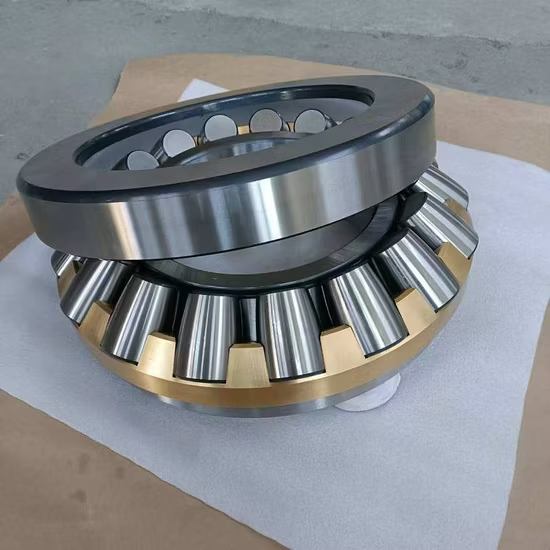
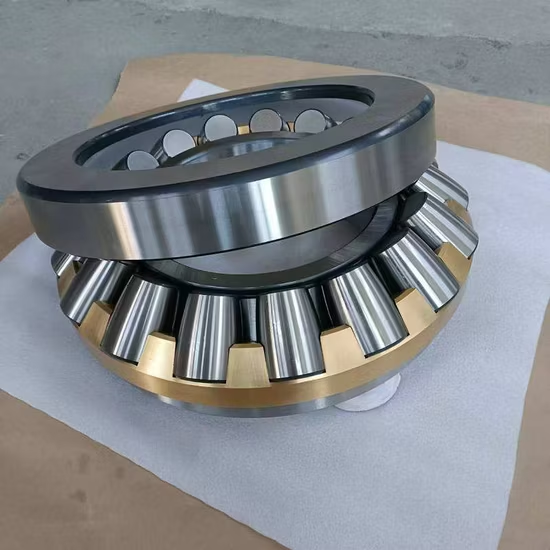
T1910-90010 Thrust Taper Roller Bearing — engineered to handle heavy axial and shock loads in automotive transmissions and industrial gearboxes.
Three-Point Cross-Reference Alignment — Base designation, internal design variant, and dimensional tolerances are strictly matched to prevent early failure in heavy axial load applications.
| Parameter | Value |
|---|---|
| Designation | T1910-90010 |
| Product Type | Thrust Taper Roller Bearing |
| Bearing Type | Thrust Tapered Roller |
| Material | Available in standard bearing steel or specialized alloy variants |
| Customization | Cross-brand interchange supported with exact internal design matching |
Note: The 90010 suffix is an unverified designation requiring manufacturer catalog confirmation prior to final order placement.
| Industry | Typical Applications |
|---|---|
| Automotive & Heavy Vehicles | Heavy vehicle steering kingpin mechanisms and transmission thrust faces |
| Industrial Machinery | Heavy-duty industrial gearbox vertical shaft thrust support |
| Machine Tools | Vertical machine tool spindle thrust compensation and rotary tables |
| Metals & Mining | Rolling mill screw-down mechanisms and crusher vertical shafts |
Matching the base designation while ignoring internal design differences is the primary cause of premature thrust bearing failure.
During my years handling aftermarket installations in the Middle East, I repeatedly saw T-1910 equivalents fail within months under heavy axial loads. The procurement team sourced a bearing with the exact same base number, but the internal roller profile and cage guidance system were entirely different. In thrust applications, this subtle mismatch causes uneven load distribution across the rollers, leading to localized spalling and catastrophic cage collapse . When sourcing a T1910-90010 thrust taper roller bearing, assuming interchangeability based solely on the base number is a critical error that compromises the entire drivetrain or spindle assembly.
Thrust tapered roller bearings are engineered specifically to manage massive unidirectional axial forces combined with shock loading. When evaluating the T1910-90010 thrust taper roller bearing for your application, our technical team reviews the specific load spectrum and shock frequency. We ensure the internal geometry and roller end-to-flange contact areas are perfectly suited to your operational demands, preventing the edge-loading issues that commonly plague incorrectly specified thrust components.
Vertical shaft arrangements and heavy steering mechanisms subject thrust bearings to extreme axial pressure, often compounded by misalignment and heavy shock loads. The lubrication film thickness is critical here; insufficient film strength under peak loads leads to metal-to-metal contact at the roller large ends. Furthermore, thermal expansion from continuous friction can alter the internal axial clearance, making precise preload and dimensional accuracy vital for maintaining stability . Contaminant ingress in harsh environments like rolling mills or mining crushers further accelerates wear if the bearing seating and housing seals are not perfectly aligned.
The defining characteristic of any thrust taper roller bearing lies in its internal geometry and cage design, which dictate its load capacity and speed limits. For the T1910-90010, understanding the exact internal variant is crucial, as different manufacturers utilize distinct roller profiles and flange designs to optimize load distribution. The cage material—whether machined brass for high-speed stability and heavy shock resistance, or pressed steel for standard operations—directly influences the bearing's thermal limits and vibration characteristics. Furthermore, the dimensional tolerances and running accuracy must be strictly verified to ensure the bearing seats perfectly against the shaft and housing shoulders, preventing axial play that could destroy the mating components.
Selecting a thrust bearing based purely on price or base designation availability often results in severe unplanned downtime. When a thrust component fails prematurely due to internal design mismatches, the damage rarely stops at the bearing itself; the mating shaft shoulders and housing faces often suffer catastrophic scoring. According to failure analysis frameworks like ISO 15243, these secondary damages exponentially increase repair costs and extend equipment outage periods . A minor saving on the initial component purchase quickly evaporates when factoring in the labor, replacement parts, and lost production revenue required to rebuild the entire assembly.
Sourcing genuine heavy-duty thrust components requires more than just a catalog match; it demands rigorous verification of internal specifications. We specialize in cross-referencing the T1910-90010 thrust taper roller bearing across multiple authorized manufacturing networks, ensuring the internal roller geometry and cage design perfectly match your original equipment requirements. Every unit we supply is backed by comprehensive batch traceability, allowing you to verify the exact production lot through official brand applications. Our technical team actively reviews your application parameters to confirm that the selected variant handles your specific axial loads and shock conditions, eliminating the guesswork that leads to field failures.
To ensure the selected thrust component perfectly matches your operational requirements, please provide the specific axial and radial load profiles, operating speeds, and thermal conditions of your application. If you are replacing an existing unit, sharing the original equipment manufacturer part numbers allows our engineering team to perform a precise cross-reference check. This technical review guarantees that the internal geometry, cage material, and dimensional tolerances of the proposed solution align flawlessly with your machinery's design parameters.
Q: What internal parameters must align during a cross-reference for this bearing?
A: Beyond the base designation, the internal roller profile, cage guidance system, and exact dimensional tolerances must match. A T1910-90010 thrust taper roller bearing from a different manufacturer might share the outer dimensions but feature a different flange design, leading to edge loading and premature failure under heavy axial stress.
Q: How can I verify the authenticity of the supplied thrust bearings?
A: We provide complete batch traceability for every unit. You can scan the QR code on the packaging using the manufacturer's official mobile application to instantly verify the production lot, origin, and authenticity, effectively eliminating the risk of counterfeit components with soft inner rings.
Q: What causes early failure in heavy-duty thrust applications?
A: Premature failure typically stems from inadequate lubrication film strength under peak axial loads, contamination ingress, or misalignment during installation. When the internal geometry does not perfectly match the load spectrum, localized stress concentrations cause spalling on the raceways, as classified in ISO 15243.
Q: How do you handle long lead times for specific thrust bearing variants?
A: We utilize our authorized distribution network to source equivalent variants from other premium brands. Our engineering team ensures the cross-referenced alternative matches the original in load capacity, internal geometry, and dimensional tolerances, providing a safe and reliable solution without compromising equipment performance.
Q: Which inspection reports are included with the shipment?
A: Every shipment includes a Certificate of Conformity, a material test report, and a dimensional inspection report. These documents verify the metallurgical quality and confirm that the running accuracy and tolerances of the specific T1910-90010 thrust taper roller bearing meet the required engineering standards before dispatch.
Our 5-step process ensures every order is engineered, validated, and supported for optimal performance.
Technical needs assessment
Custom specifications
Free samples for $50k+
Pre-shipment inspection
On-site & predictive
Our certified engineers respond within 24 hours with detailed technical specifications, pricing, and lead time information.