01
Consultation
Technical needs assessment

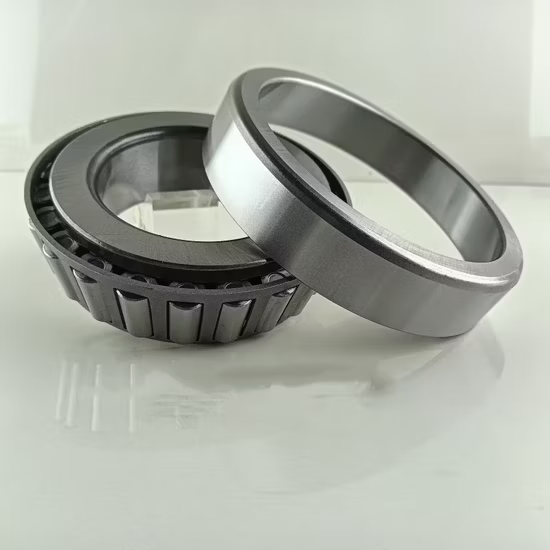
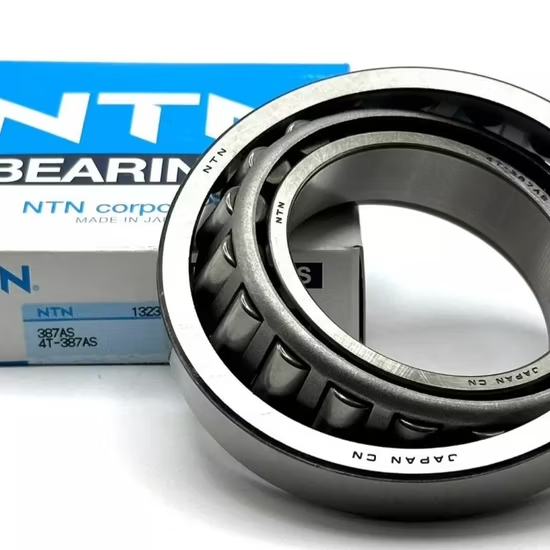
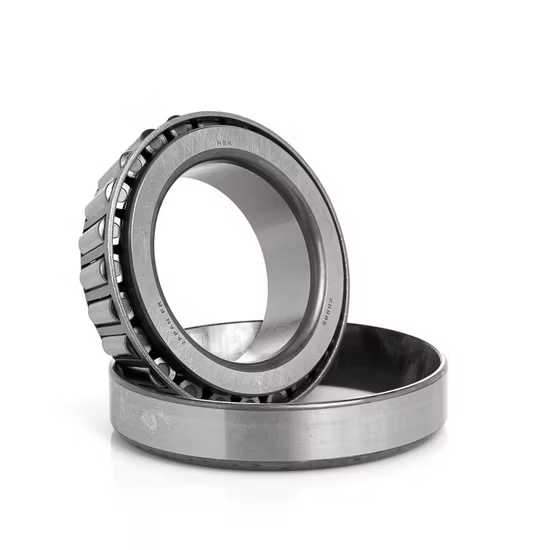
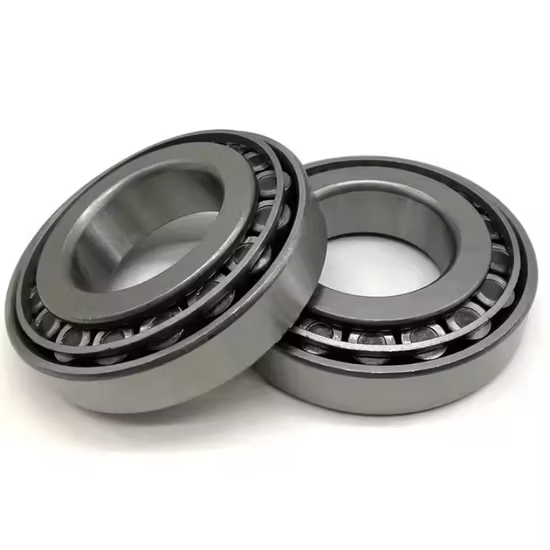

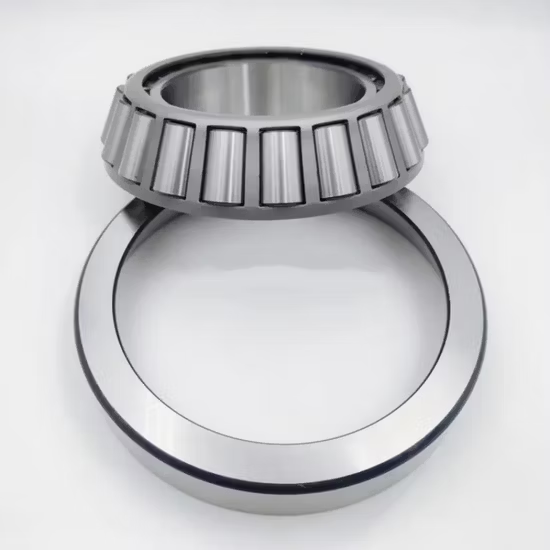
3982/3927 Inch Tapered Roller Bearing P4 — Manufactured from GCr15 steel, this inch-series component set provides reliable wear resistance under combined loads. The P4 precision class ensures strict dimensional and running accuracy for demanding equipment.
Traceable Batch Origin — Every 3982/3927 tapered roller bearing ships with manufacturer lot records verifying the exact GCr15 steel heat treatment batch.
| Parameter | Value |
|---|---|
| Designation | 3982/3927 |
| Bearing Type | Tapered Roller Bearing |
| Precision Class | P4 |
| Material | GCr15 High-Carbon Chromium Bearing Steel |
| Cage Material | Nylon / Brass / Iron |
| Origin | Germany / Japan / Sweden / Malaysia / China |
| Certification | ISO 492 / ISO 355 |
| Customization | Cross-brand interchange matching internal geometry |
Cage material options are subject to manufacturer availability; verify specific cage designation against the original equipment requirement prior to ordering.
| Industry | Typical Applications |
|---|---|
| Automotive & Heavy Vehicle | Truck wheel hubs, heavy-duty axle assemblies, trailer suspension pivots |
| Industrial Power Transmission | Heavy-load gearbox shaft supports, industrial reducer output stages |
| Marine & Offshore | Marine propulsion drive shafts, deck winch drum bearings |
| Material Processing | Crusher eccentric shafts, vibrating screen drive mechanisms |
Matching the base numbers is only the first step; ignoring internal geometry differences guarantees premature spalling under shock loads.
In the Yangtze River Delta manufacturing hubs, I have personally investigated countless warranty claims where replaced inch-series bearings failed within months. The root cause is rarely the steel itself, but rather a cross-reference error that matched the basic outer and inner ring numbers while completely overlooking the internal roller profile and cage design. When a standard replacement is forced into a high-shock application without verifying the exact internal geometry, the localized stress exceeds the material's fatigue limit, leading to early subsurface cracking . Sourcing the correct 3982/3927 tapered roller bearing requires looking past the stamped numbers to ensure the internal design matches the specific load spectrum of the machinery.
Selecting the right 3982/3927 tapered roller bearing means validating that the roller contact angle and crown profile match the combined radial and axial forces of your specific axle or gearbox. Our technical review process cross-checks the internal design against your operational parameters, ensuring the replacement handles the exact thrust-to-radial load ratio without edge-loading the rollers. This prevents the localized stress concentrations that typically destroy mismatched inch-series components.
Heavy vehicle axles and industrial gearboxes subject bearings to severe shock loads and significant temperature fluctuations during continuous operation. The P4 precision rating ensures tighter dimensional tolerances, which is critical for maintaining the correct roller-to-raceway contact pattern under heavy thrust. Furthermore, thermal expansion dictates the initial mounting clearance; setting the preload too tight generates excessive friction heat, while leaving it too loose allows destructive roller skewing and cage damage .
The identifier represents an inch-series tapered roller bearing assembly, where 3982 designates the inner ring (cone) and 3927 designates the outer ring (cup). The P4 precision class guarantees superior running accuracy and tighter tolerance bands compared to standard commercial grades, which is essential for minimizing vibration in high-speed gearboxes. The GCr15 material provides the necessary core toughness and surface hardness to resist brinelling under static shock loads. Available cage materials include nylon for reduced friction and noise, brass for high-vibration environments, and iron for cost-effective standard applications, allowing the assembly to be matched to the specific thermal and mechanical demands of the equipment.
Installing an incorrectly cross-referenced inch-series bearing often results in catastrophic raceway spalling and subsequent shaft scoring, turning a simple component swap into a major teardown. Unplanned downtime on critical mobile equipment or continuous production lines quickly eclipses the initial savings of a cheap replacement. According to failure analysis frameworks, a significant share of these premature failures stems directly from improper internal clearance settings or mismatched roller profiles that fail to distribute the dynamic loads evenly across the contact patch .
We prevent field failures by verifying that the internal geometry of the 3982/3927 tapered roller bearing matches your original equipment specifications, not just the stamped basic numbers. Our multi-brand authorization allows us to source exact equivalents with full batch traceability, ensuring the GCr15 steel meets the required metallurgical standards. We provide comprehensive cross-reference alignment that checks the cage material and precision class, eliminating the guesswork that leads to thermal binding. Every shipment is backed by application-based selection reviews, ensuring the bearing can withstand your specific load and speed conditions.
To ensure the selected inch-series components perfectly match your machinery, please provide the specific radial and axial load values, operating speeds, and steady-state temperatures. Sharing the original equipment manufacturer part numbers or detailed housing dimensions allows our engineering team to perform a rigorous cross-reference check and verify the L10 life calculation. This technical data enables us to confirm the optimal cage material and internal geometry for your exact application.
Q: How do I verify the internal design when cross-referencing the 3982/3927 tapered roller bearing?
A: Basic number matching is insufficient for heavy-duty applications. You must verify the internal roller profile, cage material, and precision class to ensure the replacement handles the specific thrust-to-radial load ratio. Our technical team cross-checks these internal geometry parameters against your OEM specifications to prevent edge-loading and premature spalling in the field.
Q: What documentation proves the authenticity and precision of this P4 inch-series bearing?
A: Every genuine assembly ships with a Certificate of Conformity, material test reports for the GCr15 steel, and dimensional inspection reports confirming P4 tolerances. Additionally, the packaging includes a QR code that can be scanned via the manufacturer's official app to verify the exact batch and lot traceability directly from the production facility.
Q: How do I choose between nylon, brass, and iron cages for my gearbox application?
A: The cage material must align with your operating environment. Nylon cages offer lower friction and quieter operation at moderate temperatures, while brass cages provide superior durability and resistance to degradation in high-vibration or high-temperature gearboxes. Iron cages serve as a reliable standard option. Provide your operational parameters so we can recommend the optimal cage design.
Q: What is the correct mounting procedure to maintain the P4 precision of these tapered components?
A: Proper mounting requires heating the inner ring uniformly using a controlled induction heater to avoid altering the GCr15 metallurgy. During assembly, precise end-play adjustment is critical; setting the clearance too tight causes thermal binding, while excessive looseness leads to roller skewing. Always follow the manufacturer's specific torque and adjustment guidelines for the selected cage material.
Our 5-step process ensures every order is engineered, validated, and supported for optimal performance.
Technical needs assessment
Custom specifications
Free samples for $50k+
Pre-shipment inspection
On-site & predictive
Our certified engineers respond within 24 hours with detailed technical specifications, pricing, and lead time information.