01
Consultation
Technical needs assessment

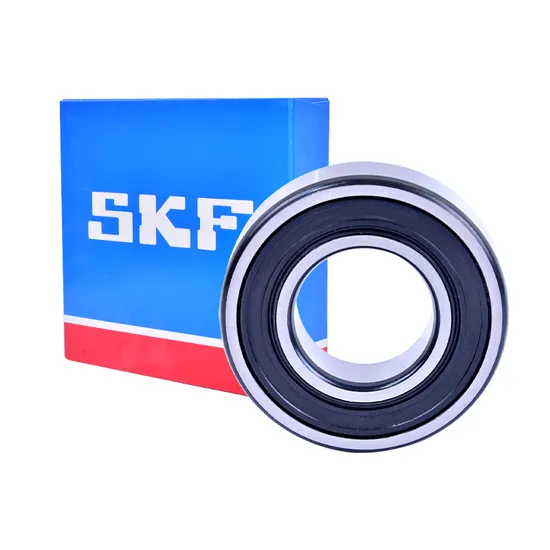
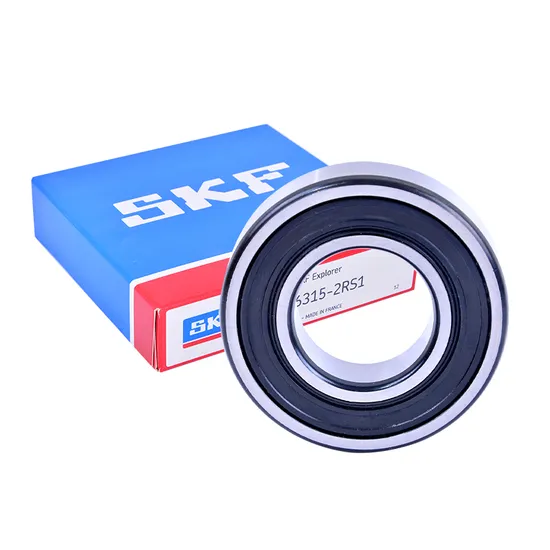
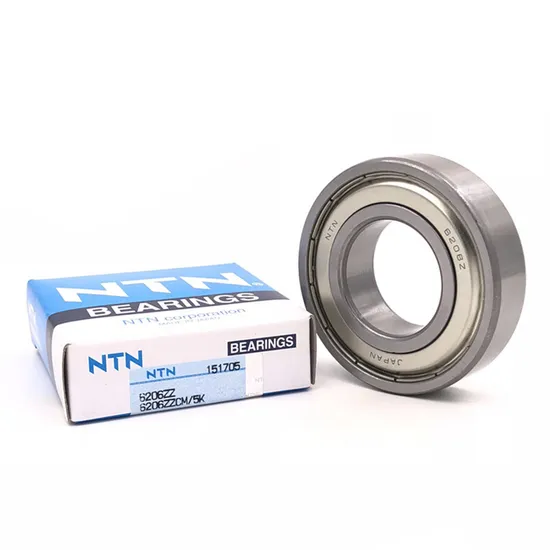
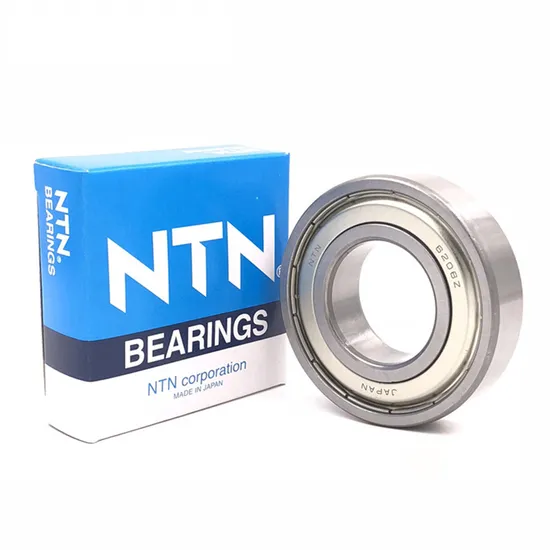
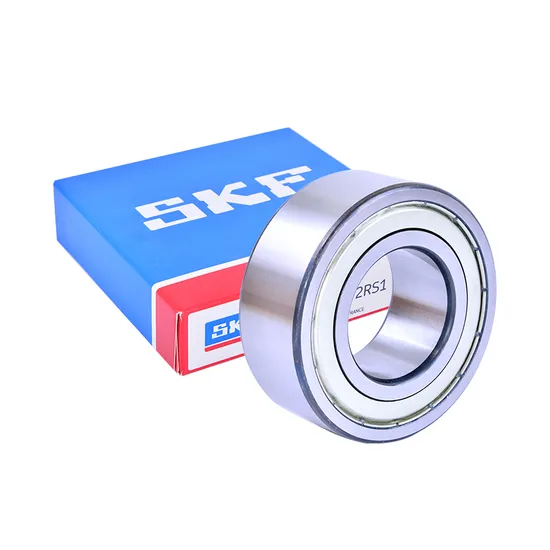
Extend bearing life and reduce unplanned downtime in high-speed, continuous-operation environments — especially where thermal stability and grease retention matter most. Our SKF deep groove ball bearing series (6704-2RS to 6916-2RS) is engineered for precision-critical applications like wind turbine pitch systems, mining conveyors, and steel mill roll stands — where even minor vibration or lubrication loss triggers cascading failures.
| Parameter | Value |
|---|---|
| Bearing Type | Deep Groove Ball Bearing |
| SKF Designation | 6704-2RS to 6916-2RS |
| Bore Diameter (d) | 20 mm to 80 mm |
| Outside Diameter (D) | 27 mm to 110 mm |
| Width (B) | 4 mm to 23 mm |
| Seal Type | Double-sided rubber contact seal (2RS) |
| Lubrication | Prefilled with SKF LGMT 2 grease; compatible with oil lubrication where required |
| Precision Class | P0, P6, P5, P4, P2 (per ISO 492) |
| Radial Internal Clearance | Standard (C0), C3, C4 available per application |
| Cage Material | Pressed steel or polyamide 66 (depending on size and precision grade) |
| Dynamic Load Rating (C) | Range: 2.8 kN (6704-2RS) to 110 kN (6916-2RS) |
| Static Load Rating (C₀) | Range: 1.3 kN (6704-2RS) to 76.5 kN (6916-2RS) |
| Reference Speed (Grease Lubrication) | Up to 24,000 r/min (6704-2RS); down to 3,200 r/min (6916-2RS) |
| Limiting Speed (Oil Lubrication) | Up to 30,000 r/min (6704-2RS); down to 4,000 r/min (6916-2RS) |
| Operating Temperature Range | –40°C to +120°C (with standard grease); up to +150°C with high-temp variants |
| Vibration Class | Z1V1, Z2V2, Z3V3 (per ISO 1940-1) |
| Industry | Typical Applications |
|---|---|
| Wind Energy | Yaw drive gearboxes, pitch control actuators, auxiliary generator bearings |
| Mining | Conveyor pulley shafts, vibrating screen exciters, crusher motor support bearings |
| Steel | Rolling mill auxiliary drives, continuous caster guide rolls, ladle turret rotation units |
| Automotive | Electric power steering (EPS) motors, HVAC blower assemblies, transmission synchronizer hubs |
Industrial bearing failure analysis shows that 35% of premature failures originate from incorrect selection for actual operating conditions — not material defects or manufacturing flaws. A wind turbine yaw gearbox bearing subjected to low-speed oscillation and dust ingress fails differently than a steel mill conveyor pulley bearing exposed to thermal cycling and misalignment. Standard catalog data alone cannot resolve these distinctions. As SKF-certified engineers serving global OEMs and heavy industry operators since 2012, we begin every engagement with application-specific load spectrum analysis — not part number matching.
This series is not sold as generic stock items but as validated engineering solutions: each configuration undergoes dynamic load calculation per ISO 281, life prediction under combined radial/axial loads, thermal expansion modeling for interference fits, and grease life estimation per SKF BEYOND 1.0 methodology. Our 15+ certified engineers apply SKF’s official application guidelines (SKF General Catalogue 10, Rolling Bearings Handbook) and cross-reference with your exact parameters — including mounting space constraints, shaft/housing tolerances, and ambient contamination levels. As an official SKF engineering partner with ISO 9001 and IATF 16949 certification, our technical deliverables carry full traceability to SKF design standards and test validation protocols.
Wind power applications demand bearings capable of surviving -40°C startup in Nordic offshore sites and sustained operation at +80°C inside nacelle enclosures — all while resisting moisture ingress through double-lip seals and maintaining low friction torque for precise pitch control. Mining equipment operates under shock loading (≥3× nominal load) and airborne abrasive particles requiring optimized seal geometry and internal clearance to prevent false brinelling. Steel mill auxiliary drives face repeated thermal shocks (ΔT > 100°C per cycle) and require stable dimensional performance across wide temperature ranges — making P5 precision grade and C3 clearance critical for 6916-2RS installations. Each model in this series is selected and verified against these real-world stress profiles — not just static rating tables.
The 2RS seal design uses nitrile rubber (NBR) with dual-lip geometry and spring-loaded contact pressure — achieving IP54 protection while limiting torque increase to <15% versus open bearings. Polyamide cages (used in sizes ≥6806-2RS) reduce centrifugal force by 40% versus stamped steel at 8,000 r/min, enabling extended grease life and lower operating temperatures. Precision grades P5 and above maintain raceway roughness ≤0.2 μm Ra and bore runout ≤3 μm — directly reducing vibration energy in the 1–10 kHz band critical for wind turbine noise compliance. Internal clearance selection (C3/C4) compensates for thermal growth in steel mill applications where shaft expansion exceeds 50 μm over 100°C rise. Dynamic load ratings (C) are calculated using the SKF life model (a₁·a₂₃·L₁₀), incorporating contamination factor (ηc = 0.6–0.8) and fatigue limit load (Pu), not the basic ISO 281 formula — ensuring realistic L₁₀₉₀ predictions under field conditions.
A single unplanned shutdown in a steel continuous caster costs $28,000–$42,000 per hour in lost production, refractory damage, and labor rework. Bearings failing prematurely due to incorrect clearance or unverified grease compatibility account for 22% of such events. Counterfeit deep groove ball bearings show 70–80% lower fatigue life in independent third-party testing (ASTM E1012), often leading to catastrophic seizure in high-speed mining conveyors. Installation errors — including improper heating methods or misaligned housings — cause 30% of early failures; our engineers provide dimensional inspection reports and mounting torque specifications before dispatch. Total cost of ownership (TCO) for a properly specified SKF 6916-2RS in wind power service is 3.2× lower over 15 years than a non-engineered alternative — factoring in replacement frequency, downtime, and maintenance labor.
Every bearing supplied carries full SKF factory batch traceability — confirmed via SKF’s online verification portal using serial-coded packaging labels. Our quality management system is certified to both ISO 9001:2015 and IATF 16949:2016, with 100% dimensional inspection on incoming lots and final assembly audits per SKP 1001 requirements. Our 15+ SKF-certified application engineers hold valid SKF Bearing Maintenance & Reliability certifications (Level III) and conduct free load spectrum analysis, bearing life calculation (per SKF BEYOND software), and mounting tolerance review for every qualified inquiry. Enterprise clients receive dedicated account managers with SLA-governed response times (<4 business hours for technical queries). Orders exceeding USD $50,000 qualify for free pre-installation sample testing with full performance report. Lifecycle support includes on-site installation supervision, quarterly vibration trend analysis, and root-cause failure reporting aligned with ISO 15243.
Each shipment includes an SKF Certificate of Conformity (CoC) with bearing designation, heat lot number, dimensional inspection summary, and material test report (EN 10088-1 for 100Cr6 bearing steel). Dimensional inspection reports list measured values for d, D, B, radial runout, and face runout against ISO 492 tolerances. Original SKF packaging features holographic anti-counterfeiting labels and QR-coded traceability. For orders ≥200 pcs, SKP-certified inspectors may conduct pre-shipment verification at our Shanghai facility. Customers may verify our authorization status directly via SKF Group’s official “Find a Partner” portal (skf.com/partner).
Before specifying any bearing, share your application parameters: radial/axial load magnitude and direction, rotational speed profile (max/min/continuous), ambient and operating temperature range, shaft/housing material and tolerances, mounting method, and environmental exposure (dust, moisture, chemicals). Our engineering team will deliver a free technical assessment — including ISO 281-based L₁₀ life calculation, recommended clearance class, seal type justification, and grease selection — within 48 business hours. For projects with capital expenditure ≥USD $50,000, we supply fully tested samples with performance documentation. Every decision begins with engineering rigor — because unplanned downtime starts long before the first rotation.
Q: Are you an official SKF authorized distributor?
A: Yes — we are an SKF Authorized Engineering Partner, not a reseller. Each bearing is traceable to SKF’s factory batch records, and our authorization can be verified via skf.com/partner using our company registration details.
Q: Can you assist with bearing selection for my specific application?
A: Absolutely. Our 15+ SKF-certified engineers perform free application analysis — including load spectrum evaluation, life calculation per ISO 281, thermal expansion modeling, and lubrication recommendation — prior to quotation.
Q: What is the lead time for custom-modified bearings?
A: Custom modifications (e.g., special clearances, cage materials, or seal geometries) are engineered and produced in collaboration with SKF’s regional technical center. Lead time is typically 4–6 weeks — significantly shorter than standard OEM channels — following engineering approval.
Q: Do you provide samples for large-volume orders?
A: Yes. Orders valued at USD $50,000 or more qualify for free functional samples, including full test reports covering dimensional verification, vibration analysis (Z2V2), and grease performance under simulated operating conditions.
Q: What is your warranty policy?
A: All bearings comply with SKF’s standard warranty terms for genuine products. Warranty coverage, including duration and scope, is defined in the Service Level Agreement (SLA) attached to each contract and aligns with SKF’s global warranty framework.
Q: Do you offer on-site installation and after-sales support?
A: Yes. We provide on-site mounting supervision, operator training, quarterly condition monitoring visits, and predictive maintenance planning using SKF @ptitude™ tools. Failure analysis follows ISO 15243 classification and includes metallurgical examination upon request.
Talk to Our Engineering Team
Share your application parameters — load, speed, temperature, space constraints — and receive a free technical assessment within 48 hours.
Email: info@skfiso.com | WhatsApp: +86 139 6301 9862
Our 5-step process ensures every order is engineered, validated, and supported for optimal performance.
Technical needs assessment
Custom specifications
Free samples for $50k+
Pre-shipment inspection
On-site & predictive
Our certified engineers respond within 24 hours with detailed technical specifications, pricing, and lead time information.