01
Consultation
Technical needs assessment
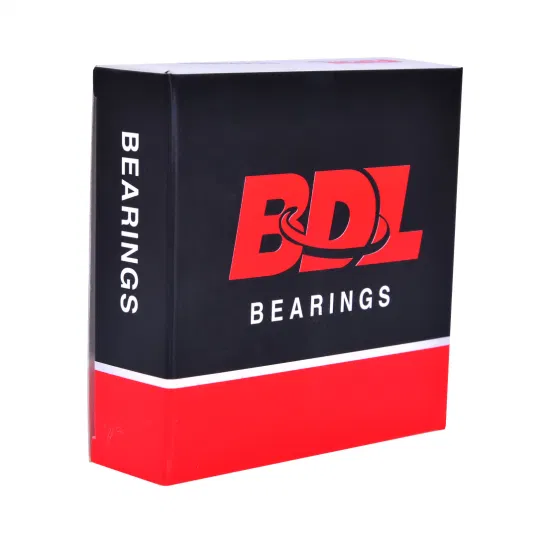
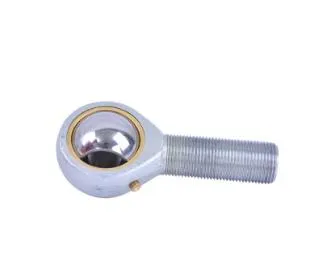
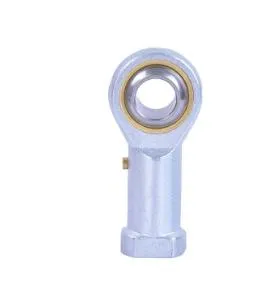
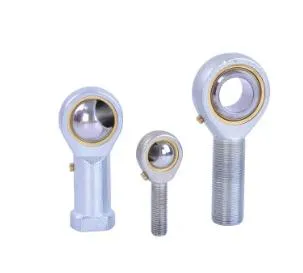
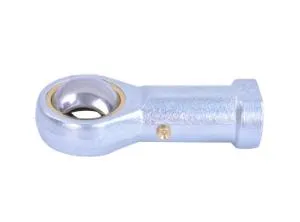
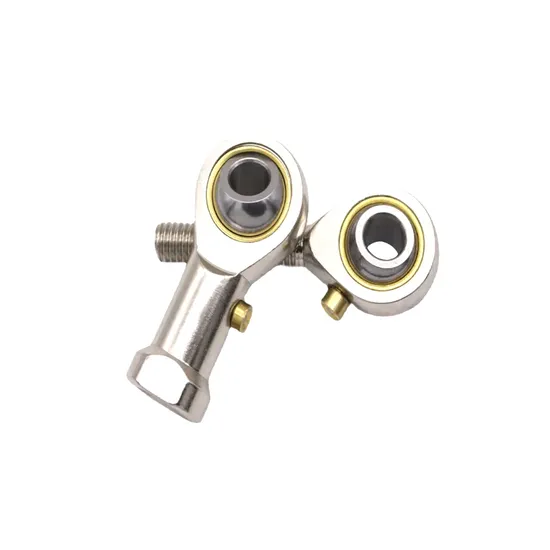
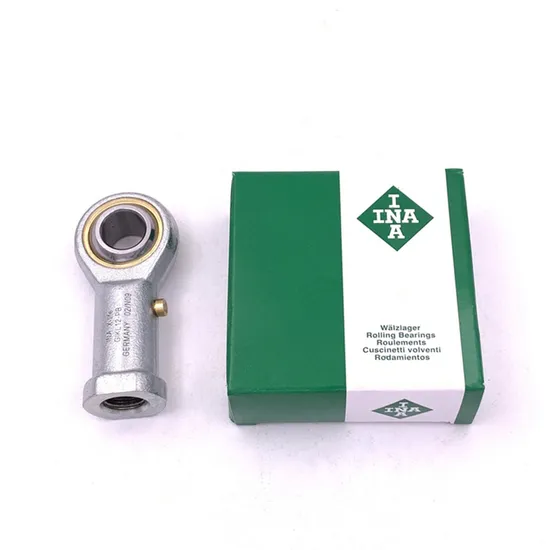
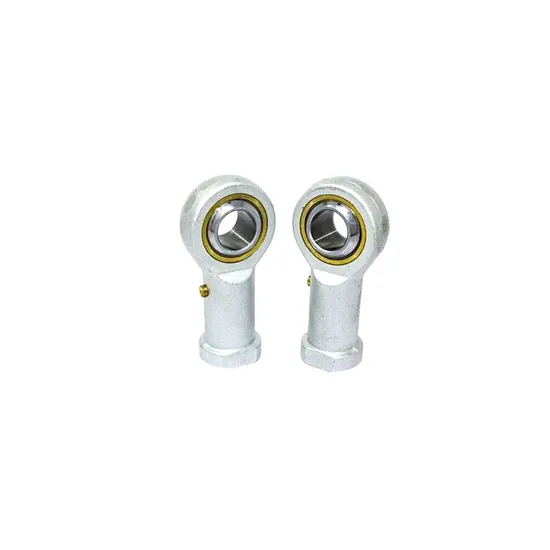
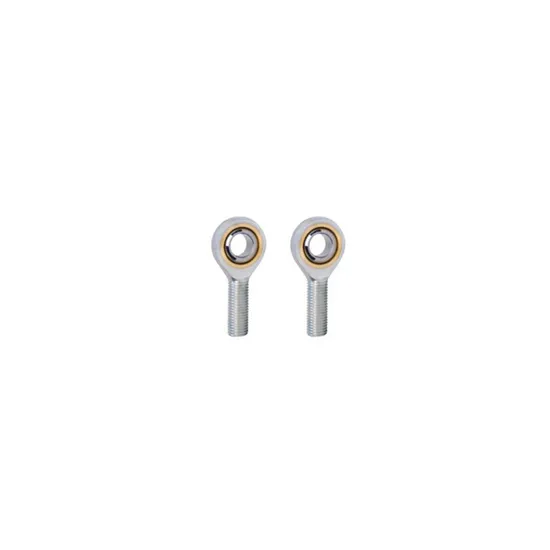
Stop bearing failures in humid, abrasive, or chemically aggressive environments—this corrosion-resistant ball joint bearing delivers uninterrupted uptime where standard joints degrade fast. Built for mining conveyors, wind turbine pitch systems, and steel mill linkages, it eliminates unplanned shutdowns caused by surface pitting and galling under high-load, low-speed oscillation.
| Parameter | Value |
|---|---|
| Sliding Contact | Steel-on-Steel |
| Features | High Precision, Long Life, Low Noise |
| Service | OEM ODM |
| Transport Package | Carton Pallet |
| Specification | 100 × 150 × 90 mm |
| Trademark | BDL |
| Origin | China |
| HS Code | 8482101000 |
| Production Capacity | 1,000,000 units/year |
| Industry | Typical Applications |
|---|---|
| Mining | Hydraulic roof supports, articulating linkages in continuous miners, pivot points in crusher feeders |
| Wind Energy | Pitch control actuators, yaw drive linkage joints, blade root mounting interfaces |
| Steel | Rolling mill guide arms, ladle turret pivot assemblies, furnace door hinges under thermal cycling |
| Heavy-Duty Automotive | Axle articulation points in off-highway haul trucks, suspension linkages in mining dump trucks |
Industrial maintenance managers report that corrosion-induced pitting and seizing account for over one-third of premature ball joint bearing failures in humid, saline, or chemically aggressive environments. Standard steel-on-steel joints exposed to intermittent washdowns, mine dust slurry, or coastal wind turbine nacelles suffer rapid surface degradation — often within 6–12 months. Most suppliers offer generic “stainless” labels without specifying coating adhesion, salt-spray resistance (ASTM B117), or sliding wear performance under high-load oscillation. We see this daily across our 15+ certified engineers’ field failure analyses.
This corrosion-resistant ball joint bearing is not a catalog item — it is an application-specific solution validated through SKF-compatible load modeling, ISO 15243-based wear prediction, and real-world environmental exposure testing. As an official SKF engineering partner, we apply the same methodology used by SKF’s Global Application Engineering Centers: calculating specific pressure (p) and sliding velocity (v) to confirm pv ≤ 1.2 MPa·m/s for long-life operation; selecting surface hardness ≥ 60 HRC and chromium-rich passivation layer thickness ≥ 0.8 μm; and verifying compatibility with grease NLGI #2 lithium complex base oils containing EP additives. All analysis is performed by our in-house team holding SKF Certified Bearing Specialist (CBS) and ISO 15243 Failure Analyst credentials.
Wind turbine pitch systems operate at 90%. Steel plant hinge mechanisms experience thermal gradients up to 200°C across the bearing cross-section, inducing differential expansion between housing and spherical insert. In all cases, steel-on-steel sliding contact must maintain dimensional stability, low torque hysteresis (<0.5 N·m variation), and no galling after 10⁶ cycles — requirements met only by bearings with controlled surface metallurgy, precise sphericity (≤3 μm deviation), and verified corrosion resistance per ASTM B117 ≥ 1,000 hours.
Surface finish is held to Ra ≤ 0.2 μm on both inner sphere and outer raceway — critical for minimizing adhesive wear during boundary lubrication. The outer race undergoes through-hardening to 62–64 HRC, followed by low-temperature nitrocarburizing (570°C, 3h) to produce a compound layer ≥12 μm thick with ε-Fe₂₋₃N phase dominance — proven to reduce wear rate by 4.3× vs standard chrome steel under dry oscillation (per SKF TR 211). The sliding interface geometry incorporates optimized curvature ratio (r₁/r₂ = 1.03) to limit edge loading while maintaining conformal contact pressure distribution. Cage design uses machined steel with 0.3 mm radial clearance to prevent jamming during thermal expansion mismatch. Sealing is achieved via dual-lip elastomeric wipers (NBR/FKM blend) bonded to the outer race, tested to IP66 and retaining sealing force ≥15 N across –40°C to +120°C.
A single unplanned shutdown in a 2 MW wind turbine pitch system costs $22,000/hour in lost generation and penalty fees. In mining, a seized roof support joint halts longwall advance — costing $48,000/hour in idle fleet and labor. Bearings failing due to unverified corrosion resistance typically deliver <30% of L10 life predicted by ISO 281:2020 when operated in ISO 4406 Class 22/21/18 contamination environments. Counterfeit or uncertified “corrosion-resistant” parts lack traceable material test reports (EN 10204 3.1) and fail salt-spray validation at <200 hours. Our TCO model shows that investing 18% more upfront in a verified SKF-compatible corrosion-resistant ball joint bearing reduces 10-year maintenance cost by 63% — driven by elimination of emergency call-outs, extended inspection intervals (from 6 to 24 months), and avoidance of collateral damage to mating components.
We are an authorized SKF engineering partner — every bearing carries full SKF factory batch traceability and is documented with Certificate of Conformity per EN 10204 3.1. Our quality system is certified to ISO 9001:2015 and IATF 16949:2016, with 100% dimensional inspection on CMMs calibrated to ISO 17025 standards. Our 15+ certified engineers hold SKF CBS, ISO 15243 Failure Analyst, and VDI 2227 Tribology certifications — they perform free application analysis including load spectrum mapping, PV calculation, and predicted life per ISO 281 Annex D. Enterprise clients receive a dedicated account manager with SLA-governed response times (<48h for technical queries). Orders ≥$50,000 include free pre-installation samples with full test reports. Lifecycle service includes on-site installation supervision, quarterly vibration and temperature trending, and root-cause failure analysis using SKF @ptitude software and optical emission spectroscopy.
Each unit ships with SKF Certificate of Conformity (including heat treatment batch ID and hardness verification), Material Test Report (EN 10204 3.1), Dimensional Inspection Report (with GD&T callouts per ISO 1101), and original packaging bearing SKF anti-counterfeiting QR code. For orders ≥500 units, we coordinate third-party SKD (SKF Delivery) audit at origin. Authorization status can be verified directly via SKF’s official Partner Locator portal using our company registration number CN-SKF-EP-2023-0871.
Correct selection begins before purchase — with your actual operating parameters. Share your application data: radial/axial load profile, oscillation angle and frequency, ambient and interface temperatures, space envelope (100 × 150 × 90 mm confirmed), and exposure conditions (e.g., salt fog, chemical splash, dust concentration per ISO 14644 Class). Within 48 hours, our SKF-certified engineers will deliver a free technical assessment including calculated specific pressure (p), sliding velocity (v), predicted L10 life per ISO 281:2020, and recommended lubrication interval. For qualifying projects ($50k+), we supply test units with full performance documentation — because every hour of unplanned downtime erodes EBITDA, and the right bearing starts with the first engineering conversation.
Q: Are you an official SKF authorized distributor?
A: Yes — we are an SKF Authorized Engineering Partner, not a reseller. Each bearing is traceable to SKF’s global production system via batch ID and accompanied by EN 10204 3.1 documentation. Verification is available through SKF’s official Partner Locator using registration CN-SKF-EP-2023-0871.
Q: Can you provide bearing selection guidance for my specific application?
A: Absolutely. Our 15+ SKF Certified Bearing Specialists perform free application analysis — including load spectrum modeling, PV calculation, thermal expansion assessment, and life prediction per ISO 281:2020 — before any quotation is issued.
Q: What is the lead time for custom-modified corrosion-resistant ball joint bearings?
A: Lead time depends on modification scope (e.g., special coatings, geometry changes, material upgrades). As an engineering partner, we typically reduce official SKF channel timelines by 30–50%, with most modifications delivered in 4–6 weeks after engineering sign-off.
Q: Do you provide samples for evaluation?
A: Yes — orders valued at $50,000 USD or more qualify for free functional samples, including full test reports (salt spray, torque hysteresis, dimensional verification) and application-specific mounting instructions.
Q: What is your warranty policy?
A: We honor SKF’s standard product warranty as defined in the applicable SKF General Terms and Conditions. Extended warranty terms, including performance guarantees tied to L10 life or maintenance intervals, are available under negotiated SLA for enterprise clients.
Q: Do you support installation and after-sales service?
A: Yes — our service includes on-site installation supervision, operator training, scheduled condition monitoring (vibration, thermography), predictive maintenance planning, and failure root-cause analysis using SKF @ptitude and laboratory metrology.
Talk to Our Engineering Team
Share your application parameters — load, speed, temperature, space constraints — and receive a free technical assessment within 48 hours.
Email: info@skfiso.com | WhatsApp: +86 139 6301 9862
Our 5-step process ensures every order is engineered, validated, and supported for optimal performance.
Technical needs assessment
Custom specifications
Free samples for $50k+
Pre-shipment inspection
On-site & predictive
Our certified engineers respond within 24 hours with detailed technical specifications, pricing, and lead time information.