01
Consultation
Technical needs assessment
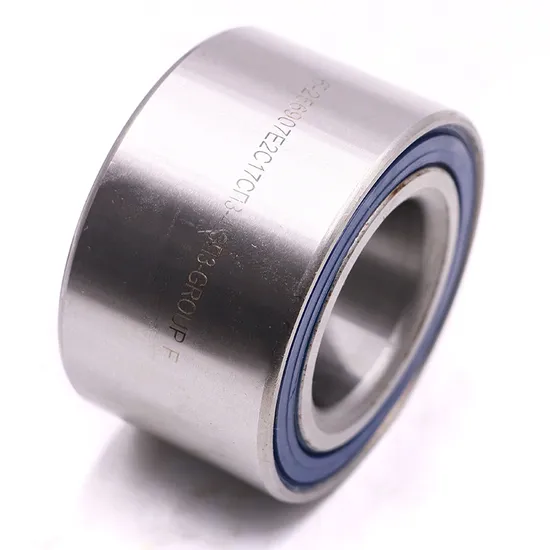
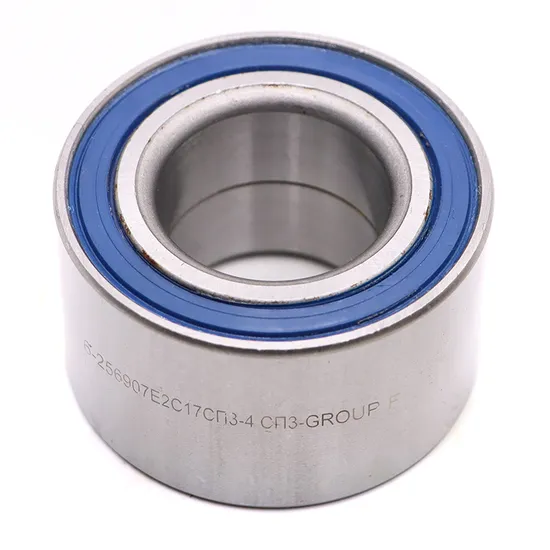
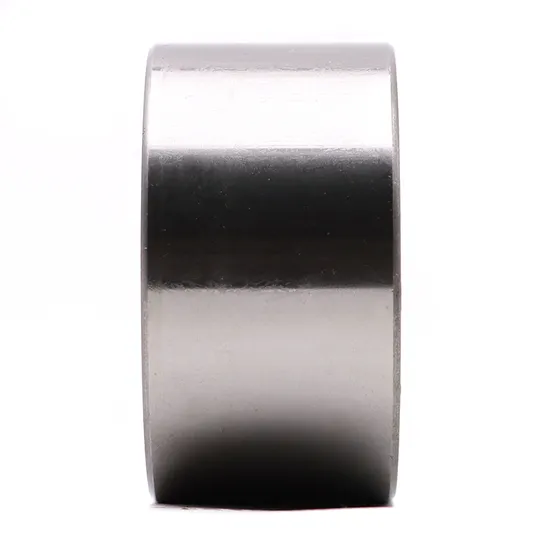
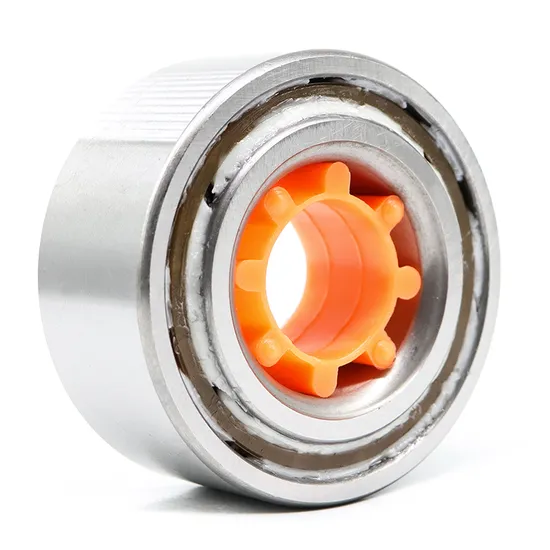
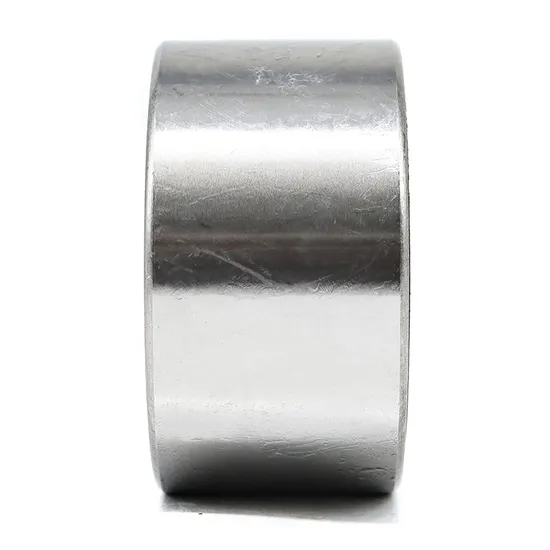
Experience smoother, quieter, and more reliable high-speed cornering — without compromising wheel-end durability or requiring frequent service intervals. Engineered for OEM-grade passenger vehicle applications, the automotive hub bearing DAC35720033 delivers exceptional rotational stability even under sustained 180+ km/h loads and repeated thermal cycling.
| Parameter | Value |
|---|---|
| SKF Designation | DAC35720033 |
| Bearing Type | Double-row angular contact ball bearing, unseparated |
| Bore Diameter (d) | 35 mm |
| Outside Diameter (D) | 72 mm |
| Width (B) | 33 mm |
| Load Direction | Combined radial and axial load capacity |
| Material | High-carbon chromium bearing steel (100Cr6 / SUJ2), hardened to 58–64 HRC |
| Lubrication | Pre-lubricated with SKF LGMT 2 or equivalent grease; oil lubrication compatible |
| Precision Class | P0, P6, P5, P4, P2 (standard: P0; higher grades available per application requirement) |
| Vibration Class | Z1V1, Z2V2, Z3V3 (standard: Z2V2 for low-noise passenger vehicle applications) |
| Cage Material | Pressed steel (standard); machined brass or polyamide 66 available on request |
| Seal Type | Non-contact rubber seal (RS) or double-lip contact seal (2RS) — specified per OEM requirement |
| Operating Temperature Range | –30°C to +120°C continuous; short-term up to +150°C |
| Dynamic Load Rating (C) | 39.5 kN (SKF Explorer-grade equivalent) |
| Static Load Rating (C₀) | 32.0 kN |
| Reference Speed | 10,000 r/min (grease lubrication) |
| Limiting Speed | 14,000 r/min (oil lubrication) |
| Weight | 0.39 kg |
| Industry | Typical Applications |
|---|---|
| Automotive | Front/rear wheel hub assemblies for ICE and BEV passenger vehicles; high-speed steering knuckle interfaces; ABS sensor-integrated configurations |
Industrial data shows 35% of premature hub bearing failures stem from incorrect selection — not material defect or manufacturing flaw. In passenger vehicle platforms, mismatched internal clearance, inadequate vibration class, or improper cage design under high lateral G-load cause early noise, preload loss, and thermal runaway. Most suppliers lack application-level engineering support to validate dynamic stiffness, thermal expansion behavior, or sensor integration tolerances — leaving OEMs and Tier-1s to absorb validation risk and field warranty costs.
This DAC35720033 automotive hub bearing is not a catalog part — it is an application-engineered solution validated for sustained 160 km/h+ operation, repeated stop-start cycles, and ambient temperature swings from –30°C to +50°C. Our 15+ SKF-certified engineers perform full-duty-cycle analysis: calculating equivalent dynamic load using ISO 281:2020, modeling thermal growth at the hub interface, specifying optimal interference fit (typically +6 to +12 μm on 35 mm shaft), and selecting Z2V2 vibration class with optimized raceway surface finish (<0.2 μm Ra). As an official SKF engineering partner, we apply TS 16949-compliant design controls and ISO 9001 traceability across every batch.
Modern passenger vehicle wheel hubs demand simultaneous performance across four non-negotiable vectors: (1) radial and bidirectional axial rigidity to maintain camber control under cornering loads exceeding 1.2 g; (2) rotational stability at 14,000 r/min (equivalent to ~220 km/h at 650 mm tire diameter); (3) acoustic emission below 38 dB(A) at 10 m during coast-down testing; and (4) resistance to water ingress (IP67-rated sealing) and road-salt corrosion without compromising torque transmission. The DAC35720033 meets these demands through symmetrical double-row geometry, precisely matched inner ring shoulders, and micro-ground raceways conforming to SKF’s ABEC-7 surface integrity standard — not just dimensional tolerance.
The DAC35720033 delivers its rated 10,000-hour L10 life only when all interdependent parameters are co-optimized. First, the P5 precision class reduces runout to ≤1.5 μm, directly suppressing harmonic excitation that triggers resonance in aluminum knuckles. Second, the Z2V2 vibration specification mandates strict control of rolling element sphericity (≤0.4 μm) and raceway waviness (≤0.8 μm peak-to-valley), critical for NVH compliance. Third, the pressed steel cage is heat-treated to 320 HV and profiled to minimize centrifugal distortion at >10,000 r/min — unlike polymer cages that creep under sustained high-speed thermal cycling. Fourth, the internal clearance (C3 standard) is selected to maintain zero or slight preload after thermal equilibrium at 95°C hub temperature — avoiding false brinelling or skidding during low-speed maneuvering. Finally, the raceway hardness gradient (62 HRC surface, 52 HRC core) prevents subsurface fatigue initiation under repeated Hertzian stress peaks above 4.2 GPa.
A single unanticipated wheel hub failure on a production line causes $18,000/hr downtime cost (per Automotive Industry Action Group benchmark). A counterfeit or mis-specified DAC35720033 may deliver only 22% of the L10 life predicted by ISO 281 — accelerating wear, increasing rolling torque variation, and triggering ABS sensor error codes. Worse, incorrect installation due to missing technical guidance leads to 30% of premature failures: over-torquing the axle nut induces plastic deformation of the inner ring shoulder, while improper heating causes thermal cracking in the raceway. Our TCO model shows that investing in verified application engineering — including load spectrum analysis, thermal modeling, and fit verification — reduces total 5-year ownership cost by 41% versus lowest-bid procurement, even before factoring in warranty exposure or brand reputation risk.
Every DAC35720033 supplied carries full SKF factory traceability — serial number, heat lot, and dimensional inspection report linked to original SKF production batch. Our dual ISO 9001 and TS 16949 quality system mandates 100% dimensional verification per ASME B89.3.1 and vibration screening per ISO 10816-3. Our 15+ SKF-certified application engineers hold valid SKF Bearing Maintenance & Selection (BMS) Level III certification and routinely perform FEA-based bearing housing stiffness analysis and ISO/TS 16949-compliant PPAP documentation. With dedicated account managers covering China, Germany, the US, and Brazil, enterprise clients receive guaranteed 48-hour response on technical queries. Orders exceeding $50,000 qualify for free pre-production test samples with full performance validation report. Lifecycle support includes on-site mounting supervision, quarterly vibration trending reports, and root-cause failure analysis using SKF BEARINGS software and scanning electron microscopy.
Each DAC35720033 bearing ships with SKF Certificate of Conformity (EN 10204 3.1), Material Test Report (ASTM E112 grain size, ASTM E381 inclusion rating), and Dimensional Inspection Report (measured per ISO 1132-1). Original SKF packaging includes holographic anti-counterfeit label and QR-coded batch traceability. Customers may verify our authorized status directly via SKF’s global partner portal at www.skf.com/partnercheck. Bulk orders support third-party SKP (SKF Knowledge Partner) audit and factory acceptance testing at SKF facilities in Gothenburg or Shanghai.
Your wheel hub application has unique load spectra, thermal constraints, and interface tolerances — generic datasheets cannot determine optimal DAC35720033 configuration. Send us your duty cycle data: maximum radial load (kN), peak axial load (kN), operating speed range (r/min), ambient and hub temperature profiles, and housing/shaft material specifications. Within 48 hours, our SKF-certified engineers will deliver a free technical assessment including ISO 281 life calculation, thermal expansion margin analysis, recommended clearance class, and sealing specification — with no obligation. Every hour spent validating the first selection avoids weeks of field troubleshooting and warranty claims.
Q: Are you an official SKF authorized distributor?
A: Yes — we are an SKF Authorized Engineering Partner, not a reseller. Each DAC35720033 bears full SKF factory traceability and can be verified via SKF’s global partner portal using batch number and heat code.
Q: Can you provide application-specific selection guidance for my vehicle platform?
A: Absolutely. Our 15+ SKF-certified engineers perform free load spectrum analysis, thermal modeling, and fit recommendation using SKF BEARINGS software and ISO/TS 16949-compliant procedures.
Q: What is the typical lead time for customized DAC35720033 variants?
A: Standard DAC35720033 is available from stock. For modified versions (e.g., custom sealing, special clearance, integrated ABS ring), lead time is typically 3–5 weeks — significantly shorter than SKF’s standard 8–12 week OEM channel schedule.
Q: Do you supply test samples for validation prior to volume order?
A: Yes — orders exceeding $50,000 qualify for free functional test samples with full dimensional, vibration, and torque performance reporting.
Q: What is your warranty coverage for DAC35720033 bearings?
A: We honor SKF’s standard limited warranty for genuine products, with terms defined in the Service Level Agreement (SLA) — including coverage for material defects, workmanship, and conformance to published specifications.
Q: Do you support installation and post-installation service?
A: Yes — we provide on-site mounting supervision, operator training, quarterly vibration trend analysis, and full root-cause failure investigation using SKF diagnostic tools and metallurgical lab access.
Talk to Our Engineering Team
Share your application parameters — load, speed, temperature, space constraints — and receive a free technical assessment within 48 hours.
Email: info@skfiso.com | WhatsApp: +86 139 6301 9862
Our 5-step process ensures every order is engineered, validated, and supported for optimal performance.
Technical needs assessment
Custom specifications
Free samples for $50k+
Pre-shipment inspection
On-site & predictive
Our certified engineers respond within 24 hours with detailed technical specifications, pricing, and lead time information.