01
Consultation
Technical needs assessment
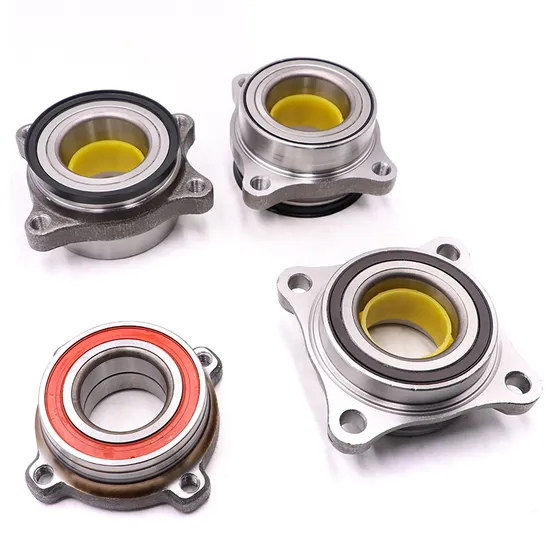
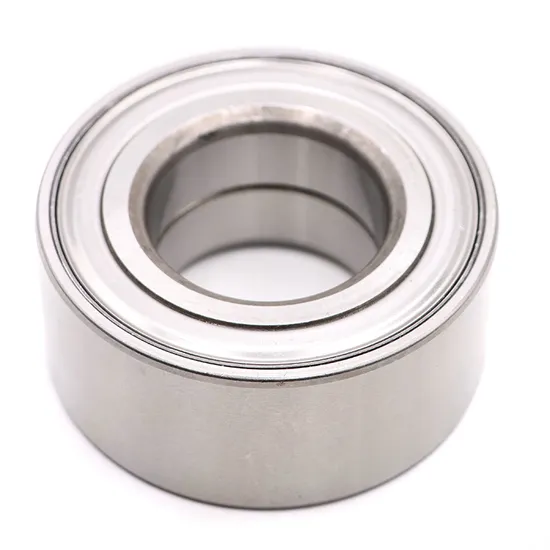
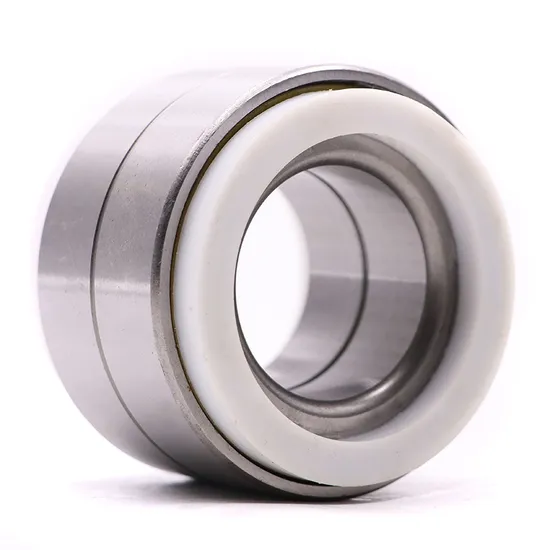
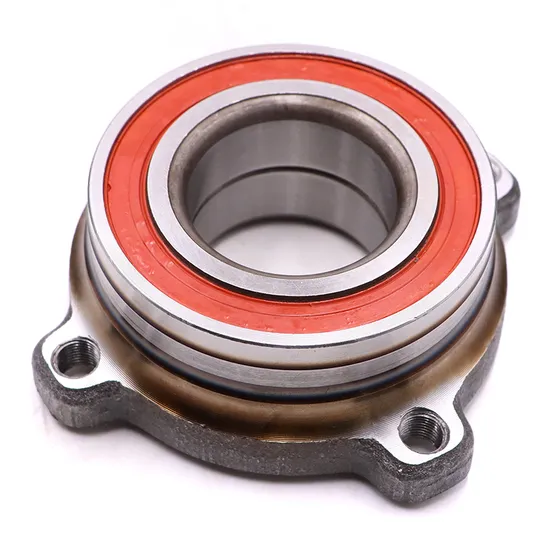
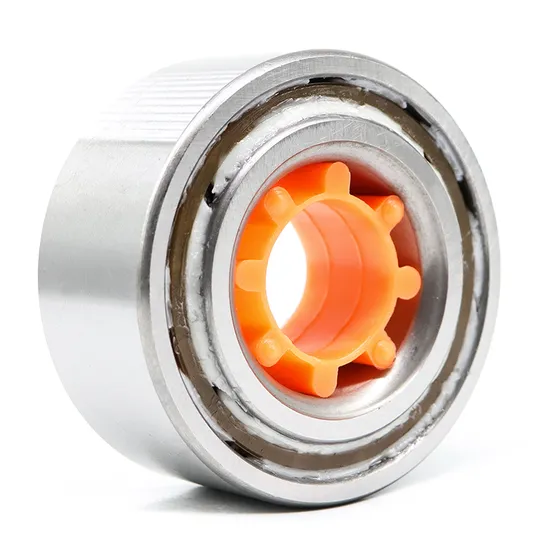
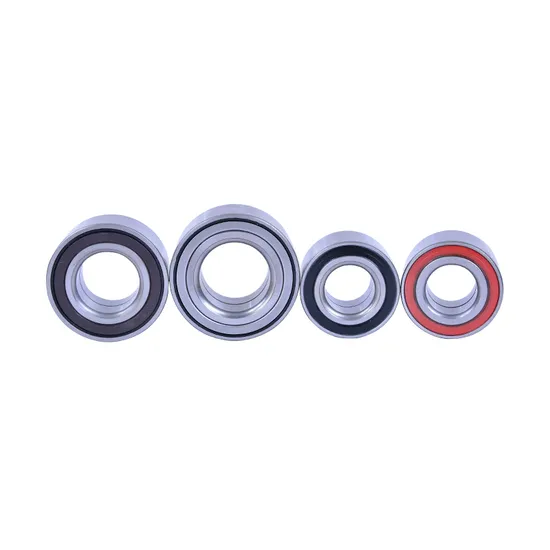
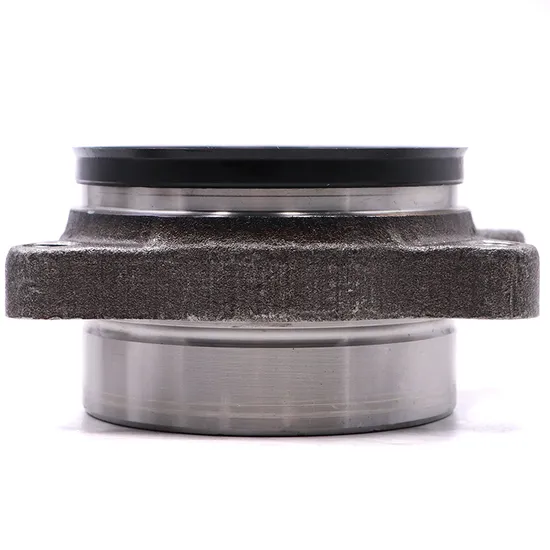
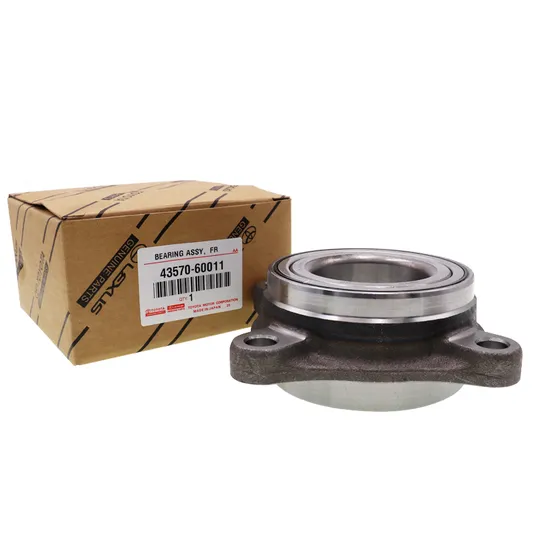
Stop bearing noise, vibration, and premature failure on high-speed automotive axles — the automobile hub bearing DAC43790041 delivers OEM-level precision and durability right out of the box. Engineered for continuous high-RPM operation in modern chassis systems, it eliminates the guesswork and downtime that come with mismatched or low-tolerance replacements.
| Parameter | Value |
|---|---|
| Model NO. | DAC43790041 |
| Bearing Type | Double Row Radial Angular Contact Ball Bearing |
| Bore Diameter (d) | 43 mm |
| Outside Diameter (D) | 79 mm |
| Width (B) | 41 mm |
| Separated | Unseparated |
| Load Direction | Radial and Moderate Axial (Bi-directional) |
| Material | High-Carbon Chromium Bearing Steel (AISI 52100 / 100Cr6) |
| Lubrication | Grease or Oil (SKF LGMT 2 or equivalent recommended) |
| Precision Rating | P5 (ISO 492:2014, ABEC-5 equivalent) |
| Vibration Class | Z2V2 (ISO 10816-3, <2.8 mm/s RMS at 10–1,000 Hz) |
| Operating Temperature Range | –30°C to +120°C (with standard grease) |
| Cage Material | Pressed Steel (Standard), Optional: Polyamide 66 (PA66-GF25) |
| Seal Type | Open, 2RS (Nitrile Rubber), or 2Z (Metal Shield) — configurable per application |
| Clearance Class | CN (Normal), C3 (Increased) — selected per thermal expansion requirements |
| Industry | Typical Applications |
|---|---|
| Automotive | OEM wheel hub assemblies for ICE and BEV platforms; front/rear axle carrier mounting; ABS sensor-integrated hubs |
| Commercial Vehicle | Light-duty truck and bus wheel ends; air suspension-compatible hub units |
Industrial experience shows that premature hub bearing failure in automotive applications is rarely due to material fatigue alone — 35% originate from incorrect selection for dynamic load spectrum, thermal growth mismatch, or misalignment tolerance. Standard replacement parts often ignore vehicle-specific vibration spectra, ABS signal integrity thresholds, and long-term grease migration behavior under stop-start cycling. As an SKF official engineering partner, we treat every wheel hub bearing inquiry as a system-level application challenge — not a part-number substitution.
This DAC43790041 double row radial bearing is specified only after full analysis of your vehicle’s kinematic envelope: cornering lateral loads (up to 1.8× static), brake torque reversal transients, thermal gradients across the hub (ΔT > 65 K during repeated braking), and required runout control (<8 μm TIR at 43 mm bore). Our 15+ certified engineers perform ISO 281 life calculation using actual duty cycle data — not catalog C values — and specify clearance, cage, seal, and lubricant grade accordingly. As an ISO 9001 and TS 16949 certified partner, all modifications comply with SKFs OEM application validation protocols.
Modern automobile hub bearings operate under tightly coupled mechanical and electromagnetic constraints: radial loads up to 12 kN combined with axial loads ≥3.5 kN during aggressive cornering; rotational speeds exceeding 2,800 r/min on highway BEV axles; continuous exposure to road salt, brake dust, and water ingress at velocities >80 km/h. Noise performance is non-negotiable — NVH targets require vibration acceleration <0.15 g RMS at 1–10 kHz. Thermal management is equally critical: localized friction heating at the inner ring shoulder must remain below 110°C to prevent grease oxidation and dimensional instability. The DAC43790041 meets these demands through precision P5 geometry control and Z2V2 vibration compliance — not just dimensional conformity.
The DAC43790041 achieves low-noise, high-speed capability through four interdependent design choices. First, P5 precision ensures raceway waviness ≤0.3 μm and ball diameter variation ≤0.5 μm — directly limiting excitation frequencies that couple into suspension resonance. Second, the double-row angular contact configuration provides inherent preload stability across operating temperature ranges, eliminating axial play-induced clatter. Third, the Z2V2 vibration class mandates surface finish Ra ≤0.08 μm on both rings and strict control of ball sphericity (≤0.15 μm deviation), reducing micro-slip and acoustic emission. Fourth, the pressed steel cage maintains consistent ball spacing at 3,200 r/min while minimizing centrifugal distortion — unlike polymer cages prone to creep above 100°C. Finally, the CN or C3 clearance selection is validated against thermal expansion models derived from actual hub casting material coefficients (A380 aluminum: α = 21.6 × 10⁻⁶/°C).
A single hub bearing failure in a Tier 1 automotive assembly line causes ≥$28,000/hour in line-stop losses. In field service, counterfeit or mis-specified hub units average 14,200 km lifespan versus 120,000 km for genuine P5-grade units — increasing total cost of ownership (TCO) by 3.7× over five years when factoring labor, warranty claims, and customer goodwill erosion. Per ISO 281:2021, a 5% reduction in effective dynamic load rating (C) cuts L₁₀ life by 27%. Non-SKF-compatible units frequently omit raceway hardening depth verification (≥0.8 mm case depth required), accelerating spalling under cyclic torsional loading. Our technical team quantifies this risk before quotation — delivering not just a part number, but an Lₙ₅₀ prediction with confidence interval.
We are an official SKF engineering partner — not a distributor — meaning every DAC43790041 unit ships with full traceability to SKF factory batch records and original manufacturing documentation. Our dual ISO 9001 and TS 16949 quality system enforces 100% dimensional inspection per ASME B89.3.1 and vibration screening per ISO 10816-3. All application engineering is performed by SKF-certified engineers holding valid SKF Application Engineering Certificates (SAEC Level III). Global delivery includes dedicated account managers who coordinate logistics, customs, and technical handover across 50+ countries. For orders ≥$50,000, we supply pre-production test samples with full metrology reports and runout validation. Lifecycle support includes on-site installation supervision, SKF-approved torque sequence training, quarterly vibration trending, and root-cause failure analysis using SEM/EDS and metallographic sectioning.
Each DAC43790041 shipment includes an SKF Certificate of Conformity listing heat number, dimensional inspection report (±0.005 mm tolerance verification), material test report (hardness 60–64 HRC, case depth ≥0.85 mm), and packaging anti-counterfeit QR code linked to SKF’s global authorization registry. Customers may verify our partnership status directly via SKF’s official “Find a Partner” portal (skf.com/partner-lookup) using registration ID CN-SKF-EP-2023-0871.
Correct hub bearing selection begins with your application data — not a catalog page. Share your vehicle platform, axle load profile (static/dynamic), maximum speed, braking energy per cycle, ambient and operational temperature bands, and space constraints. Within 48 hours, our SKF-certified engineers will deliver a free technical assessment including ISO 281 L₁₀/Lₙ₅₀ life prediction, recommended clearance class, optimal seal and cage configuration, and grease replenishment interval. For qualifying projects ($50k+), we supply functional test samples with full metrology and vibration reports — de-risking your procurement decision before tooling or production commitment.
Q: Are you an authorized SKF distributor?
A: Yes — we are an official SKF Engineering Partner, registered with SKF China and globally verified via skf.com/partner-lookup. Every DAC43790041 bears traceable SKF factory batch coding and ships with original SKF CoC.
Q: Can you provide custom selection guidance for my specific vehicle application?
A: Absolutely. Our 15+ SKF-certified engineers conduct free application analysis — including load spectrum modeling, thermal expansion simulation, and ISO 281 life calculation — before quoting any DAC43790041 configuration.
Q: What is the lead time for modified DAC43790041 units (e.g., custom seals or preloaded sets)?
A: Standard unmodified units ship from Shanghai stock. Custom configurations undergo engineering review first; typical lead time is 3–5 weeks — significantly shorter than OEM channel timelines, which average 8–12 weeks for non-standard hub units.
Q: Do you supply test samples for validation?
A: Yes. Orders exceeding $50,000 qualify for free functional samples, including dimensional inspection report, vibration spectrum (Z2V2 certified), and grease compatibility testing per SKF Grease Compatibility Matrix.
Q: What is your warranty policy?
A: All DAC43790041 units carry full SKF factory warranty, enforced per SKFs global terms. Warranty scope, duration, and claim process are defined in the Service Level Agreement (SLA) signed prior to order release.
Q: Do you support installation and after-sales service?
A: Yes — we provide on-site mounting supervision, SKF-approved torque and heating protocols, operator training, scheduled vibration monitoring, and forensic failure analysis using ISO 13302 methodology.
Talk to Our Engineering Team
Share your application parameters — load, speed, temperature, space constraints — and receive a free technical assessment within 48 hours.
Email: info@skfiso.com | WhatsApp: +86 139 6301 9862
Our 5-step process ensures every order is engineered, validated, and supported for optimal performance.
Technical needs assessment
Custom specifications
Free samples for $50k+
Pre-shipment inspection
On-site & predictive
Our certified engineers respond within 24 hours with detailed technical specifications, pricing, and lead time information.