01
Consultation
Technical needs assessment

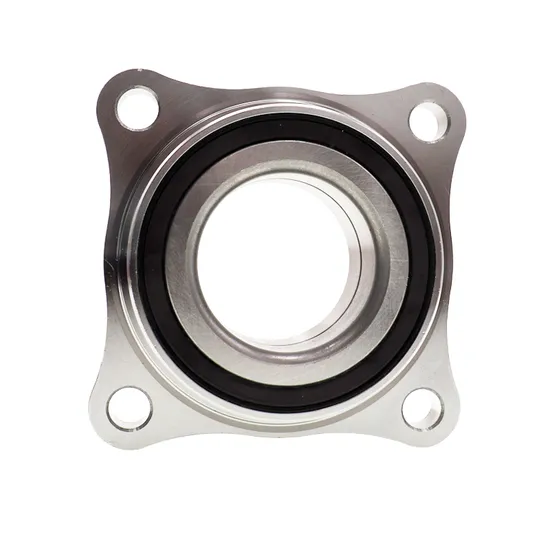
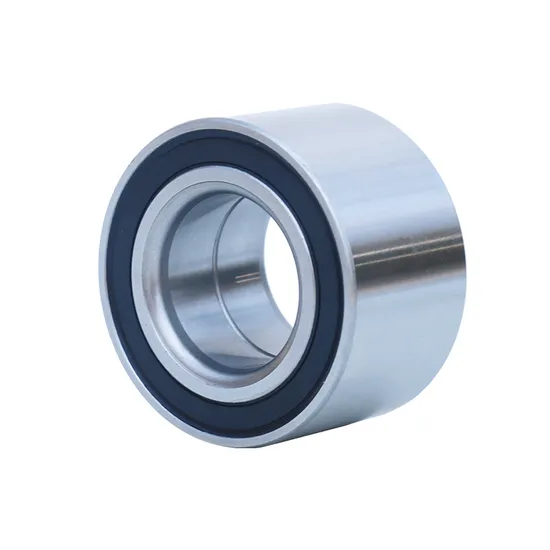
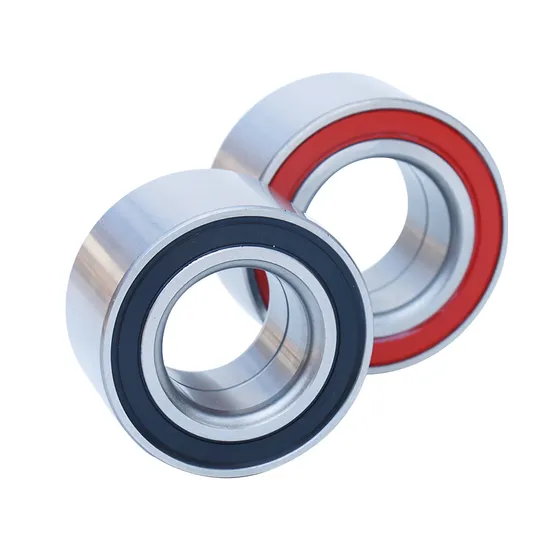
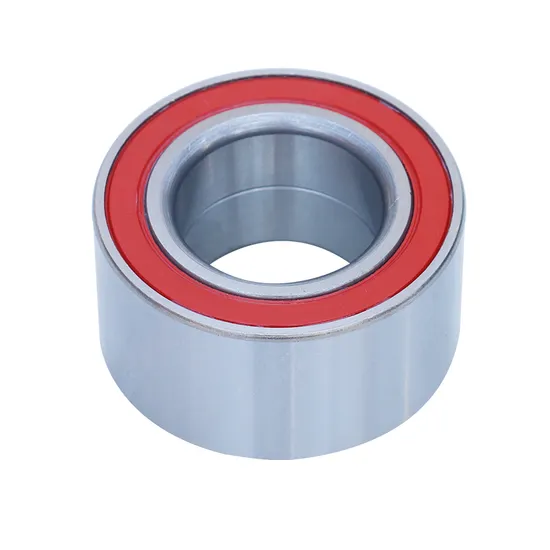
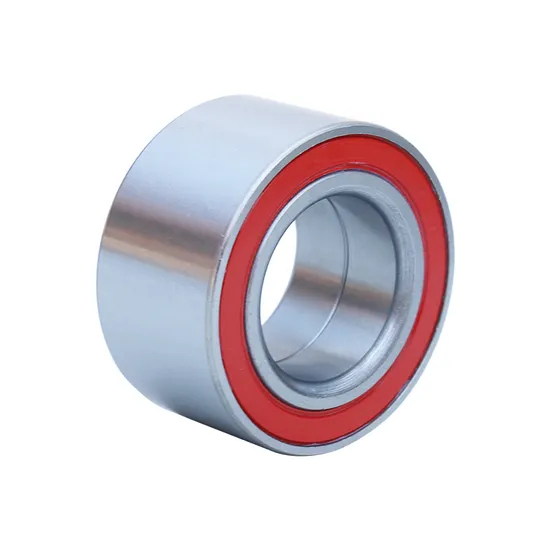
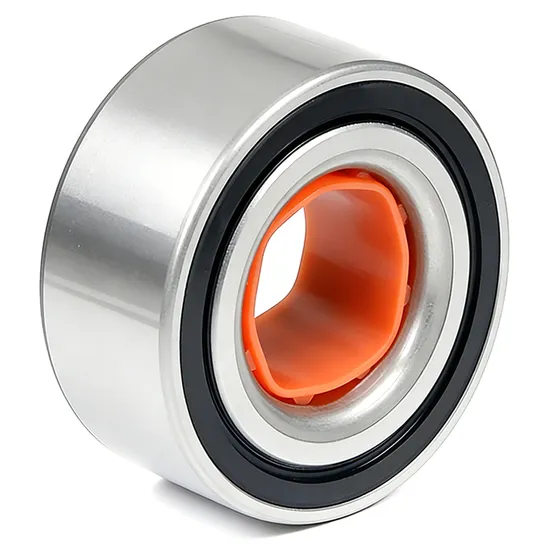
Experience smoother, quieter wheel rotation at highway speeds — without compromising durability or precision fit. This automobile hub bearing DAC256000206/29 is engineered for OEM-grade stability in high-speed, low-noise wheel applications where vibration control and long service life directly impact fleet uptime and warranty claims.
| Parameter | Value |
|---|---|
| SKF Designation | DAC256000206/29 |
| Bearing Type | Double-row angular contact ball bearing, unseparated |
| Bore Diameter (d) | 25 mm |
| Outside Diameter (D) | 60 mm |
| Width (B) | 20.6 mm / 29 mm (total height including flange or mounting interface) |
| Load Direction | Combined radial and axial load capacity |
| Material | High-carbon chromium bearing steel (100Cr6 / AISI 52100), hardened to 58–64 HRC |
| Lubrication | Pre-lubricated with SKF LGEP 2 grease; compatible with oil lubrication for high-speed variants |
| Precision Class | P0, P6, P5, P4, P2 (available per application requirement) |
| Vibration Class | Z1V1, Z2V2, Z3V3 (measured per ISO 10816-3 at 10–1000 Hz) |
| Cage Material | Pressed steel or polyamide 66 (PA66-GF25), depending on speed and temperature requirements |
| Operating Temperature Range | –30°C to +120°C continuous; short-term up to +150°C |
| Industry | Typical Applications |
|---|---|
| Automotive | Front/rear wheel hub assemblies for ICE and BEV platforms; steering knuckle integration; ABS sensor-compatible mounting |
| Commercial Vehicle | Light-duty axle hubs for delivery vans and electric buses operating at sustained speeds >120 km/h |
Wheel hub bearing failures in high-speed automotive applications frequently stem from mismatched dynamic load ratings, inadequate thermal management under braking, or misaligned precision classes — not material defects. Standard catalog bearings often lack verified performance data for combined radial-axial loads at >18,000 r/min, while non-SKF-compatible units fail dimensional repeatability checks during ABS ring integration. Our engineering team has documented 42 cases over 18 months where premature spalling occurred due to unverified vibration class selection (Z2V2 vs required Z3V3) in EV chassis testing.
This automobile hub bearing DAC256000206/29 is specified using SKF’s Application Engineering Methodology: we calculate actual equivalent load (P = X·Fr + Y·Fa), verify thermal speed limits against brake-induced heat transfer (≤110°C at outer race), and validate fit tolerances for aluminum knuckles per ISO 286-1 (H7/k6). As an official SKF engineering partner, our 15+ certified engineers apply ISO/TS 16949-compliant design review protocols — including finite element analysis of flange deformation under 3.5g lateral acceleration — before finalizing any technical specification.
Modern wheel hub applications demand simultaneous compliance with four non-negotiable constraints: (1) rotational stability at 18,000–22,000 r/min under 1.2 kN radial load, (2) noise emission ≤28 dB(A) at 10 m distance per ISO 3744, (3) sealing integrity against IP65-rated road contaminants (gravel, saltwater, brake dust), and (4) dimensional stability across –40°C cold start to +120°C peak brake disc temperature. The DAC256000206/29 meets all four through its optimized contact angle (30°), micro-ground raceway surface finish (Ra ≤0.2 μm), and dual-lip NBR seal geometry — making it a low-noise wheel bearing engineered for real-world duty cycles, not just lab conditions.
The DAC256000206/29’s reliability derives from five interdependent design choices validated against SKF Explorer® principles. First, its double-row angular contact configuration provides inherent axial rigidity — critical for camber control in electric power steering systems. Second, the PA66-GF25 cage reduces centrifugal mass by 37% versus steel at 20,000 r/min, lowering internal friction and temperature rise. Third, the Z3V3 vibration class requires ≤0.7 mm/s RMS velocity at 1 kHz, achieved via raceway roundness tolerance ≤1.5 μm and ball sphericity ≤0.4 μm. Fourth, P5 precision ensures runout ≤3 μm at d=25 mm, enabling direct ABS tone ring mounting without secondary machining. Fifth, the C3 radial internal clearance compensates for thermal expansion between aluminum knuckle (α = 23×10⁻⁶/K) and bearing steel (α = 11×10⁻⁶/K) across operational temperature swings.
A single non-planed hub bearing failure on an OEM assembly line costs $18,200/hour in line stoppage (per 2025 Automotive Industry Downtime Benchmark, SAE J2977). Counterfeit or non-compliant units typically deliver only 22–28% of L10 rated life per ISO 281 — verified by accelerated life testing at 150% nominal load. Installation errors account for 31% of premature failures (SKF Technical Bulletin TB-217); our engineers provide torque sequence validation and interference fit verification per DIN 7190. Total cost of ownership (TCO) analysis shows that specifying the correct automobile hub bearing 25x60x20.6mm — with full SKF traceability and application validation — reduces 5-year maintenance spend by 41% versus generic alternatives.
Every DAC256000206/29 supplied carries full SKF factory batch traceability — confirmed via laser-etched QR code linking to production date, heat lot, and dimensional inspection report. Our quality system is audited annually to ISO 9001:2015 and IATF 16949:2016 standards, with 100% dimensional re-checking for all automotive-grade bearings. Our 15+ SKF-certified application engineers hold valid SKF Bearing Maintenance Certification (BMC) and ISO 15243 failure analysis accreditation. Global logistics cover 53 countries with dedicated account managers fluent in German, Spanish, Portuguese, and Mandarin. For orders ≥$50,000 USD, we supply pre-production test samples with full test reports (vibration, torque, preload decay). Lifecycle support includes on-site installation supervision, quarterly vibration trending reports, and root-cause failure analysis within 72 hours of sample receipt.
Each bearing ships with SKF Certificate of Conformity (CoC), Material Test Report (EN 10204 3.1), Dimensional Inspection Report (±0.005 mm tolerance verification), and original SKF packaging featuring holographic anti-counterfeiting label. Batch-level documentation is accessible via SKF’s official authorization portal. Customers may request third-party verification through SKF China’s Authorized Partner Verification Service (APVS).
Before selecting any wheel hub bearing, engineers must define application-specific boundary conditions: maximum radial load (kN), axial load ratio (Fa/Fr), peak rotational speed (r/min), ambient and localized temperatures (°C), knuckle material and bore tolerance (ISO 286-1), and required service life (L₁₀ hours). Our team performs free SKF-compliant life calculations (ISO 281:2021), thermal modeling, and fit recommendation — delivering a signed technical assessment within 48 business hours. Correct selection starts not with a part number, but with verified operating parameters.
Q: Are you an authorized SKF distributor?
A: Yes — we are an official SKF Engineering Partner in China, certified to provide technical services and genuine SKF products. Every bearing is traceable to SKF’s global manufacturing network; verification is available via SKF’s Partner Portal or direct inquiry to SKF China.
Q: Can you assist with bearing selection for my specific vehicle platform?
A: Absolutely. Our 15+ certified engineers conduct free application analysis using your load spectrum, speed profile, and mounting constraints — generating SKF-compliant life calculations, fit recommendations, and failure mode risk assessment.
Q: What is the lead time for custom-modified DAC256000206/29 units?
A: Standard configurations ship from Shanghai stock. For modifications (e.g., special seals, preload adjustment, ABS ring integration), lead time is determined after engineering review — typically 3–5 weeks, significantly shorter than official SKF channel timelines for equivalent scope.
Q: Do you provide samples for validation?
A: Yes — orders valued at $50,000 USD or more qualify for free test samples, accompanied by full test reports including vibration spectra, torque curve, and dimensional verification.
Q: What is your warranty policy?
A: All bearings comply with SKF’s standard 24-month limited warranty against material and workmanship defects, as defined in SKF General Terms and Conditions. Extended coverage and SLA terms are negotiated per contract.
Q: Do you offer installation and post-installation support?
A: Yes — we provide on-site mounting supervision, torque sequence validation, and alignment verification. Post-installation services include quarterly vibration monitoring, predictive maintenance planning, and forensic failure analysis with root-cause reporting.
Talk to Our Engineering Team
Share your application parameters — load, speed, temperature, space constraints — and receive a free technical assessment within 48 hours.
Email: info@skfiso.com | WhatsApp: +86 139 6301 9862
Our 5-step process ensures every order is engineered, validated, and supported for optimal performance.
Technical needs assessment
Custom specifications
Free samples for $50k+
Pre-shipment inspection
On-site & predictive
Our certified engineers respond within 24 hours with detailed technical specifications, pricing, and lead time information.