01
Consultation
Technical needs assessment

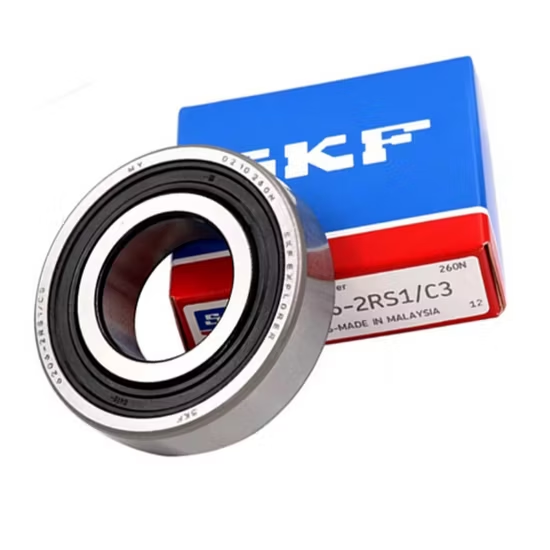

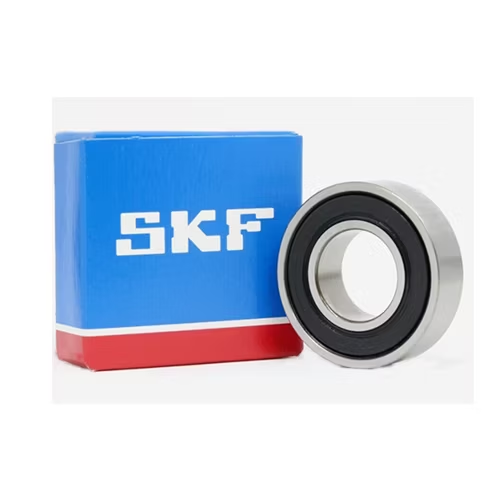
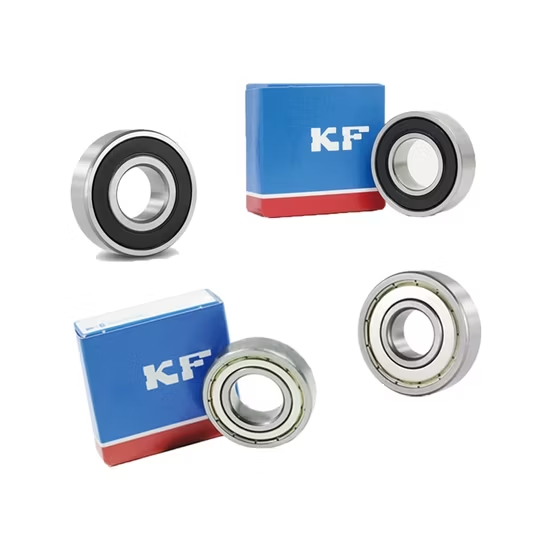


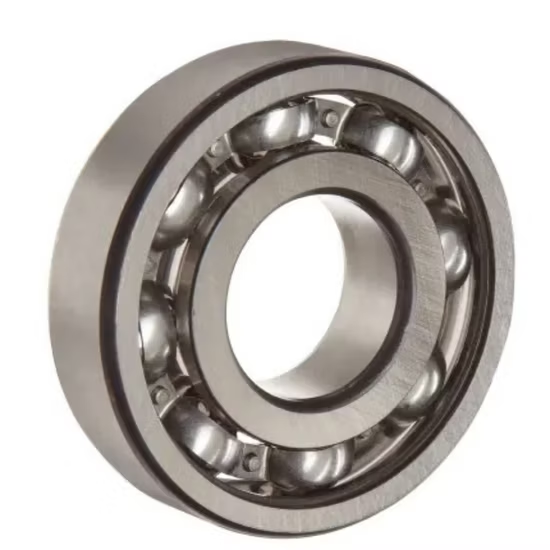
98204 Deep Groove Ball Bearing 20×42×9 mm — Constructed from high-carbon chromium GCr15 bearing steel to ensure reliable raceway hardness and wear resistance for motorcycle and general machinery applications.
Factory Batch Traceability — Every 98204 deep groove ball bearing ships with verifiable lot codes linked directly to the manufacturer's production records.
| Parameter | Value |
|---|---|
| Designation | 98204 |
| Bearing Type | Deep Groove Ball Bearing |
| Bore Diameter (d) | 20 mm |
| Outside Diameter (D) | 42 mm |
| Width (B) | 9 mm |
| Material | GCr15 |
| Seal or Shield Type | ZZ, 2RS, Open |
| Origin | Shanghai |
| Industry | Typical Applications |
|---|---|
| Motorcycles | Steering stem races, transmission main shafts, rear wheel hubs |
| Electric Motors | Rotor shaft support, cooling fan assemblies |
| General Machinery | Conveyor idler rollers, small pump impeller shafts |
| Gearboxes | Intermediate shaft positioning, output seal support |
Matching the internal clearance to the thermal expansion profile prevents catastrophic raceway binding under sustained high-speed operation.
Sourcing standard components for motorcycle drivetrains often leads to severe field failures when procurement teams overlook internal geometry. I have seen countless repair shops install basic variants with standard clearance into high-RPM transmission shafts, only for the inner ring to overheat and seize after brief operation . The 98204 deep groove ball bearing requires strict alignment between the cage design, internal clearance, and the specific thermal profile of the motorcycle application to survive continuous vibrational stress.
Selecting the correct configuration ensures the 98204 deep groove ball bearing handles the specific radial loads and shaft deflections typical in two-wheeled powertrains. Our technical review process verifies that the selected seal type and internal geometry match the exact OEM equipment requirements, eliminating the guesswork that causes premature wear in mixed-brand supply chains.
Motorcycle transmissions generate significant localized heat while operating in heavily contaminated environments. Standard clearance variants often lack the necessary thermal expansion allowance, leading to negative internal clearance and subsequent cage failure when operating temperatures rise . Furthermore, choosing between contact seals and non-contact shields dictates the balance between keeping abrasive road dust out and minimizing frictional heat generation at high rotational speeds.
The GCr15 high-carbon chromium bearing steel provides the necessary raceway hardness to resist spalling under repetitive impact loads. Depending on the mounting position, buyers can select open variants for oil-bath lubricated gearboxes, ZZ shields for low-friction environments where coarse dust is the primary concern, or 2RS contact seals for wheel hubs exposed to water and fine particulates. The 20x42x9mm dimensional envelope ensures precise fitment within standard motorcycle crankcases without requiring housing modifications.
Installing a component with the wrong seal configuration or inadequate clearance class routinely results in unplanned downtime and catastrophic damage to surrounding shaft surfaces. When frictional heat exceeds the lubricant's thermal stability, the resulting raceway scoring voids equipment warranties and forces complete assembly rebuilds. Adhering to failure analysis frameworks like ISO 15243 reveals that a significant share of these premature failures stem directly from specification oversights during the procurement phase .
We maintain authorized distribution channels that guarantee the metallurgical integrity of every GCr15 component we supply. Procurement engineers frequently encounter cross-reference errors where the base 20x42x9mm dimension matches, but the internal clearance or cage material is entirely wrong for the application. Our technical team reviews the exact suffix requirements and operational parameters to ensure the supplied units match the OEM design intent, backed by full manufacturer traceability and rigorous pre-shipment dimensional inspections.
To ensure precise application matching, please provide the specific radial and axial loads, operating speeds, and expected temperature ranges for your equipment. Supplying the exact OEM equipment numbers allows our engineering team to perform a comprehensive cross-reference review, verifying that the internal clearance and sealing configurations perfectly align with your operational requirements.
Q: How do I choose between ZZ shields and 2RS seals for motorcycle wheel applications?
A: ZZ shields offer lower friction and are suitable for enclosed areas with coarse dust, while 2RS contact seals provide superior protection against water and fine particulates. For exposed motorcycle wheel hubs, 2RS seals are generally recommended to prevent moisture ingress, provided the rotational speed does not exceed the contact seal's thermal limits.
Q: What causes a standard clearance bearing to seize in a high-speed transmission?
A: High rotational speeds generate frictional heat, causing the inner ring to expand. If a standard clearance bearing is used instead of a C3 variant, this thermal expansion eliminates the internal clearance, leading to excessive preload, extreme heat generation, and eventual cage failure or complete seizure of the shaft.
Q: How can I verify the GCr15 material hardness upon receiving the shipment?
A: While visual inspection cannot confirm hardness, you can request the Material Test Report (MTR) included with our documentation. This report details the chemical composition and heat treatment parameters used by the manufacturer, ensuring the raceways meet the required metallurgical standards for high-carbon chromium bearing steel.
Q: Why do cross-reference replacements often fail even when the 20x42x9mm dimensions match?
A: Base dimensions only define the physical envelope. Failures occur when the replacement ignores critical internal parameters like cage material, internal clearance class, and seal type. A mismatched internal design will not withstand the specific load, speed, or thermal conditions of the original equipment, leading to rapid degradation.
Q: What information is needed to verify the authenticity of the received batch?
A: Each shipment includes a Certificate of Conformity and batch lot numbers. You can use the manufacturer's official mobile application to scan the QR codes on the packaging, which will verify the production origin, date, and authenticity of the specific 98204 units delivered to your facility.
Our 5-step process ensures every order is engineered, validated, and supported for optimal performance.
Technical needs assessment
Custom specifications
Free samples for $50k+
Pre-shipment inspection
On-site & predictive
Our certified engineers respond within 24 hours with detailed technical specifications, pricing, and lead time information.