01
Consultation
Technical needs assessment

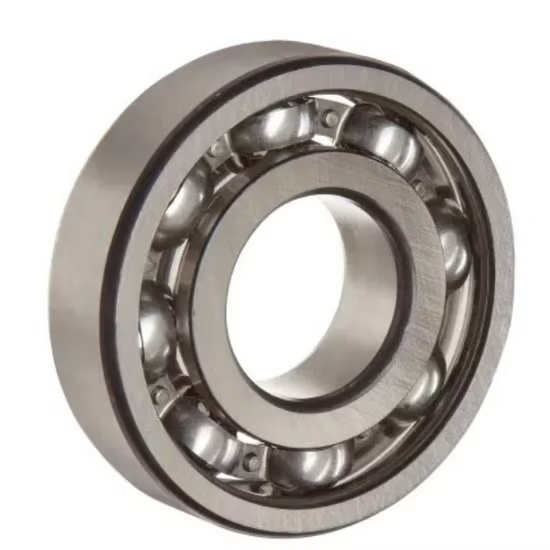
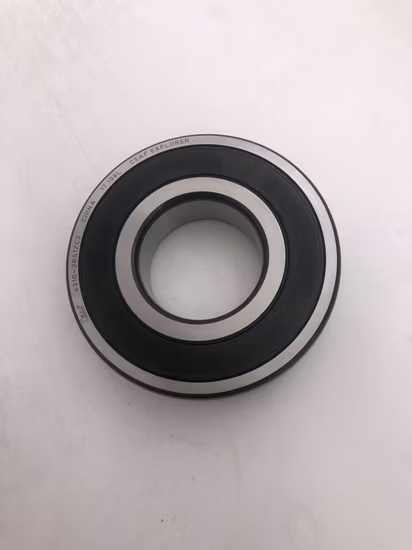
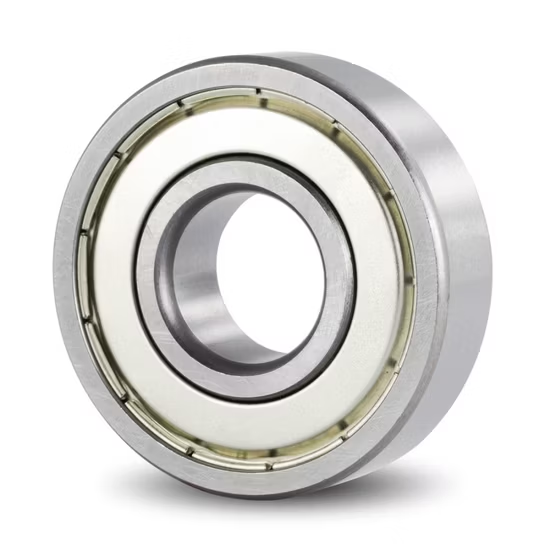

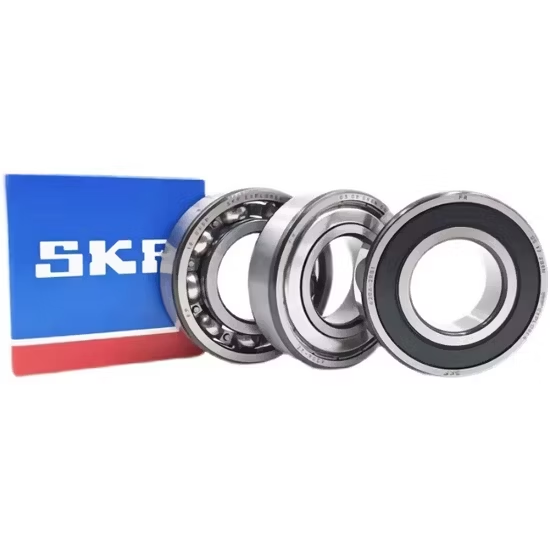

6006 Deep Groove Ball Bearing
Multi-brand authorized coverage — A single procurement order handles mixed OEM requirements across global manufacturers without juggling multiple supply chains.
| Parameter | Value |
|---|---|
| Designation | 6006 |
| Bearing Type | Deep Groove Ball Bearing |
| Seal or Shield Type | Open, Rubber Seals, Iron Seals |
| Noise and Vibration Level | Z1V1, Z2V2, Z3V3, Z4V4 |
| Origin | Germany, Japan, Sweden, Malaysia, China |
| Industry | Typical Applications |
|---|---|
| Electric Motors | Rotor shaft support in continuous duty induction motors |
| Industrial Gearboxes | High-speed input shaft positioning and radial load management |
| Material Handling | Conveyor drive pulley bearings and idler roller assemblies |
Matching the base designation is only the first step in preventing premature thermal binding.
Procurement teams often source a 6006 deep groove ball bearing based solely on the four-digit code, overlooking internal design variations. In high-speed motor environments, installing a standard cage where a high-speed variant was required leads to catastrophic cage failure. We have seen batches fail within weeks because the internal clearance and cage material were not verified against the original equipment specifications .
Selecting the correct configuration requires looking beyond the basic identifier. When sourcing a 6006 deep groove ball bearing, engineers must evaluate the specific contamination risks and acoustic requirements of the machinery. Our technical review process ensures the selected sealing arrangement and vibration grading align perfectly with the operational demands of electric motors and gearboxes, preventing early degradation.
Continuous rotary equipment subjects components to sustained radial loads and elevated thermal cycles. In electric motors, inadequate noise and vibration grading translates directly into unacceptable acoustic emissions and accelerated fatigue. For conveyors and gearboxes, the choice between rubber seals and iron shields dictates the balance between friction heat generation and particulate ingress . Lubrication retention is equally critical, as open configurations require precise external relubrication schedules to survive harsh material handling environments.
The available sealing options fundamentally alter the operational envelope. Rubber seals provide superior exclusion of fine dust and moisture but introduce higher friction limits, whereas iron shields offer non-contact protection suitable for higher rotational speeds with minimal torque penalty. The Z1V1 through Z4V4 noise and vibration classifications dictate the internal geometric precision and surface finish of the raceways. Specifying a Z4V4 grade ensures the ultra-quiet operation mandatory for household appliances and precision motor spindles, while Z1V1 remains adequate for heavy-duty industrial gearboxes where acoustic output is secondary to load capacity.
Overlooking the distinction between open, rubber-sealed, and iron-shielded variants results in rapid lubricant starvation or excessive thermal buildup. A mismatch in vibration grading causes resonance issues in high-speed rotors, leading to unplanned downtime and catastrophic damage to adjacent motor windings. According to failure analysis frameworks, a significant share of premature failures stems directly from applying standard components in environments demanding specialized internal geometries or specific seal types .
Our authorization across major international brands allows us to fulfill mixed-brand requirements in a single shipment, eliminating supply chain fragmentation. We strictly verify cross-reference alignments to ensure the replacement matches the original equipment's internal clearance and cage design, not just the base number. Every batch is subjected to rigorous authenticity checks to eliminate counterfeits with soft inner rings. Furthermore, our application-based selection review covers load, speed, and temperature parameters to guarantee the chosen configuration survives the specific operational environment.
To ensure precise alignment with your machinery requirements, provide the exact radial and axial loads, operational speeds, and ambient temperature ranges. Supplying the original equipment manufacturer part numbers allows our engineering team to conduct a comprehensive cross-reference verification. This technical review guarantees the selected sealing and acoustic grading perfectly matches your specific application parameters.
Q: What is the difference between rubber seals and iron shields for the 6006 bearing?
A: Rubber seals provide contact sealing that effectively blocks fine dust and moisture, making them ideal for contaminated environments, though they generate slightly more friction. Iron shields offer non-contact protection, which minimizes friction and heat generation, making them the preferred choice for high-speed electric motor applications where particulate ingress is strictly controlled.
Q: How do Z1V1 to Z4V4 noise and vibration levels impact electric motor applications?
A: These classifications define the internal geometric precision and surface finish of the raceways. Higher grades like Z3V3 and Z4V4 ensure ultra-quiet, smooth rotation essential for precision spindles and household appliances. Lower grades such as Z1V1 are typically sufficient for heavy-duty industrial gearboxes where acoustic output is less critical than basic load capacity.
Q: Why must internal clearance be specified alongside the base 6006 number?
A: The base number only defines the physical dimensions. Internal clearance dictates how the bearing handles thermal expansion and mounting interference. Installing a standard clearance variant in an application requiring extra clearance for high-speed thermal growth will cause the rolling elements to bind, leading to rapid overheating and catastrophic cage failure.
Q: How to verify the authenticity and batch traceability of multi-brand 6006 bearings?
A: Authenticity is confirmed by scanning the manufacturer's QR code using the official brand application, which links directly to the production batch. Additionally, requesting the Certificate of Conformity and original lot traceability documents ensures the components are genuine and not counterfeits with substandard metallurgy or cloned packaging.
Q: What are the cross-reference pitfalls when replacing an OEM 6006 bearing?
A: The most common pitfall is matching only the base designation while ignoring the suffix codes that define the cage material, seal type, and internal clearance. A replacement might physically fit the housing but fail prematurely if its internal design cannot withstand the specific speed, temperature, or contamination profile of the original equipment application.
Our 5-step process ensures every order is engineered, validated, and supported for optimal performance.
Technical needs assessment
Custom specifications
Free samples for $50k+
Pre-shipment inspection
On-site & predictive
Our certified engineers respond within 24 hours with detailed technical specifications, pricing, and lead time information.