01
Consultation
Technical needs assessment


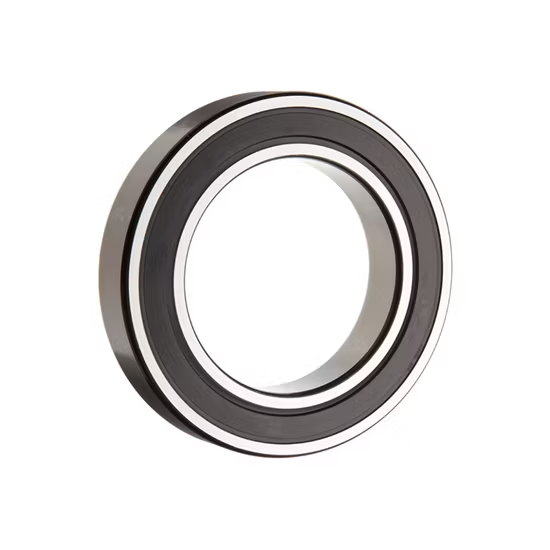


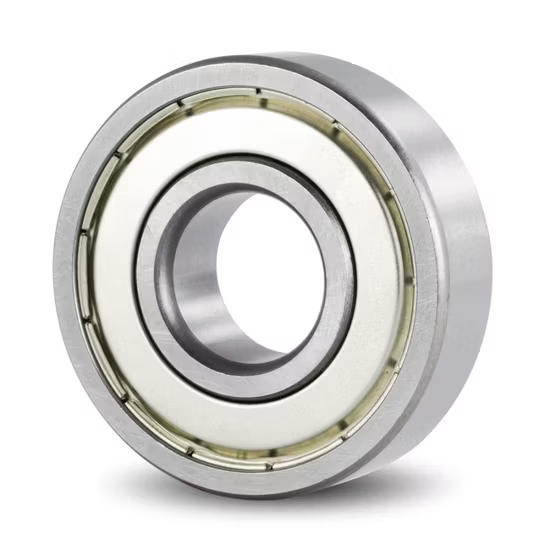
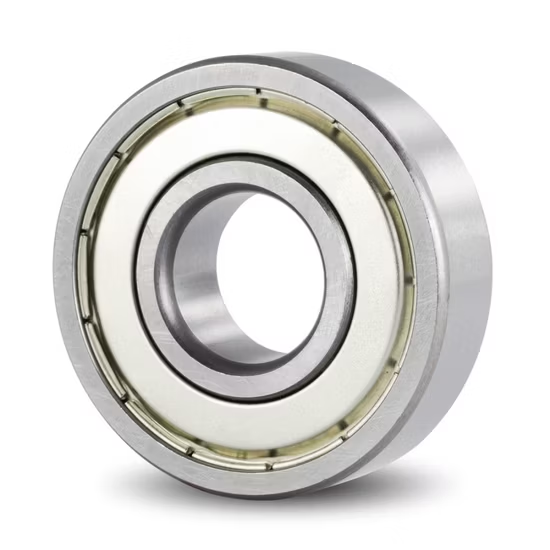
696 697 698 699 Zz 2RS Deep Groove Ball Bearing — available in P5 and P6 precision with Zz steel shields for dust protection at medium speeds or 2RS rubber contact seals for maintenance-free contamination defense in enclosed motor and automotive assemblies.
Precision suffix alignment — Cross-referencing these micro bearings ensures clearance, cage material, and P5/P6 tolerances match your exact motor specs rather than just the base number.
| Parameter | Value |
|---|---|
| Designation | 696 697 698 699 Zz 2RS |
| Bearing Type | Deep Groove Ball Bearing |
| Bore Diameter (d) | 6 mm (696), 7 mm (697), 8 mm (698), 9 mm (699) |
| Seal or Shield Type | Open, Zz (Double steel shields), 2RS (Double rubber contact seals) |
| Precision Class | P5, P6 |
| Vibration and Noise Level | Z1V1, Z2V2, Z3V3, Z4V4 |
| Origin | Germany, Japan, Sweden, Malaysia, China |
| Industry | Typical Applications |
|---|---|
| Electric Motors | High-speed rotor shafts, cooling fan assemblies |
| Automotive Parts | Alternator pulleys, throttle position sensors |
| Precision Instruments | Optical encoders, gimbal stabilization joints |
| Household Appliances | High-speed blender motors, vacuum cleaner impellers |
Matching the bore size is only the first step; ignoring internal clearance and cage design guarantees premature failure in high-speed applications.
I have seen countless 698 2RS units disintegrate inside high-speed motors within minutes because the cage material was downgraded to cut costs. When procurement teams focus solely on the outer dimensions, they overlook how thermal expansion at elevated RPM demands specific internal clearances. A base number match means nothing if the precision suffixes contradict the operational reality of the equipment .
Sourcing the correct 696 697 698 699 Zz 2RS deep groove ball bearing requires looking past the catalog title. We review your specific load profiles and rotational speeds to ensure the selected sealing configuration and precision grade align with the motor's thermal output. This application-based selection prevents the all-too-common scenario where a standard component is forced into a demanding environment.
Compact motor shafts generate intense localized heat, which rapidly degrades standard lubricants and compromises seal integrity. At high rotational speeds, rubber contact seals can generate excessive friction, while iron shields might allow fine metallic dust to infiltrate the raceway. Managing these thermal and contamination variables is critical, as even minor deviations in running accuracy will amplify vibration and destroy the bearing .
The distinction between P5 and P6 precision classes dictates the dimensional and running accuracy of the bearing, directly influencing the acoustic performance of precision instruments. Selecting between Zz iron shields and 2RS rubber seals involves balancing friction against contamination resistance; shields offer lower friction for high RPM, while rubber seals provide superior exclusion of moisture and particulates. Furthermore, the Z1V1 through Z4V4 quality levels define the strict vibration and noise thresholds required for quiet operation in household appliances and optical encoders.
Installing a component with incorrect internal clearance or substandard cage metallurgy leads directly to unplanned downtime and catastrophic rotor damage. According to ISO 281 frameworks, operating a bearing outside its verified kinematic limits drastically reduces its calculated fatigue life. These specification errors void equipment warranties and force maintenance teams into constant, expensive replacement cycles .
We source exclusively through authorized channels, ensuring every batch is fully traceable to the manufacturer's production facilities. Our cross-reference process verifies that clearance, cage material, and precision suffixes match your exact requirements, eliminating the risk of receiving visually identical but internally flawed components. We also provide application-based selection reviews to catch mismatches before the quotation stage, backed by official app QR verification for absolute authenticity.
Share your exact radial and axial loads, operating temperatures, and target RPM so our engineering team can verify the L10 life and recommend the optimal clearance class. Providing the OEM equipment number allows us to perform a comprehensive cross-reference check, ensuring the selected configuration perfectly mirrors the original design intent.
Q: Why is cross-referencing more than just the base designation necessary?
A: Matching the base number ignores critical internal variables. A 698 bearing might physically fit, but if the application requires C3 clearance for thermal expansion and you receive CN, the bearing will thermally bind and fail. We verify clearance, cage material, and precision suffixes to ensure total compatibility.
Q: How do I choose between Zz iron shields and 2RS rubber seals?
A: Zz shields provide non-contact protection ideal for high-speed, low-torque applications where minimizing friction is paramount. 2RS rubber seals offer superior exclusion of dust and moisture but generate slightly more friction. The choice depends on your specific contamination risk and maximum RPM requirements.
Q: What is the practical difference between P5 and P6 precision classes?
A: P5 offers tighter dimensional and running accuracy compared to P6. This tighter tolerance is essential for high-speed electric motors and precision instruments where minimal vibration and strict acoustic limits are required. P6 is generally sufficient for standard automotive and general machinery applications.
Q: How do the Z and V quality levels affect equipment performance?
A: These codes denote vibration and noise limits. Z4V4 represents the strictest control over surface waviness and rolling element roundness, ensuring ultra-quiet operation. This is critical for household appliances and optical instruments where acoustic emissions directly impact the perceived quality of the final product.
Q: How can I verify the authenticity of the supplied bearings?
A: Every shipment includes batch traceability documentation and a QR code. You can scan this code using the manufacturer's official mobile application to instantly verify the origin, production date, and authenticity of the bearings, completely eliminating the risk of counterfeit products.
Our 5-step process ensures every order is engineered, validated, and supported for optimal performance.
Technical needs assessment
Custom specifications
Free samples for $50k+
Pre-shipment inspection
On-site & predictive
Our certified engineers respond within 24 hours with detailed technical specifications, pricing, and lead time information.