01
Consultation
Technical needs assessment

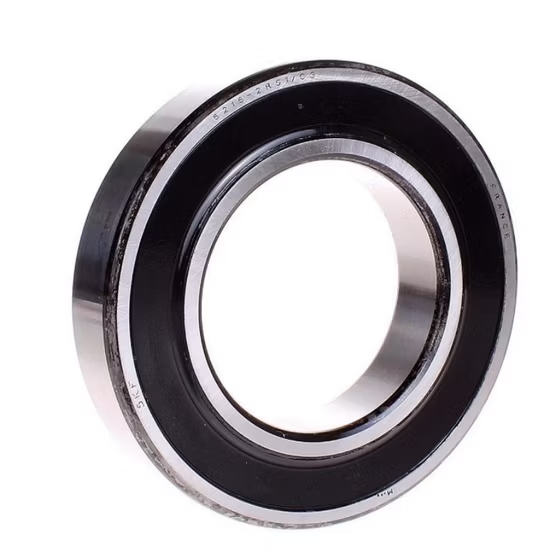


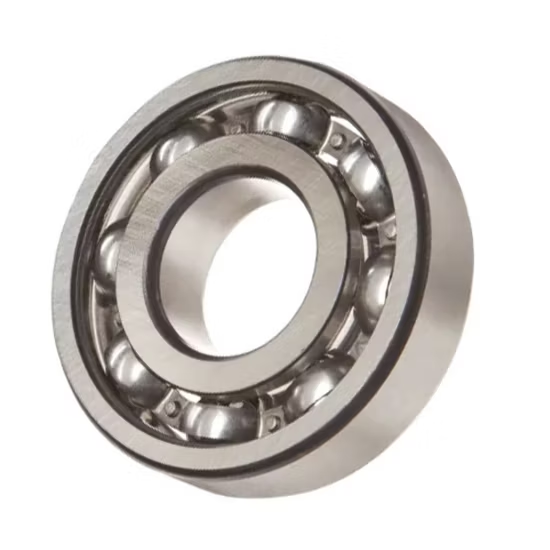
6306 Deep Groove Ball Bearing — chrome steel construction available in open, ZZ, or 2RS configurations. ZZ steel shields deliver medium-speed dust protection, while 2RS rubber seals ensure maintenance-free contamination prevention. P4 precision suits machine tool spindles, whereas P5 and P6 serve medium-precision motors and gearboxes.
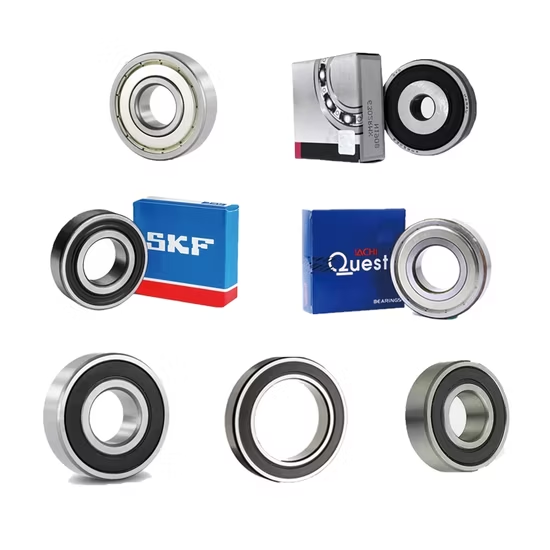
Multi-brand authorized coverage — Source your 6306 deep groove ball bearing alongside mixed SKF, FAG, and NSK requirements in a single consolidated shipment without juggling multiple vendors.
| Parameter | Value |
|---|---|
| Designation | 6306 |
| Bearing Type | Deep Groove Ball Bearing |
| Material | Chrome Steel |
| Seal or Shield Type | Open, ZZ (Double steel shields), 2RS (Double contact rubber seals) |
| Precision Class | P4, P5, P6 (per ISO 492) |
| Noise and Vibration Level | Z1V1, Z2V2, Z3V3, Z4V4 |
| Origin | Germany, Japan, Sweden, Malaysia, China |
| Industry | Typical Applications |
|---|---|
| Electric Motors | Rotor shaft support in high-speed induction motors |
| Industrial Gearboxes | High-speed input shaft positioning and support |
| Automotive Parts | Alternator and water pump rotating assemblies |
| Pumps and Conveyors | Impeller shaft and idler roller bearing seats |
Thermal binding from incorrect clearance or seal friction often seizes the shaft long before the raceways fatigue.
I have seen entire production lines halt because a standard clearance was forced into a high-temperature motor application, causing the inner ring to expand and lock against the rolling elements. Procurement teams often focus solely on the base number, overlooking how a mismatched seal type or precision grade alters the internal thermal dynamics. When the equipment demands specific thermal expansion allowances, ignoring these suffixes leads to catastrophic downtime .
Choosing the right 6306 deep groove ball bearing means matching the sealing arrangement to the contamination level and speed requirements. Open variants suit clean, oil-lubricated gearboxes, while ZZ shields offer low-friction protection for high-speed electric motors where dust is the primary concern. For water pumps or agricultural conveyors exposed to moisture and heavy particulates, 2RS rubber seals provide the necessary contact barrier to prevent lubricant washout and premature raceway scoring.
Electric motors and automotive alternators subject components to rapid temperature fluctuations and continuous rotational stress. At elevated speeds, contact seals like the 2RS variant generate internal friction heat, which can degrade the grease if the thermal limits are exceeded. Conversely, non-contact ZZ shields minimize friction but require a relatively clean environment to prevent abrasive particles from migrating past the gap. Selecting the appropriate noise and vibration grade, such as Z3V3 or Z4V4, ensures smooth operation and reduces resonance in precision spindle applications .
The distinction between P6, P5, and P4 precision classes dictates the running accuracy and dimensional tolerances of the assembly. While P6 is generally sufficient for standard industrial gearboxes, high-speed electric motors demand P5 or P4 to minimize radial runout and maintain tight air gaps. Furthermore, specifying a Z3V3 or Z4V4 vibration level guarantees that the internal geometry and surface finish are optimized to suppress acoustic noise, which is critical for automotive components and household appliance motors where operational quietness is a strict requirement.
Substituting a standard precision part into a high-speed application often results in uneven load distribution across the rolling elements. This localized stress accelerates surface fatigue and leads to unplanned downtime, far exceeding the initial savings of purchasing a lower-grade component. According to ISO 281 standards, even minor deviations in raceway roundness can drastically reduce the calculated fatigue life. Ultimately, ignoring the exact precision and vibration suffixes invites catastrophic damage to the surrounding housing and shaft .
We enforce strict cross-reference alignment, ensuring that when you order a P4 precision variant, the clearance and cage specifications perfectly match your OEM drawings rather than just the base number. Our inventory provides full batch traceability, allowing you to verify the origin of every unit through the manufacturer's official applications. By stocking authentic variants across multiple global brands, we eliminate the risk of receiving counterfeit parts with soft inner rings that fail under load. We also supply comprehensive dimensional and running accuracy inspection reports, giving your maintenance team absolute confidence before installation.
Share your specific radial and axial loads, operating speeds, and thermal conditions so our technical team can validate the L10 life and recommend the optimal clearance class. If you are replacing an existing component, provide the OEM equipment number or the exact suffix string from the old nameplate for a precise cross-reference review. This ensures the replacement matches the original equipment's internal geometry and sealing requirements perfectly.
Q: What is the difference between ZZ shields and 2RS seals for this designation?
A: ZZ steel shields provide non-contact protection against large dust particles with minimal friction, making them ideal for high-speed electric motors. 2RS rubber seals offer contact sealing that provides superior protection against moisture and fine contaminants, though they generate slightly more friction and are better suited for moderate-speed applications like water pumps.
Q: How do I choose between P4, P5, and P6 precision classes?
A: P6 is standard for general industrial gearboxes and conveyors. P5 is typically required for high-speed electric motors to reduce vibration, while P4 is reserved for precision machine tool spindles and critical automotive components where tight dimensional tolerances and minimal radial runout are absolutely essential for operational stability.
Q: Which parameters must be checked during cross-reference replacement?
A: Beyond the base number, you must verify the internal clearance class, the specific seal or shield type, and the cage material. Installing a standard clearance part in a high-temperature motor application, or mismatching the seal type, will alter the internal thermal dynamics and lead to rapid premature failure.
Q: How do Z3V3 or Z4V4 noise levels benefit electric motor applications?
A: These designations indicate strictly controlled geometric tolerances and surface finishes that minimize acoustic emissions and vibration during rotation. This is critical for high-speed motors and automotive alternators, as it reduces resonance, prevents structural fatigue in the housing, and ensures smooth, quiet operation.
Q: How can I verify the authenticity of the delivered parts?
A: Every batch includes traceability documentation and a unique identification code. You can scan the QR code on the packaging using the official mobile application of the respective brand to instantly verify the manufacturing origin, production date, and authenticity, effectively ruling out counterfeit products.
Our 5-step process ensures every order is engineered, validated, and supported for optimal performance.
Technical needs assessment
Custom specifications
Free samples for $50k+
Pre-shipment inspection
On-site & predictive
Our certified engineers respond within 24 hours with detailed technical specifications, pricing, and lead time information.