01
Consultation
Technical needs assessment


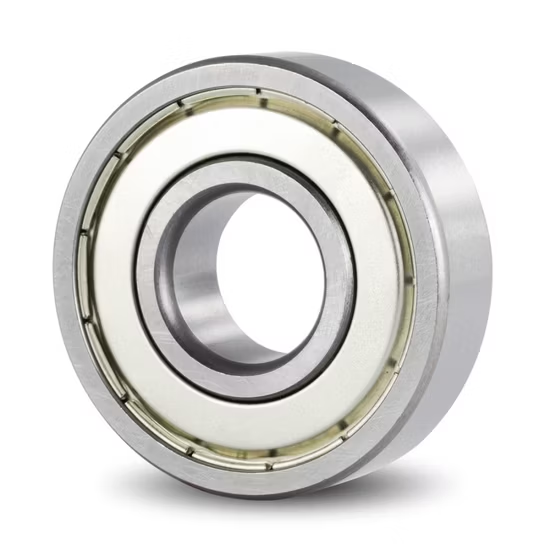


6040 Zz Deep Groove Ball Bearing — engineered for electric motors, pumps, and industrial gearboxes requiring reliable radial load capacity. Available in open, rubber, and iron shield configurations with Z1V1 to Z4V4 noise and vibration grades to match specific acoustic environments. Every shipment includes a complete documentation package with material test reports and dimensional inspection records for full traceability.
Cross-reference alignment verified — We match the base designation, seal configuration, and noise grade to prevent field binding.
| Parameter | Value |
|---|---|
| Designation | 6040 Zz |
| Bearing Type | Deep Groove Ball Bearing |
| Seal or Shield Type | Open, Rubber Seals, Iron Seals |
| Noise and Vibration Level | Z1V1, Z2V2, Z3V3, Z4V4 |
| Origin | Germany, Japan, Sweden, Malaysia, China |
Note: The Zz suffix is an unverified suffix — requires manufacturer catalog confirmation before finalizing the order.
| Industry | Typical Applications |
|---|---|
| Electric Motors | Large industrial motor shaft support, cooling fan drive assemblies |
| Material Handling | Conveyor drive pulley shafts, bulk material transfer rollers |
| Industrial Gearboxes | High-speed input shafts, intermediate reduction gear supports |
| Pumps | Centrifugal pump impeller shafts, circulation pump drive ends |
Matching the base number is never enough if the internal clearance and seal friction are ignored.
Procurement teams often source replacements based solely on the primary numeric designation, overlooking critical suffix variations. When a standard clearance unit is installed in a high-temperature motor environment, thermal expansion eliminates the internal gap, leading to rapid cage failure and unplanned downtime. We frequently see field returns where the physical dimensions were correct, but the seal type generated excessive friction heat . Ensuring the 6040 Zz deep groove ball bearing aligns with the exact operational thermal profile prevents these catastrophic seizures.
Selecting the correct shield or seal variant dictates the service life of the 6040 Zz deep groove ball bearing in contaminated or high-speed environments. Iron shields provide low-friction protection suitable for high-RPM electric motors, while rubber seals offer superior exclusion of moisture and fine particulates for outdoor conveyors. We review your specific contamination exposure to recommend the optimal configuration, ensuring the chosen seal type does not introduce parasitic drag that elevates operating temperatures beyond safe limits.
Deep groove ball bearings in large industrial gearboxes and pumps must accommodate significant thermal gradients during continuous operation. If the internal clearance is not specified to handle the heat generated by the process fluid or adjacent gears, the rolling elements will skid and degrade the raceways. Proper lubrication selection, combined with the correct noise and vibration grade, ensures the grease film remains stable. We evaluate the thermal expansion characteristics of your housing to verify that the selected clearance class prevents internal preload buildup .
The Z1V1 through Z4V4 classifications define the acoustic and dynamic smoothness of the bearing during rotation. Standard Z1V1 units are adequate for general material handling conveyors where ambient noise masks operational sound. However, precision electric motors and sensitive household appliance drives require Z3V3 or Z4V4 grades to eliminate high-frequency harmonic vibrations that degrade the driven equipment. Understanding these thresholds ensures you do not overpay for ultra-quiet bearings in rugged applications, nor install standard grades in precision spindles where vibration causes surface finish defects.
Ignoring suffix details during cross-referencing inevitably leads to premature failure and voided equipment warranties. A rubber-sealed bearing installed in a high-speed application will overheat due to lip friction, while an open bearing in a dusty pump house will suffer from abrasive wear. These misalignments trigger cascading damage to shafts and housings, transforming a simple component replacement into a major mechanical overhaul. Adhering to strict cross-reference protocols mitigates the risk of catastrophic damage and extends the mean time between failures .
Our authorization across all major international brands allows us to fulfill mixed-brand requirements for large motor overhaul projects in a single shipment. We do not just match the base number; we verify the seal friction, clearance class, and noise grade to ensure exact functional equivalence. Every batch includes full traceability to the manufacturer, eliminating the risk of counterfeit units with soft inner rings that plague the secondary market. Our technical team reviews your load and speed parameters to confirm the selected configuration will survive the specific thermal and mechanical stresses of your application.
Provide your radial and axial load calculations, operating RPM, and expected thermal gradients so we can validate the internal clearance and seal friction limits. Sharing the OEM equipment number allows our engineering team to perform a comprehensive cross-reference check against the original manufacturer specifications. This technical review ensures the supplied units meet the exact dynamic requirements of your machinery without guesswork.
Q: Why must cross-referencing include noise and vibration grades?
A: Matching only the base designation ignores the internal geometry and surface finish that dictate smooth operation. Installing a standard Z1V1 unit in a precision motor designed for Z4V4 will introduce unacceptable vibration levels, leading to premature wear of the motor windings and adjacent components. We align all suffixes to guarantee functional equivalence.
Q: How do I choose between Z1V1 and Z4V4 for my electric motors?
A: The selection depends on the motor's sensitivity to acoustic emissions and dynamic vibration. General-purpose industrial motors and heavy-duty conveyors typically perform well with Z1V1 or Z2V2 grades. High-efficiency precision motors, servo drives, and sensitive appliance applications require Z3V3 or Z4V4 to maintain smooth rotation and prevent harmonic resonance damage.
Q: What is the performance difference between rubber seals and iron shields?
A: Iron shields provide non-contact protection, offering minimal friction and allowing for higher limiting speeds, making them ideal for high-RPM motor shafts. Rubber seals create a physical contact barrier that excels at excluding fine dust and moisture but generates more friction heat. We evaluate your speed and contamination exposure to recommend the optimal seal type.
Q: How can I verify the authenticity and origin of the delivered bearings?
A: Every shipment includes batch traceability documentation and a Certificate of Conformity. You can scan the QR codes on the packaging using the respective brand's official mobile application to instantly verify the manufacturing origin and confirm the units are genuine, effectively eliminating the risk of counterfeit products with compromised metallurgy.
Q: How do we evaluate if the current seal and clearance configuration is suitable for high temperatures?
A: High ambient or operational heat causes the inner ring to expand more than the outer ring, reducing internal clearance. If the original specification used a standard clearance, thermal expansion might cause the bearing to seize. Share your exact operating temperature and housing material with us, and we will calculate the required clearance class to maintain a safe operational gap.
Our 5-step process ensures every order is engineered, validated, and supported for optimal performance.
Technical needs assessment
Custom specifications
Free samples for $50k+
Pre-shipment inspection
On-site & predictive
Our certified engineers respond within 24 hours with detailed technical specifications, pricing, and lead time information.