01
Consultation
Technical needs assessment


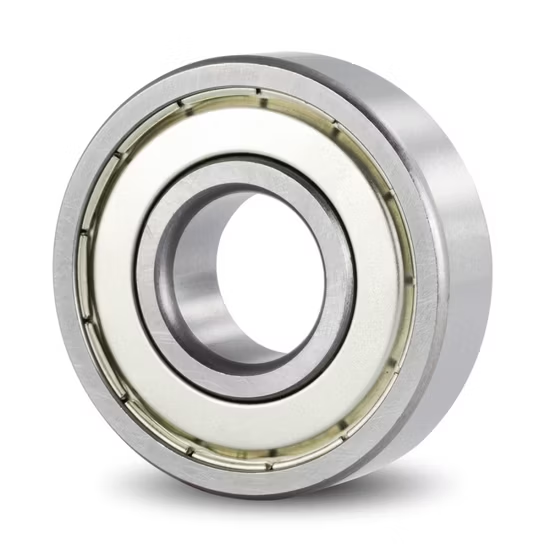


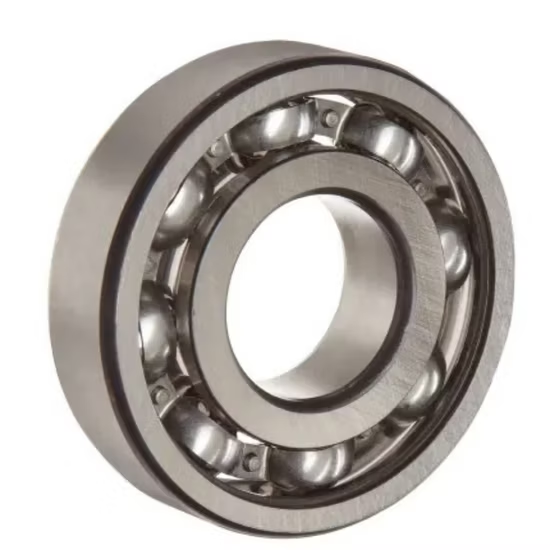
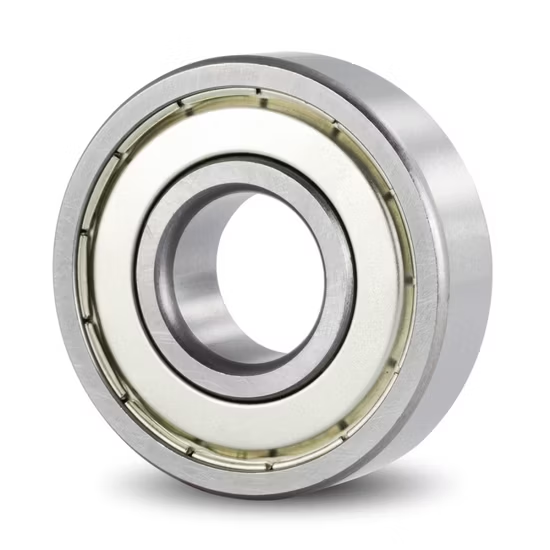
6214 Deep Groove Ball Bearing — Available in open, rubber-sealed, and iron-shielded configurations with noise grades from Z1V1 to Z4V4 to suit electric motors and gearboxes.
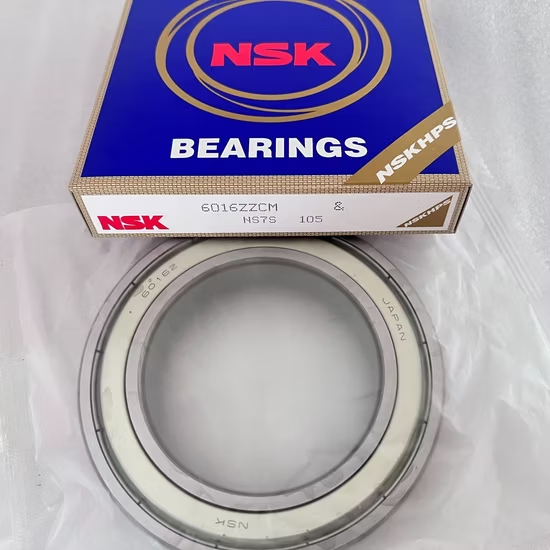
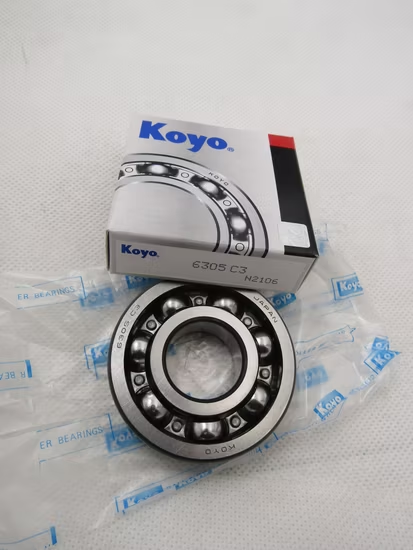
Multi-brand authorized coverage — Source SKF, FAG, NSK, NTN, and Timken equivalents for your 6214 requirements in a single consolidated shipment without juggling multiple vendors.
| Parameter | Value |
|---|---|
| Designation | 6214 |
| Product Type | Deep Groove Ball Bearing |
| Bore Diameter (d) | 70 mm |
| Outside Diameter (D) | 125 mm |
| Width (B) | 24 mm |
| Seal or Shield Type | Open, Rubber Seals, Iron Seals (available variants) |
| Noise and Vibration Level | Z1V1, Z2V2, Z3V3, Z4V4 |
| Origin | Germany, Japan, Sweden, Malaysia, China |
| Certification | ISO |
| Industry | Typical Applications |
|---|---|
| Electric Motors | Main drive shafts in industrial AC/DC motors and generator rotors |
| Industrial Gearboxes | High-speed input shafts and intermediate reduction stages |
| Pumps & Compressors | Impeller shaft supports and centrifugal pump drive ends |
| Conveyors | Head and tail pulley shaft bearings in bulk material handling |
| Household Appliances | High-speed spindle supports in commercial washing machines |
Matching the base number is only the first step; ignoring internal clearance and seal suffixes guarantees premature thermal failure.
In the trading hubs of the Pearl River Delta, I have seen countless 6214 deep groove ball bearing replacements fail within weeks because procurement teams focused solely on the base designation. When a standard clearance variant is pressed into a high-temperature motor application without accounting for thermal expansion, the internal gap vanishes. The rolling elements skid, the cage melts, and the shaft seizes . Cross-referencing requires strict alignment of every suffix, not just the primary digits.
Selecting the correct 6214 deep groove ball bearing requires looking past the catalog number to evaluate the actual operating environment. Our technical team reviews your specific radial loads, rotational speeds, and ambient temperatures to recommend the precise internal clearance and seal configuration. This application-based selection review ensures the bearing performs reliably whether it is running in a clean, climate-controlled motor assembly or a dusty conveyor drive.
Electric motors and industrial gearboxes subject bearings to continuous radial loads and high rotational speeds, generating significant internal heat. If the internal clearance is too tight, thermal expansion will eliminate the operational gap, leading to catastrophic binding. Conversely, environments with heavy airborne particulates demand effective sealing; however, contact seals introduce friction that limits maximum speed . Balancing these thermal, mechanical, and contamination variables is critical for achieving the expected L10 fatigue life.
The base designation represents the fundamental 70x125x24 mm geometry, but the suffixes dictate real-world survival. An open type without shields is ideal for applications where external lubrication and cooling are managed by the housing. When contamination is a factor, rubber seals provide excellent dust exclusion but generate friction heat, whereas iron shields offer a non-contact compromise for higher-speed gearboxes. Furthermore, selecting the appropriate noise and vibration grade—from standard Z1V1 up to the ultra-quiet Z4V4—is mandatory for precision electric motors to prevent resonant frequency issues and ensure smooth acoustic performance.
Installing a bearing that matches the base dimensions but lacks the correct internal design or clearance class leads to unplanned downtime and severe secondary damage. When a standard variant replaces a high-clearance requirement, the resulting thermal binding can destroy the motor shaft and housing, voiding equipment warranties. According to ISO 281 life calculation principles, operating outside the designated clearance and lubrication parameters drastically reduces the dynamic load rating and accelerates subsurface fatigue .
We maintain authorized distribution channels across all major international brands, allowing you to consolidate mixed-brand requirements into one traceable order. Counterfeiters frequently clone QR codes and use soft inner rings that pass casual visual checks but fail under load; our strict batch traceability and official app verification eliminate this risk. We perform rigorous cross-reference checks to ensure the clearance, cage material, and precision suffixes perfectly match your OEM specifications, preventing the field failures caused by superficial part number matching.
To ensure the selected variant perfectly matches your machinery, please provide the specific radial and axial loads, operating speeds, and thermal conditions of your application. Sharing the original OEM equipment number allows our engineering team to perform a precise cross-reference check, verifying that the internal clearance and seal configuration align with the factory design. This technical复核 guarantees you receive a component engineered for your exact operational parameters, eliminating guesswork and preventing premature failures.
Q: Why does a basic part number match still result in rapid motor failure?
A: Matching the base number ignores critical internal parameters. If your equipment requires a high-clearance variant for thermal expansion but receives a standard clearance part, the internal gap vanishes as the motor heats up. This causes the rolling elements to skid, generating massive friction and leading to rapid thermal seizure and cage destruction.
Q: How do I choose between rubber seals and iron shields for my gearbox?
A: Rubber seals provide excellent protection against dust and moisture but create contact friction that limits maximum rotational speed. Iron shields offer a non-contact gap that supports higher speeds and reduces heat generation, though they provide less protection against fine particulate ingress. The choice depends on your specific speed and contamination thresholds.
Q: What do the Z1V1 to Z4V4 noise and vibration grades actually mean?
A: These grades classify the acoustic and vibration output of the bearing. Z1V1 is standard for general industrial machinery, while Z4V4 represents ultra-precision balancing and finishing, strictly required for high-end electric motors and sensitive household appliances where operational silence and minimal vibration are critical design parameters.
Q: How can I verify the authenticity of the bearings I receive?
A: Every shipment includes batch traceability documentation and a Certificate of Conformity. You can scan the packaging QR code using the manufacturer's official mobile application to verify the production lot and origin. This digital check instantly identifies cloned codes commonly used on counterfeit products with substandard metallurgy.
Q: What installation precautions are necessary for the low-noise Z4V4 variants?
A: Ultra-quiet bearings are highly sensitive to raceway contamination and physical shock. Always handle them with clean, lint-free gloves and ensure the mounting environment is free of airborne dust. Use controlled induction heating for the inner ring and avoid applying mounting forces through the rolling elements to preserve the precision surface finish.
Our 5-step process ensures every order is engineered, validated, and supported for optimal performance.
Technical needs assessment
Custom specifications
Free samples for $50k+
Pre-shipment inspection
On-site & predictive
Our certified engineers respond within 24 hours with detailed technical specifications, pricing, and lead time information.