01
Consultation
Technical needs assessment

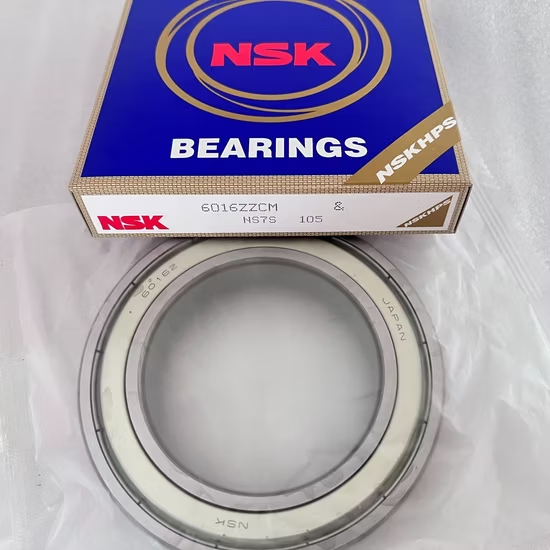

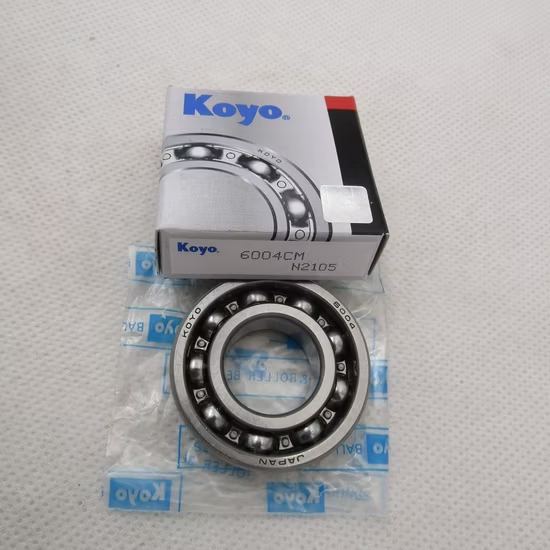
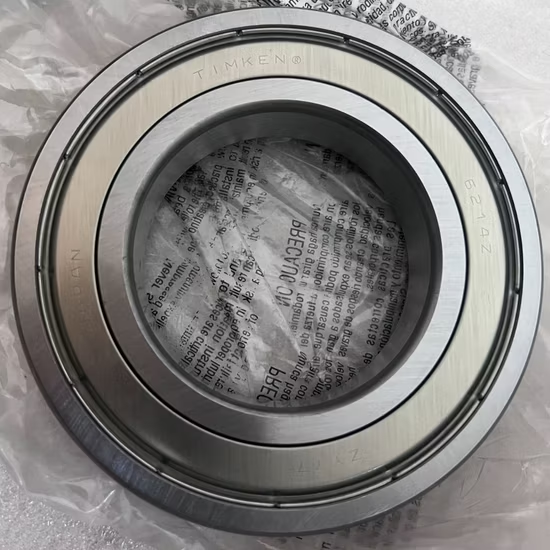

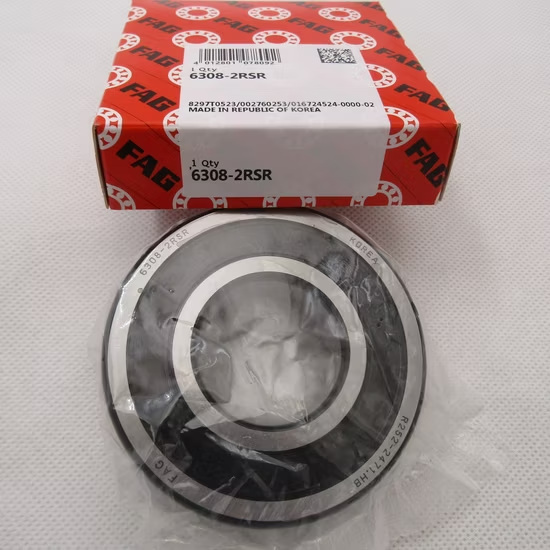
Mf52zz-Mf148zz Flanged Deep Groove Ball Bearings — equipped with double iron shields for reliable dust protection at moderate rotational speeds. The integrated flange profile simplifies axial positioning inside compact housings, while ZZ steel covers retain factory lubrication without adding excess friction torque.
Scan To Verify Authenticity — Every Mf52zz-Mf148zz flanged deep groove ball bearing batch includes a traceable QR code readable via the manufacturer's official app to confirm genuine origin and production lot.
| Parameter | Value |
|---|---|
| Designation | Mf52zz-Mf148zz |
| Bearing Type | Deep Groove Ball Bearing |
| Flange Type | Flanged |
| Seal or Shield Type | Open, Rubber Seals, Iron Shields (ZZ) |
| Vibration and Noise Level | Z1V1, Z2V2, Z3V3, Z4V4 |
| Origin | Germany, Japan, Sweden, Malaysia, China |
| Industry | Typical Applications |
|---|---|
| Electric Motors | Miniature motor rotors and cooling fan shaft assemblies |
| Precision Instruments | Optical device gimbals and laboratory measurement spindles |
| Household Appliances | High-speed blender shafts and quiet HVAC blower motors |
Matching the base designation without verifying the internal clearance and noise grade suffixes turns a precision assembly into a thermal failure point.
Many procurement engineers focus solely on the outer dimensions, ignoring that a standard CN clearance in a tightly fitted micro motor housing leads to thermal binding. I have seen countless miniature motors seize on the workshop floor because the installed Mf52zz-Mf148zz flanged deep groove ball bearing lacked the necessary C3 clearance for thermal expansion. Sourcing teams often approve batches based on the basic number, only to face high-frequency noise complaints or premature cage failures when the Z/V vibration grades do not align with the equipment's acoustic requirements.
Securing the correct Mf52zz-Mf148zz flanged deep groove ball bearing requires looking past the basic size to evaluate the exact operational environment. Our technical team reviews your specific load profiles and housing tolerances to ensure the selected clearance class and shield configuration prevent operational drag. We cross-reference the complete designation string, guaranteeing that the friction torque and dust protection levels match the delicate requirements of your miniature assemblies.
Miniature applications demand strict control over radial loads and rotational speeds, where even minor misalignments cause excessive heat. The flanged outer ring simplifies axial positioning in thin-walled housings, but the internal geometry must accommodate the thermal expansion generated at high RPMs. Selecting the appropriate seal type involves balancing contamination exclusion against friction heat; iron shields offer low-friction protection for clean environments, while rubber seals provide superior moisture resistance at the cost of higher torque. Proper pre-lubrication and precise mounting force application are critical to avoid brinelling the raceways during assembly.
The ZZ suffix indicates double iron shields, which provide excellent protection against large particulate contamination while maintaining the low friction torque essential for high-speed micro motors. Unlike rubber contact seals, these non-contact metal shields do not generate additional heat, making them ideal for continuous-duty appliance and instrument applications. Furthermore, the Z1V1 through Z4V4 noise and vibration classifications dictate the geometric accuracy and surface finish of the rolling elements. Specifying a Z3V3 or Z4V4 grade ensures the bearing operates quietly in noise-sensitive environments, eliminating the high-frequency whine that often plagues lower-grade alternatives in precision optical devices.
Substituting a standard clearance bearing into an interference-fit housing inevitably causes internal preload, leading to unplanned downtime and catastrophic motor seizure. When cross-referencing ignores the flange thickness or shield type, the resulting assembly suffers from premature failure due to improper axial location or lubricant starvation. According to ISO 15243 frameworks, these installation and selection errors manifest as smearing or cage fractures, completely voiding the equipment warranty. Relying on incomplete designation matching ultimately costs far more in field replacements than sourcing the exact specification initially.
We maintain authorized distribution channels across major global brands, allowing you to consolidate mixed-brand requirements for Mf52zz-Mf148zz flanged deep groove ball bearing orders into a single shipment. Our cross-reference protocol strictly aligns clearance, cage design, and precision suffixes, preventing the common trap of matching only the base number. Every batch is backed by manufacturer-level traceability, ensuring the QR codes on the packaging link directly to the original production data. We also provide application-based selection reviews to verify that your chosen vibration grade and seal type will survive the actual operating temperatures and speeds.
To ensure precise technical validation, please share your operational parameters including radial and axial loads, maximum RPM, and housing fit tolerances. Providing the original OEM equipment number allows our engineering team to perform a comprehensive cross-reference check, verifying that the flange dimensions and internal clearances perfectly match your design. This data enables us to recommend the optimal seal configuration and vibration grade for your specific application.
Q: Why does a matching base number still result in assembly failure?
A: Base numbers only define outer dimensions. Ignoring suffixes like the ZZ shield type or internal clearance leads to thermal binding in interference fits or inadequate dust protection. We verify the complete designation string to ensure the physical and operational characteristics match your housing and environmental requirements perfectly.
Q: How do Z1V1 to Z4V4 grades differ in micro motor applications?
A: These codes represent strict vibration and acoustic limits. Z1V1 is standard, while Z4V4 offers ultra-low noise achieved through superior raceway finishing and tighter rolling element tolerances. Selecting the correct grade prevents high-frequency whine in noise-sensitive precision instruments and household appliances.
Q: What is the boundary between rubber seals and ZZ iron shields?
A: ZZ iron shields provide non-contact protection against large dust particles with minimal friction torque, ideal for high-speed applications. Rubber seals offer superior exclusion of fine moisture and contaminants but introduce higher friction and heat. We help you balance contamination risk against torque limitations.
Q: How should the flanged outer ring be pressed into the housing?
A: Mounting force must be applied exclusively to the outer flanged ring. Pressing on the inner ring transfers the axial load directly through the miniature balls and raceways, causing permanent brinelling and immediate noise generation upon startup. Proper tooling is essential to protect the bearing geometry.
Our 5-step process ensures every order is engineered, validated, and supported for optimal performance.
Technical needs assessment
Custom specifications
Free samples for $50k+
Pre-shipment inspection
On-site & predictive
Our certified engineers respond within 24 hours with detailed technical specifications, pricing, and lead time information.