01
Consultation
Technical needs assessment



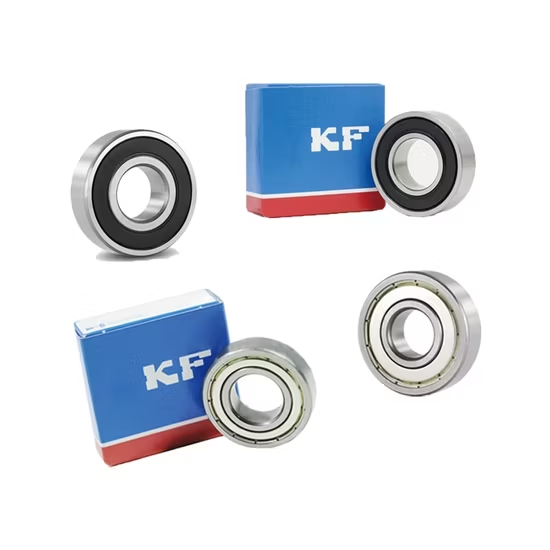


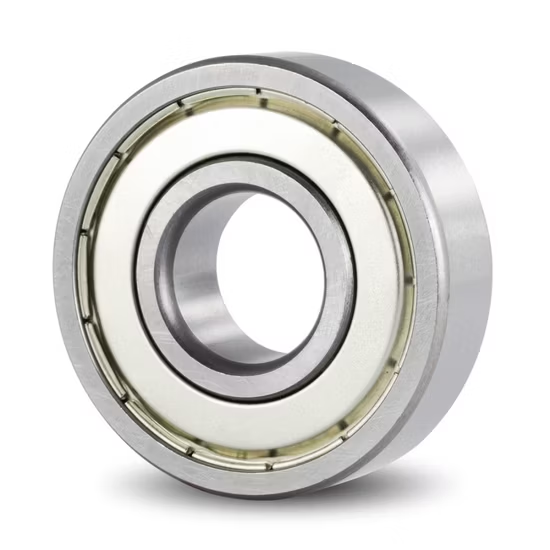
6001 Deep Groove Ball Bearing P4 P5 P6 — offered in open, iron shield, and 2RS double rubber seal options to effectively prevent contamination ingress. Select P4, P5, or P6 precision grades to match exact speed and tolerance requirements in electric motors and industrial gearboxes.
Multi-brand authorized sourcing — Procure genuine 6001 deep groove ball bearings from SKF, FAG, or NSK in a single consolidated shipment without juggling multiple vendors.
| Parameter | Value |
|---|---|
| Designation | 6001 |
| Bearing Type | Deep Groove Ball Bearing |
| Seal or Shield Type | Open, Rubber Seals (2RS), Iron Shields |
| Vibration and Noise Level | Z1V1, Z2V2, Z3V3, Z4V4 |
| Precision Class | P4, P5, P6 |
| Origin | Germany, Japan, Sweden, Malaysia, China |
| HS Code | 848210 |
Note: The ZZ shield designation is treated as an unverified suffix variant requiring manufacturer catalog confirmation prior to bulk ordering.
| Industry | Typical Applications |
|---|---|
| Electric Motors | Rotor shaft support in high-speed spindles and induction motors |
| Industrial Gearboxes | High-speed input shaft positioning and radial load support |
| Material Handling | Conveyor drive pulley shafts and idler roller bearings |
| Pumps and Compressors | Impeller shaft alignment and radial load management |
| Household Appliances | Washing machine drum support and HVAC blower motor shafts |
Matching the base designation without verifying the precision class and internal clearance guarantees premature thermal binding in high-speed applications.
I have seen procurement engineers source standard tolerance replacements for high-speed spindles, only to face catastrophic seizures within hours. When a standard precision component is forced into a high-RPM environment, the internal friction generates heat that standard clearances cannot accommodate. This cross-reference oversight leads to severe unplanned downtime and destroyed housings . Sourcing teams often focus purely on the base number, completely ignoring the critical suffixes that dictate thermal stability and acoustic performance.
Selecting the correct 6001 deep groove ball bearing requires aligning the precision class with the actual rotational speed and load profile of the equipment. We review your specific RPM and radial load parameters to ensure the chosen tolerance band prevents excessive runout. This application-based selection review guarantees that high-speed spindles receive the exact geometric accuracy required to maintain film thickness and prevent metal-to-metal contact.
High-speed motor shafts generate substantial heat, making the internal clearance selection critical for accommodating thermal expansion without inducing preload. Simultaneously, the choice between contact rubber seals and non-contact iron shields dictates the balance between moisture ingress protection and friction-induced temperature rise. Selecting the wrong seal type in a dusty environment rapidly degrades the lubricant, while overly restrictive seals in high-RPM setups cause immediate overheating .
The P4, P5, and P6 precision classes define the dimensional and running accuracy limits, directly impacting the vibration signature of precision spindles. For applications demanding ultra-smooth operation, specifying Z3V3 or Z4V4 noise grades ensures the internal geometry and surface finishes minimize acoustic emissions. The 2RS rubber seals provide robust contamination exclusion for washdown environments, whereas open variants allow for customized oil-air lubrication systems essential for extreme speed applications.
Installing a standard clearance component where an expanded clearance was specified for thermal growth inevitably leads to internal preload and rapid cage failure. According to ISO 281 fatigue life calculations, operating under unintended preload drastically reduces the calculated service life. This results in catastrophic damage to adjacent shafts and housings, voiding equipment warranties and forcing emergency maintenance interventions .
Our authorized distribution network covers all major international brands, allowing you to fulfill mixed-brand requirements in a single order. We match cross-references strictly on clearance, cage material, and precision suffixes, preventing the dangerous habit of swapping a high-precision unit for a standard commercial grade. Every batch is fully traceable to the manufacturer, and we provide rigorous application-based selection reviews to catch suffix discrepancies before the components reach your assembly floor.
Provide your exact radial and axial loads, operating temperatures, and target RPM so our engineering team can validate the L10 life and recommend the optimal clearance class. If you are replacing an existing unit, share the OEM equipment number or the full designation string from the nameplate for a precise cross-reference check. This technical alignment ensures the sealed or open configuration perfectly matches your maintenance intervals and environmental exposure.
Q: How do we ensure the clearance and precision suffixes match our OEM requirements during cross-referencing?
A: We never rely solely on the base number. Our technical team cross-references the OEM equipment number against manufacturer catalogs to verify the exact internal clearance and precision class. This prevents the common error of installing standard tolerance components in high-speed spindles, ensuring the replacement perfectly matches the original thermal and geometric design parameters.
Q: What is the selection boundary between 2RS rubber seals and iron shields for electric motor applications?
A: Iron shields offer low-friction protection suitable for high-RPM environments where heat generation must be minimized, but they cannot block liquid ingress. Rubber seals provide excellent protection against dust and moisture but introduce higher friction. We evaluate your motor's operating speed and environmental exposure to recommend the seal type that balances contamination exclusion with thermal stability.
Q: How do P4, P5, and P6 precision grades differ in their practical application for deep groove ball bearings?
A: These grades dictate the strictness of dimensional tolerances and running accuracy. P6 is suitable for general industrial gearboxes and standard motors. P5 is typically required for higher-speed applications demanding lower vibration. P4 is reserved for precision machine tool spindles and high-frequency motors where minimal runout and strict acoustic control are critical to preventing premature fatigue.
Q: How can we verify the authenticity of the received bearings using brand official apps?
A: Each authorized batch features unique traceability markings. By scanning the QR code or entering the batch number into the specific brand's official mobile application, you can instantly verify the manufacturing origin and authenticity. This step effectively eliminates the risk of installing counterfeit components with soft inner rings that pass casual visual inspections but fail under operational loads.
Q: What are the lubrication guidelines for Z3V3 and Z4V4 low-noise bearings in high-speed motor applications?
A: Bearings supplied with these low-noise grades are typically pre-lubricated with specialized low-torque greases designed for high-speed operation and acoustic performance. If they are sealed variants, they are generally maintenance-free and should not be relubricated. For open variants, you must strictly follow the manufacturer's oil-air or oil-mist lubrication schedules to maintain the low-vibration characteristics without inducing thermal drag.
Our 5-step process ensures every order is engineered, validated, and supported for optimal performance.
Technical needs assessment
Custom specifications
Free samples for $50k+
Pre-shipment inspection
On-site & predictive
Our certified engineers respond within 24 hours with detailed technical specifications, pricing, and lead time information.