01
Consultation
Technical needs assessment



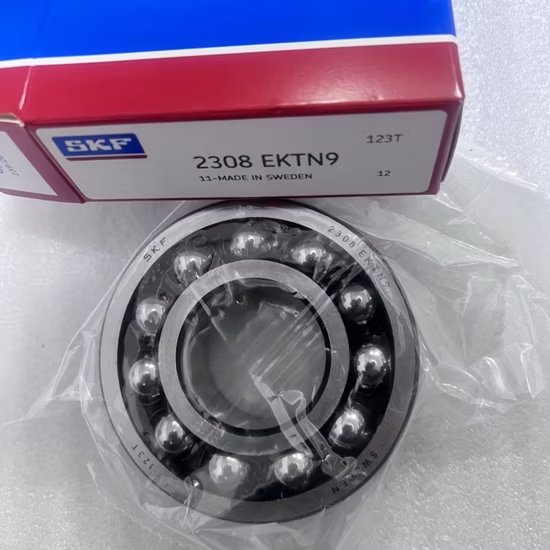


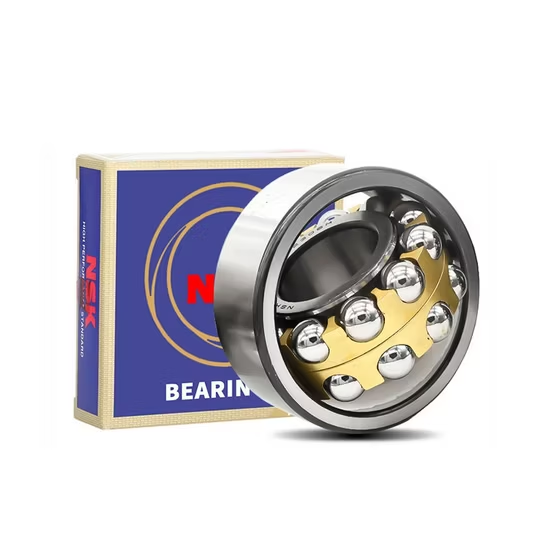
2311/C3 Self-Aligning Ball Bearing features C3 radial internal clearance, providing greater internal space than normal to accommodate thermal expansion during high-speed operations. This self-aligning design effectively compensates for shaft misalignment while preventing thermal binding.
Unified Multi-Brand Sourcing — Procure your 2311/C3 self-aligning ball bearing alongside mixed SKF, FAG, or NSK requirements in a single consolidated shipment without coordinating multiple vendors.
| Parameter | Value |
|---|---|
| Designation | 2311/C3 |
| Product Type | Self-Aligning Ball Bearing |
| Bearing Style | Open, Rubber Seals, Iron Seals (Available Options) |
| Clearance Class | C3 (Radial internal clearance greater than Normal) |
| Origin | Germany / Japan / Sweden / Malaysia / China |
| HS Code | 848210 |
| Industry | Typical Applications |
|---|---|
| High-Speed Manufacturing | Textile machinery rollers and high-speed operating spindles |
| Material Handling | Conveyor pulley shafts subject to structural deflection |
| Agricultural Machinery | Drive components and harvesting equipment gearboxes |
Standard clearance inevitably leads to thermal seizure under high-speed continuous operation.
During a high-speed fan project in Dubai, a standard CN clearance variant was mistakenly installed instead of the specified C3 version. As the rotor accelerated, friction heat caused the inner ring to expand, entirely eliminating the internal clearance and resulting in a catastrophic thermal seizure that halted production. This preventable failure highlights why verifying the exact suffix is critical when sourcing a 2311/C3 self-aligning ball bearing for thermally demanding environments .
High-speed shafts frequently experience minor deflections that rigid bearing types cannot tolerate. The spherical outer ring raceway of this 2311/C3 self-aligning ball bearing allows the inner ring to pivot slightly, accommodating installation misalignments without inducing destructive edge loading. We verify that the selected seal type and cage design align perfectly with your specific rotational speed and contamination exposure, ensuring the component performs reliably in its intended housing.
Continuous high-speed rotation generates substantial friction heat, which directly impacts lubricant viscosity and internal bearing geometry. If the radial clearance is too tight, thermal expansion will force the rolling elements against the raceways, causing a rapid temperature spike. Furthermore, shaft deflection under dynamic loads requires a bearing capable of self-alignment to prevent localized stress concentrations . Selecting the appropriate seal variant—whether open for external oil lubrication or sealed for maintenance-free grease retention—is equally vital to prevent particulate ingress in dusty agricultural or material handling environments.
The C3 designation indicates a radial internal clearance strictly greater than the standard CN class. This engineered extra space is non-negotiable for high-speed applications, as it provides the necessary thermal buffer for the inner ring to expand without preloading the balls. Beyond clearance, the available bearing styles dictate operational limits. Open variants require continuous external lubrication and clean environments, while rubber-sealed options protect against moisture and fine dust at the cost of slightly higher friction. Iron-sealed variants offer a compromise, shielding against larger debris while permitting higher rotational speeds than contact rubber seals.
Substituting a standard clearance bearing in a high-speed application rarely results in a gradual decline; it typically causes sudden, unplanned downtime. According to failure analysis frameworks, thermal seizure and subsequent cage destruction are common outcomes when internal clearances are exhausted by heat . This catastrophic damage often destroys the adjacent shaft and housing, voiding equipment warranties and forcing expensive secondary repairs far beyond the cost of the correctly specified component.
We maintain authorized distribution channels across all major international brands, allowing us to fulfill mixed-brand orders with complete batch traceability. Our cross-reference process goes far beyond matching the base number 2311; we rigorously verify the C3 clearance, seal type, and cage material to prevent the exact misapplication that caused the Dubai fan seizure. Every shipment includes official app QR verification and dimensional inspection reports, ensuring you receive genuine products with the precise internal geometry required for your high-speed equipment.
To ensure the selected variant matches your operational demands, please provide your radial and axial load profiles, continuous operating speeds, and expected thermal gradients. Sharing the exact OEM equipment designation allows our engineering team to perform a comprehensive cross-reference check, verifying that the C3 clearance and specific seal configuration perfectly align with your original design parameters.
Q: Why is matching the C3 suffix more critical than just ordering the base 2311 number?
A: The base number only defines the physical dimensions and self-aligning geometry. The C3 suffix specifies the internal thermal buffer. Installing a standard clearance bearing in a high-speed application will cause thermal expansion to eliminate the clearance, leading to rapid overheating and mechanical seizure.
Q: How do I choose between open, rubber-sealed, and iron-sealed styles for this application?
A: Open styles are best for high-speed setups with external oil circulation. Rubber seals provide maximum protection against fine dust and moisture but generate higher friction. Iron shields offer a middle ground, blocking larger particles while allowing higher rotational speeds than contact rubber seals.
Q: Can this self-aligning bearing compensate for severe shaft misalignment?
A: While the spherical outer raceway allows for angular misalignment between the inner and outer rings, it is designed to compensate for minor deflections and installation errors. Severe structural misalignment should be corrected mechanically, as excessive angles will still overload the rolling elements and reduce operational life.
Q: How do you verify the authenticity of the bearings before shipment?
A: Every unit is sourced through authorized channels and features original manufacturer batch traceability. We provide QR codes that can be scanned via the brand's official application to confirm authenticity, alongside dimensional inspection reports verifying the precise C3 internal clearance.
Our 5-step process ensures every order is engineered, validated, and supported for optimal performance.
Technical needs assessment
Custom specifications
Free samples for $50k+
Pre-shipment inspection
On-site & predictive
Our certified engineers respond within 24 hours with detailed technical specifications, pricing, and lead time information.