01
Consultation
Technical needs assessment



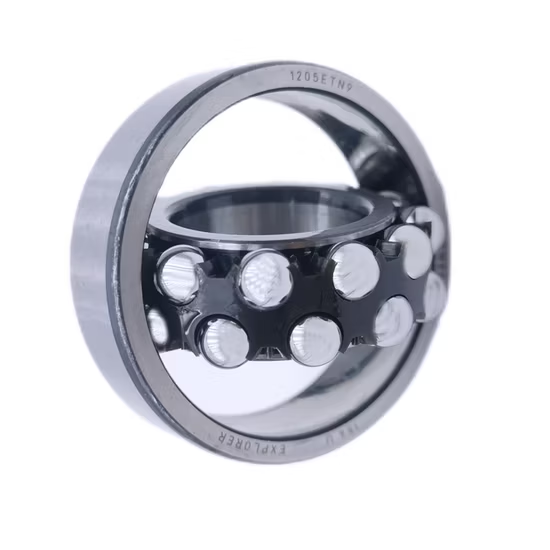
2310/K/C3 Double Row Self-Aligning Ball Bearing 50×110×40 mm C3 — The 1:12 tapered bore enables flexible axial positioning using adapter sleeves. C3 radial internal clearance effectively compensates for thermal expansion in conveyor systems, while the double row structure tolerates shaft misalignment.
Traceable Batch Origins — Every 2310/K/C3 unit ships with manufacturer lot documentation and official app QR verification to guarantee authentic material provenance.
| Parameter | Value |
|---|---|
| Designation | 2310/K/C3 |
| Bearing Type | Self-Aligning Ball Bearing |
| Bore Diameter (d) | 50 mm |
| Outside Diameter (D) | 110 mm |
| Width (B) | 40 mm |
| Bore Type | Tapered bore (1:12) |
| Clearance Class | C3 |
| Number of Rows | Double Row |
| Material Options | Available in stainless steel or standard bearing steel variants |
| Seal or Shield Options | Available in open, rubber-sealed, or iron-shielded configurations |
| Origin | Germany / Japan / Sweden / Malaysia / China |
| HS Code | 848210 |
Note: Specific material grades and seal configurations are subject to manufacturer availability and require verification during the inquiry stage.
| Industry | Typical Applications |
|---|---|
| Material Handling | Belt conveyor drive pulleys and tail roller shafts |
| Agriculture | Combine harvester rotor drives and auger supports |
| General Manufacturing | Industrial gearbox intermediate shafts and motor mounts |
A mismatched internal clearance is the silent killer of conveyor reliability. During a site intervention in Dubai, I investigated a series of seized drive pulleys where standard clearance bearings had been installed instead of the specified C3 variant. The resulting thermal expansion under continuous operation eliminated the internal operating clearance, leading to catastrophic cage failure and prolonged downtime . When sourcing a 2310/K/C3 self-aligning ball bearing, verifying the exact clearance suffix is not optional; it is the primary defense against heat-induced seizure in demanding material handling environments.
Conveyor systems operate under constant radial loads and inevitable shaft misalignments caused by structural deflection. The double-row self-aligning design inherently compensates for these angular errors, protecting the rolling elements from edge stress. By strictly matching the C3 clearance and tapered bore specifications, we ensure the bearing accommodates the thermal gradients typical in Middle Eastern and heavy-duty industrial climates, keeping your material handling lines running without interruption.
Belt conveyors subject drive shafts to steady radial loads combined with shock impacts during material loading. Elevated ambient temperatures and friction heat drastically reduce internal clearance, making the C3 designation critical for maintaining an adequate lubrication film thickness . Furthermore, the dusty environment of mining and aggregate handling demands careful consideration of sealing options, balancing the need for contamination exclusion against the friction heat generated by contact seals.
The "K" suffix denotes a 1:12 tapered bore, designed to be mounted on a adapter sleeve. This configuration allows for precise axial positioning and fine-tuning of the internal clearance during installation, which is highly advantageous for long conveyor shafts. The "C3" suffix indicates a radial internal clearance greater than normal. This extra clearance is engineered specifically to absorb the thermal expansion of the shaft and housing that occurs when the conveyor operates under heavy loads or in high-temperature environments, preventing the rolling elements from skidding.
Substituting a standard CN clearance bearing for a C3 variant in a high-temperature conveyor application inevitably leads to premature failure. As the shaft expands, the internal clearance vanishes, causing excessive friction, rapid temperature spikes, and eventual seizure of the inner ring to the shaft. According to failure mode classifications outlined in ISO 15243, this thermal binding often results in severe smearing and cage disintegration . The resulting unplanned downtime and collateral damage to the gearbox or motor far exceed the initial cost of procuring the correctly specified component.
Our procurement process goes beyond matching the base 2310 number. We actively verify the "K" and "C3" suffixes against your specific operating parameters to prevent cross-reference errors that plague standard trading companies. Because we maintain authorized distribution across all major international brands, we can source the exact tapered bore and clearance combination you need without compromising on authenticity. Every shipment includes full batch traceability, ensuring that the metallurgical integrity of the rings and rolling elements meets the rigorous demands of continuous-duty material handling.
To ensure the 2310/K/C3 self-aligning ball bearing perfectly matches your conveyor drive, please provide the operating radial and axial loads, rotational speed, and expected ambient temperature range. Sharing the specific OEM equipment number or the dimensions of the existing adapter sleeve allows our engineering team to perform a precise cross-reference review and confirm the optimal sealing configuration for your dust exposure levels.
Q: Why is the C3 clearance suffix critical when cross-referencing the 2310/K/C3?
A: The C3 suffix indicates greater than normal radial internal clearance, which is essential for accommodating thermal expansion in conveyor drives. If a standard clearance bearing is installed by mistake, the heat generated during operation will eliminate the internal gap, leading to thermal binding, excessive friction, and catastrophic seizure of the shaft assembly.
Q: What does the "K" suffix mean for the installation of this self-aligning bearing?
A: The "K" suffix designates a 1:12 tapered bore. This means the bearing is not pressed directly onto a cylindrical shaft but is mounted using an adapter sleeve and locknut. This setup allows maintenance teams to precisely adjust the internal radial clearance and securely lock the bearing in position on the conveyor shaft.
Q: How do I choose between open, rubber-sealed, or iron-shielded variants for my conveyor?
A: The choice depends on your contamination and maintenance strategy. Open bearings require external sealing housings and regular relubrication. Rubber seals offer excellent protection against fine conveyor dust and moisture but generate slightly more friction. Iron shields provide basic protection against large debris with minimal friction, suitable for cleaner environments.
Q: Why must I verify the material option rather than assuming standard bearing steel?
A: While standard bearing steel is common, certain conveyor applications in washdown or highly corrosive environments require stainless steel variants. Assuming the material without verification can lead to rapid surface corrosion and pitting. Always confirm the specific material grade during the inquiry to ensure it aligns with your environmental exposure.
Our 5-step process ensures every order is engineered, validated, and supported for optimal performance.
Technical needs assessment
Custom specifications
Free samples for $50k+
Pre-shipment inspection
On-site & predictive
Our certified engineers respond within 24 hours with detailed technical specifications, pricing, and lead time information.