01
Consultation
Technical needs assessment



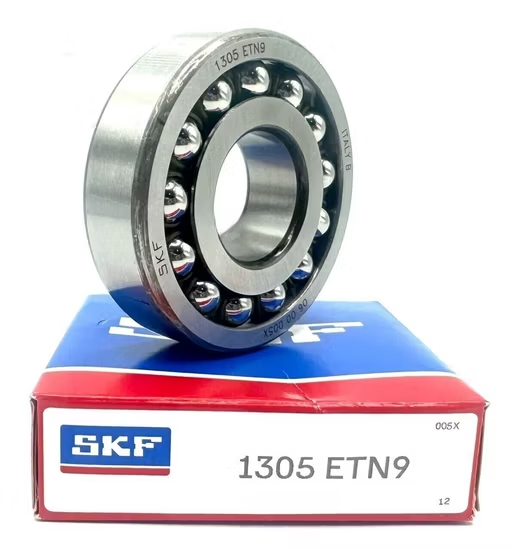
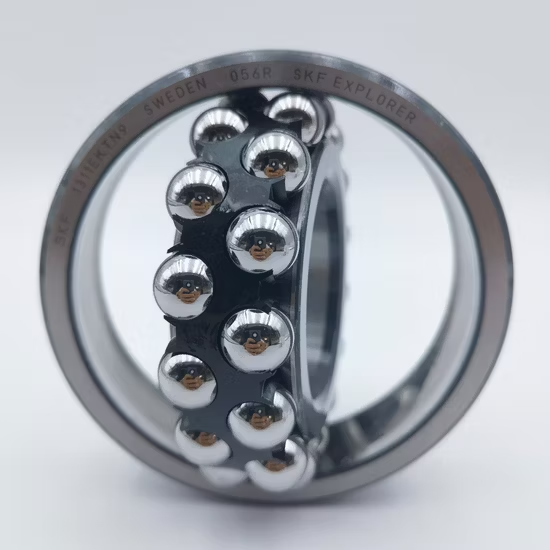
2310 Self-Aligning Ball Bearing 50×110×40 mm — double row construction effectively accommodates static and dynamic shaft misalignment while supporting radial loads in demanding industrial applications.
Unified Multi-Brand Sourcing — Procure genuine 2310 self-aligning ball bearings across SKF, FAG, and NSK in a single consolidated order, eliminating multi-vendor coordination.
| Parameter | Value |
|---|---|
| Designation | 2310 |
| Bearing Type | Self-Aligning Ball Bearing |
| Bore Diameter (d) | 50 mm |
| Outside Diameter (D) | 110 mm |
| Width (B) | 40 mm |
| Number of Rows | Double Row |
| Bore Type | Cylindrical (Standard) or Tapered 1:12 (K suffix) |
| Seal or Shield Type | Open, Rubber Seals, Iron Seals |
| Origin | Germany / Japan / Sweden / Malaysia / China |
Note: The 'm' suffix occasionally appears in cross-references but remains unverified; standard machined brass cage designations typically use an uppercase 'M'. Always confirm exact cage material via the manufacturer catalog.
| Industry | Typical Applications |
|---|---|
| Material Handling | Conveyor belt return idler pulleys and bucket elevator tail shafts |
| Agriculture | Combine harvester threshing cylinder drive shafts and tractor PTO joints |
| Electric Motors & Pumps | Large industrial fan shafts and centrifugal pump drive ends |
| General Gearboxes | Input and output shafts subject to housing deflection |
Matching the base designation while ignoring critical suffixes guarantees premature field failure.
I have seen entire cement plant production lines halt simply because a maintenance crew installed a standard cylindrical bore variant when the application strictly required a K suffix for adapter sleeve mounting. When the basic 2310 self-aligning ball bearing is sourced without verifying the exact internal geometry, seal configuration, or clearance class, the self-aligning capability is entirely compromised. Procurement teams often focus solely on the primary numbers, overlooking that a mismatched cage material or incorrect thermal clearance will cause rapid binding under operational heat .
The primary advantage of this double row configuration lies in its ability to accommodate static and dynamic shaft misalignment. When heavy conveyor shafts bend under load, the outer ring raceway allows the inner ring and ball assembly to pivot freely. Our technical review process ensures that the selected variant provides the precise angular misalignment tolerance required for your specific housing and shaft deflection parameters.
In agricultural and material handling environments, heavy dust and debris constantly threaten internal raceway integrity. Selecting between open, rubber-sealed, or iron-shielded variants dictates the balance between contamination exclusion and high-speed friction heat. Furthermore, as operational temperatures rise, the shaft expands more than the housing. Specifying the correct internal clearance class prevents the bearing from seizing when thermal growth eliminates the internal operating gap .
The 50x110x40mm dimensions define the physical envelope, but the suffixes define the operational reality. The K suffix indicates a 1:12 tapered bore, which is mandatory for secure mounting on adapter sleeves in applications where precise axial positioning and interference fit are critical. Using a standard cylindrical bore in a tapered sleeve setup leads to immediate slippage and shaft fretting. Additionally, while rubber seals provide excellent moisture and dust exclusion, iron shields offer lower friction for higher-speed electric motor applications where heat generation must be minimized.
Ignoring the K suffix or misinterpreting cage material designations leads directly to unplanned downtime and catastrophic shaft damage. When a cylindrical bore is forced onto a tapered sleeve, the resulting micro-movements destroy the shaft journal through fretting corrosion. According to failure analysis frameworks outlined in ISO 281 and ISO 15243, these installation and selection errors account for a massive share of premature mechanical breakdowns, voiding equipment warranties and forcing expensive emergency replacements .
We prevent cross-reference errors by validating not just the base 2310 number, but every accompanying suffix for clearance, cage, and precision. Our authorized multi-brand distribution network allows us to source the exact variant you need, whether it requires a specific seal type or a tapered bore, without compromising on authenticity. Every shipment includes batch traceability, ensuring you receive genuine components rather than counterfeits with cloned QR codes and soft inner rings that fail under load. We provide application-based selection reviews to confirm that the chosen bearing can withstand your specific load, speed, and temperature conditions.
To ensure precise technical alignment, please provide your operational parameters including radial and axial loads, operating speeds, and ambient temperatures. If you are replacing an existing unit, share the exact OEM equipment number or the full designation including all suffixes so we can perform a comprehensive cross-reference verification. Our engineering team will review your application data to confirm the optimal clearance class and sealing arrangement before finalizing the quotation.
Q: How do I verify the authenticity of the 2310 self-aligning ball bearing upon delivery?
A: Every bearing we supply features batch traceability and a unique QR code. You can scan this code using the official mobile application of the respective manufacturer to instantly verify its origin and production batch, ensuring you have received a genuine product rather than a counterfeit with compromised metallurgy.
Q: What is the functional difference between the standard bore and the K suffix?
A: The standard designation features a cylindrical bore for direct shaft press-fits or housing installations. The K suffix indicates a 1:12 tapered bore, specifically designed to be mounted on adapter sleeves. This allows for precise axial positioning and a secure interference fit on shafts that are not machined to tight tolerance steps.
Q: Why is it critical to match the internal clearance class during cross-referencing?
A: Internal clearance dictates how the bearing handles thermal expansion. If a standard CN clearance is installed in a high-temperature application that requires C3, the shaft expansion will eliminate the internal gap, causing thermal binding, excessive friction, and rapid cage failure. We verify these classes to match your exact thermal environment.
Q: How should I choose between rubber seals and iron shields for my application?
A: Rubber seals provide superior exclusion of heavy dust, moisture, and agricultural debris, making them ideal for harsh environments, though they generate slightly more friction. Iron shields offer non-contact protection against larger particles while maintaining lower friction, making them better suited for higher-speed electric motor applications where heat dissipation is critical.
Q: Can you cross-reference this bearing to other major international brands?
A: Yes, we provide comprehensive cross-referencing across all major authorized brands. However, we do not just match the base number; we meticulously align the internal design, cage material, clearance class, and sealing suffixes to ensure the replacement performs identically to the original specification in your specific machinery.
Our 5-step process ensures every order is engineered, validated, and supported for optimal performance.
Technical needs assessment
Custom specifications
Free samples for $50k+
Pre-shipment inspection
On-site & predictive
Our certified engineers respond within 24 hours with detailed technical specifications, pricing, and lead time information.